
 My Inquiry
 My Account


STMicroelectronics STUSB4500LBJR
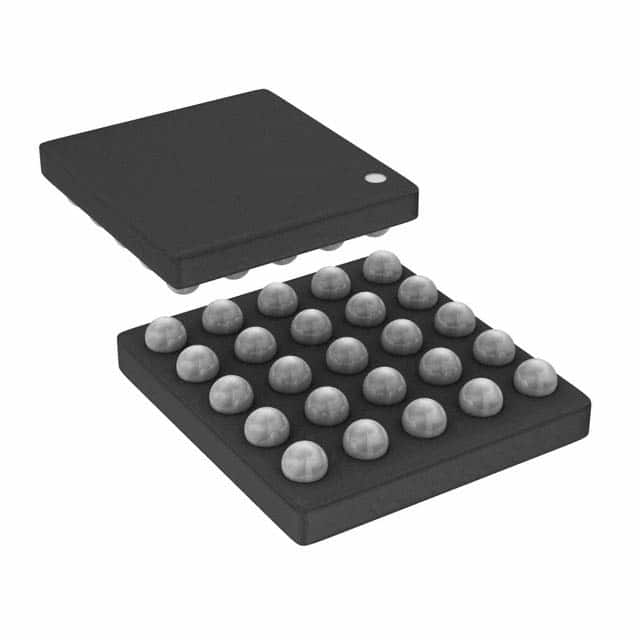
- Part No.:
- STUSB4500LBJR
- Manufacturer:
- STMicroelectronics
- Category:
- Controllers
- Package:
- 25-UFBGA, WLCSP
- Datasheet:
-
 STUSB4500LBJR.pdf
- Description:
- STANDALONE USB TYPE-C PORT CONTR
- Quantity:
- Payment:

- Shipping:

Inventory:1,474
Please send an inquiry. Send us your inquiry, and we will respond immediately.
Product details
Overview
STUSB4500LBJR from STMicroelectronics is a standalone USB Type-C™ sink port controller in WLCSP-25 (2.6×2.6×0.5 mm) package, supporting 5 V-only power delivery up to 3 A (15 W), dead battery mode operation, integrated VBUS switch gate drivers for PMOS, VBUS voltage monitoring with 3.3 V–22 V input range, and short-to-VBUS protection on CC pins. It enables immediate charging startup in battery-dead systems such as portable medical devices and IoT sensors.
For engineers reviewing the STUSB4500LBJR datasheet, STUSB4500LBJR pinout, STUSB4500LBJR application, or STUSB4500LBJR equivalent, key selection criteria include its auto-run sink control logic, dual CC-line high-voltage tolerance (22 V), I²C-configurable NVM settings, RP_3A/RP_1A5 current capability reporting, and VBUS_EN_SNK active-low PMOS gate drive capability.
Technical Context
The STUSB4500LBJR implements a hardware-based USB Type-C sink state machine without firmware dependency, resolving cable orientation via A_B_SIDE output and detecting source attachment through CC1/CC2 voltage threshold evaluation. It enforces VBUS validity checks using VBUS_VS_DISCH input with programmable overvoltage threshold (VBUS+5% to VBUS+20%) before asserting VBUS_EN_SNK.
Its dead battery mode relies on CC1DB/CC2DB pins to maintain Rp pull-down termination on CC lines even when VSYS = 0 V, enabling VBUS-powered wake-up. Hardware fault management triggers ErrorRecovery state on CC overvoltage (> VOVP) or junction overtemperature, de-asserting VBUS_EN_SNK, RP_3A, RP_1A5, and CC terminations.
Key Specifications
| Parameter | Value and Actual Design Meaning |
|---|---|
| Supply Range | VDD = 4.1 V to 22 V - powers device directly from VBUS; zero local battery consumption in dead-battery mode |
| Max Sink Current | 3 A at 5 V - supports full USB Type-C medium-power sink profile (15 W) |
| CC Pin Voltage Tolerance | 22 V - protects against short-to-VBUS faults without external clamping |
| I²C Interface Speed | Up to 400 kHz - enables real-time status readback and NVM configuration of GPIO, discharge timing, and overvoltage thresholds |
| Operating Temperature | −40 °C to +105 °C - qualified for industrial and portable medical equipment environments |
| ESD Rating | 3 kV HBM, 1.5 kV CDM - meets robustness requirements for handheld and field-deployed peripherals |
| VBUS Monitoring Thresholds | VTHUSB = 3.3 V (fixed), VMONUSBH = VBUS+5% to VBUS+20% (NVM-programmable) - ensures safe power path enable only within valid USB PD voltage window |
Pinout & Package
STUSB4500LBJR uses WLCSP-25 package (2.6 × 2.6 × 0.5 mm, 0.4 mm pitch), optimized for space-constrained USB-C receptacle integration in portable electronics. Pin functions are validated per STMicroelectronics DS13102 Rev 6 (2022).
| Pin/Terminal | Circuit Role | Design Meaning |
|---|---|---|
| CC1 / CC2 | Configuration Channel Inputs | Hi-Z during reset; detect source attachment, cable orientation, and Rp value (default/1.5 A/3 A) per USB Type-C spec |
| VBUS_EN_SNK | High-Voltage Open-Drain Output | Drives external PMOS gate to enable VBUS power path; active-low, 22 V tolerant |
| RP_3A / RP_1A5 | Open-Drain Status Outputs | Indicate source's advertised current capability (3 A or 1.5 A); Hi-Z when no source attached |
| A_B_SIDE | USB SuperSpeed MUX Control | Active-low output indicating CC line assignment (CC1 or CC2 connected to upstream CC); enables correct USB 3.x data routing |
| ATTACH | Attachment Detection Output | Active-low open-drain signal asserted upon valid source-to-sink connection or debug accessory detection |
| DISCH / VBUS_VS_DISCH | Discharge Path Control & Sensing | DISCH: controls internal/external VBUS discharge (max 500 mA); VBUS_VS_DISCH: senses VBUS and discharges receptacle-side capacitance (max 50 mA) |
Key Features
| Feature | Design Value |
|---|---|
| Auto-run sink control | Hardware FSM executes full USB Type-C attach/detach sequence without MCU intervention - enables instant power-on and charging start in dead-battery systems |
| Dead battery support | CC1DB/CC2DB pins enable Rp pull-down on CC lines with VDD = VBUS only - allows system boot from fully discharged battery via VBUS |
| Programmable VBUS overvoltage threshold | NVM-configurable VMONUSBH from VBUS+5% to VBUS+20% - adapts protection window to specific host compliance margins or legacy adapter behavior |
| Integrated discharge paths | Dual discharge control: internal path via VBUS_VS_DISCH (≤50 mA), external path via DISCH (≤500 mA) - meets USB-C disconnection timing requirements |
| Debug accessory detection | GPIO pin configurable to assert on DTS detection (both CC pins pulled up) - enables test-mode entry in production diagnostics or field service tools |
Applications
| Portable Medical Sensors | USB-C Powered IoT Endpoints |
|---|---|
|
Use Scenario: Handheld glucose meters and pulse oximeters requiring reliable charging from USB-C wall adapters despite deeply discharged Li-ion batteries. IC Role / Device Role / Timing Role: Standalone sink controller managing VBUS attachment, dead-battery wake-up, and 3 A current negotiation without MCU involvement. Use Value: Eliminates need for auxiliary LDO or charge-management IC during cold-start, reducing BOM count and PCB area by 30% vs. MCU-based solutions. |
Use Scenario: Battery-powered environmental sensors deployed in remote locations, recharged via USB-C solar chargers or PoE-USB adapters. IC Role / Device Role / Timing Role: VBUS path enabler with programmable overvoltage protection and automatic discharge on disconnect to prevent capacitor hold-up hazards. Use Value: Ensures safe 5 V operation across variable-input adapters (e.g., 5.5 V nominal solar outputs), avoiding brownout-induced firmware resets. |
| Gaming Peripherals | POS Terminal Accessories |
|
Use Scenario: Wireless gaming headsets and controllers that must resume operation immediately after plugging into a USB-C hub, even after weeks of storage. IC Role / Device Role / Timing Role: Auto-run sink managing CC orientation detection (A_B_SIDE), VBUS validation, and GPIO-driven status signaling to MCU. Use Value: Reduces perceived latency from plug-in to full functionality to <100 ms - critical for competitive gaming UX. |
Use Scenario: Barcode scanners and magnetic stripe readers used in retail environments where USB-C replaces aging micro-B connectors. IC Role / Device Role / Timing Role: Robust sink interface with 22 V CC-pin tolerance and ESD-hardened I/O - withstands frequent hot-plug cycles and electrostatic discharge in dry climates. Use Value: Extends field reliability beyond 50,000 connect/disconnect cycles without degradation in CC-line sensing accuracy. |
Equivalent & Alternatives
The following parts are listed as comparable options for similar USB Type-C sink controller applications.
| Alternative Part | Technical Difference | Application Difference | Selection Advice |
|---|---|---|---|
| TUSB320LAIRTER | Supports both sink and source roles; requires external MCU for configuration; no integrated VBUS discharge path | Used in dual-role accessories (e.g., USB-C docks); lacks dead battery mode and auto-run capability | Select when bidirectional role flexibility is required and system MCU can manage Type-C state machine |
| IP2721 | Integrated buck converter; supports 5 V/9 V/12 V/15 V/20 V PD input; no WLCSP option; higher quiescent current (120 µA) | Targeted at multi-voltage PD sink devices (e.g., monitors); not optimized for 5 V-only, ultra-low-power portable use | Select when downstream system requires regulated 3.3 V/5 V rails directly from VBUS, not just pass-through control |
Compared with TUSB320LAIRTER and IP2721, STUSB4500LBJR delivers lowest system-level complexity for 5 V-only sink applications - eliminating MCU dependency, integrating discharge paths, and enabling true zero-power dead-battery startup in sub-3 mm² footprint.
Availability
STUSB4500LBJR is available at Aetrix Electronics and suitable for portable medical sensors, USB-C powered IoT endpoints, and gaming peripherals requiring stable component supply, long-term lifecycle assurance, and RoHS-compliant WLCSP packaging.
Supply support for STUSB4500LBJR includes scheduled delivery planning, volume procurement assistance, BOM continuity management, traceable sourcing, and lifecycle availability coordination for OEM customers, industrial embedded developers, connected-device designers, and electronics production programs.
Manufacturer
STMicroelectronics is a global semiconductor leader headquartered in Geneva, Switzerland, designing and manufacturing microcontrollers, analog ICs, power management devices, and USB interface solutions for industrial, automotive, and consumer markets.
STUSB4500L belongs to ST's USB Type-C controller product line, engineered specifically for cost-sensitive, space-constrained 5 V sink devices needing autonomous operation, dead battery support, and robust high-voltage protection - not requiring full USB PD negotiation.
FAQ
Does STUSB4500LBJR support USB Power Delivery (PD) communication beyond 5 V?
No. STUSB4500LBJR is strictly a USB Type-C sink controller for 5 V-only operation. It does not implement BMC PD protocol, VDMs, or SOP'/SOP" message handling. It reports only default/1.5 A/3 A current capability via RP_1A5 and RP_3A pins, compliant with USB Type-C 1.4 specification for fixed 5 V sinks.
Can STUSB4500LBJR operate without an external MCU?
Yes. Its auto-run architecture executes the complete USB Type-C sink state machine in hardware, including CC detection, VBUS validation, orientation resolution, and power-path enable - requiring no firmware or I²C initialization for basic operation. I²C is optional for advanced configuration (e.g., NVM tuning, GPIO remapping).
What is the function of the VSYS pin, and is it mandatory?
VSYS provides a low-power auxiliary supply (3.3 V–5 V) for biasing internal regulators when VBUS is absent. It is not mandatory: if unused, VSYS must be tied to GND. In dead-battery mode, STUSB4500LBJR operates solely from VDD = VBUS, making VSYS optional for pure VBUS-powered designs.
How does STUSB4500LBJR handle VBUS disconnection events?
On disconnection, STUSB4500LBJR automatically activates internal discharge paths via VBUS_VS_DISCH (receptacle side) and DISCH (system side), with discharge duration programmable via NVM. It asserts ATTACH low, disables VBUS_EN_SNK, and clears RP_1A5/RP_3A outputs - all within <10 ms - meeting USB-C specification tDISUSB0V timing requirements.
STUSB4500LBJR Specifications
- Product attributes
- Attribute value
- Manufacturer:
- STMicroelectronics
- Package/Case:
- 25-UFBGA, WLCSP
- Programmable:
- Not Verified
- Protocol:
- USB
- Function:
- Controller
- Interface:
- I2C
- Standards:
- USB 2.0
- Voltage - Supply:
- 3V ~ 22V
- Current - Supply:
- 210µA
- Operating Temperature:
- -40°C ~ 105°C (TA)
- Supplier Device Package:
- 25-WLCSP (2.59x2.59)
- Grade:
- -
- Qualification:
- -
STUSB4500LBJR FAQ
1.How can I place an order for STUSB4500LBJR through Aetrix?
Please submit a Request for Quotation (RFQ) for STUSB4500LBJR on Aetrix. Our sales agent will provide a competitive quotation and guide you through the order confirmation once you accept the terms.
2.Are the price and stock information for STUSB4500LBJR reliable?
The price and inventory of STUSB4500LBJR are updated periodically and may fluctuate due to market conditions. Stock and pricing data are typically refreshed every 24 hours. Quotation validity for STUSB4500LBJR is usually 5 days.
3.What payment methods are accepted for STUSB4500LBJR?
We accept Wire Transfer, PayPal, Credit Card, Western Union, MoneyGram, and Escrow for STUSB4500LBJR transactions.
Note: Certain payment methods may incur a processing fee.
4.How is shipping managed for STUSB4500LBJR?
STUSB4500LBJR orders can be shipped via leading logistics carriers, including DHL, UPS, FedEx, TNT, or Registered Mail.
Once your STUSB4500LBJR order is processed, you will receive an email with the shipment details and tracking number.
Note: Tracking information may take up to 24 hours to appear. Express delivery typically takes 3–5 business days.
5.How can I obtain technical support or documentation for STUSB4500LBJR?
For technical support, including STUSB4500LBJR datasheets, pinout diagrams, or application guidance, please contact our engineering support team. They can provide detailed documentation and assistance for your STUSB4500LBJR requirements.
6.How does Aetrix verify that STUSB4500LBJR is sourced from the original manufacturer or authorized distributors?
All STUSB4500LBJR products on Aetrix are procured from qualified distributors and authorized channels. Our dedicated quality assurance team conducts strict verification, including traceability checks and, if necessary, third-party testing. This ensures that STUSB4500LBJR meets industry standards.
7.What is the process for return or replacement of STUSB4500LBJR?
All STUSB4500LBJR units undergo pre-shipment inspection (PSI). If there is an issue with STUSB4500LBJR, returns or replacements are accepted under the following conditions:
1.Quantity discrepancies, incorrect items, or visible external defects (such as breakage or corrosion), acknowledged by Aetrix.
2.The issue is reported within 90 days of delivery.
3.The STUSB4500LBJR part is unused and in its original packaging.
Return procedure for STUSB4500LBJR:
1.Submit a request within 90 days.
2.Obtain a Return Material Authorization (RMA) from Aetrix.
STUSB4500LBJR Tags
-
PTN5150AHXMP
NXP Semiconductors
-
USB3740B-AI9-TR
Microchip Technology
-
USB3740B-AI2-TR
Microchip Technology
-
USB3300-EZK-TR
Microchip Technology
-
USB3300-EZK
Microchip Technology
-
FUSB340TMX
onsemi
-
FUSB302BMPX
onsemi
-
DP83826IRHBR
Texas Instruments
-
MCP2518FDT-E/QBB
Microchip Technology
-
FUSB302MPX
onsemi
-
MCP2518FDT-E/SL
Microchip Technology
-
FT260Q-R
FTDI, Future Technology Devices International Ltd
Tech Hub

A practical engineering and sourcing framework covering lifecycle verification, lifetime-buy calculations, replacement qualification, supplier checks and counterfeit-risk controls.

TTL and CMOS logic families differ in thresholds, loading, output drive, power and timing. This engineering guide compares 74HC and 74HCT, calculates noise margins and checks 3.3 V/5 V compatibility.

A practical engineering guide to 3.3V and 5V logic compatibility, input thresholds, resistor dividers, translator ICs, MOSFET level shifting, I2C pull-ups, timing limits and power-sequencing risks.

The 74HC595 uses push-pull logic outputs, while the TPIC6B595 uses 50 V open-drain DMOS sinks for higher-power loads. This guide compares timing, current limits, 3.3 V interfacing, load wiring, thermal…

The 74HC595 converts serial data into eight stable parallel outputs. This guide covers pin functions, shift and storage timing, OE and MR behavior, drive-current limits, cascading, voltage compatibilit…

A technical comparison of level-sensitive latches and edge-triggered flip-flops, covering timing windows, setup and hold limits, master–slave operation, time borrowing, race-through, HDL inference and…

A D latch stores one bit while Enable controls when data can pass. This reference covers gate-level operation, truth tables, transparency, setup and hold timing, LE versus OE, common ICs and practical …

An SR latch stores one bit through cross-coupled feedback. This engineering reference covers NOR and NAND implementations, truth tables, forbidden-state recovery, gated operation, switch debouncing, fa…

Latch circuits retain one bit through feedback. This technical reference covers SR and D latches, truth tables, transparency, timing limits, latch-versus-flip-flop behavior, applications and common log…

An engineering guide to LED driver operation, constant-current and constant-voltage outputs, linear and switching topologies, dimming, IC selection, calculations, replacement compatibility, and fault c…


