
 My Inquiry
 My Account


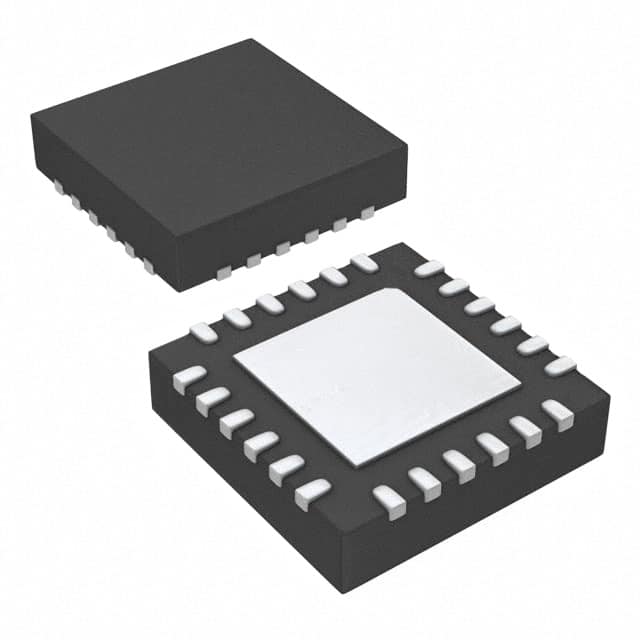
STMicroelectronics STUSB4500LQTR
- Part No.:
- STUSB4500LQTR
- Manufacturer:
- STMicroelectronics
- Category:
- Controllers
- Package:
- 24-VFQFN Exposed Pad
- Datasheet:
-
 STUSB4500LQTR.pdf
- Description:
- STANDALONE USB TYPE-C PORT CONTR
- Quantity:
- Payment:

- Shipping:

Inventory:4,000
Please send an inquiry. Send us your inquiry, and we will respond immediately.
Product details
Overview
STUSB4500LQTR from STMicroelectronics is a standalone USB Type-C™ sink port controller for 5 V-only applications up to 3 A (15 W), supporting dead battery mode, integrated VBUS switch gate drivers, VBUS voltage monitoring, and short-to-VBUS protection on CC pins. It operates with VDD from 4.1 V to 22 V, enables immediate charging on cold start, and reports source current capability (default/1.5 A/3 A) via RP_3A/RP_1A5 outputs - used in battery-powered IoT devices, printers, and USB-C accessories.
For engineers reviewing the STUSB4500LQTR datasheet, STUSB4500LQTR pinout, STUSB4500LQTR application, or STUSB4500LQTR equivalent, key selection considerations include its auto-run Type-C sink behavior, high-voltage CC pin tolerance (22 V), I²C-configurable NVM settings, dead battery support without external firmware, and QFN-24 EP (4×4 mm) package compatibility with USB 2.0 and SuperSpeed MUX control.
Technical Context
The STUSB4500LQTR implements a hardware-based USB Type-C sink state machine that autonomously detects attachment, resolves cable orientation via A_B_SIDE, identifies source vs. debug accessory, and asserts VBUS_EN_SNK only when VBUS_VS_DISCH confirms valid voltage (3.3 V–22 V). It integrates dual high-voltage analog front-ends on CC1/CC2 and CC1DB/CC2DB to maintain Rp termination during dead battery mode.
Its power architecture uses VDD directly from VBUS (4.1–22 V), eliminating local battery drain, while internal 1.2 V and 2.7 V regulators (VREG_1V2/VREG_2V7) supply core logic. Hardware fault management triggers ErrorRecovery on overtemperature or CC overvoltage (>VOVP), deasserting VBUS_EN_SNK and terminations within defined timing limits per USB Type-C rev 1.4.
Key Specifications
| Parameter | Value and Actual Design Meaning |
|---|---|
| Supply Range (VDD) | 4.1 V to 22 V - powers device directly from VBUS, enabling zero-battery-consumption operation |
| Max Sink Current | 3 A at 5 V - supports full USB-C 15 W power delivery for portable electronics |
| CC Pin HV Tolerance | 22 V - protects against short-to-VBUS faults without external clamping |
| Operating Temp | −40 °C to +105 °C - qualified for industrial and automotive-adjacent embedded use |
| I²C Speed | Up to 400 kHz - allows real-time status readback and NVM configuration in host-managed systems |
| ESD Rating | 3 kV HBM, 1.5 kV CDM - meets robustness requirements for consumer-facing USB ports |
| USB Certification | TID #1455, USB Type-C™ rev 1.4 - ensures interoperability with certified sources and cables |
Pinout & Package
STUSB4500LQTR is packaged in a thermally enhanced QFN-24 EP (4 mm × 4 mm, 0.5 mm height) with exposed pad grounded for thermal dissipation and EMI reduction.
| Pin/Terminal | Circuit Role | Design Meaning |
|---|---|---|
| VBUS_EN_SNK | High-voltage open-drain output | Directly drives PMOS gate to enable VBUS power path; active-low, 22 V tolerant |
| CC1 / CC2 | Configuration channel analog I/O | Detects source attachment, orientation, and Rp value; Hi-Z at reset, 22 V fault-tolerant |
| RP_3A / RP_1A5 | Open-drain status outputs | Indicate source's advertised current (3 A or 1.5 A); Hi-Z = default/absent, low = asserted |
| A_B_SIDE | USB SuperSpeed MUX control | Active-low signal selecting CC1/CC2 routing for USB 3.x data lane assignment |
| DISCH / VBUS_VS_DISCH | Discharge path control & VBUS sensing | Voltage monitor input + internal/external discharge enable; 50 mA (receptacle) / 500 mA (system) max discharge |
Key Features
| Feature | Design Value |
|---|---|
| Auto-run sink operation | No firmware or host CPU required - establishes connection and enables VBUS within milliseconds of plug-in |
| Dead battery mode | Enables system boot and charging from VBUS even when local battery is fully depleted (0 V) |
| Programmable NVM configuration | Customizes GPIO function, discharge timing, overvoltage thresholds, and I²C address without external components |
| Hardware fault recovery | Automatic transition to ErrorRecovery state on overtemperature or CC overvoltage, disabling VBUS_EN_SNK and terminations |
| USB 2.0 & SuperSpeed ready | A_B_SIDE output and CC detection logic support both legacy USB 2.0 and USB 3.x data routing requirements |
Applications
| Printers & Camcorders | IoT Sensors & Drones |
|---|---|
Use Scenario: Portable printer powered solely via USB-C from laptop or power bank, requiring instant-on after cold start. IC Role / Device Role / Timing Role: Standalone sink controller managing VBUS enable, current reporting, and dead battery wake-up without MCU involvement. Use Value: Eliminates need for auxiliary LDO or wake-up circuitry; reduces BOM count by integrating VBUS monitoring, discharge, and orientation detection. | Use Scenario: Battery-powered environmental sensor node recharged daily via USB-C, operating in −25 °C outdoor environments. IC Role / Device Role / Timing Role: Primary USB-C interface IC handling attach/detach, VBUS validation, and safe 3 A charge path enablement. Use Value: −40 °C to +105 °C rating ensures reliable cold-start operation; 22 V CC tolerance prevents field failures from VBUS transients. |
| Computer Accessories | Healthcare Handhelds |
Use Scenario: Wireless keyboard with rechargeable Li-ion battery, using USB-C for both data and charging. IC Role / Device Role / Timing Role: Sink controller resolving cable flip (via A_B_SIDE), reporting source capability, and enabling VBUS_EN_SNK only after valid VBUS detection. Use Value: Enables seamless USB-C plug-and-play without software stack; I²C interface allows host to read port status and configure discharge timing. | Use Scenario: FDA-classified handheld diagnostic tool requiring certified, traceable USB-C charging with fault logging. IC Role / Device Role / Timing Role: Certified USB Type-C sink (TID #1455) providing hardware-level overvoltage/overtemperature protection and GPIO-fault signaling. Use Value: Meets medical device safety requirements via autonomous hardware fault response - no reliance on host firmware for critical protections. |
Equivalent & Alternatives
The following parts are listed as comparable options for similar USB Type-C sink controller applications.
| Alternative Part | Technical Difference | Application Difference | Selection Advice |
|---|---|---|---|
| TUSB320LIRGTR | Supports dual-role (DRP) and source mode; requires external MCU for sink configuration; no integrated VBUS gate driver | Used where bidirectional port flexibility is needed; lacks auto-run and dead battery features | Select when system requires DRP capability and can implement firmware-based sink control |
| IP2721 | Integrated buck converter for system power; supports PD3.0 negotiation; larger QFN-32 package; higher cost | Targeted at PD-enabled devices needing >5 V or programmable voltage; not 5 V-only optimized | Select when USB Power Delivery beyond 5 V/3 A is required and bill-of-materials allow added complexity |
Compared with TUSB320LIRGTR and IP2721, STUSB4500LQTR delivers lowest-system-complexity 5 V sink control with zero-software dependency, dedicated dead battery support, and tighter thermal/power envelope - ideal for cost-sensitive, battery-constrained USB-C peripherals.
Availability
STUSB4500LQTR is available at Aetrix Electronics and suitable for printers, IoT sensors, computer accessories, and healthcare handhelds requiring stable component supply, industrial temperature operation, and certified USB Type-C compliance.
Supply support for STUSB4500LQTR includes scheduled delivery planning, volume procurement assistance, BOM continuity management, traceable sourcing, and lifecycle availability coordination for OEM customers, industrial embedded developers, connected-device designers, and electronics production programs.
Manufacturer
STMicroelectronics is a global semiconductor leader headquartered in Geneva, designing and manufacturing microcontrollers, analog ICs, power management, and USB interface solutions for industrial, automotive, and consumer markets.
The STUSB4500L product line targets cost-optimized, firmware-free USB Type-C sink implementations in battery-powered and space-constrained devices - emphasizing reliability, certification, and minimal external component count.
FAQ
Does STUSB4500LQTR support USB Power Delivery (PD) voltage negotiation?
No. STUSB4500LQTR is strictly a 5 V-only sink controller compliant with USB Type-C rev 1.4 basic power role. It does not implement BMC communication, PD message parsing, or variable-voltage negotiation. It reports only default/1.5 A/3 A current capability at 5 V via RP pins and GPIO.
Can STUSB4500LQTR operate without an external MCU?
Yes. Its auto-run architecture enables full USB-C sink functionality - including attachment detection, VBUS enablement, current reporting, and fault recovery - without any host processor or firmware. I²C is optional for advanced configuration or status monitoring.
What is the purpose of the CC1DB and CC2DB pins?
CC1DB and CC2DB enable dead battery mode by connecting to CC1/CC2 respectively. This maintains pull-down termination on the CC lines even when VDD is unpowered, allowing a source to detect the sink and supply VBUS before the IC is energized - essential for cold-start battery charging.
How is thermal protection implemented in STUSB4500LQTR?
Internal junction temperature sensing triggers automatic entry into ErrorRecovery state if TJ exceeds maximum rating. This disables VBUS_EN_SNK, removes CC terminations, and asserts GPIO (if configured for ERROR_RECOVERY), ensuring fail-safe shutdown without host intervention.
STUSB4500LQTR Specifications
- Product attributes
- Attribute value
- Manufacturer:
- STMicroelectronics
- Package/Case:
- 24-VFQFN Exposed Pad
- Programmable:
- Not Verified
- Protocol:
- USB
- Function:
- Controller
- Interface:
- I2C
- Standards:
- USB 2.0
- Voltage - Supply:
- 3V ~ 22V
- Current - Supply:
- 210µA
- Operating Temperature:
- -40°C ~ 105°C (TA)
- Supplier Device Package:
- 24-QFN-EP (4x4)
- Grade:
- -
- Qualification:
- -
STUSB4500LQTR FAQ
1.How can I place an order for STUSB4500LQTR through Aetrix?
Please submit a Request for Quotation (RFQ) for STUSB4500LQTR on Aetrix. Our sales agent will provide a competitive quotation and guide you through the order confirmation once you accept the terms.
2.Are the price and stock information for STUSB4500LQTR reliable?
The price and inventory of STUSB4500LQTR are updated periodically and may fluctuate due to market conditions. Stock and pricing data are typically refreshed every 24 hours. Quotation validity for STUSB4500LQTR is usually 5 days.
3.What payment methods are accepted for STUSB4500LQTR?
We accept Wire Transfer, PayPal, Credit Card, Western Union, MoneyGram, and Escrow for STUSB4500LQTR transactions.
Note: Certain payment methods may incur a processing fee.
4.How is shipping managed for STUSB4500LQTR?
STUSB4500LQTR orders can be shipped via leading logistics carriers, including DHL, UPS, FedEx, TNT, or Registered Mail.
Once your STUSB4500LQTR order is processed, you will receive an email with the shipment details and tracking number.
Note: Tracking information may take up to 24 hours to appear. Express delivery typically takes 3–5 business days.
5.How can I obtain technical support or documentation for STUSB4500LQTR?
For technical support, including STUSB4500LQTR datasheets, pinout diagrams, or application guidance, please contact our engineering support team. They can provide detailed documentation and assistance for your STUSB4500LQTR requirements.
6.How does Aetrix verify that STUSB4500LQTR is sourced from the original manufacturer or authorized distributors?
All STUSB4500LQTR products on Aetrix are procured from qualified distributors and authorized channels. Our dedicated quality assurance team conducts strict verification, including traceability checks and, if necessary, third-party testing. This ensures that STUSB4500LQTR meets industry standards.
7.What is the process for return or replacement of STUSB4500LQTR?
All STUSB4500LQTR units undergo pre-shipment inspection (PSI). If there is an issue with STUSB4500LQTR, returns or replacements are accepted under the following conditions:
1.Quantity discrepancies, incorrect items, or visible external defects (such as breakage or corrosion), acknowledged by Aetrix.
2.The issue is reported within 90 days of delivery.
3.The STUSB4500LQTR part is unused and in its original packaging.
Return procedure for STUSB4500LQTR:
1.Submit a request within 90 days.
2.Obtain a Return Material Authorization (RMA) from Aetrix.
STUSB4500LQTR Tags
-
PTN5150AHXMP
NXP USA Inc.
-
USB3740B-AI9-TR
Microchip Technology
-
USB3740B-AI2-TR
Microchip Technology
-
USB3300-EZK-TR
Microchip Technology
-
USB3300-EZK
Microchip Technology
-
FUSB340TMX
onsemi
-
FUSB302BMPX
onsemi
-
DP83826IRHBR
Texas Instruments
-
MCP2518FDT-E/QBB
Microchip Technology
-
FUSB302MPX
onsemi
-
MCP2518FDT-E/SL
Microchip Technology
-
FT260Q-R
FTDI, Future Technology Devices International Ltd
Tech Hub

Operational amplifier guide covering op amp basics, feedback, ideal vs real op amps, common configurations, buffer circuits, offset, bias current, gain-bandwidth, slew rate, rail-to-rail limits and sel…

Jumper cables guide covering safe connection order, red and black clamp placement, final ground connection, cable gauge, length, clamp quality, copper vs CCA cables, jump starter comparison and battery…

LDO regulator guide covering low dropout voltage, power dissipation, thermal design, PSRR, output noise, capacitor stability, adjustable LDO circuits, LDO vs buck converter and datasheet selection chec…

Conditional Access Module guide covering CAM meaning, CI/CI+ interface, smart card authorization, DVB security workflow, TV and set-top box compatibility, internal electronics, ESD protection, connecto…

Guide to electronic component obsolescence covering EOL risk, PCN/PDN notices, last-time buy planning, replacement options, form-fit-function validation, counterfeit risk and BOM lifecycle management.

18650 battery guide covering lithium-ion cell basics, 3.6V/3.7V voltage, 4.2V charging, mAh and Wh capacity, protected cells, chargers, BMS, series-parallel packs, holders, welding and sourcing checks.…

Hall effect sensor guide covering working principle, linear and digital sensors, Arduino circuits, current sensing, speed detection, automotive applications, A3144 examples, signal filtering and datash…

Product Change Notification guide for electronic components, covering PCN meaning, PCN vs PDN/EOL, common change types, risk levels, form-fit-function review, engineering validation, BOM control, LTB/L…

A practical guide to blend door actuators, covering HVAC function, symptoms, location, AC and heater issues, reset and calibration, replacement cost, electrical diagnosis, compatibility checks, and rep…

Engineering guide to Raspberry Pi alternatives, covering chip-level differences, Orange Pi, ROCK, Jetson, Banana Pi, NanoPi, Compute Module, Pico, GPIO, camera, HAT compatibility, and replacement risks…


