
 My Inquiry
 My Account


Semtech Corporation SX1257IWLTRT
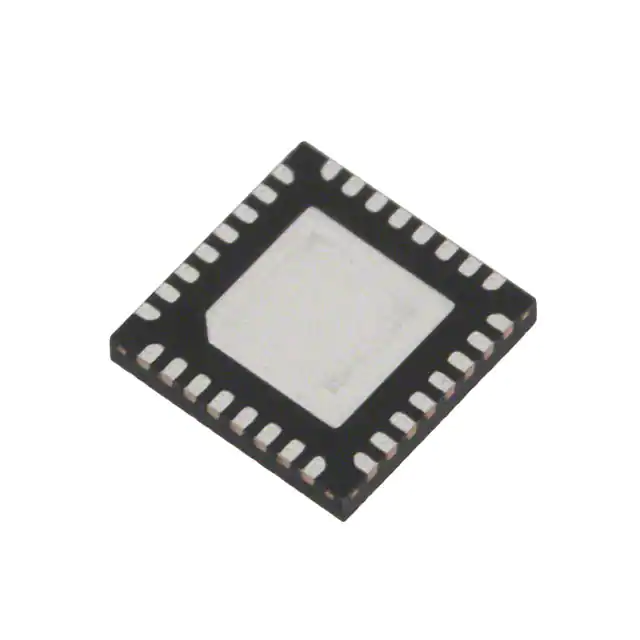
- Part No.:
- SX1257IWLTRT
- Manufacturer:
- Semtech Corporation
- Category:
- RF Transceiver ICs
- Package:
- 32-WFQFN Exposed Pad
- Datasheet:
-
 SX1257IWLTRT.pdf
- Description:
- IC RF TXRX 802.15.4 32MLPQ
- Quantity:
- Payment:

- Shipping:

Inventory:5,306
Please send an inquiry. Send us your inquiry, and we will respond immediately.
Product details
Overview
SX1257IWLTRT from Semtech is a transient diverting suppressor (TDS) designed for high-energy EOS protection of 22V-rated power or I/O lines, featuring ±30kV IEC 61000-4-2 ESD immunity, 40A peak pulse current (8/20μs), 27.6V clamping at 40A, 20mΩ dynamic resistance, and 175pF junction capacitance - deployed in USB Type-C PD input protection and industrial load switch front-end circuits.
For engineers reviewing the SX1257IWLTRT datasheet, pinout, applications, or equivalent options, this page delivers verified electrical specs, DFN-6 package layout guidance, real-world clamping stability across temperature and current, and direct alternative comparisons for robust overvoltage protection design.
Technical Context
The SX1257IWLTRT uses a surge-rated FET as its primary protection element, activated by a precision trigger circuit that turns on the shunt path when transient voltage exceeds breakdown. Unlike conventional TVS diodes, its clamping voltage remains nearly constant (27.5–28V) from 24A to 40A due to decreasing RDS(on), not fixed RDYN.
It operates across –40°C to +125°C with stable 22V reverse stand-off voltage and <600nA leakage at VRWM. Its 175pF capacitance at 22V/1MHz and 20mΩ dynamic resistance enable low-voltage overshoot suppression without signal integrity compromise in high-speed bus interfaces.
Key Specifications
| Parameter | Value and Actual Design Meaning |
|---|---|
| Working Voltage | 22V - defines maximum continuous DC operating voltage before activation; matches USB PD 20V nominal + margin. |
| Clamping Voltage | 27.6V at 40A (8/20μs) - limits transient overvoltage to safe level for downstream 24V-rated controllers and load switches. |
| Peak Pulse Current | 40A (8/20μs) - meets IEC 61000-4-5 Level 4 surge immunity for industrial equipment and USB PD ports. |
| ESD Withstand | ±30kV contact & air (IEC 61000-4-2) - exceeds automotive and industrial ESD requirements without external staging. |
| Junction Capacitance | 175pF at 22V/1MHz - low enough for USB Type-C VBUS line protection without degrading power delivery signaling integrity. |
| Dynamic Resistance | 20mΩ (8/20μs) - enables flat clamping curve and minimal IR drop during high-current surges. |
| Leakage Current | ≤600nA at 22V - ensures negligible standby power loss in battery-backed or always-on IoT systems. |
Pinout & Package
Package: DFN 1.6mm × 1.6mm × 0.55mm, 6-lead, RoHS-compliant, UL 94V-0 molding compound, lead-free finish, tape-and-reel packaging (3,000 pcs/reel).
| Pin/Terminal | Circuit Role | Design Meaning |
|---|---|---|
| Pins 1, 2, 3 | GND | Common ground return path for surge current; all three must be connected to minimize parasitic inductance and maximize 40A capability. |
| Pins 4, 5, 6 | IN | Protected line input (e.g., USB PD VBUS); parallel connection ensures uniform current sharing and thermal distribution under surge. |
Key Features
| Feature | Design Value |
|---|---|
| Constant-clamp architecture | Clamping voltage varies only ±0.5V from 24A to 40A - eliminates derating for temperature or current, unlike TVS diodes. |
| FET-based shunt topology | Surge energy dissipated in low-RDS(on) channel instead of PN junction - enables higher IPP and stable Tj rise. |
| Low dynamic resistance | 20mΩ measured between 1A–40A - reduces voltage overshoot during fast-rising transients (e.g., ESD, lightning-induced surges). |
| High-temperature stability | Clamping holds at 27.6V up to +125°C - ensures consistent protection in enclosed industrial enclosures or automotive under-hood environments. |
| Compact DFN footprint | 1.6mm × 1.6mm area - saves >60% board space vs. SO-8 or SOT-23 TVS alternatives while maintaining full 40A rating. |
Applications
| USB Type-C Power Delivery Protection | Industrial Load Switch Input Protection |
|---|---|
|
Use Scenario: Protecting VBUS line in USB-C receptacles supporting up to 20V/5A PD negotiation against ESD, lightning-induced surges, and hot-plug transients. IC Role / Device Role / Timing Role: Primary front-end EOS suppressor placed directly at connector, clamping transients before reaching PD controller and load switch ICs. Use Value: Maintains 27.6V clamping at full 40A even at 125°C - prevents damage to 24V-rated controllers (e.g., STUSB4500, TUSB7320) where conventional TVS would exceed safe voltage margins. |
Use Scenario: Safeguarding input terminals of industrial-grade load switches (e.g., HS2950P, TPS22990) in remote meters, PLC I/O modules, and robotic power rails. IC Role / Device Role / Timing Role: High-energy transient shunt that diverts surge current away from the load switch's internal MOSFET gate oxide and drain-source junction. Use Value: Limits voltage across load switch input to ≤28V during ±1kV/42Ω IEC 61000-4-5 surges - avoids catastrophic failure and extends field lifetime in ungrounded or long-cable installations. |
| IoT Edge Device Power Bus Protection | Notebook/Tablet VBUS Line Protection |
|
Use Scenario: Securing 22V-capable power inputs in battery-powered IoT gateways exposed to ESD during handling and conducted surges via AC adapters. IC Role / Device Role / Timing Role: Single-component, low-leakage (≤600nA) protector enabling always-on operation while meeting IEC 61000-4-2/4-4/4-5 compliance. Use Value: 175pF capacitance avoids signal distortion on shared power/data rails; 22mW standby dissipation supports multi-year battery life in sensor nodes. |
Use Scenario: Protecting VBUS routing on thin-profile laptop and tablet motherboards where PCB space and thermal mass are constrained. IC Role / Device Role / Timing Role: Space-optimized, high-surge-capacity suppressor mounted adjacent to USB-C port to minimize trace inductance and coupling. Use Value: DFN-6 package fits within 1.6mm × 1.6mm footprint - enables placement directly under connector footprint without layer stacking penalties. |
Equivalent & Alternatives
The following parts are listed as comparable options for similar transient protection applications.
| Alternative Part | Technical Difference | Application Difference | Selection Advice |
|---|---|---|---|
| TDS2211P.C | Identical electrical specs, same DFN-6 package, identical marking (T22), same Semtech manufacturing lot control and qualification. | No functional difference; TDS2211P.C is the commercial-grade variant with identical performance and reliability data. | Select TDS2211P.C for cost-sensitive volume production where extended temperature range is not required beyond –40°C to +125°C. |
| SP1003-02HTG | Lower 30A IPP rating, 33V clamping at 30A, 22pF capacitance - optimized for lower-voltage (12V) rails, not 22V VBUS. | Not suitable for USB PD or 22V industrial buses; better matched to 5V/12V logic or USB 2.0 data lines. | Choose SP1003-02HTG only if protecting sub-15V rails where ultra-low capacitance (<25pF) is prioritized over high-voltage clamping stability. |
Compared with TDS2211P.C and SP1003-02HTG, SX1257IWLTRT offers identical surge performance and package compatibility to TDS2211P.C but differs in part numbering convention and reel packaging - SP1003-02HTG requires redesign for 22V systems due to insufficient clamping margin and lower IPP.
Availability
SX1257IWLTRT is available at Aetrix Electronics and suitable for USB Type-C PD interfaces, industrial load switch inputs, IoT edge device power buses, and notebook/tablet VBUS line protection requiring stable component supply, full IEC 61000-4-2/4-4/4-5 compliance, and compact DFN-6 integration.
Supply support for SX1257IWLTRT includes scheduled delivery planning, volume procurement assistance, BOM continuity management, traceable sourcing, and lifecycle availability coordination for OEM customers, industrial embedded developers, connected-device designers, and electronics production programs.
Manufacturer
Semtech Corporation is a U.S.-based fabless semiconductor company specializing in analog and mixed-signal ICs for precision sensing, protection, and connectivity solutions.
The TDS family - including SX1257IWLTRT - was engineered specifically for high-energy EOS protection of 12–24V power and interface lines where conventional TVS devices fail to maintain safe clamping margins across temperature and current extremes.
FAQ
What is the exact clamping voltage of SX1257IWLTRT at 40A surge current?
The SX1257IWLTRT clamps at 27.6V (typical) and 28V (max) under 40A peak pulse current (tp = 8/20μs), per IEC 61000-4-5 test conditions with 2Ω source impedance. This value is guaranteed across –40°C to +125°C ambient and reflects the device's FET-based constant-clamp architecture - not a fixed RDYN-dependent rise like standard TVS diodes. The SX1257IWLTRT maintains this tight window without derating.
Is SX1257IWLTRT pin-compatible with TDS2211P.C?
Yes - SX1257IWLTRT and TDS2211P.C share identical DFN-6 package dimensions (1.6mm × 1.6mm), pin configuration (Pins 1–3 = GND, Pins 4–6 = IN), thermal pad layout, and solder mask recommendations. Both require the same PCB land pattern and mounting process. The SX1257IWLTRT is functionally and mechanically interchangeable with TDS2211P.C in existing designs.
Can SX1257IWLTRT protect USB Type-C superspeed (SS) differential pairs?
No - SX1257IWLTRT is rated for 175pF junction capacitance at 22V, making it suitable only for VBUS or CC/SBU line protection, not high-speed SS TX/RX lanes. For USB 3.2 Gen 1/2 superspeed lines, Semtech recommends RClamp3371ZC (<0.25pF). The SX1257IWLTRT is explicitly intended for power-line or low-speed signal protection where capacitance is non-critical, and its 22V working voltage aligns with USB PD bus requirements.
What is the maximum operating temperature for SX1257IWLTRT?
The SX1257IWLTRT is rated for continuous operation from –40°C to +125°C ambient temperature. Its clamping voltage remains stable across this full range - varying less than ±0.3V from –40°C to +125°C at 40A - and junction temperature is limited to +150°C per absolute maximum ratings. This makes SX1257IWLTRT suitable for sealed industrial enclosures and automotive under-dash applications.
Does SX1257IWLTRT require a thermal pad or heatsink on the PCB?
No - the SX1257IWLTRT dissipates surge energy in its low-RDS(on) FET channel, not in a thermally sensitive PN junction, so no thermal pad or external heatsink is needed. The datasheet explicitly states "no thermal pad is needed" and recommends connecting all GND pins (1–3) with multiple vias to an inner ground plane to minimize inductance - not to enhance conduction cooling. The SX1257IWLTRT's 0.55mm height and DFN construction rely on PCB copper for transient thermal dissipation.
SX1257IWLTRT Specifications
- Product attributes
- Attribute value
- Manufacturer:
- Semtech Corporation
- Series:
- -
- Package/Case:
- 32-WFQFN Exposed Pad
- Packaging:
- Tape & Reel (TR)
- Product Status:
- Active
- Programmable:
- Not Verified
- Type:
- TxRx Only
- RF Family/Standard:
- 802.15.4
- Protocol:
- -
- Modulation:
- FHSS, FSK, OFDM, O-QPSK
- Frequency:
- 862Mhz ~ 1.02GHz
- Data Rate (Max):
- -
- Power - Output:
- 8dBm
- Sensitivity:
- -
- Memory Size:
- -
- Serial Interfaces:
- SPI
- GPIO:
- 4
- Voltage - Supply:
- 2.7V ~ 3.6V
- Current - Receiving:
- 20mA
- Current - Transmitting:
- 58mA
- Operating Temperature:
- -40°C ~ 85°C
- Grade:
- -
- Qualification:
- -
- Supplier Device Package:
- 32-MLPQ (5x5)
SX1257IWLTRT FAQ
1.How can I place an order for SX1257IWLTRT through Aetrix?
Please submit a Request for Quotation (RFQ) for SX1257IWLTRT on Aetrix. Our sales agent will provide a competitive quotation and guide you through the order confirmation once you accept the terms.
2.Are the price and stock information for SX1257IWLTRT reliable?
The price and inventory of SX1257IWLTRT are updated periodically and may fluctuate due to market conditions. Stock and pricing data are typically refreshed every 24 hours. Quotation validity for SX1257IWLTRT is usually 5 days.
3.What payment methods are accepted for SX1257IWLTRT?
We accept Wire Transfer, PayPal, Credit Card, Western Union, MoneyGram, and Escrow for SX1257IWLTRT transactions.
Note: Certain payment methods may incur a processing fee.
4.How is shipping managed for SX1257IWLTRT?
SX1257IWLTRT orders can be shipped via leading logistics carriers, including DHL, UPS, FedEx, TNT, or Registered Mail.
Once your SX1257IWLTRT order is processed, you will receive an email with the shipment details and tracking number.
Note: Tracking information may take up to 24 hours to appear. Express delivery typically takes 3–5 business days.
5.How can I obtain technical support or documentation for SX1257IWLTRT?
For technical support, including SX1257IWLTRT datasheets, pinout diagrams, or application guidance, please contact our engineering support team. They can provide detailed documentation and assistance for your SX1257IWLTRT requirements.
6.How does Aetrix verify that SX1257IWLTRT is sourced from the original manufacturer or authorized distributors?
All SX1257IWLTRT products on Aetrix are procured from qualified distributors and authorized channels. Our dedicated quality assurance team conducts strict verification, including traceability checks and, if necessary, third-party testing. This ensures that SX1257IWLTRT meets industry standards.
7.What is the process for return or replacement of SX1257IWLTRT?
All SX1257IWLTRT units undergo pre-shipment inspection (PSI). If there is an issue with SX1257IWLTRT, returns or replacements are accepted under the following conditions:
1.Quantity discrepancies, incorrect items, or visible external defects (such as breakage or corrosion), acknowledged by Aetrix.
2.The issue is reported within 90 days of delivery.
3.The SX1257IWLTRT part is unused and in its original packaging.
Return procedure for SX1257IWLTRT:
1.Submit a request within 90 days.
2.Obtain a Return Material Authorization (RMA) from Aetrix.
SX1257IWLTRT Tags
-
ESP32-D0WD-V3
Espressif Systems
-
ESP8266EX
Espressif Systems

-
ESP32-S3
Espressif Systems
-
NRF24L01P-R7
Nordic Semiconductor ASA
-
NRF24L01P-R
Nordic Semiconductor ASA
-
ESP32-U4WDH
Espressif Systems
-
DA14531-00000OG2
Renesas
-
ESP32-C6FH4
Espressif Systems
-
DA14531-00000FX2
Renesas
-
NRF24L01P-T
Nordic Semiconductor ASA
-
NRF52810-QCAA-R
Nordic Semiconductor ASA
-
ESP32-S3FN8
Espressif Systems
Tech Hub

A practical engineering and sourcing framework covering lifecycle verification, lifetime-buy calculations, replacement qualification, supplier checks and counterfeit-risk controls.

TTL and CMOS logic families differ in thresholds, loading, output drive, power and timing. This engineering guide compares 74HC and 74HCT, calculates noise margins and checks 3.3 V/5 V compatibility.

A practical engineering guide to 3.3V and 5V logic compatibility, input thresholds, resistor dividers, translator ICs, MOSFET level shifting, I2C pull-ups, timing limits and power-sequencing risks.

The 74HC595 uses push-pull logic outputs, while the TPIC6B595 uses 50 V open-drain DMOS sinks for higher-power loads. This guide compares timing, current limits, 3.3 V interfacing, load wiring, thermal…

The 74HC595 converts serial data into eight stable parallel outputs. This guide covers pin functions, shift and storage timing, OE and MR behavior, drive-current limits, cascading, voltage compatibilit…

A technical comparison of level-sensitive latches and edge-triggered flip-flops, covering timing windows, setup and hold limits, master–slave operation, time borrowing, race-through, HDL inference and…

A D latch stores one bit while Enable controls when data can pass. This reference covers gate-level operation, truth tables, transparency, setup and hold timing, LE versus OE, common ICs and practical …

An SR latch stores one bit through cross-coupled feedback. This engineering reference covers NOR and NAND implementations, truth tables, forbidden-state recovery, gated operation, switch debouncing, fa…

Latch circuits retain one bit through feedback. This technical reference covers SR and D latches, truth tables, transparency, timing limits, latch-versus-flip-flop behavior, applications and common log…

An engineering guide to LED driver operation, constant-current and constant-voltage outputs, linear and switching topologies, dimming, IC selection, calculations, replacement compatibility, and fault c…


