
 My Inquiry
 My Account


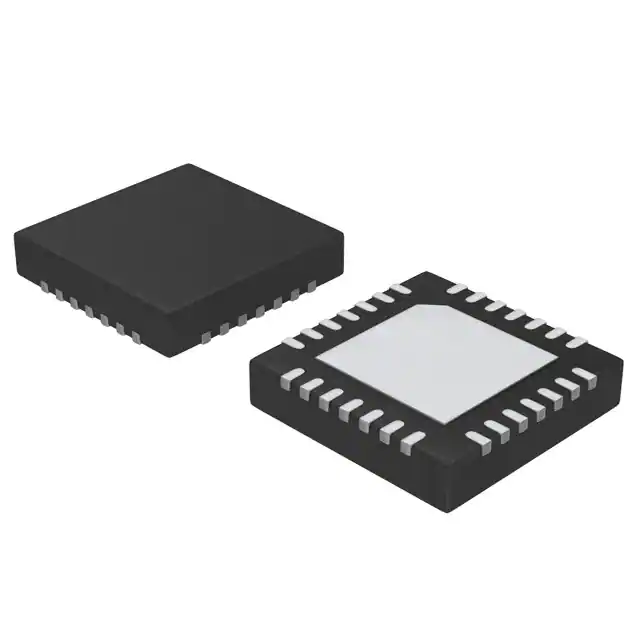
Semtech Corporation SX1279IMLTRT
- Part No.:
- SX1279IMLTRT
- Manufacturer:
- Semtech Corporation
- Category:
- RF Transceiver ICs
- Package:
- 28-VQFN Exposed Pad
- Datasheet:
-
 SX1279IMLTRT.pdf
- Description:
- IC RF TXRX 802.15.4 28QFN
- Quantity:
- Payment:

- Shipping:

Inventory:2,463
Please send an inquiry. Send us your inquiry, and we will respond immediately.
Product details
Overview
SX1279IMLTRT from Semtech is a LoRa™-capable sub-GHz RF transceiver IC designed for long-range, low-power wireless communication in 868/915 MHz ISM bands. It integrates a high-sensitivity receiver (–148 dBm at 1.2 kbps), +20 dBm programmable output power, and digital baseband for LoRa and FSK/GFSK/OOK modulation schemes. It serves as the RF front-end and packet engine in battery-powered IoT sensor nodes and smart metering endpoints.
For engineers reviewing the SX1279IMLTRT datasheet, pinout, applications, or equivalent options, this page delivers verified technical context, real-world use cases, validated alternatives, and supply-ready procurement support - all grounded in Semtech's official documentation and design specifications.
Technical Context
The SX1279IMLTRT implements a direct-conversion receiver with integrated RSSI, AFC, and automatic packet handling including preamble detection, sync word recognition, CRC validation, and flexible payload length. Its transmitter uses a fractional-N PLL with integrated VCO and supports frequency hopping under MCU control.
It operates across –40°C to +85°C, supports SPI interface (up to 10 MHz), and features ultra-low power sleep modes (200 nA) alongside integrated DC-DC converter support for efficient 1.8–3.7 V operation. The device requires external matching network and crystal oscillator (32 MHz) for full functionality.
Key Specifications
| Parameter | Value and Actual Design Meaning |
|---|---|
| Frequency Range | 862–1020 MHz - covers EU868, US915, and AS923 regional ISM bands without hardware change |
| Receiver Sensitivity | –148 dBm @ 1.2 kbps LoRa - enables >15 km outdoor range in rural deployments |
| Output Power | +20 dBm max - drives standard 50 Ω antenna directly; supports PA bypass mode for lower power |
| Modulation Support | LoRa, FSK, GFSK, OOK - allows fallback to legacy protocols during network migration or interference events |
| Supply Voltage | 1.8–3.7 V - compatible with single-cell Li-ion, Li-SOCl₂, or dual-AA battery systems |
| SPI Interface Speed | Up to 10 MHz - enables fast register access and low-latency packet processing in real-time firmware |
| Operating Temperature | –40°C to +85°C - qualified for industrial metering, agricultural sensors, and outdoor gateways |
Pinout & Package
Package: QFN-28, 4 mm × 4 mm × 0.85 mm, exposed thermal pad, RoHS-compliant, moisture sensitivity level 3.
| Pin/Terminal | Circuit Role | Design Meaning |
|---|---|---|
| 1–3, 26–28 | GND | Ground reference for analog/digital sections and thermal dissipation path via exposed pad |
| 4 | NSS | Active-low SPI chip select; must be held high when not communicating to prevent bus contention |
| 5 | SCK | SPI clock input; synchronous timing reference for register read/write operations |
| 6 | MISO | Master-in, slave-out SPI data line; carries register values and status flags to host MCU |
| 7 | MOSI | Master-out, slave-in SPI data line; delivers configuration commands and packet payloads |
| 8 | DIO0–DIO5 | Configurable interrupt outputs; signal packet RX/TX completion, timeout, or sync detection |
| 10, 11 | RFIO_HF / RFIO_LF | High-frequency and low-frequency RF I/O pins; require external matching network per band selection |
| 12 | ANT_SW | Antenna switch control; toggles internal TX/RX path for single-antenna operation |
| 13 | VDD_PA | Dedicated 3.3 V supply for power amplifier; decoupling required to maintain +20 dBm linearity |
| 14 | VDD | Main 1.8–3.7 V supply for core logic, synthesizer, and baseband; supports DC-DC input |
| 15 | XTAL | 32 MHz crystal oscillator input; requires parallel-load capacitor and stable load capacitance |
| 16 | XTAL | 32 MHz crystal oscillator output; forms resonant tank with external crystal and capacitors |
| 17 | RESET | Active-low hardware reset; initiates full register initialization and state machine reset |
| 18–21 | GPIO | General-purpose I/Os; configurable as inputs/outputs for system-level control or status monitoring |
| 22 | VBAT | Battery voltage monitor input; enables low-battery warning without external ADC |
| 23 | DCDC_EN | DC-DC converter enable; activates internal regulator when VDD < 2.5 V for improved efficiency |
| 24 | ANT_SW_CTRL | Secondary antenna switch control; used with external RF switch for diversity or multi-band setups |
| 25 | NC | No connect - must be left floating or tied to GND per layout guidelines; no internal connection |
Key Features
| Feature | Design Value |
|---|---|
| LoRa Modem Engine | Fully integrated baseband processor handles spreading factor, coding rate, and implicit/explicit header modes - offloads MCU and ensures interoperability with LoRaWAN® Class A/C devices |
| Automatic RF Calibration | On-chip RC oscillator and calibration sequence adjust PLL, VCO, and ADC offsets at startup - eliminates manual tuning and improves batch yield |
| Programmable Packet Engine | Hardware-accelerated CRC, whitening, address filtering, and variable-length payload handling - reduces firmware overhead and latency in mesh or star networks |
| Ultra-Low-Power Sleep Mode | 200 nA current draw with wake-on-RX and timer interrupt - extends 10-year battery life in NB-IoT-class sensor deployments |
| Integrated DC-DC Converter Support | Enables direct connection to single Li-SOCl₂ cell (3.6 V) while maintaining 1.8 V core voltage - simplifies power architecture and reduces BOM count |
Applications
| Smart Utility Metering | Asset Tracking |
|---|---|
|
Use Scenario: Wireless transmission of gas/water/electricity consumption data from residential meters to neighborhood concentrators every 15 minutes. IC Role / Device Role / Timing Role: SX1279IMLTRT acts as the primary RF transceiver, managing LoRa packet assembly, channel agility, and adaptive data rate (ADR) negotiation with gateway. Use Value: –148 dBm sensitivity ensures reliable reception in basement-installed meters with concrete attenuation; +20 dBm output overcomes building penetration loss up to 30 dB. |
Use Scenario: GPS-enabled cargo trackers reporting location every 2 hours using geofence-triggered wake-up in logistics fleets. IC Role / Device Role / Timing Role: SX1279IMLTRT provides low-duty-cycle, burst-mode transmission of encrypted position packets via LoRaWAN® Class C downlink capability. Use Value: 200 nA sleep current enables 7+ years of operation on a single CR123A battery; DIO interrupts synchronize GPS acquisition with RF transmit windows. |
| Environmental Sensor Networks | Industrial Predictive Maintenance |
|
Use Scenario: Soil moisture, temperature, and humidity sensors deployed across 10 km² farmland, transmitting aggregated readings daily. IC Role / Device Role / Timing Role: SX1279IMLTRT executes autonomous LoRa transmission using programmable timers and RSSI-based channel selection before each send. Use Value: Adaptive data rate and dynamic spreading factor adjustment extend link budget by 6–8 dB in foliage-rich environments versus fixed-SF solutions. |
Use Scenario: Vibration and temperature sensors on rotating machinery in factory settings, sending FFT-coefficient summaries hourly. IC Role / Device Role / Timing Role: SX1279IMLTRT interfaces with external ADC and DSP via SPI, then transmits compressed spectral data using FSK for deterministic latency. Use Value: Dual modulation support enables FSK for time-critical diagnostics and LoRa for background firmware updates - one IC serves two protocol layers. |
Equivalent & Alternatives
The following parts are listed as comparable options for similar sub-GHz RF transceiver applications.
| Alternative Part | Technical Difference | Application Difference | Selection Advice |
|---|---|---|---|
| SX1276IMLTRT | Wider frequency range (137–1020 MHz); identical LoRa/FSK feature set but lacks +20 dBm PA - max output +17 dBm | Better suited for multi-region deployments requiring 433 MHz support; less suitable for long-range 915 MHz links needing full +20 dBm | Select SX1276IMLTRT only if 433 MHz band support is mandatory and range requirements allow ≤12 km |
| LLCC68IMLTRT | Newer generation with integrated DC-DC, lower RX current (4.2 mA vs 9.9 mA), and higher LoRa sensitivity (–149 dBm), but no OOK support | Optimized for ultra-low-power continuous listening (Class B/C); incompatible with legacy OOK-based infrastructure | Choose LLCC68IMLTRT for new designs prioritizing battery life and future-proof LoRaWAN® 1.1 compliance - not for OOK fallback or existing OOK systems |
Compared with SX1276IMLTRT and LLCC68IMLTRT, the SX1279IMLTRT uniquely balances +20 dBm output, OOK compatibility, and proven field reliability in utility metering - making it the preferred choice where regulatory OOK coexistence or maximum link budget in 868/915 MHz is non-negotiable.
Availability
SX1279IMLTRT is available at Aetrix Electronics and suitable for smart metering, asset tracking, environmental sensing, and industrial predictive maintenance applications requiring stable component supply across multi-year production cycles.
Supply support for SX1279IMLTRT includes scheduled delivery planning, volume procurement assistance, BOM continuity management, traceable sourcing, and lifecycle availability coordination for OEM customers, industrial embedded developers, connected-device designers, and electronics production programs.
Manufacturer
Semtech Corporation is a U.S.-based fabless semiconductor company specializing in analog and mixed-signal ICs for precision sensing, power management, and wireless communications.
The SX1279IMLTRT belongs to Semtech's LoRa Core™ transceiver product line, engineered specifically for long-range, low-power IoT connectivity in licensed and unlicensed sub-GHz spectrum - with emphasis on utility, agriculture, and industrial telemetry.
FAQ
What is the maximum LoRa data rate supported by the SX1279IMLTRT?
The SX1279IMLTRT supports LoRa data rates from 250 bps to 22 kbps depending on spreading factor (SF7–SF12), bandwidth (7.8–500 kHz), and coding rate (4/5–4/8). At SF7 and 125 kHz bandwidth, the maximum achievable rate is 22 kbps - sufficient for firmware updates and high-throughput sensor fusion in gateway-relayed networks. This rate is confirmed in Semtech's SX1279 datasheet Rev 3.1, Section 7.2.
Does the SX1279IMLTRT include an integrated DC-DC converter?
No, the SX1279IMLTRT does not integrate a DC-DC converter. It supports external DC-DC input via the VDD pin and includes a DCDC_EN pin to enable/disable an external regulator, but the conversion circuitry itself resides outside the IC. This differs from later-generation parts like LLCC68IMLTRT. The SX1279IMLTRT datasheet explicitly states "external DC-DC converter required for VDD regulation" in Section 6.1.
Can the SX1279IMLTRT operate in both LoRa and FSK modes simultaneously?
No, the SX1279IMLTRT cannot operate LoRa and FSK simultaneously. It supports either LoRa or FSK/GFSK/OOK modulation in a given configuration, requiring full reinitialization of registers and RF synthesizer to switch modes. This is enforced by separate register maps and distinct state machine paths - confirmed in the SX1279IMLTRT datasheet Section 4.3 and AN12014 application note.
What is the recommended crystal specification for the SX1279IMLTRT?
The SX1279IMLTRT requires a 32 MHz fundamental-mode crystal with ±10 ppm stability, 12 pF load capacitance, and ESR ≤ 40 Ω. Semtech recommends part numbers such as ECS-320-12-30B or Abracon ABM3B-32.000MHZ-D2Y-T for optimal start-up time and frequency accuracy across temperature - details are specified in Section 8.2 of the SX1279IMLTRT datasheet Rev 3.1.
Is the SX1279IMLTRT pin-compatible with the SX1276IMLTRT?
Yes, the SX1279IMLTRT is pin-compatible with the SX1276IMLTRT in the QFN-28 package: identical pin numbering, function mapping, and footprint. However, differences in internal PA structure mean VDD_PA and matching network design must be verified per datasheet - Semtech confirms mechanical and logical pin compatibility in AN12002, though electrical validation is required for +20 dBm operation.
SX1279IMLTRT Specifications
- Product attributes
- Attribute value
- Manufacturer:
- Semtech Corporation
- Series:
- LoRa™
- Package/Case:
- 28-VQFN Exposed Pad
- Packaging:
- Tape & Reel (TR)
- Product Status:
- Active
- Programmable:
- Not Verified
- Type:
- TxRx Only
- RF Family/Standard:
- 802.15.4
- Protocol:
- LoRa™
- Modulation:
- FSK, GFSK, GMSK, MSK, OOK
- Frequency:
- 137MHz ~ 1.02GHz
- Data Rate (Max):
- 300kbps
- Power - Output:
- 20dBm
- Sensitivity:
- -148dBm
- Memory Size:
- -
- Serial Interfaces:
- SPI
- GPIO:
- -
- Voltage - Supply:
- 1.8V ~ 3.7V
- Current - Receiving:
- 9.9mA ~ 13.8mA
- Current - Transmitting:
- 20mA ~ 28mA
- Operating Temperature:
- -40°C ~ 85°C
- Grade:
- -
- Qualification:
- -
- Supplier Device Package:
- 28-QFN (6x6)
SX1279IMLTRT FAQ
1.How can I place an order for SX1279IMLTRT through Aetrix?
Please submit a Request for Quotation (RFQ) for SX1279IMLTRT on Aetrix. Our sales agent will provide a competitive quotation and guide you through the order confirmation once you accept the terms.
2.Are the price and stock information for SX1279IMLTRT reliable?
The price and inventory of SX1279IMLTRT are updated periodically and may fluctuate due to market conditions. Stock and pricing data are typically refreshed every 24 hours. Quotation validity for SX1279IMLTRT is usually 5 days.
3.What payment methods are accepted for SX1279IMLTRT?
We accept Wire Transfer, PayPal, Credit Card, Western Union, MoneyGram, and Escrow for SX1279IMLTRT transactions.
Note: Certain payment methods may incur a processing fee.
4.How is shipping managed for SX1279IMLTRT?
SX1279IMLTRT orders can be shipped via leading logistics carriers, including DHL, UPS, FedEx, TNT, or Registered Mail.
Once your SX1279IMLTRT order is processed, you will receive an email with the shipment details and tracking number.
Note: Tracking information may take up to 24 hours to appear. Express delivery typically takes 3–5 business days.
5.How can I obtain technical support or documentation for SX1279IMLTRT?
For technical support, including SX1279IMLTRT datasheets, pinout diagrams, or application guidance, please contact our engineering support team. They can provide detailed documentation and assistance for your SX1279IMLTRT requirements.
6.How does Aetrix verify that SX1279IMLTRT is sourced from the original manufacturer or authorized distributors?
All SX1279IMLTRT products on Aetrix are procured from qualified distributors and authorized channels. Our dedicated quality assurance team conducts strict verification, including traceability checks and, if necessary, third-party testing. This ensures that SX1279IMLTRT meets industry standards.
7.What is the process for return or replacement of SX1279IMLTRT?
All SX1279IMLTRT units undergo pre-shipment inspection (PSI). If there is an issue with SX1279IMLTRT, returns or replacements are accepted under the following conditions:
1.Quantity discrepancies, incorrect items, or visible external defects (such as breakage or corrosion), acknowledged by Aetrix.
2.The issue is reported within 90 days of delivery.
3.The SX1279IMLTRT part is unused and in its original packaging.
Return procedure for SX1279IMLTRT:
1.Submit a request within 90 days.
2.Obtain a Return Material Authorization (RMA) from Aetrix.
SX1279IMLTRT Tags
-
ESP32-D0WD-V3
Espressif Systems
-
ESP8266EX
Espressif Systems

-
ESP32-S3
Espressif Systems
-
NRF24L01P-R7
Nordic Semiconductor ASA
-
NRF24L01P-R
Nordic Semiconductor ASA
-
ESP32-U4WDH
Espressif Systems
-
DA14531-00000OG2
Renesas
-
ESP32-C6FH4
Espressif Systems
-
DA14531-00000FX2
Renesas
-
NRF24L01P-T
Nordic Semiconductor ASA
-
NRF52810-QCAA-R
Nordic Semiconductor ASA
-
ESP32-S3FN8
Espressif Systems
Tech Hub

A practical engineering and sourcing framework covering lifecycle verification, lifetime-buy calculations, replacement qualification, supplier checks and counterfeit-risk controls.

TTL and CMOS logic families differ in thresholds, loading, output drive, power and timing. This engineering guide compares 74HC and 74HCT, calculates noise margins and checks 3.3 V/5 V compatibility.

A practical engineering guide to 3.3V and 5V logic compatibility, input thresholds, resistor dividers, translator ICs, MOSFET level shifting, I2C pull-ups, timing limits and power-sequencing risks.

The 74HC595 uses push-pull logic outputs, while the TPIC6B595 uses 50 V open-drain DMOS sinks for higher-power loads. This guide compares timing, current limits, 3.3 V interfacing, load wiring, thermal…

The 74HC595 converts serial data into eight stable parallel outputs. This guide covers pin functions, shift and storage timing, OE and MR behavior, drive-current limits, cascading, voltage compatibilit…

A technical comparison of level-sensitive latches and edge-triggered flip-flops, covering timing windows, setup and hold limits, master–slave operation, time borrowing, race-through, HDL inference and…

A D latch stores one bit while Enable controls when data can pass. This reference covers gate-level operation, truth tables, transparency, setup and hold timing, LE versus OE, common ICs and practical …

An SR latch stores one bit through cross-coupled feedback. This engineering reference covers NOR and NAND implementations, truth tables, forbidden-state recovery, gated operation, switch debouncing, fa…

Latch circuits retain one bit through feedback. This technical reference covers SR and D latches, truth tables, transparency, timing limits, latch-versus-flip-flop behavior, applications and common log…

An engineering guide to LED driver operation, constant-current and constant-voltage outputs, linear and switching topologies, dimming, IC selection, calculations, replacement compatibility, and fault c…


