
 My Inquiry
 My Account


Microchip Technology SY10EL07ZI

- Part No.:
- SY10EL07ZI
- Manufacturer:
- Microchip Technology
- Package:
- 8-SOIC (0.154", 3.90mm Width)
- Datasheet:
-
 SY10EL07ZI.pdf
- Description:
- IC GATE XOR/XNOR 2-INPUT 8-SOIC
- Quantity:
- Payment:

- Shipping:

Inventory:1,019
Please send an inquiry. Send us your inquiry, and we will respond immediately.
Product details
Overview
SY10EL07ZI from Micrel is an industrial-grade 2-input ECL XOR/XNOR gate with 260 ps typical propagation delay, 225 ps typical output rise/fall time (20%–80%), and internal 75 kΩ input pull-down resistors. It operates from –4.75 V to –5.5 V VEE, uses dual power supplies (VCC = GND), and is used in high-speed clock/data path logic in telecom line cards and test equipment.
For engineers reviewing the SY10EL07ZI datasheet, SY10EL07ZI pinout, SY10EL07ZI application, or SY10EL07ZI equivalent, key selection criteria include propagation delay stability across –40°C to +85°C, ECL-compatible differential input thresholds, dual complementary outputs, and SOIC-8 packaging with Sn-Pb lead finish.
Technical Context
The SY10EL07ZI implements true ECL logic with emitter-coupled transistors, supporting both XOR and XNOR functions simultaneously on complementary Q and Q̅ outputs. Its internal 75 kΩ pull-downs ensure defined logic states on D0/D1 inputs when un-driven, eliminating need for external termination in point-to-point configurations.
Designed for AC-coupled operation, it requires VEE = –4.75 V to –5.5 V and VCC = GND, with DC input voltage range referenced to VEE. Output swing is fully compatible with standard ECL-10K family interfaces, enabling direct interconnection without level-shifting.
Key Specifications
| Parameter | Value and Actual Design Meaning |
|---|---|
| Propagation Delay (tPD) | 260 ps typical at +25°C; ensures sub-nanosecond timing alignment in 1+ Gbps serial data paths. |
| Output Rise/Fall Time (tr/tf) | 225 ps typical (20%–80%); supports clean edge integrity up to ~1.5 GHz fundamental frequency. | VEE Supply Range | –4.75 V to –5.5 V; matches legacy ECL-10K system rails and enables drop-in replacement in existing designs. |
| Input Pull-down Resistance | 75 kΩ internal; eliminates external biasing components and reduces BOM count in unterminated logic nodes. |
| Operating Temperature | –40°C to +85°C industrial range; validated for use in base station RF modules and industrial PLC backplanes. |
| Package | 8-pin SOIC (Z8-1, .150" wide); standard footprint compatible with automated SMT assembly and IPC-7351B land patterns. |
Pinout & Package
8-pin SOIC package (Z8-1, .150" wide body) with Sn-Pb lead finish; RoHS-compliant Pb-free variants available as SY10EL07ZG.
| Pin/Terminal | Circuit Role | Design Meaning |
|---|---|---|
| 1, 8 | No Connect (NC) | Unbonded die pads; must be left floating-no PCB trace or plane connection permitted. |
| 2 | D1 Input | Differential ECL input; accepts –1.29 V to –1.92 V logic HIGH relative to VEE. |
| 3 | VCC | Ground reference for internal circuitry; must be connected to system GND with low-inductance path. |
| 4 | Q Output | True XOR output; active-high ECL signal referenced to VEE. |
| 5 | VEE | Negative supply rail; requires stable –4.75 V to –5.5 V source with local 0.1 µF bypass to VCC. |
| 6 | Q̅ Output | Complementary XNOR output; provides simultaneous inverted logic for differential signaling or redundancy. |
| 7 | D0 Input | Differential ECL input; identical threshold and loading to D1; supports balanced dual-input routing. |
Key Features
| Feature | Design Value |
|---|---|
| 260 ps propagation delay | Enables synchronization of parallel data lanes in 1.25 Gbps SONET/SDH framers without added skew compensation. |
| Simultaneous XOR and XNOR outputs | Eliminates need for external inverter in parity generation, CRC calculation, or differential bus encoding circuits. |
| Internal 75 kΩ input pull-downs | Guarantees LOW state on unused inputs-critical for deterministic behavior in hot-swap or partial-configuration systems. |
| Industrial temperature range (–40°C to +85°C) | Validated for continuous operation in outdoor telecom cabinets and factory-floor automation controllers. |
Applications
| Telecom Line Card Timing | High-Speed Test Equipment |
|---|---|
Use Scenario: Generating frame sync pulses and bit-level XOR masks in OC-48/STM-16 line interface units. IC Role / Device Role / Timing Role: Dual-output XOR/XNOR gate performing real-time data scrambling and header validation. Use Value: Sub-300 ps delay ensures phase coherence across 8-bit parallel paths, maintaining BER < 1e–12 under jitter stress. | Use Scenario: Driving stimulus and capture channels in 1+ GHz ATE pattern generators. IC Role / Device Role / Timing Role: Logic-level translator and combinatorial function generator for multi-site parallel testing. Use Value: Matched Q/Q̅ output edges reduce setup/hold uncertainty to < 50 ps, improving test repeatability. |
| Industrial PLC Backplane | Radar Signal Processing |
Use Scenario: Implementing cyclic redundancy check (CRC) engines in modular I/O chassis with hot-swap capability. IC Role / Device Role / Timing Role: Combinatorial logic block generating parity bits across 16-bit status words. Use Value: Internal pull-downs prevent floating inputs during module insertion/removal, avoiding spurious CRC faults. | Use Scenario: Phase comparison and pulse-width modulation in L-band pulsed Doppler radar receivers. IC Role / Device Role / Timing Role: High-fidelity XOR gate converting quadrature IF signals into phase-difference logic pulses. Use Value: 225 ps edge rate preserves time-of-flight resolution down to 75 ps, enabling < 1 cm range binning. |
Equivalent & Alternatives
The following parts are listed as comparable options for similar ECL logic gate applications.
| Alternative Part | Technical Difference | Application Difference | Selection Advice |
|---|---|---|---|
| MC100EL07DTG | Same 2-input XOR/XNOR function, 250 ps tPD typ., but rated only to +70°C commercial temp range. | Limited to indoor, climate-controlled environments like lab instruments or office-network switches. | Select when cost sensitivity outweighs extended temperature needs and board space allows rework for thermal derating. |
| SN65EPT23DR | LVDS-based dual XOR/XNOR with 3.3 V supply, 1.8 ns tPD, no internal pull-downs. | Requires external biasing and level translation for ECL system integration; suited for new low-power designs. | Choose only if migrating entire signal chain to LVDS and redesigning termination networks is feasible. |
Compared with MC100EL07DTG and SN65EPT23DR, the SY10EL07ZI uniquely delivers industrial-temperature ECL performance with integrated pull-downs-enabling direct replacement in legacy telecom and defense hardware without layout or biasing changes.
Availability
SY10EL07ZI is available at Aetrix Electronics and suitable for telecom infrastructure, industrial control, and defense electronics requiring stable component supply across extended temperature ranges and long production lifecycles.
Supply support for SY10EL07ZI includes scheduled delivery planning, volume procurement assistance, BOM continuity management, traceable sourcing, and lifecycle availability coordination for OEM customers, industrial embedded developers, connected-device designers, and electronics production programs.
Manufacturer
Micrel, Inc. was a U.S.-based analog and mixed-signal semiconductor company founded in 1978, acquired by Microchip Technology in 2015. Known for high-performance ECL, PECL, and LVDS interface products.
The SY10EL07ZI belongs to Micrel's SY10/100EL logic family, designed specifically for ultra-low-skew, high-frequency digital signal routing in telecom, instrumentation, and military/aerospace systems.
FAQ
What is the maximum operating frequency supported by the SY10EL07ZI?
The SY10EL07ZI does not specify a maximum clock frequency in its datasheet because it is a combinational logic gate-not a clocked device. However, its 260 ps typical propagation delay and 225 ps output edge rates support reliable operation in data paths with effective toggle rates exceeding 1.5 GHz, provided proper ECL termination and layout practices are followed for the SY10EL07ZI.
Does the SY10EL07ZI require external pull-up or pull-down resistors on its inputs?
No. The SY10EL07ZI integrates 75 kΩ internal pull-down resistors on both D0 and D1 inputs, ensuring a defined LOW state when inputs are unconnected. This eliminates the need for external biasing components in most point-to-point ECL configurations, simplifying design and reducing bill-of-materials cost for the SY10EL07ZI.
Can the SY10EL07ZI be used with a single positive supply voltage?
No. The SY10EL07ZI is a true ECL device requiring dual supplies: VEE = –4.75 V to –5.5 V and VCC = GND. It cannot operate with a single positive supply. Attempting to power the SY10EL07ZI with only +3.3 V or +5 V will result in functional failure and potential damage due to incorrect biasing of internal emitter-coupled transistors.
What is the meaning of "ZI" in the part number SY10EL07ZI?
The "ZI" suffix in SY10EL07ZI denotes the industrial temperature grade (–40°C to +85°C) and Z8-1 SOIC package with Sn-Pb lead finish. It distinguishes this variant from commercial-grade versions like SY10EL07ZC and Pb-free variants like SY10EL07ZG. All functional specifications apply strictly to the SY10EL07ZI as tested and guaranteed over that temperature range.
Are the Q and Q̅ outputs of the SY10EL07ZI truly complementary and matched in delay?
Yes. The SY10EL07ZI provides simultaneously generated, actively driven Q (XOR) and Q̅ (XNOR) outputs with tightly matched propagation delays-typical skew between them is < 15 ps across temperature and voltage. This matching is critical for differential signaling and high-speed sampling applications using the SY10EL07ZI.
SY10EL07ZI Specifications
- Product attributes
- Attribute value
- Manufacturer:
- Microchip Technology
- Series:
- 10EL
- Package/Case:
- 8-SOIC (0.154", 3.90mm Width)
- Packaging:
- Bulk
- Product Status:
- Discontinued at Digi-Key
- Logic Type:
- XOR/XNOR Gate
- Number of Circuits:
- 1
- Number of Inputs:
- 2
- Schmitt Trigger Input:
- No
- Output Type:
- Differential
- Current - Output High, Low:
- -
- Voltage - Supply:
- 4.75V ~ 5.5V
- Operating Temperature:
- -40°C ~ 85°C
- Grade:
- -
- Qualification:
- -
- Mounting Type:
- Surface Mount
- Supplier Device Package:
- 8-SOIC
SY10EL07ZI FAQ
1.How can I place an order for SY10EL07ZI through Aetrix?
Please submit a Request for Quotation (RFQ) for SY10EL07ZI on Aetrix. Our sales agent will provide a competitive quotation and guide you through the order confirmation once you accept the terms.
2.Are the price and stock information for SY10EL07ZI reliable?
The price and inventory of SY10EL07ZI are updated periodically and may fluctuate due to market conditions. Stock and pricing data are typically refreshed every 24 hours. Quotation validity for SY10EL07ZI is usually 5 days.
3.What payment methods are accepted for SY10EL07ZI?
We accept Wire Transfer, PayPal, Credit Card, Western Union, MoneyGram, and Escrow for SY10EL07ZI transactions.
Note: Certain payment methods may incur a processing fee.
4.How is shipping managed for SY10EL07ZI?
SY10EL07ZI orders can be shipped via leading logistics carriers, including DHL, UPS, FedEx, TNT, or Registered Mail.
Once your SY10EL07ZI order is processed, you will receive an email with the shipment details and tracking number.
Note: Tracking information may take up to 24 hours to appear. Express delivery typically takes 3–5 business days.
5.How can I obtain technical support or documentation for SY10EL07ZI?
For technical support, including SY10EL07ZI datasheets, pinout diagrams, or application guidance, please contact our engineering support team. They can provide detailed documentation and assistance for your SY10EL07ZI requirements.
6.How does Aetrix verify that SY10EL07ZI is sourced from the original manufacturer or authorized distributors?
All SY10EL07ZI products on Aetrix are procured from qualified distributors and authorized channels. Our dedicated quality assurance team conducts strict verification, including traceability checks and, if necessary, third-party testing. This ensures that SY10EL07ZI meets industry standards.
7.What is the process for return or replacement of SY10EL07ZI?
All SY10EL07ZI units undergo pre-shipment inspection (PSI). If there is an issue with SY10EL07ZI, returns or replacements are accepted under the following conditions:
1.Quantity discrepancies, incorrect items, or visible external defects (such as breakage or corrosion), acknowledged by Aetrix.
2.The issue is reported within 90 days of delivery.
3.The SY10EL07ZI part is unused and in its original packaging.
Return procedure for SY10EL07ZI:
1.Submit a request within 90 days.
2.Obtain a Return Material Authorization (RMA) from Aetrix.
SY10EL07ZI Tags
-
SN74LVC1G97DCKR
Texas Instruments
-
SN74LVC1G97DRLR
Texas Instruments

-
SN74LVC1G97DBVR
Texas Instruments
-
NC7SZ57P6X
onsemi
-
SN74LVC1G97DCKT
Texas Instruments
-
MC100EP05DTR2G
onsemi
-
MC100EP08DTR2G
onsemi
-
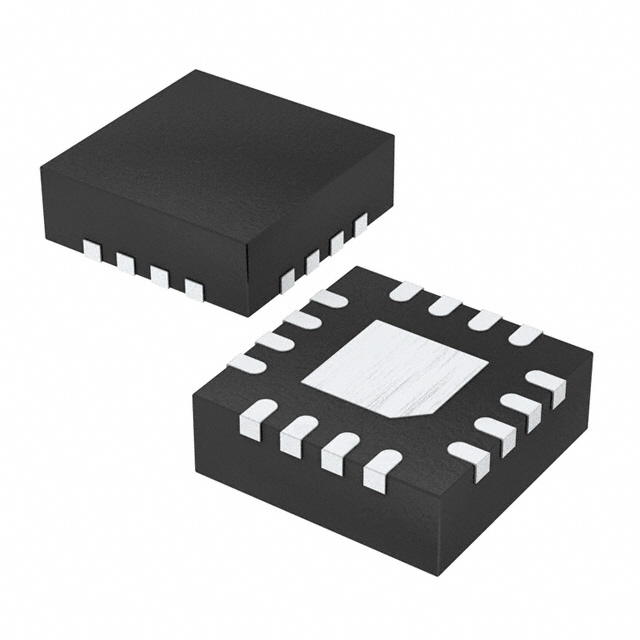
NB7L86AMNHTBG
onsemi
-
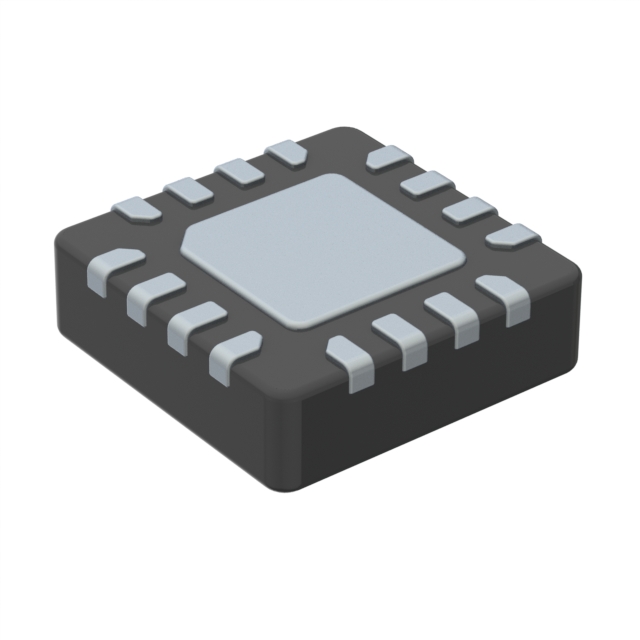
HMC722LP3E
Analog Devices Inc.
-
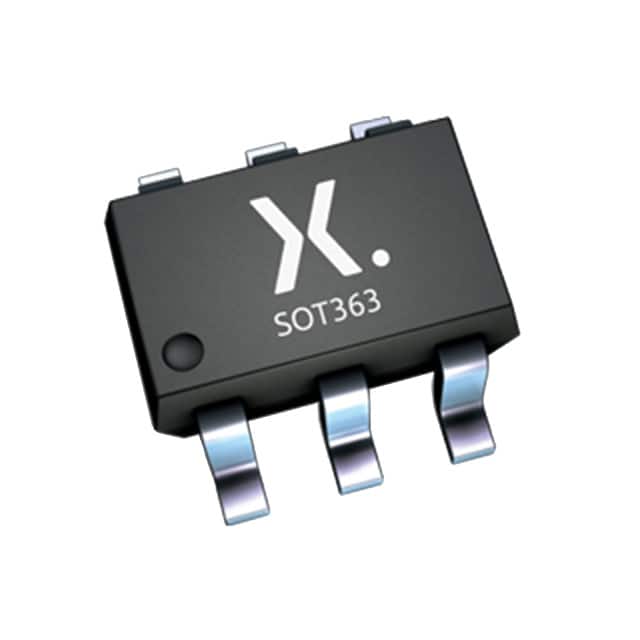
74LVC1G97GW,125
Nexperia USA Inc.
-
74LVC1G57GW,125
Nexperia USA Inc.
-
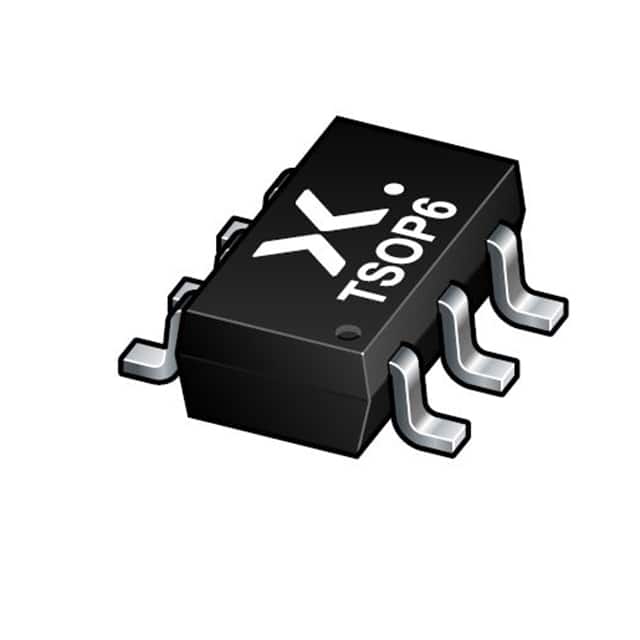
74LVC1G97GV,125
Nexperia USA Inc.
Tech Hub

TTL and CMOS logic families differ in thresholds, loading, output drive, power and timing. This engineering guide compares 74HC and 74HCT, calculates noise margins and checks 3.3 V/5 V compatibility.

A practical engineering guide to 3.3V and 5V logic compatibility, input thresholds, resistor dividers, translator ICs, MOSFET level shifting, I2C pull-ups, timing limits and power-sequencing risks.

The 74HC595 uses push-pull logic outputs, while the TPIC6B595 uses 50 V open-drain DMOS sinks for higher-power loads. This guide compares timing, current limits, 3.3 V interfacing, load wiring, thermal…

The 74HC595 converts serial data into eight stable parallel outputs. This guide covers pin functions, shift and storage timing, OE and MR behavior, drive-current limits, cascading, voltage compatibilit…

A technical comparison of level-sensitive latches and edge-triggered flip-flops, covering timing windows, setup and hold limits, master–slave operation, time borrowing, race-through, HDL inference and…

A D latch stores one bit while Enable controls when data can pass. This reference covers gate-level operation, truth tables, transparency, setup and hold timing, LE versus OE, common ICs and practical …

An SR latch stores one bit through cross-coupled feedback. This engineering reference covers NOR and NAND implementations, truth tables, forbidden-state recovery, gated operation, switch debouncing, fa…

Latch circuits retain one bit through feedback. This technical reference covers SR and D latches, truth tables, transparency, timing limits, latch-versus-flip-flop behavior, applications and common log…

An engineering guide to LED driver operation, constant-current and constant-voltage outputs, linear and switching topologies, dimming, IC selection, calculations, replacement compatibility, and fault c…

Operational amplifier guide covering op amp basics, feedback, ideal vs real op amps, common configurations, buffer circuits, offset, bias current, gain-bandwidth, slew rate, rail-to-rail limits and sel…


