
 My Inquiry
 My Account


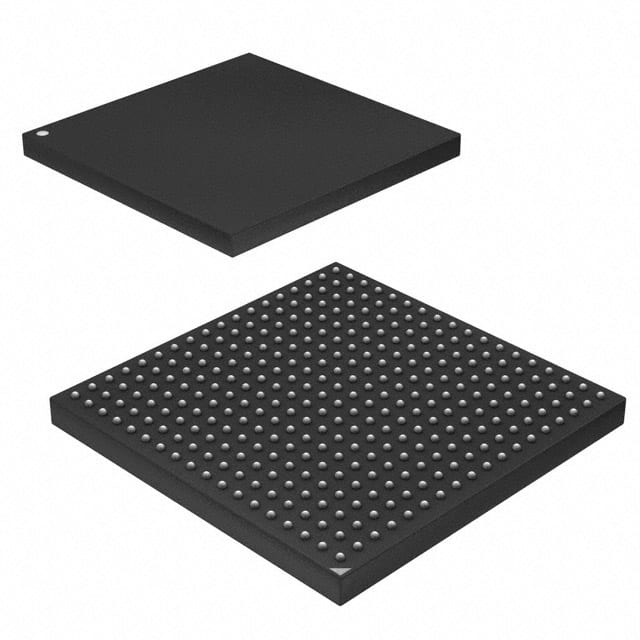
NXP Semiconductors T1013NXN7KQA

- Part No.:
- T1013NXN7KQA
- Manufacturer:
- NXP Semiconductors
- Category:
- Microprocessors
- Package:
- 525-FBGA, FCBGA
- Datasheet:
-
 T1013NXN7KQA.pdf
- Description:
- IC MPU QORIQ T1 1GHZ 525FCPBGA
- Quantity:
- Payment:

- Shipping:

Inventory:4,113
Please send an inquiry. Send us your inquiry, and we will respond immediately.
Product details
Overview
T1013NXN7KQA from NXP Semiconductors is a dual-core 64-bit Power Architecture® communications processor with e5500 cores clocked up to 1.4 GHz, integrated DPAA acceleration, SEC 5.x crypto engine, and support for DDR3L/DDR4 memory at 1600 MT/s - deployed in wired/wireless branch routers and enterprise WLAN access points.
For engineers reviewing the T1013NXN7KQA datasheet, T1013NXN7KQA pinout, T1013NXN7KQA application, or T1013NXN7KQA equivalent, key selection factors include its 23 × 23 mm FCBGA package, 4-lane 10 Gb/s SerDes, 4× GbE MACs with MACSEC, PCIe 2.0 ×3, and hardware-accelerated packet parsing/classification for edge networking control planes.
Technical Context
The T1013NXN7KQA implements two e5500 64-bit cores with per-core 32 KB I-cache and D-cache, 256 KB backside L2 cache, and 256 KB shared platform cache. It integrates CoreNet Coherency Fabric, QMAN-based queue management, and PAMU for memory-mapped peripheral access control.
Its Data Path Acceleration Architecture (DPAA) provides dedicated hardware offload for CAPWAP/DTLS, full L2/L3 tunneling, packet parsing, classification, distribution, and SEC 5.x cryptographic operations - all coordinated via the QorIQ trust architecture including secure boot and tamper detection.
Key Specifications
| Parameter | Value and Actual Design Meaning |
|---|---|
| Core Architecture | Dual e5500 64-bit Power Architecture cores, supporting hybrid 32-bit mode for legacy software compatibility |
| Max Clock Frequency | 1.4 GHz - enables real-time packet processing at line rate for 1 GbE and 10 GbE uplinks |
| Memory Interface | 64-bit DDR3L/DDR4 controller with ECC, up to 1600 MT/s - supports high-bandwidth, fault-tolerant system memory |
| Accelerators | DPAA with QMAN, BMAN, SEC 5.x, and pattern-aware parsing - reduces host CPU load for security and forwarding tasks |
| Networking Peripherals | 4× 1 GbE MACs with MACSEC, 1× 10 GbE interface, 4-lane SerDes supporting SGMII/QSGMII/XFI/PCIe/SATA |
| Expansion Interfaces | 3× PCIe 2.0 controllers, 2× USB 2.0 with PHY, SATA 2.0, SDXC/eMMC, QUICC Engine for TDM/HDLC/ISDN |
Pinout & Package
Package: 23 mm × 23 mm Fine-Pitch Ball Grid Array (FCBGA) with 621 balls, RoHS-compliant, thermal lid option available.
| Pin/Terminal | Circuit Role | Design Meaning |
|---|---|---|
| A1–A10, B1–B10, etc. | Ball grid array (BGA) signal/power/ground terminals | No discrete pins; 621-ball FCBGA layout optimized for DDR3L/4 routing, SerDes channel isolation, and thermal dissipation |
| VDD_DDR, VDD_CORE, VDD_IO | Power supply domains | Separate regulated rails for DDR interface (1.35 V), core logic (0.9–1.1 V), and I/O (1.5/1.8/2.5/3.3 V) |
| CLK_IN, REF_CLK | Reference clock inputs | Single 100 MHz differential clock source supports full SoC synchronization and BOM cost reduction |
| MDIO, MDC | Management Data Input/Output | IEEE 802.3-compliant interface for configuring and monitoring Ethernet PHYs |
Key Features
| Feature | Design Value |
|---|---|
| DPAA Hardware Offload | Reduces host CPU utilization by >70% for CAPWAP, DTLS, and L2/L3 tunneling in WLAN controller applications |
| SEC 5.x Cryptographic Engine | Accelerates AES-128/256, SHA-256, RSA-2048, and HMAC operations - enables wire-speed IPsec/WPA3 without software overhead |
| QUICC Engine Module | Offloads legacy TDM, HDLC, and ISDN protocol handling - preserves CPU cycles for modern control-plane functions |
| Lossless Deep Sleep Mode | Enables sub-100 mW standby power while retaining DDR state and fast wake-up - critical for fanless industrial edge devices |
| QorIQ Trust Architecture | Provides secure boot chain, volatile key storage, and tamper-detection circuitry - meets IEC 62443-3-3 SL2 requirements |
Applications
| Wired Branch Router Control | Enterprise WLAN Access Point |
|---|---|
Use Scenario: Centralized control plane for multi-WAN failover, QoS policy enforcement, and dynamic routing in SMB branch offices. IC Role / Device Role / Timing Role: Main SoC executing Linux-based routing stack with hardware-accelerated packet classification and crypto offload. Use Value: Enables deterministic 100 µs interrupt latency and sustained 2.5 Gbps forwarding throughput using DPAA and SEC 5.x. | Use Scenario: High-density 802.11ac AP managing 128+ concurrent clients with WPA3-Enterprise and CAPWAP tunnel termination. IC Role / Device Role / Timing Role: Dual-core application processor running VortiQa AIS and open network switch software with real-time packet parsing. Use Value: Delivers 99.999% uptime via lossless deep sleep and hardware-enforced secure boot for remote deployments. |
| Unified Threat Management Gateway | Industrial Single-Board Computer |
Use Scenario: Embedded firewall appliance performing deep packet inspection, TLS decryption, and intrusion prevention at 1 Gbps line rate. IC Role / Device Role / Timing Role: Host processor for Snort/Suricata with DPAA-accelerated flow classification and SEC 5.x TLS offload. Use Value: Achieves 1.2 Gbps IPS throughput with <500 µs added latency per packet using hardware buffer management and QMAN scheduling. | Use Scenario: Ruggedized SBC for factory-floor PLC communication gateways requiring long-term availability and EMI resilience. IC Role / Device Role / Timing Role: Deterministic control SoC with QUICC Engine handling Modbus/TCP and HDLC over RS-485. Use Value: Supports -40°C to +85°C operation with single-clock-source design and ECC-protected DDR3L memory. |
Equivalent & Alternatives
The following parts are listed as comparable options for similar communications processor applications.
| Alternative Part | Technical Difference | Application Difference | Selection Advice |
|---|---|---|---|
| T1023NXN7KQA | Dual-core variant with identical package, pinout, and feature set but rated for 1.4 GHz across full temperature range | Preferred for extended temperature (-40°C to +105°C) industrial deployments requiring guaranteed max frequency | Select T1023NXN7KQA when operating above 85°C ambient or requiring full-speed validation over full temp range |
| T1014NXN7KQA | Lacks CoreNet Coherency Fabric, Security Fuse Processor, and Security Monitor; includes 16-bit IFC instead of 32-bit | Suitable for cost-sensitive control-plane-only designs without coherency or advanced trust features | Choose T1014NXN7KQA only if DPAA, SEC 5.x, and secure boot are not required - no pin-to-pin replacement |
Compared with T1023NXN7KQA, the T1013NXN7KQA offers identical functionality at a lower thermal envelope for commercial-temperature edge routing; versus T1014NXN7KQA, it delivers full QorIQ trust architecture and coherent interconnect essential for unified threat management and secure WLAN controller use cases.
Availability
T1013NXN7KQA is available at Aetrix Electronics and suitable for wired branch routers, enterprise WLAN access points, and industrial single-board computers requiring stable component supply, long lifecycle support, and qualified automotive/industrial-grade sourcing.
Supply support for T1013NXN7KQA includes scheduled delivery planning, volume procurement assistance, BOM continuity management, traceable sourcing, and lifecycle availability coordination for OEM customers, industrial embedded developers, connected-device designers, and electronics production programs.
Manufacturer
NXP Semiconductors is a global semiconductor leader focused on secure connectivity solutions for automotive, industrial, and networking markets, with headquarters in Eindhoven, Netherlands.
The QorIQ T10xx family targets low-cost, power-efficient edge networking control applications - delivering scalable 64-bit performance, hardware-accelerated data path processing, and integrated security for next-generation service provider and enterprise infrastructure.
FAQ
What is the maximum operating frequency of the T1013NXN7KQA?
The T1013NXN7KQA operates at up to 1.4 GHz under commercial temperature conditions (0°C to +85°C). This frequency is validated for both e5500 cores simultaneously and enables real-time packet processing for 1 GbE and 10 GbE interfaces. The T1013NXN7KQA achieves this performance with 256 KB per-core L2 cache and 256 KB platform cache, ensuring low-latency memory access. Thermal design must maintain junction temperature below 105°C for sustained operation.
Does the T1013NXN7KQA support DDR4 memory?
Yes, the T1013NXN7KQA supports both DDR3L and DDR4 memory up to 1600 MT/s with ECC capability. Its 64-bit memory controller allows configurable 32-bit or 64-bit data bus width and supports interleaved addressing for improved bandwidth efficiency. DDR4 operation requires compatible termination and voltage regulation (1.2 V), and the T1013NXN7KQA's memory controller includes built-in training algorithms for reliable initialization across process/voltage/temperature corners.
Is the T1013NXN7KQA pin-compatible with other QorIQ T10xx processors?
The T1013NXN7KQA shares the same 23 mm × 23 mm FCBGA package and ball map with the T1024NXN7KQA and T1042NXN7KQA, enabling scalable system design. However, it is not pin-compatible with the T1014NXN7KQA due to differences in IFC width and missing CoreNet signals. Board-level reuse requires verification of SerDes lane mapping, power rail sequencing, and thermal pad alignment per NXP reference layout AN4947.
What security features does the T1013NXN7KQA include?
The T1013NXN7KQA integrates QorIQ Trust Architecture with secure boot, tamper detection, volatile key storage, and debug lockdown. Its SEC 5.x cryptographic engine accelerates AES, SHA, RSA, and HMAC operations. Unlike the T1014NXN7KQA, it includes Security Monitor and Security Fuse Processor for runtime integrity checking and immutable root-of-trust provisioning - meeting IEC 62443-3-3 SL2 and NIST SP 800-193 requirements.
Which development tools support the T1013NXN7KQA?
The T1013NXN7KQA is supported by CodeWarrior Development Studio for Power Architecture, the QorIQ Linux SDK, and VortiQa application software including AIS and open network switch director. Third-party toolchains from Wind River, Mentor Graphics, and Green Hills also provide certified BSPs. Reference design software (RDS) packages include board-specific device tree configurations and DPAA initialization scripts validated for T1013NXN7KQA hardware.
T1013NXN7KQA Specifications
- Product attributes
- Attribute value
- Manufacturer:
- NXP Semiconductors
- Package/Case:
- 525-FBGA, FCBGA
- Series:
- QorIQ T1
- Packaging:
- Tray
- Product Status:
- Active
- Core Processor:
- PowerPC e5500
- Number of Cores/Bus Width:
- 1 Core, 64-Bit
- Speed:
- 1GHz
- Co-Processors/DSP:
- -
- RAM Controllers:
- DDR3L, DDR4
- Graphics Acceleration:
- No
- Display & Interface Controllers:
- -
- Ethernet:
- GbE (8)
- SATA:
- SATA 3Gbps (2)
- USB:
- USB 2.0 + PHY (2)
- Voltage - I/O:
- -
- Operating Temperature:
- -40°C ~ 105°C (TA)
- Grade:
- -
- Qualification:
- -
- Security Features:
- Boot Security, Cryptography, Secure Fusebox, Secure Debug, Tamper Detection, Volatile key Storage
- Mounting Type:
- Surface Mount
- Supplier Device Package:
- 525-FCPBGA (19x19)
- Additional Interfaces:
- I2C, MMC/SD, PCIe, SPI, UART
T1013NXN7KQA FAQ
1.How can I place an order for T1013NXN7KQA through Aetrix?
Please submit a Request for Quotation (RFQ) for T1013NXN7KQA on Aetrix. Our sales agent will provide a competitive quotation and guide you through the order confirmation once you accept the terms.
2.Are the price and stock information for T1013NXN7KQA reliable?
The price and inventory of T1013NXN7KQA are updated periodically and may fluctuate due to market conditions. Stock and pricing data are typically refreshed every 24 hours. Quotation validity for T1013NXN7KQA is usually 5 days.
3.What payment methods are accepted for T1013NXN7KQA?
We accept Wire Transfer, PayPal, Credit Card, Western Union, MoneyGram, and Escrow for T1013NXN7KQA transactions.
Note: Certain payment methods may incur a processing fee.
4.How is shipping managed for T1013NXN7KQA?
T1013NXN7KQA orders can be shipped via leading logistics carriers, including DHL, UPS, FedEx, TNT, or Registered Mail.
Once your T1013NXN7KQA order is processed, you will receive an email with the shipment details and tracking number.
Note: Tracking information may take up to 24 hours to appear. Express delivery typically takes 3–5 business days.
5.How can I obtain technical support or documentation for T1013NXN7KQA?
For technical support, including T1013NXN7KQA datasheets, pinout diagrams, or application guidance, please contact our engineering support team. They can provide detailed documentation and assistance for your T1013NXN7KQA requirements.
6.How does Aetrix verify that T1013NXN7KQA is sourced from the original manufacturer or authorized distributors?
All T1013NXN7KQA products on Aetrix are procured from qualified distributors and authorized channels. Our dedicated quality assurance team conducts strict verification, including traceability checks and, if necessary, third-party testing. This ensures that T1013NXN7KQA meets industry standards.
7.What is the process for return or replacement of T1013NXN7KQA?
All T1013NXN7KQA units undergo pre-shipment inspection (PSI). If there is an issue with T1013NXN7KQA, returns or replacements are accepted under the following conditions:
1.Quantity discrepancies, incorrect items, or visible external defects (such as breakage or corrosion), acknowledged by Aetrix.
2.The issue is reported within 90 days of delivery.
3.The T1013NXN7KQA part is unused and in its original packaging.
Return procedure for T1013NXN7KQA:
1.Submit a request within 90 days.
2.Obtain a Return Material Authorization (RMA) from Aetrix.
T1013NXN7KQA Tags
-
AT91SAM9260B-CU-999
Microchip Technology
-
AT91SAM9G25-CU
Microchip Technology
-
ATSAMA5D27C-CU
Microchip Technology
-
AT91SAM9X35-CU
Microchip Technology
-
AT91SAM9X25-CU
Microchip Technology
-
MCIMX6Y2CVM08AB
NXP Semiconductors
.JPG)
-
AM3352BZCZ100
Texas Instruments
-
AT91SAM9260B-CU
Microchip Technology
-
AT91SAM9260B-QU
Microchip Technology
-
ATSAMA5D31A-CU
Microchip Technology
-
AT91SAM9G20B-CU-999
Microchip Technology
-
MCIMX6Y2CVM05AB
NXP Semiconductors
Tech Hub

A practical engineering guide to 3.3V and 5V logic compatibility, input thresholds, resistor dividers, translator ICs, MOSFET level shifting, I2C pull-ups, timing limits and power-sequencing risks.

The 74HC595 uses push-pull logic outputs, while the TPIC6B595 uses 50 V open-drain DMOS sinks for higher-power loads. This guide compares timing, current limits, 3.3 V interfacing, load wiring, thermal…

The 74HC595 converts serial data into eight stable parallel outputs. This guide covers pin functions, shift and storage timing, OE and MR behavior, drive-current limits, cascading, voltage compatibilit…

A technical comparison of level-sensitive latches and edge-triggered flip-flops, covering timing windows, setup and hold limits, master–slave operation, time borrowing, race-through, HDL inference and…

A D latch stores one bit while Enable controls when data can pass. This reference covers gate-level operation, truth tables, transparency, setup and hold timing, LE versus OE, common ICs and practical …

An SR latch stores one bit through cross-coupled feedback. This engineering reference covers NOR and NAND implementations, truth tables, forbidden-state recovery, gated operation, switch debouncing, fa…

Latch circuits retain one bit through feedback. This technical reference covers SR and D latches, truth tables, transparency, timing limits, latch-versus-flip-flop behavior, applications and common log…

An engineering guide to LED driver operation, constant-current and constant-voltage outputs, linear and switching topologies, dimming, IC selection, calculations, replacement compatibility, and fault c…

Operational amplifier guide covering op amp basics, feedback, ideal vs real op amps, common configurations, buffer circuits, offset, bias current, gain-bandwidth, slew rate, rail-to-rail limits and sel…

Jumper cables guide covering safe connection order, red and black clamp placement, final ground connection, cable gauge, length, clamp quality, copper vs CCA cables, jump starter comparison and battery…


