
 My Inquiry
 My Account


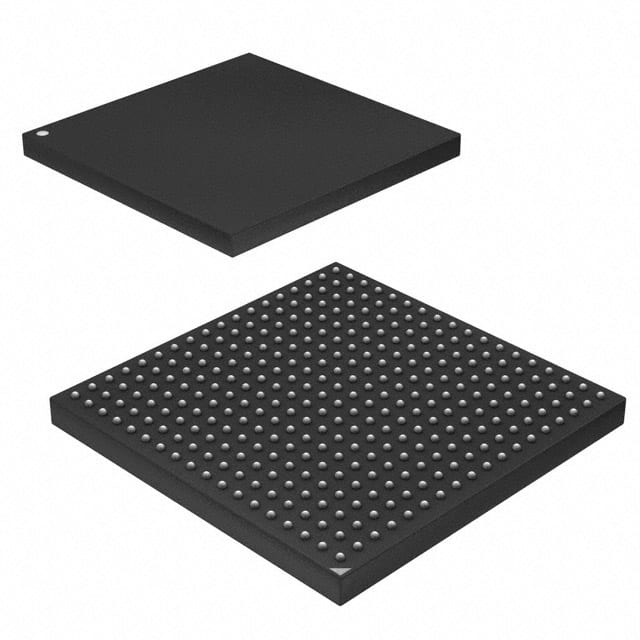
NXP Semiconductors T1022NSE7PQB

- Part No.:
- T1022NSE7PQB
- Manufacturer:
- NXP Semiconductors
- Category:
- Microprocessors
- Package:
- 780-FBGA, FCBGA
- Datasheet:
-
 T1022NSE7PQB.pdf
- Description:
- IC MPU QORIQ T1 1.4GHZ 780FCPBGA
- Quantity:
- Payment:

- Shipping:

Inventory:4,531
Please send an inquiry. Send us your inquiry, and we will respond immediately.
Product details
Overview
T1022NSE7PQB from NXP Semiconductors is a dual-core 64-bit Power Architecture® communications processor featuring two e5500 cores up to 1.5 GHz, integrated Data Path Acceleration Architecture (DPAA), and five 1 GbE MACs - designed for control- and data-plane convergence in edge routers and industrial gateways.
For engineers reviewing the T1022NSE7PQB datasheet, T1022NSE7PQB pinout, T1022NSE7PQB application, or T1022NSE7PQB equivalent, key selection criteria include DDR3L/4 support up to 1600 MT/s, hardware virtualization with hypervisor privilege level, 8-lane 5 Gb/s SerDes, integrated QUICC Engine for TDM/HDLC, and QorIQ trust architecture with secure boot and tamper detection.
Technical Context
The T1022NSE7PQB implements a dual-e5500 core complex with 32 KB I/D L1 cache per core, 256 KB shared L2 cache, and 256 KB platform-level L3 cache, enabling deterministic real-time response in mixed-criticality networking workloads. Its CoreNet coherency fabric coordinates memory access across CPU, accelerators, and peripherals while enforcing QoS and bandwidth allocation.
DPAA offloads packet processing via dedicated Frame Manager (FMAN), Queue Manager (QMAN), and Buffer Manager (BMAN), supporting 13 Gb/s classification/parsing, 224 hardware queues, and 64 buffer pools - all synchronized with the e5500 cores without software intervention.
Key Specifications
| Parameter | Value and Actual Design Meaning |
|---|---|
| Core Architecture | Dual 64-bit e5500 Power Architecture cores with hybrid 32/64-bit mode for legacy software compatibility |
| Max Core Frequency | 1.5 GHz - enables single-threaded throughput of 4.5 DMIPS/MHz × 2 cores = 9 DMIPS total at peak |
| Memory Interface | Single-channel DDR3L/DDR4 controller up to 1600 MT/s with ECC - supports up to 64 GB addressable space |
| Ethernet Interfaces | Five 1 GbE MACs (RGMII/SGMII) - no integrated switch (unlike T1040/T1020); requires external PHY or switch |
| SerDes Lanes | Eight lanes configurable as SGMII, QSGMII, PCIe 2.0, or SATA 2.0 - enables flexible high-speed peripheral expansion |
| Security Acceleration | SEC 5.4 crypto engine supporting AES, 3DES, SHA-1/256, and XOR/CRC at up to 5 Gb/s - offloads encryption from CPU |
| Virtualization Support | Hardware-assisted virtualization with hypervisor privilege level - enables KVM, Linux containers, and commercial hypervisors |
Pinout & Package
Package: 780-pin FC-BGA (27 mm × 27 mm, 1.0 mm pitch), RoHS-compliant, lead-free, moisture sensitivity level 3.
| Pin/Terminal | Circuit Role | Design Meaning |
|---|---|---|
| DDR_DQ[0:63] | DDR data bus | 64-bit bidirectional data interface for DDR3L/DDR4 SDRAM; requires matched trace length and on-die termination |
| DDR_ADDR[0:15] | DDR address/command bus | 16-bit address + bank/row/column command lines; supports 32-bit addressing with bank interleaving |
| PCIE0_RX/TX[0:7] | PCIe 2.0 differential pair | Lane 0 of first PCIe controller; supports x1/x2/x4 configuration; requires AC coupling and 100 Ω differential impedance |
| SGMII0_TX/RX | Gigabit Ethernet PHY interface | Differential SGMII link to external PHY; operates at 1.25 Gb/s with embedded clock recovery |
| QIX[0:15] | QUICC Engine TDM interface | 16-bit time-division multiplexed bus for HDLC, TDM voice, ISDN, or custom serial protocols |
| BOOT_CFG[0:7] | Strap configuration pins | Hardwired at power-on to select boot source (NOR/NAND/SD/eMMC/SATA) and memory map initialization |
Key Features
| Feature | Design Value |
|---|---|
| DPAA Hardware Offload | FMAN parses/classifies packets at 13 Gb/s; QMAN schedules work across cores/accelerators using multilevel priority queues |
| CoreNet Coherency Fabric | Enables cache-coherent communication between e5500 cores, accelerators, and memory controllers without software cache management |
| QUICC Engine Module | Dedicated RISC coprocessor handling legacy TDM, HDLC, UART, and ISDN protocols - isolates real-time traffic from main CPU |
| QorIQ Trust Architecture | Secure boot chain with immutable ROM loader, tamper-detect circuitry, volatile key storage, and debug lockdown |
| Power Management | Multiple low-power states (Doze/Deep Doze/Stop) with dynamic voltage/frequency scaling per core and peripheral domain |
Applications
| Enterprise Edge Router | Industrial Protocol Gateway |
|---|---|
Use Scenario: Aggregating broadband WAN links and routing traffic across VLANs in compact branch office routers. IC Role / Device Role / Timing Role: Control-plane processor executing routing stack (e.g., Quagga/BIRD) and data-plane packet forwarding via DPAA. Use Value: Five 1 GbE MACs eliminate external PHYs; DPAA delivers wire-speed forwarding at 5 Gb/s aggregate with <10 µs latency. | Use Scenario: Bridging Modbus TCP, PROFINET, and EtherCAT networks in factory automation systems. IC Role / Device Role / Timing Role: Dual-core host running real-time Linux (PREEMPT_RT) while QUICC Engine handles deterministic TDM/HDLC protocol framing. Use Value: Hardware-isolated QUICC Engine ensures sub-100 µs jitter for motion control loops; e5500 cores manage higher-layer protocol translation. |
| Mobile Backhaul Node | Ruggedized Network Appliance |
Use Scenario: Small-cell aggregation unit connecting LTE base stations to core network via microwave or fiber. IC Role / Device Role / Timing Role: Data-path processor performing deep packet inspection, QoS marking, and IEEE 1588v2 timestamping for sync distribution. Use Value: SEC 5.4 encrypts backhaul traffic at line rate; SerDes lanes support dual SGMII + PCIe for fronthaul extension cards. | Use Scenario: Deployed in military-grade chassis for secure tactical networking with environmental hardening. IC Role / Device Role / Timing Role: Trusted execution environment hosting secure boot, encrypted firmware updates, and runtime tamper monitoring. Use Value: QorIQ Trust Architecture validates firmware signatures before load; tamper sensors trigger zeroization of cryptographic keys on enclosure breach. |
Equivalent & Alternatives
The following parts are listed as comparable options for similar communications processor applications.
| Alternative Part | Technical Difference | Application Difference | Selection Advice |
|---|---|---|---|
| T1042NSE7PQB | Quad-core e5500 (vs. dual-core), adds second DMA engine and additional SerDes lane configurations | Higher packet throughput required in firewall or UTM appliances with concurrent IPS/IDS and SSL inspection | Select T1042NSE7PQB when >2.5 Gb/s sustained data-plane throughput or quad-core virtualization density is required |
| LX2160A | 16-core ARM Cortex-A72, no QUICC Engine, different SerDes (10 Gb/s lanes), no integrated FMAN/QMAN | Cloud-native edge compute, containerized microservices, and DPDK-based vSwitch - not suitable for legacy TDM/HDLC | Choose LX2160A for scalable ARM ecosystem, Kubernetes support, and DPDK acceleration - not for TDM or deterministic real-time protocol stacks |
Compared with T1022NSE7PQB, the T1042NSE7PQB offers higher core count and throughput for consolidated security functions, while the LX2160A shifts to ARM-based cloud-edge scalability but abandons legacy telecom interfaces and hardware-accelerated packet parsing.
Availability
T1022NSE7PQB is available at Aetrix Electronics and suitable for enterprise edge routers, industrial protocol gateways, mobile backhaul nodes, and ruggedized network appliances requiring stable component supply over extended product lifecycles.
Supply support for T1022NSE7PQB includes scheduled delivery planning, volume procurement assistance, BOM continuity management, traceable sourcing, and lifecycle availability coordination for OEM customers, industrial embedded developers, connected-device designers, and electronics production programs.
Manufacturer
NXP Semiconductors is a global semiconductor company specializing in secure connectivity solutions for automotive, industrial, and networking markets.
The QorIQ T1 family - including the T1022NSE7PQB - was engineered for mixed-control-and-data-plane networking applications where deterministic packet processing, hardware virtualization, and legacy protocol support are critical.
FAQ
Does the T1022NSE7PQB include an integrated Gigabit Ethernet switch?
No, the T1022NSE7PQB does not include an integrated Ethernet switch. Unlike the T1040 and T1020 variants, the T1022NSE7PQB provides five independent 1 GbE MACs only - each requiring an external PHY or switch IC. This design reduces die area and power for applications where switching functionality is handled externally or unnecessary.
What memory technologies does the T1022NSE7PQB support?
The T1022NSE7PQB supports single-channel DDR3L and DDR4 SDRAM up to 1600 MT/s with full ECC capability. It does not support LPDDR3 or LPDDR4. The memory controller addresses up to 64 GB of physical memory space and includes programmable timing parameters for JEDEC-compliant DIMMs or discrete DRAM chips.
Is the QUICC Engine present in the T1022NSE7PQB?
Yes, the T1022NSE7PQB integrates a full QUICC Engine module supporting TDM, HDLC, UART, and ISDN protocols. This dedicated RISC coprocessor operates independently of the e5500 cores, enabling deterministic real-time handling of legacy telecom interfaces without CPU overhead or jitter.
Can the T1022NSE7PQB run Linux with hardware virtualization?
Yes, the T1022NSE7PQB supports hardware-assisted virtualization via its e5500 hypervisor privilege level. It is validated with KVM, NXP's reference hypervisor, and commercial solutions from Green Hills and Enea. Full Linux SDK support includes kernel patches, device tree bindings, and DPAA driver integration for guest OS networking.
What boot sources are supported by the T1022NSE7PQB?
The T1022NSE7PQB supports boot from NOR flash, NAND flash, SD card, eMMC, and SATA devices. Boot configuration is set via BOOT_CFG[0:7] strapping pins at power-on reset. The ROM bootloader validates signed images when Secure Boot is enabled and loads the initial firmware into internal SRAM before handing control to the application.
T1022NSE7PQB Specifications
- Product attributes
- Attribute value
- Manufacturer:
- NXP Semiconductors
- Package/Case:
- 780-FBGA, FCBGA
- Series:
- QorIQ T1
- Packaging:
- Bulk
- Product Status:
- Active
- Core Processor:
- PowerPC e5500
- Number of Cores/Bus Width:
- 2 Core, 64-Bit
- Speed:
- 1.4GHz
- Co-Processors/DSP:
- -
- RAM Controllers:
- DDR3L/4
- Graphics Acceleration:
- No
- Display & Interface Controllers:
- -
- Ethernet:
- 1Gbps (5)
- SATA:
- SATA 3Gbps (2)
- USB:
- USB 2.0 + PHY (2)
- Voltage - I/O:
- -
- Operating Temperature:
- 0°C ~ 105°C (TA)
- Grade:
- -
- Qualification:
- -
- Security Features:
- Boot Security, Cryptography, Secure Fusebox, Secure Debug, Tamper Detection, Volatile key Storage
- Mounting Type:
- Surface Mount
- Supplier Device Package:
- 780-FCPBGA (23x23)
- Additional Interfaces:
- I2C, MMC/SD, PCIe, SPI, UART
T1022NSE7PQB FAQ
1.How can I place an order for T1022NSE7PQB through Aetrix?
Please submit a Request for Quotation (RFQ) for T1022NSE7PQB on Aetrix. Our sales agent will provide a competitive quotation and guide you through the order confirmation once you accept the terms.
2.Are the price and stock information for T1022NSE7PQB reliable?
The price and inventory of T1022NSE7PQB are updated periodically and may fluctuate due to market conditions. Stock and pricing data are typically refreshed every 24 hours. Quotation validity for T1022NSE7PQB is usually 5 days.
3.What payment methods are accepted for T1022NSE7PQB?
We accept Wire Transfer, PayPal, Credit Card, Western Union, MoneyGram, and Escrow for T1022NSE7PQB transactions.
Note: Certain payment methods may incur a processing fee.
4.How is shipping managed for T1022NSE7PQB?
T1022NSE7PQB orders can be shipped via leading logistics carriers, including DHL, UPS, FedEx, TNT, or Registered Mail.
Once your T1022NSE7PQB order is processed, you will receive an email with the shipment details and tracking number.
Note: Tracking information may take up to 24 hours to appear. Express delivery typically takes 3–5 business days.
5.How can I obtain technical support or documentation for T1022NSE7PQB?
For technical support, including T1022NSE7PQB datasheets, pinout diagrams, or application guidance, please contact our engineering support team. They can provide detailed documentation and assistance for your T1022NSE7PQB requirements.
6.How does Aetrix verify that T1022NSE7PQB is sourced from the original manufacturer or authorized distributors?
All T1022NSE7PQB products on Aetrix are procured from qualified distributors and authorized channels. Our dedicated quality assurance team conducts strict verification, including traceability checks and, if necessary, third-party testing. This ensures that T1022NSE7PQB meets industry standards.
7.What is the process for return or replacement of T1022NSE7PQB?
All T1022NSE7PQB units undergo pre-shipment inspection (PSI). If there is an issue with T1022NSE7PQB, returns or replacements are accepted under the following conditions:
1.Quantity discrepancies, incorrect items, or visible external defects (such as breakage or corrosion), acknowledged by Aetrix.
2.The issue is reported within 90 days of delivery.
3.The T1022NSE7PQB part is unused and in its original packaging.
Return procedure for T1022NSE7PQB:
1.Submit a request within 90 days.
2.Obtain a Return Material Authorization (RMA) from Aetrix.
T1022NSE7PQB Tags
-
AT91SAM9260B-CU-999
Microchip Technology
-
AT91SAM9G25-CU
Microchip Technology
-
ATSAMA5D27C-CU
Microchip Technology
-
AT91SAM9X35-CU
Microchip Technology
-
AT91SAM9X25-CU
Microchip Technology
-
MCIMX6Y2CVM08AB
NXP Semiconductors
.JPG)
-
AM3352BZCZ100
Texas Instruments
-
AT91SAM9260B-CU
Microchip Technology
-
AT91SAM9260B-QU
Microchip Technology
-
ATSAMA5D31A-CU
Microchip Technology
-
AT91SAM9G20B-CU-999
Microchip Technology
-
MCIMX6Y2CVM05AB
NXP Semiconductors
Tech Hub

A practical engineering guide to 3.3V and 5V logic compatibility, input thresholds, resistor dividers, translator ICs, MOSFET level shifting, I2C pull-ups, timing limits and power-sequencing risks.

The 74HC595 uses push-pull logic outputs, while the TPIC6B595 uses 50 V open-drain DMOS sinks for higher-power loads. This guide compares timing, current limits, 3.3 V interfacing, load wiring, thermal…

The 74HC595 converts serial data into eight stable parallel outputs. This guide covers pin functions, shift and storage timing, OE and MR behavior, drive-current limits, cascading, voltage compatibilit…

A technical comparison of level-sensitive latches and edge-triggered flip-flops, covering timing windows, setup and hold limits, master–slave operation, time borrowing, race-through, HDL inference and…

A D latch stores one bit while Enable controls when data can pass. This reference covers gate-level operation, truth tables, transparency, setup and hold timing, LE versus OE, common ICs and practical …

An SR latch stores one bit through cross-coupled feedback. This engineering reference covers NOR and NAND implementations, truth tables, forbidden-state recovery, gated operation, switch debouncing, fa…

Latch circuits retain one bit through feedback. This technical reference covers SR and D latches, truth tables, transparency, timing limits, latch-versus-flip-flop behavior, applications and common log…

An engineering guide to LED driver operation, constant-current and constant-voltage outputs, linear and switching topologies, dimming, IC selection, calculations, replacement compatibility, and fault c…

Operational amplifier guide covering op amp basics, feedback, ideal vs real op amps, common configurations, buffer circuits, offset, bias current, gain-bandwidth, slew rate, rail-to-rail limits and sel…

Jumper cables guide covering safe connection order, red and black clamp placement, final ground connection, cable gauge, length, clamp quality, copper vs CCA cables, jump starter comparison and battery…


