
 My Inquiry
 My Account


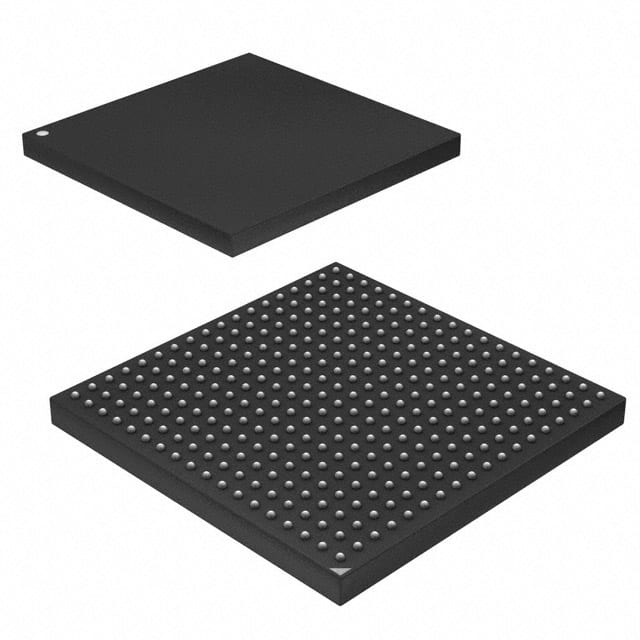
NXP Semiconductors T2081NSN8PTB

- Part No.:
- T2081NSN8PTB
- Manufacturer:
- NXP Semiconductors
- Category:
- Microprocessors
- Package:
- 896-BFBGA, FCBGA
- Datasheet:
-
 T2081NSN8PTB.pdf
- Description:
- IC MPU QORIQ 1.533GHZ 896FCPBGA
- Quantity:
- Payment:

- Shipping:

Inventory:3,307
Please send an inquiry. Send us your inquiry, and we will respond immediately.
Product details
Overview
T2081NSN8PTB from NXP is a 28 nm QorIQ communications processor based on four dual-threaded 64-bit e6500 Power Architecture® cores, operating up to 1.8 GHz with 2 MB shared L2 cache, integrated DPAA for packet processing acceleration, and 780-pin 23 × 23 mm FC-BGA package. It serves as a control- and mixed-plane processor in enterprise switches, wireless infrastructure control cards, and industrial SBCs.
For engineers reviewing the T2081NSN8PTB datasheet, T2081NSN8PTB pinout, T2081NSN8PTB application, or T2081NSN8PTB equivalent, key selection criteria include SerDes lane count (8×), PCIe Gen3/Gen2 mix (1× Gen3 + 3× Gen2), 7× 1 Gb/s MACs, absence of SATA/RapidIO/Aurora, and pin compatibility with T1042 for board reuse in scalable product families.
Technical Context
The T2081NSN8PTB implements a hierarchical CoreNet interconnect fabric supporting coherent and non-coherent transactions with bandwidth allocation, paired with a 64-bit DDR3/3L memory controller running up to 2133 MT/s and 72-bit ECC support. Its DPAA subsystem includes FMAN (packet parsing/classification), QMAN (224-queue scheduling), BMAN (64 buffer pools), SEC (cryptographic acceleration to 10 Gb/s), and DCE (compression/decompression up to 17.5 Gb/s).
Hardware virtualization is enabled via hypervisor privilege level, logical-to-real address translation, PAMU v2 I/O MMU, vMPIC, and vDMA - all supporting KVM, Linux containers, and NXP hypervisor. The device omits RMan, SATA, Aurora, and second SRIO port present in T2080, reflecting its streamlined mid-range positioning.
Key Specifications
| Parameter | Value and Actual Design Meaning |
|---|---|
| Core Architecture | Four dual-threaded 64-bit e6500 Power Architecture® cores, 1.8 GHz max, 6.0 DMIPS/MHz per core |
| L2 Cache | 2 MB shared banked L2 cache enabling efficient code/data sharing across all eight virtual threads |
| Memory Interface | 64-bit DDR3/3L controller up to 2133 MT/s with 72-bit ECC for system reliability in telecom/industrial environments |
| SerDes Lanes | 8 lanes configurable up to 10 GHz, supporting PCIe, SGMII, XFI, and RapidIO physical layers |
| Ethernet MACs | 7 × 1 Gb/s MACs (SGMII/RGMII) plus up to 2 × 10 Gb/s MACs (XFI/KR only), no HiGig or XAUI |
| PCIe Controllers | 1 × Gen3 + 3 × Gen2 endpoints with SR-IOV support, enabling flexible high-speed peripheral attachment |
| Virtualization Support | Hypervisor privilege level, PAMU v2 I/O MMU, vMPIC, vDMA, and DPAA accelerator virtualization for safe guest isolation |
Pinout & Package
Package: 23 mm × 23 mm FC-BGA, 780 pins, 0.8 mm pitch, RoHS-compliant, thermal lid, designed for conduction-cooled and ruggedized industrial applications.
| Pin/Terminal | Circuit Role | Design Meaning |
|---|---|---|
| A1–A10, B1–B10, etc. (all 780) | Ball grid array signal/power/ground terminals | Pin-compatible with T1042; exact assignment requires IBIS model and package drawing T2081NSN8PTB-PKG-REV1 |
| VDD_DDR, VDD_CORE, VDD_IO | Power supply domains | Separate 1.5 V DDR, 1.0 V core, and 1.8/3.3 V I/O rails requiring independent sequencing and filtering |
| DDR_DQ[0:63], DDR_ADDR[0:15] | DDR3/3L interface signals | 64-bit data bus + 16-bit address/command bus with differential clocks and ODT control for impedance matching |
| PCIE_RX[0:3], PCIE_TX[0:3] | PCIe Gen2/Gen3 differential pairs | Four dedicated high-speed serial links supporting root complex or endpoint operation with auto-negotiation |
| SGMII_RX[0:6], SGMII_TX[0:6] | 1 Gb/s Ethernet PHY interfaces | Seven SGMII lanes for direct connection to external PHYs or optical modules without retiming |
Key Features
| Feature | Design Value |
|---|---|
| Dual-threaded e6500 cores | Delivers 1.7× single-thread performance per core while maintaining deterministic latency for control-plane workloads |
| DPAA hardware acceleration | Offloads packet parsing, classification, queue management, crypto, and compression from CPU cores to dedicated engines |
| Hardware-assisted virtualization | Enables secure, low-overhead partitioning of control and data plane functions using hypervisor mode and IOMMU protection |
| Pin compatibility with T1042 | Allows reuse of existing PCB layouts and firmware base for cost-effective performance upgrades in deployed systems |
| Low-latency CoreNet fabric | Provides prioritized, bandwidth-allocated coherency between CPU, accelerators, memory, and I/O with sub-20 ns latency |
Applications
| Enterprise Switch Control Plane | Wireless Base Station Control Card |
|---|---|
Use Scenario: Managing routing tables, SNMP agents, CLI, and protocol stacks in modular Layer 3 Ethernet switches. IC Role / Device Role / Timing Role: Integrated control plane processor handling real-time OS tasks, packet forwarding decisions, and management interfaces. Use Value: Dual-threaded e6500 cores and DPAA offload enable concurrent control-plane processing and deep packet inspection at line rate. | Use Scenario: Running LTE/WCDMA baseband control software, radio resource management, and backhaul interface protocols in macrocell BTS. IC Role / Device Role / Timing Role: Mixed control-and-data-plane processor managing CPRI/eCPRI transport, OAM, and fronthaul timing synchronization. Use Value: 7× 1 Gb/s MACs and 2× 10 Gb/s XFI interfaces directly support multi-sector backhaul aggregation without external switch fabric. |
| Industrial SBC for Factory Automation | Ruggedized Router for Defense Avionics |
Use Scenario: Serving as main compute engine in DIN-rail mounted SBCs performing PLC logic, EtherCAT master, and HMI rendering. IC Role / Device Role / Timing Role: Deterministic real-time processor executing RTOS-based motion control loops and fieldbus protocol stacks. Use Value: Seven-stage pipeline and hardware virtualization allow strict timing isolation between safety-critical and non-critical partitions. | Use Scenario: Implementing secure, tamper-resistant routing in airborne networking equipment with DO-178C/DO-254 compliance requirements. IC Role / Device Role / Timing Role: Trusted execution platform with secure boot, debug lockdown, and cryptographic acceleration for IPsec/IKEv2. Use Value: QorIQ Trust Architecture enables certified secure boot chain and runtime key protection without external TPM. |
Equivalent & Alternatives
The following parts are listed as comparable options for similar communications processor applications.
| Alternative Part | Technical Difference | Application Difference | Selection Advice |
|---|---|---|---|
| T1042NXN8PTB | Quad-core e5500 @ 1.4 GHz, no DPAA, no SEC/DCE, 4× 1 Gb/s MACs, 2× PCIe Gen2, 640-pin package | Lacks hardware acceleration, lower throughput, suitable for legacy control-only roles without data-plane offload | Select when migrating from P1022/P2020 and cost sensitivity outweighs need for DPAA or crypto acceleration |
| T2080NSN8PTB | Same core, cache, and DPAA; adds 2× SATA, RMan, Aurora, second SRIO, 8× SerDes, 8× 1 Gb/s MACs, 25×25 mm 896-pin package | Supports chip-to-chip interconnect, storage, and higher-density Ethernet in full-featured platforms | Select when board space and power budget allow larger package and additional I/O is required for converged infrastructure |
Compared with T1042NXN8PTB, T2081NSN8PTB delivers 28% higher core frequency, full DPAA offload, and crypto acceleration - enabling control+data plane consolidation. Versus T2080NSN8PTB, it trades SerDes count, SATA, and SRIO for smaller footprint and pin compatibility with legacy T1042 designs.
Availability
T2081NSN8PTB is available at Aetrix Electronics and suitable for enterprise switching, wireless infrastructure control cards, and industrial SBCs requiring stable component supply, long-term lifecycle support, and qualified automotive/industrial temperature grade availability.
Supply support for T2081NSN8PTB includes scheduled delivery planning, volume procurement assistance, BOM continuity management, traceable sourcing, and lifecycle availability coordination for OEM customers, industrial embedded developers, connected-device designers, and electronics production programs.
Manufacturer
NXP Semiconductors is a global semiconductor company headquartered in Eindhoven, Netherlands, specializing in secure connectivity solutions for automotive, industrial, and communications markets.
The T2081NSN8PTB belongs to NXP's QorIQ T-Series communications processors, designed specifically for mid-range control- and mixed-plane applications where performance, power efficiency, and hardware-accelerated packet processing must coexist in compact form factors.
FAQ
What is the maximum operating frequency of the T2081NSN8PTB?
The T2081NSN8PTB operates at a maximum frequency of 1.8 GHz across all four dual-threaded e6500 cores. This frequency is guaranteed under industrial temperature conditions (–40°C to +105°C) with appropriate voltage and cooling. The 1.8 GHz rating reflects sustained performance in real-world control-plane workloads, not burst-mode peaks. T2081NSN8PTB achieves this while maintaining a seven-stage pipeline for predictable branch response latency.
Does the T2081NSN8PTB support hardware virtualization?
Yes, the T2081NSN8PTB includes comprehensive hardware-assisted virtualization features: hypervisor privilege level, logical-to-real address translation, PAMU v2 I/O MMU, vMPIC, and vDMA. These capabilities enable secure, low-overhead partitioning of control and data plane functions. T2081NSN8PTB supports KVM, Linux containers, and the NXP hypervisor - all validated on the official NXP Linux SDK.
Is the T2081NSN8PTB pin-compatible with any other NXP processors?
Yes, the T2081NSN8PTB is explicitly pin-compatible with the quad-core T1042 processor. This allows customers to reuse existing PCB layouts, power delivery networks, and thermal solutions when upgrading from T1042-based designs. The 780-pin 23 × 23 mm FC-BGA footprint matches T1042 exactly, though firmware and BSP updates are required to leverage T2081NSN8PTB's enhanced features.
What Ethernet interfaces does the T2081NSN8PTB support?
The T2081NSN8PTB supports up to seven 1 Gb/s MACs (via SGMII or RGMII) and up to two 10 Gb/s MACs (XFI/KR only). It does not support XAUI, HiGig, or 2.5 Gb/s SGMII. All MACs are multiplexed over the 8-lane SerDes and require external PHYs or optical modules. The FMAN within DPAA handles classification, policing, and distribution for all supported interfaces.
Does the T2081NSN8PTB include cryptographic acceleration?
Yes, the T2081NSN8PTB integrates the Security Engine (SEC) 5.2, providing hardware-accelerated cryptography including AES, DES, SHA, RSA, and ECC. SEC delivers up to 10 Gb/s throughput for IPsec and TLS offload. Unlike the T2080, T2081NSN8PTB does not include tamper detection circuitry, but retains secure boot, secure debug, and volatile key storage as part of the QorIQ Trust Architecture.
T2081NSN8PTB Specifications
- Product attributes
- Attribute value
- Manufacturer:
- NXP Semiconductors
- Package/Case:
- 896-BFBGA, FCBGA
- Series:
- QorIQ T2
- Packaging:
- Tray
- Product Status:
- Active
- Core Processor:
- PowerPC e6500
- Number of Cores/Bus Width:
- 4 Core, 64-Bit
- Speed:
- 1.533GHz
- Co-Processors/DSP:
- -
- RAM Controllers:
- DDR3, DDR3L
- Graphics Acceleration:
- -
- Display & Interface Controllers:
- -
- Ethernet:
- 1Gbps (8), 2.5Gbps (4), 10Gbps (4)
- SATA:
- SATA 3Gbps (2)
- USB:
- USB 2.0 + PHY (2)
- Voltage - I/O:
- -
- Operating Temperature:
- 0°C ~ 105°C (TA)
- Grade:
- -
- Qualification:
- -
- Security Features:
- Boot Security, Cryptography, Secure Fusebox, Secure Debug, Tamper Detection, Volatile key Storage
- Mounting Type:
- Surface Mount
- Supplier Device Package:
- 896-FCPBGA (25x25)
- Additional Interfaces:
- -
T2081NSN8PTB FAQ
1.How can I place an order for T2081NSN8PTB through Aetrix?
Please submit a Request for Quotation (RFQ) for T2081NSN8PTB on Aetrix. Our sales agent will provide a competitive quotation and guide you through the order confirmation once you accept the terms.
2.Are the price and stock information for T2081NSN8PTB reliable?
The price and inventory of T2081NSN8PTB are updated periodically and may fluctuate due to market conditions. Stock and pricing data are typically refreshed every 24 hours. Quotation validity for T2081NSN8PTB is usually 5 days.
3.What payment methods are accepted for T2081NSN8PTB?
We accept Wire Transfer, PayPal, Credit Card, Western Union, MoneyGram, and Escrow for T2081NSN8PTB transactions.
Note: Certain payment methods may incur a processing fee.
4.How is shipping managed for T2081NSN8PTB?
T2081NSN8PTB orders can be shipped via leading logistics carriers, including DHL, UPS, FedEx, TNT, or Registered Mail.
Once your T2081NSN8PTB order is processed, you will receive an email with the shipment details and tracking number.
Note: Tracking information may take up to 24 hours to appear. Express delivery typically takes 3–5 business days.
5.How can I obtain technical support or documentation for T2081NSN8PTB?
For technical support, including T2081NSN8PTB datasheets, pinout diagrams, or application guidance, please contact our engineering support team. They can provide detailed documentation and assistance for your T2081NSN8PTB requirements.
6.How does Aetrix verify that T2081NSN8PTB is sourced from the original manufacturer or authorized distributors?
All T2081NSN8PTB products on Aetrix are procured from qualified distributors and authorized channels. Our dedicated quality assurance team conducts strict verification, including traceability checks and, if necessary, third-party testing. This ensures that T2081NSN8PTB meets industry standards.
7.What is the process for return or replacement of T2081NSN8PTB?
All T2081NSN8PTB units undergo pre-shipment inspection (PSI). If there is an issue with T2081NSN8PTB, returns or replacements are accepted under the following conditions:
1.Quantity discrepancies, incorrect items, or visible external defects (such as breakage or corrosion), acknowledged by Aetrix.
2.The issue is reported within 90 days of delivery.
3.The T2081NSN8PTB part is unused and in its original packaging.
Return procedure for T2081NSN8PTB:
1.Submit a request within 90 days.
2.Obtain a Return Material Authorization (RMA) from Aetrix.
T2081NSN8PTB Tags
-
AT91SAM9260B-CU-999
Microchip Technology
-
AT91SAM9G25-CU
Microchip Technology
-
ATSAMA5D27C-CU
Microchip Technology
-
AT91SAM9X35-CU
Microchip Technology
-
AT91SAM9X25-CU
Microchip Technology
-
MCIMX6Y2CVM08AB
NXP Semiconductors
.JPG)
-
AM3352BZCZ100
Texas Instruments
-
AT91SAM9260B-CU
Microchip Technology
-
AT91SAM9260B-QU
Microchip Technology
-
ATSAMA5D31A-CU
Microchip Technology
-
AT91SAM9G20B-CU-999
Microchip Technology
-
MCIMX6Y2CVM05AB
NXP Semiconductors
Tech Hub

A practical engineering guide to 3.3V and 5V logic compatibility, input thresholds, resistor dividers, translator ICs, MOSFET level shifting, I2C pull-ups, timing limits and power-sequencing risks.

The 74HC595 uses push-pull logic outputs, while the TPIC6B595 uses 50 V open-drain DMOS sinks for higher-power loads. This guide compares timing, current limits, 3.3 V interfacing, load wiring, thermal…

The 74HC595 converts serial data into eight stable parallel outputs. This guide covers pin functions, shift and storage timing, OE and MR behavior, drive-current limits, cascading, voltage compatibilit…

A technical comparison of level-sensitive latches and edge-triggered flip-flops, covering timing windows, setup and hold limits, master–slave operation, time borrowing, race-through, HDL inference and…

A D latch stores one bit while Enable controls when data can pass. This reference covers gate-level operation, truth tables, transparency, setup and hold timing, LE versus OE, common ICs and practical …

An SR latch stores one bit through cross-coupled feedback. This engineering reference covers NOR and NAND implementations, truth tables, forbidden-state recovery, gated operation, switch debouncing, fa…

Latch circuits retain one bit through feedback. This technical reference covers SR and D latches, truth tables, transparency, timing limits, latch-versus-flip-flop behavior, applications and common log…

An engineering guide to LED driver operation, constant-current and constant-voltage outputs, linear and switching topologies, dimming, IC selection, calculations, replacement compatibility, and fault c…

Operational amplifier guide covering op amp basics, feedback, ideal vs real op amps, common configurations, buffer circuits, offset, bias current, gain-bandwidth, slew rate, rail-to-rail limits and sel…

Jumper cables guide covering safe connection order, red and black clamp placement, final ground connection, cable gauge, length, clamp quality, copper vs CCA cables, jump starter comparison and battery…


