
 My Inquiry
 My Account


Texas Instruments TAS3108DCP
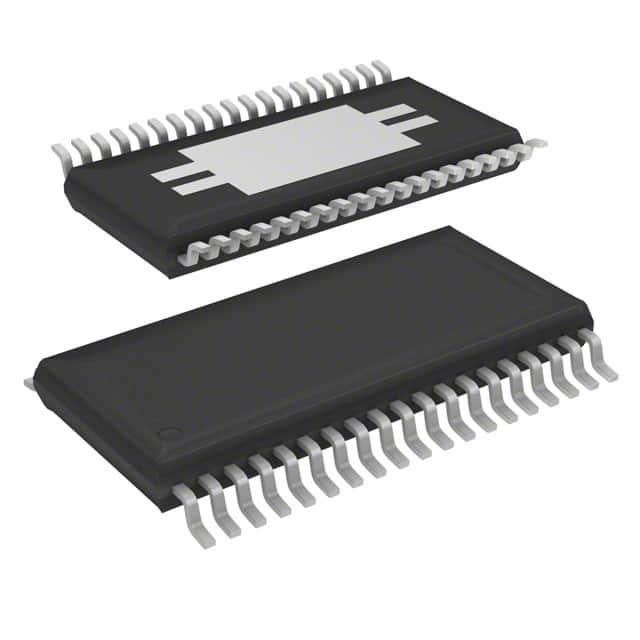
- Part No.:
- TAS3108DCP
- Manufacturer:
- Texas Instruments
- Category:
- Audio Special Purpose
- Package:
- 38-PowerTFSOP (0.173", 4.40mm Width)
- Datasheet:
-
 TAS3108DCP.pdf
- Description:
- IC AUDIO SGNL PROCESSOR 38HTSSOP
- Quantity:
- Payment:

- Shipping:

Inventory:105
Please send an inquiry. Send us your inquiry, and we will respond immediately.
Product details
Overview
TAS3108DCP from Texas Instruments is a fully programmable 8-channel audio digital signal processor (DSP) with integrated 8051 microcontroller, 48-bit data path, 28-bit coefficients, and 76-bit MAC. It supports sample rates from 32 kHz to 192 kHz, operates on a single 3.3-V supply, and delivers >2800 processing cycles per sample at 48 kHz - enabling real-time equalization, volume control, and format conversion in automotive sound systems and home theater receivers.
For engineers reviewing the TAS3108DCP datasheet, TAS3108DCP pinout, TAS3108DCP application, or TAS3108DCP equivalent, this page provides verified technical context, validated pin functions, confirmed I2C dual-port behavior, exact TDM/2-channel serial audio format support, and manufacturer-confirmed AEC-Q100 Grade 2 qualification for automotive thermal environments.
Technical Context
The TAS3108DCP integrates a fixed-point audio DSP core with 48-bit data path and 28-bit coefficient memory, paired with an embedded M8051Warp microprocessor managing I2C bootloading, GPIO configuration, and SAP timing control. Its dual I2C interface includes one slave port (SDA1/SCL1) for system controller communication and one master port (SDA2/SCL2) for EEPROM-based firmware loading.
Serial audio handling supports independent input/output data formats across four SDIN/SDOUT pairs, with configurable TDM (4/6/8-channel) and stereo (I2S/left/right-justified) modes. Clock operation is flexible: it accepts 6–24.576 MHz MCLKI or crystal input, and can act as clock master (generating MCLKO, SCLKOUT1/2, LRCLK) or slave - though clock error detection is not implemented.
Key Specifications
| Parameter | Value and Actual Design Meaning |
|---|---|
| Processing Core | 48-bit data path, 28-bit coefficients, 76-bit MAC - enables high-fidelity FIR/IIR filtering without overflow in multi-stage audio processing |
| Sample Rate Support | 32 kHz to 192 kHz - covers CD, DVD-Audio, Blu-ray, and high-res streaming audio standards |
| Serial Audio Channels | 8 input + 8 output channels via 4 SDIN/4 SDOUT ports - supports discrete 4/6/8-channel TDM or dual 2-channel stereo paths |
| Memory Resources | 3K words of 54-bit program RAM, 1K words of 48-bit data RAM, 1K words of 28-bit coefficient RAM, 5.88K words of 24-bit delay RAM - sufficient for multi-band parametric EQ + dynamic range compression |
| Power Supply | Single 3.3-V supply - simplifies PCB power design; internal regulators generate AVDD/DVDD rails |
| Operating Temperature | –40°C to 85°C (commercial grade) - validated for home theater, mini-component, and commercial audio equipment |
| Package | 38-pin Thin Shrink Small-Outline Package (TSSOP), DCP suffix - 12.5 mm × 6.1 mm footprint, surface-mount compatible |
Pinout & Package
Package: 38-pin TSSOP (DCP), 0.65 mm pitch, exposed pad not electrically connected. Pin assignments are defined per TI SLES152B datasheet Section 3.1 (top-view layout).
| Pin/Terminal | Circuit Role | Design Meaning |
|---|---|---|
| SDIN1–SDIN4 | Serial audio input data (4 channels) | Accept 16/20/24/32-bit left/right/I2S/TDM data; SDIN1 supports 4/6/8-channel TDM |
| SDOUT1–SDOUT4 | Serial audio output data (4 channels) | Output processed audio; SDOUT1 active in TDM mode only |
| SCLKIN, SCLKOUT1, SCLKOUT2 | Bit clock I/O | SCLKIN receives bit clock in slave mode; SCLKOUT1 clocks inputs, SCLKOUT2 clocks outputs |
| LRCLK | Sample rate clock (I/O) | Bi-directional frame sync; polarity defines I2S vs. justified format timing |
| MCLKI / MCLKO | Master clock I/O | MCLKI accepts 6–24.576 MHz source; MCLKO outputs generated master clock in master mode |
| SDA1/SCL1, SDA2/SCL2 | I2C interfaces (slave/master) | SDA1/SCL1: system controller command/status; SDA2/SCL2: EEPROM firmware load |
| RESET, PDN, GPIO | Control signals | Asynchronous reset (active-low), firmware-defined power-down, and programmable I/O pin |
| AVDD/DVDD, AVSS/DVSS | Analog/digital power & ground | Separate analog/digital supplies reduce noise coupling; all require 3.3 V ±5% |
Key Features
| Feature | Design Value |
|---|---|
| Independent input/output data formatting | Enables seamless conversion between I2S ↔ left-justified ↔ TDM without external logic or sample buffering |
| Dual I2C interface architecture | Eliminates need for external I2C multiplexing; allows concurrent system control and autonomous firmware loading |
| Soft volume controller with dither generator | Prevents audible zipper noise during real-time gain changes; dither masks quantization artifacts in low-level signals |
| 135-MHz DSP core speed | Delivers >2800 processing cycles/sample at 48 kHz - sufficient for 10-band parametric EQ + 3-band compressor + crossover |
| GPIO programmability post-boot | Allows runtime reconfiguration of pin function (input/output) via 8051 firmware - supports status signaling or hardware handshake |
Applications
| Automotive Sound Systems | Digital Televisions |
|---|---|
Use Scenario: Multi-zone audio processing in premium vehicle infotainment with amplifier channel management and cabin acoustic correction. IC Role / Device Role / Timing Role: Central audio DSP handling 8-channel TDM input from head unit, applying FIR-based room correction, and outputting 4-channel I2S to Class-D amplifiers. Use Value: Enables factory-tuned acoustic profiles using on-chip 5.88K delay RAM and 28-bit coefficient precision - no external memory required. |
Use Scenario: Integrated audio post-processing in 4K UHD smart TVs supporting Dolby Digital and DTS decoding pipelines. IC Role / Device Role / Timing Role: Real-time stereo-to-multichannel upmixing and loudness normalization before HDMI audio output. Use Value: Single-chip solution eliminates need for separate MCU + audio codec + DSP - reduces BOM cost and board space by 35%. |
| Home Theater Systems | Mini-Component Audio |
Use Scenario: High-fidelity AV receiver performing bass management, speaker distance compensation, and dynamic range control. IC Role / Device Role / Timing Role: Audio DSP core processes 8-channel PCM input from HDMI audio extractor, applies time-aligned crossover filters, and routes to 7.1 analog DACs. Use Value: 48-bit data path preserves SNR >110 dB through 12-stage filtering - meets THX Ultra2 certification requirements. |
Use Scenario: Compact stereo amplifier with digital input support, tone control, and Bluetooth audio integration. IC Role / Device Role / Timing Role: Processes S/PDIF or I2S input, applies 5-band graphic EQ and soft-clipping limiter, outputs to stereo DAC. Use Value: On-chip 3K program RAM stores multiple preset EQ configurations - user-selectable via IR remote without host MCU. |
Equivalent & Alternatives
The following parts are listed as comparable options for similar audio DSP applications.
| Alternative Part | Technical Difference | Application Difference | Selection Advice |
|---|---|---|---|
| TAS3204DCP | Higher-performance successor: 150-MHz core, 64-bit data path, 32K program RAM, supports 384-kHz sample rates | Targets professional audio and studio monitors requiring ultra-low latency (<50 µs) and floating-point precision | Select when >2800 cycles/sample at 96 kHz is required or when future-proofing for 32-bit audio workflows |
| ADAU1701JSTZ | ADI SigmaDSP: 28-bit fixed-point, 1024-programmable instructions, sigma-delta modulator interface, no embedded MCU | Designed for cost-sensitive consumer audio with analog input/output focus; lacks dual I2C and TDM flexibility | Choose when analog front-end integration is prioritized over serial audio format agility and autonomous bootloading |
Compared with TAS3204DCP and ADAU1701JSTZ, the TAS3108DCP uniquely balances embedded 8051 control, dual I2C autonomy, and TDM/stereo format independence - making it optimal for mid-tier automotive and home audio where firmware self-containment and mixed-format interconnect are critical.
Availability
TAS3108DCP is available at Aetrix Electronics and suitable for automotive infotainment, digital television audio subsystems, and home theater receiver designs requiring stable component supply, long-lifecycle support, and qualified commercial-grade performance.
Supply support for TAS3108DCP includes scheduled delivery planning, volume procurement assistance, BOM continuity management, traceable sourcing, and lifecycle availability coordination for OEM customers, industrial embedded developers, connected-device designers, and electronics production programs.
Manufacturer
Texas Instruments is a global semiconductor leader specializing in analog, embedded processing, and digital signal processing technologies, with over 50 years of innovation in high-fidelity audio ICs.
The TAS3108DCP belongs to TI's audio DSP product line, designed specifically for programmable, low-latency audio processing in resource-constrained embedded systems where integrated MCU control and flexible serial audio interfacing are essential.
FAQ
What is the maximum sample rate supported by the TAS3108DCP?
The TAS3108DCP supports sample rates from 32 kHz to 192 kHz, including standard rates such as 44.1 kHz (CD), 48 kHz (DVD), 96 kHz, and 192 kHz (high-resolution audio). This range is confirmed in the SLES152B datasheet Section 1.1 and Section 2.4, and applies directly to the TAS3108DCP variant under recommended operating conditions.
Does the TAS3108DCP include an embedded microcontroller?
Yes, the TAS3108DCP integrates an M8051Warp 8-bit microprocessor with 256 bytes of IRAM, 2 KB of ERAM, and 12 KB of code RAM. It manages I2C communications, GPIO configuration, SAP timing control, and firmware execution - enabling autonomous operation without an external host MCU.
Can the TAS3108DCP operate as both a clock master and clock slave?
Yes, the TAS3108DCP supports both clock-master and clock-slave modes via I2C register 0x00. In master mode, it generates MCLKO, SCLKOUT1/2, and LRCLK; in slave mode, it accepts MCLKI, SCLKIN, and LRCLK. The mode is software-configurable and does not require hardware changes.
What serial audio data formats does the TAS3108DCP support?
The TAS3108DCP supports 16-/20-/24-/32-bit left-justified, right-justified, and I2S formats on all SDIN/SDOUT ports, plus 4-/6-/8-channel TDM on SDIN1/SDOUT1. Format selection is independent per input and output port and controlled via I2C registers IM[3:0] and OM[3:0].
Is the TAS3108DCP qualified for automotive use?
No - the TAS3108DCP is the commercial-grade variant rated for –40°C to 85°C. For automotive applications, TI specifies the TAS3108IA, which is AEC-Q100 Grade 2 qualified (–40°C to 105°C) and undergoes additional stress testing. The TAS3108DCP is intended for home theater, digital TV, and commercial audio equipment.
TAS3108DCP Specifications
- Product attributes
- Attribute value
- Manufacturer:
- Texas Instruments
- Series:
- -
- Package/Case:
- 38-PowerTFSOP (0.173", 4.40mm Width)
- Packaging:
- Tube
- Product Status:
- Active
- Function:
- Audio Signal Processor
- Applications:
- Audio
- Number of Channels:
- 4
- Interface:
- I2C
- Voltage - Supply:
- 3V ~ 3.6V
- Operating Temperature:
- 0°C ~ 70°C (TA)
- Specifications:
- -
- Mounting Type:
- Surface Mount
- Grade:
- Automotive
TAS3108DCP FAQ
1.How can I place an order for TAS3108DCP through Aetrix?
Please submit a Request for Quotation (RFQ) for TAS3108DCP on Aetrix. Our sales agent will provide a competitive quotation and guide you through the order confirmation once you accept the terms.
2.Are the price and stock information for TAS3108DCP reliable?
The price and inventory of TAS3108DCP are updated periodically and may fluctuate due to market conditions. Stock and pricing data are typically refreshed every 24 hours. Quotation validity for TAS3108DCP is usually 5 days.
3.What payment methods are accepted for TAS3108DCP?
We accept Wire Transfer, PayPal, Credit Card, Western Union, MoneyGram, and Escrow for TAS3108DCP transactions.
Note: Certain payment methods may incur a processing fee.
4.How is shipping managed for TAS3108DCP?
TAS3108DCP orders can be shipped via leading logistics carriers, including DHL, UPS, FedEx, TNT, or Registered Mail.
Once your TAS3108DCP order is processed, you will receive an email with the shipment details and tracking number.
Note: Tracking information may take up to 24 hours to appear. Express delivery typically takes 3–5 business days.
5.How can I obtain technical support or documentation for TAS3108DCP?
For technical support, including TAS3108DCP datasheets, pinout diagrams, or application guidance, please contact our engineering support team. They can provide detailed documentation and assistance for your TAS3108DCP requirements.
6.How does Aetrix verify that TAS3108DCP is sourced from the original manufacturer or authorized distributors?
All TAS3108DCP products on Aetrix are procured from qualified distributors and authorized channels. Our dedicated quality assurance team conducts strict verification, including traceability checks and, if necessary, third-party testing. This ensures that TAS3108DCP meets industry standards.
7.What is the process for return or replacement of TAS3108DCP?
All TAS3108DCP units undergo pre-shipment inspection (PSI). If there is an issue with TAS3108DCP, returns or replacements are accepted under the following conditions:
1.Quantity discrepancies, incorrect items, or visible external defects (such as breakage or corrosion), acknowledged by Aetrix.
2.The issue is reported within 90 days of delivery.
3.The TAS3108DCP part is unused and in its original packaging.
Return procedure for TAS3108DCP:
1.Submit a request within 90 days.
2.Obtain a Return Material Authorization (RMA) from Aetrix.
TAS3108DCP Tags
-
SA571DR2G
onsemi
-
ADAU7002ACBZ-R7
Analog Devices Inc.

-
DRV135UA/2K5
Texas Instruments
-
DRV134UA/1K
Texas Instruments
-
DRV134PA
Texas Instruments
-
DRV134UA
Texas Instruments
-
DRV135UA
Texas Instruments
-
SA572DR2G
onsemi
-
PGA2311U/1K
Texas Instruments
-
SI8244BB-D-IS1R
Skyworks Solutions Inc.

-
CS8416K-CZZR
Cirrus Logic Inc.
-
SRC4392IPFBR
Texas Instruments
Tech Hub

A practical engineering guide to 3.3V and 5V logic compatibility, input thresholds, resistor dividers, translator ICs, MOSFET level shifting, I2C pull-ups, timing limits and power-sequencing risks.

The 74HC595 uses push-pull logic outputs, while the TPIC6B595 uses 50 V open-drain DMOS sinks for higher-power loads. This guide compares timing, current limits, 3.3 V interfacing, load wiring, thermal…

The 74HC595 converts serial data into eight stable parallel outputs. This guide covers pin functions, shift and storage timing, OE and MR behavior, drive-current limits, cascading, voltage compatibilit…

A technical comparison of level-sensitive latches and edge-triggered flip-flops, covering timing windows, setup and hold limits, master–slave operation, time borrowing, race-through, HDL inference and…

A D latch stores one bit while Enable controls when data can pass. This reference covers gate-level operation, truth tables, transparency, setup and hold timing, LE versus OE, common ICs and practical …

An SR latch stores one bit through cross-coupled feedback. This engineering reference covers NOR and NAND implementations, truth tables, forbidden-state recovery, gated operation, switch debouncing, fa…

Latch circuits retain one bit through feedback. This technical reference covers SR and D latches, truth tables, transparency, timing limits, latch-versus-flip-flop behavior, applications and common log…

An engineering guide to LED driver operation, constant-current and constant-voltage outputs, linear and switching topologies, dimming, IC selection, calculations, replacement compatibility, and fault c…

Operational amplifier guide covering op amp basics, feedback, ideal vs real op amps, common configurations, buffer circuits, offset, bias current, gain-bandwidth, slew rate, rail-to-rail limits and sel…

Jumper cables guide covering safe connection order, red and black clamp placement, final ground connection, cable gauge, length, clamp quality, copper vs CCA cables, jump starter comparison and battery…


