
 My Inquiry
 My Account


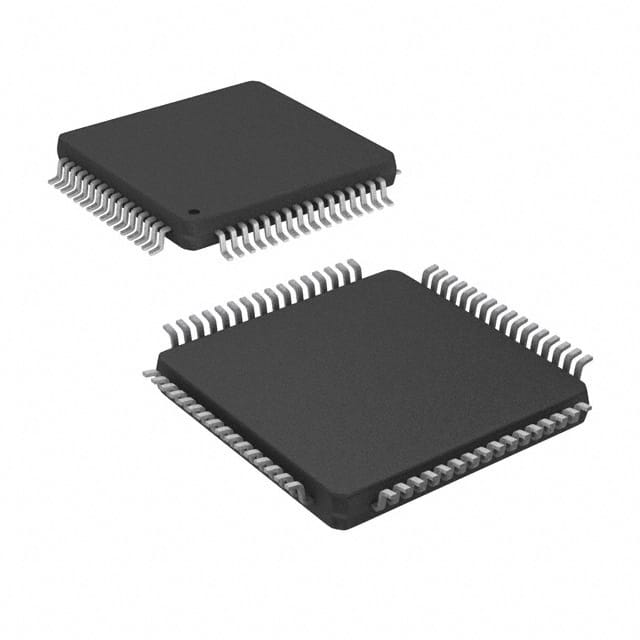
Texas Instruments TAS5508CPAG
- Part No.:
- TAS5508CPAG
- Manufacturer:
- Texas Instruments
- Category:
- Audio Special Purpose
- Package:
- 64-TQFP
- Datasheet:
-
 TAS5508CPAG.pdf
- Description:
- IC MODULATOR 64TQFP
- Quantity:
- Payment:

- Shipping:

Inventory:4,753
Please send an inquiry. Send us your inquiry, and we will respond immediately.
Product details
Overview
TAS5508CPAG from Texas Instruments is an 8-channel digital audio PWM processor with integrated digital audio processing (DAP), I²C control interface, and programmable biquad filters. It supports sample rates up to 192 kHz, delivers >100 dB SNR, and implements dynamic range control (DRC), loudness compensation, and AM interference avoidance for high-fidelity Class-D amplifier systems.
For engineers reviewing the TAS5508CPAG datasheet, TAS5508CPAG pinout, TAS5508CPAG application, or TAS5508CPAG equivalent, key selection criteria include its 8-channel PWM output capability, I²C-configurable DAP architecture, 28-bit/48-bit coefficient precision, and support for I²S, left-justified, and right-justified serial audio formats in consumer AV receivers and multi-zone audio systems.
Technical Context
The TAS5508CPAG integrates a fully programmable digital audio processor with dual-bank register architecture enabling seamless coefficient updates without audio interruption. Its DAP includes input crossbar mixer, eight independent biquad filter sections per channel, bass/treble controls, volume/automute logic, and two-stage DRC with separate control for channels 1–7 and channel 8.
It features a PLL-based clock generator supporting master/slave operation across 32–192 kHz sample rates, PSVC (power-supply volume control) for gain compensation against rail variation, and de-emphasis filtering compliant with CD and DAT standards. The device uses 5.23 and 25.23 fixed-point number formats for coefficient storage and arithmetic.
Key Specifications
| Parameter | Value and Actual Design Meaning |
|---|---|
| Channels | 8 independent PWM outputs for full surround or multi-zone audio distribution |
| Max Sample Rate | 192 kHz - enables high-resolution audio playback and studio-grade source compatibility |
| SNR | 102 dB (A-weighted) - ensures low-noise performance critical for premium home theater systems |
| Coefficient Precision | 28-bit (5.23) and 48-bit (25.23) formats - provides high-resolution filter tuning and stable low-frequency response |
| Serial Audio Interface | I²S, left-justified, right-justified - supports interoperability with diverse DSPs, ADCs, and SoCs |
| DRC Architecture | Two independent DRC engines (DRC1 for ch1–7, DRC2 for ch8) - allows asymmetric compression for LFE or center channel optimization |
| AM Interference Avoidance | Programmable carrier frequency shift (±100 kHz) - suppresses audible AM radio interference in speaker cables |
Pinout & Package
Package: TQFP-64 (10 mm × 10 mm, 0.5 mm pitch), RoHS-compliant, thermally enhanced for audio power stage integration.
| Pin/Terminal | Circuit Role | Design Meaning |
|---|---|---|
| RESET | Asynchronous active-low reset input | Forces device into known state; holds all PWM outputs low and clears internal registers |
| PDN | Active-low power-down control | Enters low-power standby mode; disables PLL, clocks, and PWM generation while retaining register contents |
| MUTE | Hardware mute control | Immediately silences all PWM outputs without interrupting DAP processing or register state |
| HP_SEL | Headphone/line output selector | Switches output mixer routing between headphone DAC path and line-level PWM outputs |
| BKND_ERR | Open-drain back-end error flag | Signals overcurrent, thermal fault, or undervoltage condition from connected Class-D power stage |
| SCL/SDA | I²C serial control interface | Slave address 0x36; supports standard/fast-mode timing for configuration and real-time parameter updates |
| LRCLK/BCLK/DIN | Primary serial audio interface | Accepts I²S/left/right-justified data at up to 192 kHz; supports 16–32 bit word length |
| PWM1–PWM8 | Differential PWM outputs | Eight complementary PWM pairs with 50% duty cycle center point; drive external gate drivers or integrated Class-D stages |
Key Features
| Feature | Design Value |
|---|---|
| Programmable Biquad Filters | 20-byte per-filter register format supporting 8 channels × 8 biquads - enables precise room correction and speaker EQ |
| Loudness Compensation | Configurable via 5-register set (0x91–0x95) with default Fletcher-Munson curve - restores perceived bass/treble at low listening volumes |
| Interchannel Delay | Independent 0–100 ms delay per channel (registers 0x1B–0x22) - supports time-aligned multi-speaker setups and acoustic beamforming |
| Dynamic Range Control | Dual DRC engines with separate threshold, ratio, attack/release parameters - preserves dialogue intelligibility while limiting peak excursion |
| Power-Supply Volume Control (PSVC) | Compensates digital gain based on measured VDD voltage - maintains consistent output level despite rail droop under load |
| De-Emphasis Filtering | Programmable 50 µs / 75 µs / off modes - matches legacy CD/DAT source pre-emphasis for accurate spectral reproduction |
Applications
| Home Theater AV Receiver | Multi-Zone Audio Distribution |
|---|---|
|
Use Scenario: 7.1-channel surround sound system with HDMI audio input, bass management, and zone-selectable outputs. IC Role / Device Role / Timing Role: Central digital audio processor handling channel mixing, speaker EQ, DRC, and 8-channel PWM generation for discrete power stages. Use Value: Enables precise bass/treble control, interchannel delay alignment, and loudness compensation - improving cinematic immersion at varying volume levels. |
Use Scenario: Commercial building with four independent audio zones (lobby, café, offices, patio), each requiring independent volume and content routing. IC Role / Device Role / Timing Role: Audio routing and processing hub accepting single AES3/I²S source and distributing processed streams to 8 PWM outputs mapped across zones. Use Value: Delivers independent volume ramping (register 0xD0), channel-specific DRC, and mute control - eliminating crosstalk and enabling scheduled zone muting. |
| Studio Monitor Controller | High-End Soundbar Processor |
|
Use Scenario: Dual-mono reference monitor system with analog/digital inputs, selectable EQ profiles, and calibrated output level tracking. IC Role / Device Role / Timing Role: Precision digital signal conditioner performing input switching, 28-bit biquad filtering, and PSVC-corrected PWM output for Class-D amplifiers. Use Value: Maintains 102 dB SNR and <0.002% THD+N across full dynamic range - preserving transient fidelity and low-level detail critical for mixing decisions. |
Use Scenario: Slim-profile soundbar with virtual surround, dialogue enhancement, and subwoofer integration using single-board design. IC Role / Device Role / Timing Role: Integrated audio processor managing 3 front channels + 2 virtualized surrounds + 1 LFE path, with dedicated DRC2 for subwoofer compression. Use Value: Leverages channel 8's independent DRC2 engine and programmable interchannel delay - enabling tight phase alignment between main drivers and subwoofer. |
Equivalent & Alternatives
The following parts are listed as comparable options for similar 8-channel digital audio processor applications.
| Alternative Part | Technical Difference | Application Difference | Selection Advice |
|---|---|---|---|
| TAS5518PAP | Successor with 192 kHz support, enhanced DRC, and improved PSVC resolution; same TQFP-64 package and pin-compatible | Targets next-gen AV receivers requiring tighter THD+N (<0.001%) and extended coefficient memory (up to 128 biquads) | Select TAS5518PAP when upgrading for higher audio fidelity and larger filter complexity; retains PCB layout and firmware I²C register map compatibility |
| CS497016-CQZ | 8-channel HD-Audio DSP with 200 MHz MIPS core, floating-point processing, and built-in SRC; QFP-128 package, non-pin-compatible | Used in programmable audio platforms needing real-time algorithm loading, multi-format decoding, and flexible I/O routing | Choose CS497016-CQZ for custom audio processing beyond fixed-function DAP - e.g., Dolby Atmos metadata parsing or adaptive room correction |
Compared with TAS5508CPAG, TAS5518PAP offers higher coefficient resolution and lower noise floor while maintaining drop-in replacement capability, whereas CS497016-CQZ provides programmable architecture at the cost of increased firmware development effort and board space.
Availability
TAS5508CPAG is available at Aetrix Electronics and suitable for home theater receivers, commercial multi-zone audio systems, studio monitoring controllers, and high-end soundbars requiring stable component supply and long-term industrial availability.
Supply support for TAS5508CPAG includes scheduled delivery planning, volume procurement assistance, BOM continuity management, traceable sourcing, and lifecycle availability coordination for OEM customers, industrial embedded developers, connected-device designers, and electronics production programs.
Manufacturer
Texas Instruments is a global semiconductor leader specializing in analog, embedded processing, and digital signal technologies with over 50 years of innovation in audio and power management ICs.
The TAS5508CPAG belongs to TI's PurePath™ Ultra-HD audio processor family, designed specifically for high-fidelity, low-latency digital audio processing in premium consumer and professional audio equipment.
FAQ
What is the primary function of the TAS5508CPAG in an audio system?
The TAS5508CPAG serves as a dedicated 8-channel digital audio processor that performs real-time signal conditioning-including mixing, equalization, dynamic range control, loudness compensation, and PWM generation-for Class-D amplifier systems. It replaces discrete DSP+FPGA+PWM controller combinations with a single, I²C-configurable IC optimized for high-SNR, low-latency audio reproduction. Its architecture enables precise channel alignment and consistent output level control across varying supply conditions.
Does the TAS5508CPAG support I²S, left-justified, and right-justified audio formats?
Yes, the TAS5508CPAG supports all three standard serial audio formats via its LRCLK/BCLK/DIN interface. Configuration is controlled through the Serial Data Interface Control Register (0x0E), allowing selection of I²S (default), left-justified, or right-justified modes at sample rates from 32 kHz to 192 kHz. Each format supports 16–32 bit word lengths and master/slave clocking, making TAS5508CPAG compatible with a wide range of audio SoCs, ADCs, and transport interfaces.
How does the TAS5508CPAG implement dynamic range control (DRC)?
The TAS5508CPAG implements two independent DRC engines: DRC1 for channels 1–7 and DRC2 for channel 8. Each engine uses configurable threshold, ratio, attack, and release parameters stored in dedicated registers (0x96–0xA9). DRC1 applies symmetric compression across main channels, while DRC2 allows tailored treatment of the LFE channel-enabling deeper bass extension without clipping. Both engines operate in the digital domain before PWM modulation, preserving signal integrity.
What is the purpose of the BKND_ERR pin on the TAS5508CPAG?
The BKND_ERR pin is an open-drain output that signals fault conditions from the connected Class-D power stage, such as overcurrent, thermal shutdown, or undervoltage lockout. When asserted, it triggers automatic mute and can be monitored by the host microcontroller via GPIO polling or interrupt. This enables fail-safe behavior in TAS5508CPAG-based systems-preventing damage to speakers or amplifiers during abnormal operating conditions without requiring external supervision circuitry.
Can the TAS5508CPAG perform loudness compensation, and how is it configured?
Yes, the TAS5508CPAG includes programmable loudness compensation aligned with the Fletcher-Munson equal-loudness contour. It is configured using five dedicated registers (0x91–0x95) that define frequency breakpoints, gain offsets, and slope parameters. Default settings provide 10 dB bass boost and 4 dB treble boost at -20 dBFS, scaling inversely with signal level. This feature ensures balanced tonal perception at low listening volumes-critical for nighttime use in home theater and soundbar applications using TAS5508CPAG.
TAS5508CPAG Specifications
- Product attributes
- Attribute value
- Manufacturer:
- Texas Instruments
- Series:
- -
- Package/Case:
- 64-TQFP
- Packaging:
- Bulk
- Product Status:
- Active
- Function:
- Modulator
- Applications:
- Digital Audio Interfacing
- Number of Channels:
- 8
- Interface:
- I2C, I2S
- Voltage - Supply:
- 3V ~ 3.6V
- Operating Temperature:
- 0°C ~ 70°C (TA)
- Specifications:
- 32kHz ~ 192kHz
- Mounting Type:
- Surface Mount
- Grade:
- -
TAS5508CPAG FAQ
1.How can I place an order for TAS5508CPAG through Aetrix?
Please submit a Request for Quotation (RFQ) for TAS5508CPAG on Aetrix. Our sales agent will provide a competitive quotation and guide you through the order confirmation once you accept the terms.
2.Are the price and stock information for TAS5508CPAG reliable?
The price and inventory of TAS5508CPAG are updated periodically and may fluctuate due to market conditions. Stock and pricing data are typically refreshed every 24 hours. Quotation validity for TAS5508CPAG is usually 5 days.
3.What payment methods are accepted for TAS5508CPAG?
We accept Wire Transfer, PayPal, Credit Card, Western Union, MoneyGram, and Escrow for TAS5508CPAG transactions.
Note: Certain payment methods may incur a processing fee.
4.How is shipping managed for TAS5508CPAG?
TAS5508CPAG orders can be shipped via leading logistics carriers, including DHL, UPS, FedEx, TNT, or Registered Mail.
Once your TAS5508CPAG order is processed, you will receive an email with the shipment details and tracking number.
Note: Tracking information may take up to 24 hours to appear. Express delivery typically takes 3–5 business days.
5.How can I obtain technical support or documentation for TAS5508CPAG?
For technical support, including TAS5508CPAG datasheets, pinout diagrams, or application guidance, please contact our engineering support team. They can provide detailed documentation and assistance for your TAS5508CPAG requirements.
6.How does Aetrix verify that TAS5508CPAG is sourced from the original manufacturer or authorized distributors?
All TAS5508CPAG products on Aetrix are procured from qualified distributors and authorized channels. Our dedicated quality assurance team conducts strict verification, including traceability checks and, if necessary, third-party testing. This ensures that TAS5508CPAG meets industry standards.
7.What is the process for return or replacement of TAS5508CPAG?
All TAS5508CPAG units undergo pre-shipment inspection (PSI). If there is an issue with TAS5508CPAG, returns or replacements are accepted under the following conditions:
1.Quantity discrepancies, incorrect items, or visible external defects (such as breakage or corrosion), acknowledged by Aetrix.
2.The issue is reported within 90 days of delivery.
3.The TAS5508CPAG part is unused and in its original packaging.
Return procedure for TAS5508CPAG:
1.Submit a request within 90 days.
2.Obtain a Return Material Authorization (RMA) from Aetrix.
TAS5508CPAG Tags
-
SA571DR2G
onsemi
-
ADAU7002ACBZ-R7
Analog Devices Inc.

-
DRV135UA/2K5
Texas Instruments
-
DRV134UA/1K
Texas Instruments
-
DRV134PA
Texas Instruments
-
DRV134UA
Texas Instruments
-
DRV135UA
Texas Instruments
-
SA572DR2G
onsemi
-
PGA2311U/1K
Texas Instruments
-
SI8244BB-D-IS1R
Skyworks Solutions Inc.

-
CS8416K-CZZR
Cirrus Logic Inc.
-
SRC4392IPFBR
Texas Instruments
Tech Hub

A practical engineering guide to 3.3V and 5V logic compatibility, input thresholds, resistor dividers, translator ICs, MOSFET level shifting, I2C pull-ups, timing limits and power-sequencing risks.

The 74HC595 uses push-pull logic outputs, while the TPIC6B595 uses 50 V open-drain DMOS sinks for higher-power loads. This guide compares timing, current limits, 3.3 V interfacing, load wiring, thermal…

The 74HC595 converts serial data into eight stable parallel outputs. This guide covers pin functions, shift and storage timing, OE and MR behavior, drive-current limits, cascading, voltage compatibilit…

A technical comparison of level-sensitive latches and edge-triggered flip-flops, covering timing windows, setup and hold limits, master–slave operation, time borrowing, race-through, HDL inference and…

A D latch stores one bit while Enable controls when data can pass. This reference covers gate-level operation, truth tables, transparency, setup and hold timing, LE versus OE, common ICs and practical …

An SR latch stores one bit through cross-coupled feedback. This engineering reference covers NOR and NAND implementations, truth tables, forbidden-state recovery, gated operation, switch debouncing, fa…

Latch circuits retain one bit through feedback. This technical reference covers SR and D latches, truth tables, transparency, timing limits, latch-versus-flip-flop behavior, applications and common log…

An engineering guide to LED driver operation, constant-current and constant-voltage outputs, linear and switching topologies, dimming, IC selection, calculations, replacement compatibility, and fault c…

Operational amplifier guide covering op amp basics, feedback, ideal vs real op amps, common configurations, buffer circuits, offset, bias current, gain-bandwidth, slew rate, rail-to-rail limits and sel…

Jumper cables guide covering safe connection order, red and black clamp placement, final ground connection, cable gauge, length, clamp quality, copper vs CCA cables, jump starter comparison and battery…


