
 My Inquiry
 My Account


Toshiba Semiconductor and Storage TB62261FTAG,EL
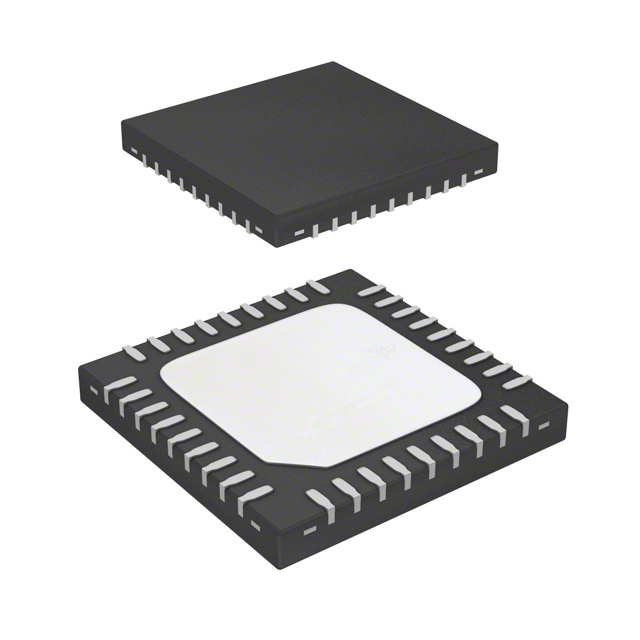
- Part No.:
- TB62261FTAG,EL
- Manufacturer:
- Toshiba Semiconductor and Storage
- Category:
- Motor Drivers, Controllers
- Package:
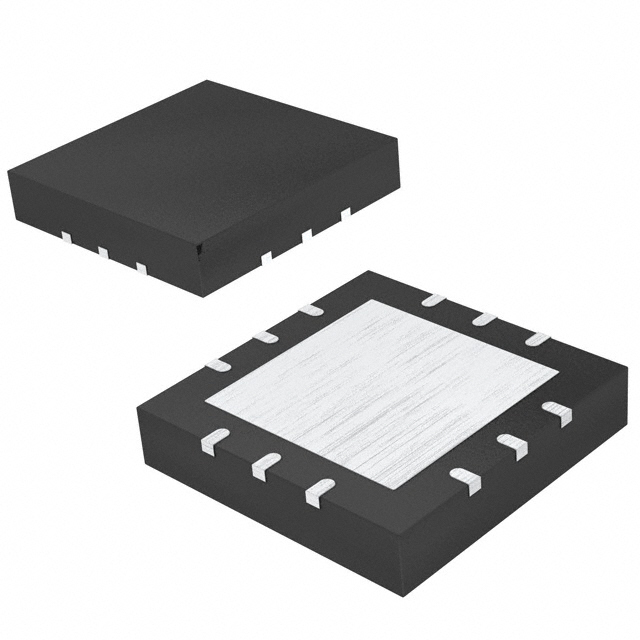
- 36-WFQFN Exposed Pad
- Datasheet:
-
 TB62261FTAG,EL.pdf
- Description:
- IC MOTOR DRIVER BIPOLAR 36WQFN
- Quantity:
- Payment:

- Shipping:

Inventory:4,762
Please send an inquiry. Send us your inquiry, and we will respond immediately.
Product details
Overview
TB62261FTAG from Toshiba Electronic Devices & Storage Corporation is a two-phase bipolar stepping motor driver IC using PWM chopper control with PHASE-in interface logic. It delivers 1.2 A typical output current per phase at up to 35 V VM supply, features integrated thermal shutdown (TSD) and over-current detection (ISD), and supports full/half/quarter-step resolution for precision motion control in compact industrial actuators.
For engineers reviewing the TB62261FTAG datasheet, TB62261FTAG pinout, TB62261FTAG application, or TB62261FTAG equivalent, key selection considerations include its 0.8 Ω (typ.) high-side + low-side MOSFET on-resistance, external OSCM frequency tuning via R/C network, VREF-based current threshold setting, and QFN36 package thermal management requirements.
Technical Context
The TB62261FTAG implements a mixed-decay PWM chopper architecture with three-mode transistor control (CHARGE/SLOW/FAST) per H-bridge leg, enabling precise constant-current regulation across step resolutions. Its dual-channel design includes independent VREF_A/VREF_B pins for asymmetric current tuning and dedicated RS_A/RS_B sense inputs with 27 µA max bias current.
Motor phase sequencing is determined by PHASE_A/PHASE_B and IN_A1/IN_A2/IN_B1/IN_B2 logic states, with real-time zero-current detection triggering Hi-Z output during decay transitions. The internal oscillator (fOSCM = 1.2–2.0 MHz, configurable via OSCM pin) feeds a 1/16 divider to set chopper frequency between 40–150 kHz, balancing ripple suppression and thermal efficiency.
Key Specifications
| Parameter | Value and Actual Design Meaning |
|---|---|
| Output Current | 1.2 A typical per phase - enables driving NEMA 17–23 stepper motors with torque retention at higher speeds |
| VM Supply Range | 10–35 V - supports 24 V industrial bus systems while allowing headroom for back-EMF spikes |
| On-Resistance | 0.8 Ω (typ., high + low side) - reduces conduction loss and junction heating under continuous 1 A load |
| Chopper Frequency | 70 kHz typical (40–150 kHz range) - balances current ripple (<5% at 100 kHz) against gate switching losses |
| TSD Threshold | 145–175 °C - provides fail-safe thermal protection before permanent silicon damage occurs |
| VREF Input Range | 2.0–3.6 V - sets peak current via IOUT = VREF/5.0/RSENSE, supporting 0.8–1.5 A calibration |
| Logic Compatibility | 3.3 V / 5 V tolerant inputs - interfaces directly with microcontrollers without level-shifting |
Pinout & Package
P-WQFN36-0606-0.50-002: 6 mm × 6 mm, 0.5 mm pitch, exposed thermal pad - requires PCB GND connection on all four corners and center pad for effective heat dissipation (RθJA = 96 °C/W on 4-layer board).
| Pin/Terminal | Circuit Role | Design Meaning |
|---|---|---|
| 1, 2, 33–36 | Step resolution & phase control | IN_A1/IN_A2/IN_B1/IN_B2 define quarter-step current amplitude; PHASE_A/PHASE_B set winding polarity |
| 3, 29 | Standby & ground | STANDBY = L disables oscillator and outputs; GND pins (4,10,13,15,18,29) must be star-connected to minimize noise coupling |
| 6–7, 21–22 | Current sense inputs | RS_A1/RS_A2 and RS_B1/RS_B2 connect to low-side shunt resistors; internal 27 µA bias enables accurate 0.5–1.5 A sensing |
| 8–9, 11–12, 16–17, 19–20 | H-bridge outputs | Paired OUT_A+/OUT_A− and OUT_B+/OUT_B− drive motor windings; each pair shares identical current path and thermal behavior |
| 30–31 | Current threshold reference | VREF_A/VREF_B set per-channel peak current independently; 1/5.0 gain allows 3.0 V → 1.18 A with 0.51 Ω shunt |
| 32 | Oscillator tuning | OSCM pin accepts RC network (e.g., 3.6 kΩ + 270 pF) to configure fOSCM = 1.6 MHz → fchop ≈ 100 kHz |
Key Features
| Feature | Design Value |
|---|---|
| Integrated BiCD process | Enables monolithic integration of high-voltage DMOS drivers and precision analog circuits on single die |
| Mixed-decay PWM control | Automatically transitions between SLOW/FAST modes during current decay to minimize ripple and power loss |
| Dual independent current tuning | VREF_A and VREF_B allow asymmetric current profiles for torque optimization in unbalanced mechanical loads |
| Built-in protection suite | Simultaneous TSD (145–175 °C), ISD (2.1–4.0 A), and POR ensure robust operation under fault conditions |
| Configurable chopper frequency | External R/C on OSCM pin permits system-level trade-off between current smoothness and thermal performance |
Applications
| Industrial CNC Positioning | Medical Infusion Pump Actuation |
|---|---|
Use Scenario: Closed-loop X-Y table movement in desktop CNC mills with sub-0.01 mm repeatability. IC Role / Device Role / Timing Role: TB62261FTAG serves as the primary stepper driver, translating microcontroller PHASE/IN commands into bidirectional PWM-controlled coil currents. Use Value: Full/half/quarter-step support enables microstepping resolution matching encoder feedback, while 1.2 A drive current maintains torque at 300 RPM under 24 V supply. | Use Scenario: Precise syringe plunger advancement in battery-powered portable infusion pumps. IC Role / Device Role / Timing Role: TB62261FTAG regulates motor current to deliver consistent flow rates (0.1–10 mL/hr) with minimal acoustic noise. Use Value: Low 0.8 Ω on-resistance minimizes self-heating in sealed enclosures, and STANDBY mode reduces quiescent current to 2.5 mA during idle periods. |
| Automated Retail Vending Mechanism | Lab Automation Sample Carousel |
Use Scenario: Product dispensing carousel requiring reliable start/stop cycles with variable load inertia. IC Role / Device Role / Timing Role: TB62261FTAG drives a 2-phase bipolar stepper to rotate indexed trays, responding to discrete PHASE pulses from PLC outputs. Use Value: Built-in ISD detection prevents coil burnout during jammed-can events, and 40 V absolute max rating accommodates 36 V boost supplies for high-torque acceleration. | Use Scenario: 24-position sample carousel in benchtop analyzers requiring silent, vibration-free indexing. IC Role / Device Role / Timing Role: TB62261FTAG executes quarter-step sequences under microcontroller command to achieve 0.9° mechanical resolution. Use Value: Configurable chopping frequency (70 kHz default) suppresses audible motor whine while maintaining <2% current ripple for stable positioning. |
Equivalent & Alternatives
The following parts are listed as comparable options for similar bipolar stepper motor driver applications.
| Alternative Part | Technical Difference | Application Difference | Selection Advice |
|---|---|---|---|
| STSPIN220TR | Lower voltage rating (45 V vs. 40 V abs max), integrated current sense amplifier, no external OSCM tuning | Requires fewer external components but lacks independent VREF per channel | Preferred for space-constrained designs where fixed 1.2 A current and simplified layout outweigh tunability needs |
| MP6500GQZ-P | Higher current capability (2.5 A), integrated 3.3 V LDO, different pinout and step-resolution encoding | Supports higher torque motors but demands PCB redesign due to non-compatible footprint | Selected when >1.5 A phase current or integrated logic supply is required, accepting layout revision cost |
Compared with STSPIN220TR and MP6500GQZ-P, the TB62261FTAG offers unique per-channel VREF tuning and external chopper frequency control-critical for optimizing torque consistency across varying motor inductances and thermal environments-while maintaining pin compatibility within Toshiba's QFN36 stepper driver family.
Availability
TB62261FTAG is available at Aetrix Electronics and suitable for industrial CNC positioning, medical infusion pump actuation, automated retail vending mechanisms, and lab automation sample carousels requiring stable component supply and long-term production continuity.
Supply support for TB62261FTAG includes scheduled delivery planning, volume procurement assistance, BOM continuity management, traceable sourcing, and lifecycle availability coordination for OEM customers, industrial embedded developers, connected-device designers, and electronics production programs.
Manufacturer
Toshiba Electronic Devices & Storage Corporation designs high-reliability semiconductor solutions for industrial, automotive, and consumer applications, with expertise in BiCD process technology and motor control IP.
The TB62261FTAG belongs to Toshiba's bipolar stepper driver product line, engineered specifically for compact, thermally constrained motion systems requiring precise current regulation, integrated protection, and flexible step resolution without external controllers.
FAQ
What is the maximum continuous output current supported by the TB62261FTAG?
The TB62261FTAG supports 1.2 A typical continuous output current per phase under standard operating conditions (Ta = 25°C, VM = 24 V, 4-layer PCB). Absolute maximum rating is 1.5 A, but sustained operation above 1.2 A requires careful thermal design-including exposed pad soldering to GND and copper pour-to prevent TSD activation at junction temperatures exceeding 145°C.
How does the TB62261FTAG implement current regulation without external current-sense amplifiers?
The TB62261FTAG uses an internal current-comparison architecture that monitors voltage drop across external low-value shunt resistors (RS_A1/RS_A2 and RS_B1/RS_B2) connected to its dedicated sense pins. With a fixed 1/5.0 VREF gain, it compares this sensed voltage against the VREF_A/VREF_B reference to generate PWM duty cycle adjustments-eliminating need for external op-amps or comparators while maintaining ±5% current accuracy.
Can the TB62261FTAG drive unipolar stepper motors?
No, the TB62261FTAG is designed exclusively for two-phase bipolar stepper motors. Its H-bridge output stage (OUT_A+/OUT_A− and OUT_B+/OUT_B−) requires center-tap–free windings and cannot interface with unipolar motors' five- or six-wire configurations. Attempting unipolar operation would result in incorrect current paths and potential device damage due to improper biasing of internal transistors.
What is the purpose of the OSCM pin on the TB62261FTAG, and how is it configured?
OSCM pin sets the internal oscillator frequency that determines chopper timing. It is configured with an external resistor (e.g., 3.6 kΩ) and capacitor (e.g., 270 pF) to ground, yielding fOSCM ≈ 1.6 MHz and fchop ≈ 100 kHz. This tuning allows designers to optimize trade-offs: higher frequencies reduce current ripple but increase switching losses; lower frequencies improve thermal efficiency at the cost of increased ripple amplitude.
Does the TB62261FTAG require external flyback diodes for back-EMF protection?
No, the TB62261FTAG integrates body diodes within its MOSFET H-bridge outputs, eliminating need for external flyback diodes. However, system-level back-EMF management remains critical: the power supply must provide adequate sink capability during motor deceleration, and PCB layout must minimize inductance in VM/GND paths to prevent voltage overshoot beyond the 40 V absolute maximum rating.
TB62261FTAG,EL Specifications
- Product attributes
- Attribute value
- Manufacturer:
- Toshiba Semiconductor and Storage
- Series:
- -
- Package/Case:
- 36-WFQFN Exposed Pad
- Packaging:
- Tape & Reel (TR)
- Product Status:
- Active
- Motor Type - Stepper:
- Bipolar
- Motor Type - AC, DC:
- Brushed DC
- Function:
- Driver - Fully Integrated, Control and Power Stage
- Output Configuration:
- Half Bridge (4)
- Interface:
- Parallel
- Technology:
- Power MOSFET
- Step Resolution:
- 1, 1/2, 1/4
- Applications:
- Appliance
- Current - Output:
- 800mA
- Voltage - Supply:
- 4.75V ~ 5.25V
- Voltage - Load:
- 10V ~ 35V
- Operating Temperature:
- -20°C ~ 150°C (TJ)
- Grade:
- -
- Qualification:
- -
- Mounting Type:
- Surface Mount
- Supplier Device Package:
- 36-WQFN (6x6)
TB62261FTAG,EL FAQ
1.How can I place an order for TB62261FTAG,EL through Aetrix?
Please submit a Request for Quotation (RFQ) for TB62261FTAG,EL on Aetrix. Our sales agent will provide a competitive quotation and guide you through the order confirmation once you accept the terms.
2.Are the price and stock information for TB62261FTAG,EL reliable?
The price and inventory of TB62261FTAG,EL are updated periodically and may fluctuate due to market conditions. Stock and pricing data are typically refreshed every 24 hours. Quotation validity for TB62261FTAG,EL is usually 5 days.
3.What payment methods are accepted for TB62261FTAG,EL?
We accept Wire Transfer, PayPal, Credit Card, Western Union, MoneyGram, and Escrow for TB62261FTAG,EL transactions.
Note: Certain payment methods may incur a processing fee.
4.How is shipping managed for TB62261FTAG,EL?
TB62261FTAG,EL orders can be shipped via leading logistics carriers, including DHL, UPS, FedEx, TNT, or Registered Mail.
Once your TB62261FTAG,EL order is processed, you will receive an email with the shipment details and tracking number.
Note: Tracking information may take up to 24 hours to appear. Express delivery typically takes 3–5 business days.
5.How can I obtain technical support or documentation for TB62261FTAG,EL?
For technical support, including TB62261FTAG,EL datasheets, pinout diagrams, or application guidance, please contact our engineering support team. They can provide detailed documentation and assistance for your TB62261FTAG,EL requirements.
6.How does Aetrix verify that TB62261FTAG,EL is sourced from the original manufacturer or authorized distributors?
All TB62261FTAG,EL products on Aetrix are procured from qualified distributors and authorized channels. Our dedicated quality assurance team conducts strict verification, including traceability checks and, if necessary, third-party testing. This ensures that TB62261FTAG,EL meets industry standards.
7.What is the process for return or replacement of TB62261FTAG,EL?
All TB62261FTAG,EL units undergo pre-shipment inspection (PSI). If there is an issue with TB62261FTAG,EL, returns or replacements are accepted under the following conditions:
1.Quantity discrepancies, incorrect items, or visible external defects (such as breakage or corrosion), acknowledged by Aetrix.
2.The issue is reported within 90 days of delivery.
3.The TB62261FTAG,EL part is unused and in its original packaging.
Return procedure for TB62261FTAG,EL:
1.Submit a request within 90 days.
2.Obtain a Return Material Authorization (RMA) from Aetrix.
TB62261FTAG,EL Tags
-
DRV2603RUNR
Texas Instruments
-
DRV8837CDSGR
Texas Instruments
-
DRV8837DSGR
Texas Instruments
-
DRV8838DSGR
Texas Instruments
-
DRV8839DSSR
Texas Instruments
-
EMC2301-1-ACZL-TR
Microchip Technology
-
DRV8231ADSGR
Texas Instruments
-
EMC2302-2-AIZL-TR
Microchip Technology
-
DRV8800PWPR
Texas Instruments
-
DRV8835DSSR
Texas Instruments
-
EMC2303-1-KP-TR
Microchip Technology
-
DRV8876PWPR
Texas Instruments
Tech Hub

Counterfeit components can hide behind convincing markings and passing basic function tests. This engineering reference covers source traceability, external inspection, X-ray, XRF, electrical testing, …

A practical engineering and sourcing framework covering lifecycle verification, lifetime-buy calculations, replacement qualification, supplier checks and counterfeit-risk controls.

TTL and CMOS logic families differ in thresholds, loading, output drive, power and timing. This engineering guide compares 74HC and 74HCT, calculates noise margins and checks 3.3 V/5 V compatibility.

A practical engineering guide to 3.3V and 5V logic compatibility, input thresholds, resistor dividers, translator ICs, MOSFET level shifting, I2C pull-ups, timing limits and power-sequencing risks.

The 74HC595 uses push-pull logic outputs, while the TPIC6B595 uses 50 V open-drain DMOS sinks for higher-power loads. This guide compares timing, current limits, 3.3 V interfacing, load wiring, thermal…

The 74HC595 converts serial data into eight stable parallel outputs. This guide covers pin functions, shift and storage timing, OE and MR behavior, drive-current limits, cascading, voltage compatibilit…

A technical comparison of level-sensitive latches and edge-triggered flip-flops, covering timing windows, setup and hold limits, master–slave operation, time borrowing, race-through, HDL inference and…

A D latch stores one bit while Enable controls when data can pass. This reference covers gate-level operation, truth tables, transparency, setup and hold timing, LE versus OE, common ICs and practical …

An SR latch stores one bit through cross-coupled feedback. This engineering reference covers NOR and NAND implementations, truth tables, forbidden-state recovery, gated operation, switch debouncing, fa…

Latch circuits retain one bit through feedback. This technical reference covers SR and D latches, truth tables, transparency, timing limits, latch-versus-flip-flop behavior, applications and common log…


