
 My Inquiry
 My Account


Toshiba Semiconductor and Storage TB62D787FTG,EL
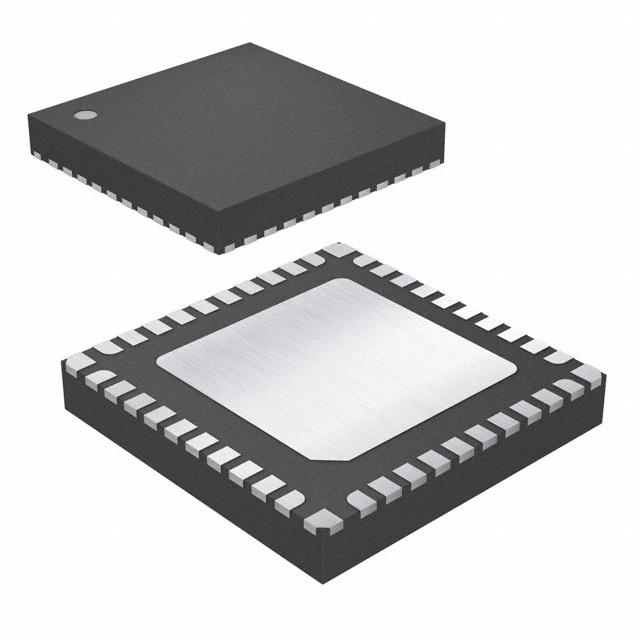
- Part No.:
- TB62D787FTG,EL
- Manufacturer:
- Toshiba Semiconductor and Storage
- Category:
- LED Drivers
- Package:
- 40-VFQFN Exposed Pad
- Datasheet:
-
 TB62D787FTG,EL.pdf
- Description:
- IC LED DRVR LIN PWM 40MA 40VQFN
- Quantity:
- Payment:

- Shipping:

Inventory:4,000
Please send an inquiry. Send us your inquiry, and we will respond immediately.
Product details
Overview
TB62D787FTG from Toshiba Electronic Devices & Storage Corporation is a 24-channel constant-current LED driver IC with integrated 7-bit PWM dimming control, single-wire serial interface, and per-color current-setting resistors (R/G/B). It delivers up to 40 mA per channel across three color blocks (R/G/B), operates from 7–28 V LED supply (VL) or separate 5 V logic supply (Vcc), and supports individual addressing of up to 64 drivers in daisy-chained LED lighting systems.
For engineers reviewing the TB62D787FTG datasheet, TB62D787FTG pinout, TB62D787FTG application, or TB62D787FTG equivalent, this page provides verified technical context on its single-wire data protocol, open-drain constant-current outputs for common-anode LEDs, thermal shutdown protection, and BiCD process–enabled high-speed data transfer - all critical for architectural decisions in RGB signage, architectural lighting, and display backlighting.
Technical Context
The TB62D787FTG implements a Manchester-encoded single-wire asynchronous interface where logic states are determined by transitions (H→L or L→H), eliminating clock line requirements. Its internal architecture divides the 24 outputs into three 8-channel groups (R/G/B), each configured via dedicated external current-setting resistors (REXT-R/G/B).
Each channel features an open-drain constant-current sink with 0.5 V minimum compliance voltage at 5–40 mA, and integrates independent 7-bit PWM counters synchronized to an internal oscillator. Addressing uses a 3-bit ID setting (ID0–ID2) enabling up to 64 unique slave addresses, with programmable modes including per-channel, all-channel, special (24-channel batch), 12-channel, and 6-channel data loading sequences.
Key Specifications
| Parameter | Value and Actual Design Meaning |
|---|---|
| Output channels | 24 open-drain constant-current sinks, grouped as 8×R / 8×G / 8×B for RGB LED arrays |
| PWM resolution | 7-bit (128 steps), enabling precise luminance control from 0/127 (off) to 127/127 (fully on) |
| Current range per channel | 5–40 mA, set externally via REXT-R/G/B resistors; ±3% matching between channels |
| Supply voltage | VL = 7–28 V (shared LED power rail); Vcc = 4.5–5.5 V (separate logic supply) |
| Output withstand voltage | 28 V max - supports common-anode LED strings with up to 27 V forward drop |
| Operating temperature | −40°C to +85°C - qualified for industrial and outdoor lighting environments |
| Interface | Single DATA-IN wire with Manchester encoding; no clock required; DATA-OUT provides buffered echo |
Pinout & Package
P-VQFN40-0606-0.50-001: 40-pin, 6 mm × 6 mm, 0.5 mm pitch, exposed thermal pad (must be connected to GND).
| Pin/Terminal | Circuit Role | Design Meaning |
|---|---|---|
| /OUTR0–/OUTR7 | Constant-current sink output (red channel) | Open-drain, supports common-anode red LEDs; 8 dedicated pins |
| /OUTG0–/OUTG7 | Constant-current sink output (green channel) | Open-drain, supports common-anode green LEDs; 8 dedicated pins |
| /OUTB0–/OUTB7 | Constant-current sink output (blue channel) | Open-drain, supports common-anode blue LEDs; 8 dedicated pins |
| REXT-R/G/B | External current-setting resistor connection | Each sets full-scale current for its respective 8-channel color block |
| ID0–ID2 | 3-bit hardware address configuration | Enables up to 64 unique device IDs in multi-driver systems |
| DATA-IN / DATA-OUT | Asynchronous serial interface I/O | Manchester-encoded single-wire input; DATA-OUT echoes signal for daisy-chain verification |
| VL / VLOUT / Vcc / GND / PGND | Power and ground terminals | VL powers LED strings; VLOUT supplies regulated 5 V to Vcc when shared; PGND handles high-current return paths |
Key Features
| Feature | Design Value |
|---|---|
| Single-wire serial interface | Eliminates clock line and reduces PCB routing complexity in multi-driver LED systems |
| Per-color current tuning | Independent REXT-R/G/B pins enable precise white-point calibration and color balance across RGB channels |
| Thermal shutdown (TSD) | Protects against overtemperature failure during sustained high-current operation or poor heatsinking |
| Daisy-chain capability | DATA-OUT pin allows cascading multiple TB62D787FTG devices without additional controllers |
| Flexible programming modes | Supports per-channel, all-channel, 12-channel, and 6-channel data loading - optimizing update latency vs. data overhead |
Applications
| Architectural LED Strips | RGB Video Signage |
|---|---|
Use Scenario: Long linear LED strips with individually addressable RGB pixels for building façade illumination. IC Role / Device Role / Timing Role: Constant-current sink driver with per-pixel PWM dimming and daisy-chain data forwarding. Use Value: Enables uniform brightness and color fidelity across 24-output segments while minimizing interconnect wiring via single-wire control. | Use Scenario: High-resolution outdoor LED displays requiring synchronized RGB channel control and thermal resilience. IC Role / Device Role / Timing Role: Channel-isolated current driver with 7-bit PWM timing and built-in TSD for continuous operation under solar heating. Use Value: Delivers stable 40 mA per channel at 85°C ambient, supporting high-brightness pixel density without derating. |
| Backlight Driver for Large Panels | Stage Lighting Systems |
Use Scenario: Edge-lit or direct-lit LCD backlights using RGB LED arrays for wide-gamut color reproduction. IC Role / Device Role / Timing Role: Precision current source with independent R/G/B current scaling and synchronized PWM dimming. Use Value: Achieves <±3% current matching between channels, critical for accurate white-point stability and grayscale linearity. | Use Scenario: DMX-controlled moving head lights and PAR cans requiring rapid, flicker-free intensity modulation. IC Role / Device Role / Timing Role: High-speed single-wire receiver with sub-millisecond update latency and robust noise immunity. Use Value: Manchester encoding ensures reliable data reception in electrically noisy stage environments without clock skew issues. |
Equivalent & Alternatives
The following parts are listed as comparable options for similar LED driver applications.
| Alternative Part | Technical Difference | Application Difference | Selection Advice |
|---|---|---|---|
| TB62D786FTG | 24-channel, same package and pinout, but lacks integrated 5 V regulator (VLOUT) and requires external Vcc regulation | Suitable only where 5 V rail is already stabilized; not usable in VL-shared configurations | Select when system already provides clean 5 V and board space is constrained - eliminates need for external LDO |
| AL8863SP-13 | 12-channel, boost-based constant-current controller with analog/digital dimming; no integrated PWM or single-wire interface | Requires external MCU for PWM generation and communication; suited for lower-channel-count, high-efficiency DC-DC designs | Choose for battery-powered or efficiency-critical applications where channel count ≤12 and external control is acceptable |
Compared with TB62D786FTG, the TB62D787FTG adds integrated VLOUT for simplified power architecture, while AL8863SP-13 trades channel density and interface simplicity for higher conversion efficiency and flexibility in input voltage range - making TB62D787FTG optimal for scalable, low-complexity RGB LED systems.
Availability
TB62D787FTG is available at Aetrix Electronics and suitable for architectural lighting, RGB signage, large-panel backlighting, and stage lighting applications requiring stable component supply, long-term production continuity, and guaranteed traceability.
Supply support for TB62D787FTG includes scheduled delivery planning, volume procurement assistance, BOM continuity management, traceable sourcing, and lifecycle availability coordination for OEM customers, industrial embedded developers, connected-device designers, and electronics production programs.
Manufacturer
Toshiba Electronic Devices & Storage Corporation designs and manufactures semiconductor solutions for power management, motor control, and optical devices, with global manufacturing and quality certifications.
The TB62D787FTG belongs to Toshiba's BiCD-process LED driver family, engineered specifically for high-density RGB LED systems requiring single-wire scalability, thermal robustness, and per-color current precision.
FAQ
What is the maximum number of TB62D787FTG devices that can be addressed on a single data bus?
The TB62D787FTG supports up to 64 unique slave addresses via hardware-configurable ID0–ID2 pins (3-bit address space). Each device must have a distinct combination of GND/Vcc/REXT connections on these pins. The TB62D787FTG does not require address decoding circuitry - addressing is handled entirely within the IC's internal logic upon start command recognition.
How does the TB62D787FTG achieve constant current accuracy across all 24 channels?
The TB62D787FTG achieves ±3.0% constant-current accuracy between channels and ±6.0% between ICs by using matched internal current mirror structures and dedicated external resistors (REXT-R/G/B) per color group. Accuracy is specified at 15 mA output current and 0.5 V compliance voltage. Layout symmetry and Kelvin sensing of REXT pins further minimize PCB-induced errors in the TB62D787FTG design.
Can the TB62D787FTG drive common-cathode LED configurations?
No, the TB62D787FTG is designed exclusively for common-anode LED configurations. All 24 output pins (/OUTR0–/OUTB7) are open-drain constant-current sinks - they pull current from the LED anode toward PGND/GND. Driving common-cathode LEDs would require sourcing current, which the TB62D787FTG does not support. Attempting such use may result in improper operation or damage.
What happens if the TEST pin on the TB62D787FTG is left floating?
If the TEST pin (pin 29) is left floating, the TB62D787FTG will not operate normally - it may fail to initialize, exhibit erratic data reception, or remain in reset. The datasheet explicitly requires TEST to be connected to GND during normal operation. This pin is reserved for factory testing; any non-GND state (including open or high) disables functional behavior of the TB62D787FTG.
Does the TB62D787FTG support daisy-chaining, and how is it implemented?
Yes, the TB62D787FTG supports daisy-chaining via its DATA-OUT pin (pin 27), which buffers and retransmits the DATA-IN signal after internal processing. In a chain, DATA-IN of device N+1 connects to DATA-OUT of device N. Each device recognizes its own address and forwards unrecognized data - enabling single-controller control of dozens of TB62D787FTG devices with minimal wiring.
TB62D787FTG,EL Specifications
- Product attributes
- Attribute value
- Manufacturer:
- Toshiba Semiconductor and Storage
- Series:
- -
- Package/Case:
- 40-VFQFN Exposed Pad
- Packaging:
- Tape & Reel (TR)
- Product Status:
- Active
- Type:
- Linear
- Topology:
- -
- Internal Switch(s):
- Yes
- Number of Outputs:
- 24
- Voltage - Supply (Min):
- 7V
- Voltage - Supply (Max):
- 28V
- Voltage - Output:
- 0.5V ~ 4V
- Current - Output / Channel:
- 40mA
- Frequency:
- -
- Dimming:
- PWM
- Applications:
- -
- Operating Temperature:
- -40°C ~ 85°C
- Grade:
- -
- Qualification:
- -
- Mounting Type:
- Surface Mount
- Supplier Device Package:
- 40-VQFN (6x6)
TB62D787FTG,EL FAQ
1.How can I place an order for TB62D787FTG,EL through Aetrix?
Please submit a Request for Quotation (RFQ) for TB62D787FTG,EL on Aetrix. Our sales agent will provide a competitive quotation and guide you through the order confirmation once you accept the terms.
2.Are the price and stock information for TB62D787FTG,EL reliable?
The price and inventory of TB62D787FTG,EL are updated periodically and may fluctuate due to market conditions. Stock and pricing data are typically refreshed every 24 hours. Quotation validity for TB62D787FTG,EL is usually 5 days.
3.What payment methods are accepted for TB62D787FTG,EL?
We accept Wire Transfer, PayPal, Credit Card, Western Union, MoneyGram, and Escrow for TB62D787FTG,EL transactions.
Note: Certain payment methods may incur a processing fee.
4.How is shipping managed for TB62D787FTG,EL?
TB62D787FTG,EL orders can be shipped via leading logistics carriers, including DHL, UPS, FedEx, TNT, or Registered Mail.
Once your TB62D787FTG,EL order is processed, you will receive an email with the shipment details and tracking number.
Note: Tracking information may take up to 24 hours to appear. Express delivery typically takes 3–5 business days.
5.How can I obtain technical support or documentation for TB62D787FTG,EL?
For technical support, including TB62D787FTG,EL datasheets, pinout diagrams, or application guidance, please contact our engineering support team. They can provide detailed documentation and assistance for your TB62D787FTG,EL requirements.
6.How does Aetrix verify that TB62D787FTG,EL is sourced from the original manufacturer or authorized distributors?
All TB62D787FTG,EL products on Aetrix are procured from qualified distributors and authorized channels. Our dedicated quality assurance team conducts strict verification, including traceability checks and, if necessary, third-party testing. This ensures that TB62D787FTG,EL meets industry standards.
7.What is the process for return or replacement of TB62D787FTG,EL?
All TB62D787FTG,EL units undergo pre-shipment inspection (PSI). If there is an issue with TB62D787FTG,EL, returns or replacements are accepted under the following conditions:
1.Quantity discrepancies, incorrect items, or visible external defects (such as breakage or corrosion), acknowledged by Aetrix.
2.The issue is reported within 90 days of delivery.
3.The TB62D787FTG,EL part is unused and in its original packaging.
Return procedure for TB62D787FTG,EL:
1.Submit a request within 90 days.
2.Obtain a Return Material Authorization (RMA) from Aetrix.
TB62D787FTG,EL Tags
-
BCR402RE6327HTSA1
Infineon Technologies

-
BCR430UXTSA2
Infineon Technologies
-
BCR420UE6433HTMA1
Infineon Technologies
-
BCR420UE6327HTSA1
Infineon Technologies
-
BCR421UE6327HTSA1
Infineon Technologies
-
LYT1604D-TL
Power Integrations

-
HV9910CLG-G
Microchip Technology

-
CL2N8-G
Microchip Technology
-
BCR420UW6-7
Diodes Incorporated
-
BCR421UW6-7
Diodes Incorporated
-
BCR420UFD-7
Diodes Incorporated
-
BCR421UFD-7
Diodes Incorporated
Tech Hub

Counterfeit components can hide behind convincing markings and passing basic function tests. This engineering reference covers source traceability, external inspection, X-ray, XRF, electrical testing, …

A practical engineering and sourcing framework covering lifecycle verification, lifetime-buy calculations, replacement qualification, supplier checks and counterfeit-risk controls.

TTL and CMOS logic families differ in thresholds, loading, output drive, power and timing. This engineering guide compares 74HC and 74HCT, calculates noise margins and checks 3.3 V/5 V compatibility.

A practical engineering guide to 3.3V and 5V logic compatibility, input thresholds, resistor dividers, translator ICs, MOSFET level shifting, I2C pull-ups, timing limits and power-sequencing risks.

The 74HC595 uses push-pull logic outputs, while the TPIC6B595 uses 50 V open-drain DMOS sinks for higher-power loads. This guide compares timing, current limits, 3.3 V interfacing, load wiring, thermal…

The 74HC595 converts serial data into eight stable parallel outputs. This guide covers pin functions, shift and storage timing, OE and MR behavior, drive-current limits, cascading, voltage compatibilit…

A technical comparison of level-sensitive latches and edge-triggered flip-flops, covering timing windows, setup and hold limits, master–slave operation, time borrowing, race-through, HDL inference and…

A D latch stores one bit while Enable controls when data can pass. This reference covers gate-level operation, truth tables, transparency, setup and hold timing, LE versus OE, common ICs and practical …

An SR latch stores one bit through cross-coupled feedback. This engineering reference covers NOR and NAND implementations, truth tables, forbidden-state recovery, gated operation, switch debouncing, fa…

Latch circuits retain one bit through feedback. This technical reference covers SR and D latches, truth tables, transparency, timing limits, latch-versus-flip-flop behavior, applications and common log…


