
 My Inquiry
 My Account


Toshiba Semiconductor and Storage TB9057FG
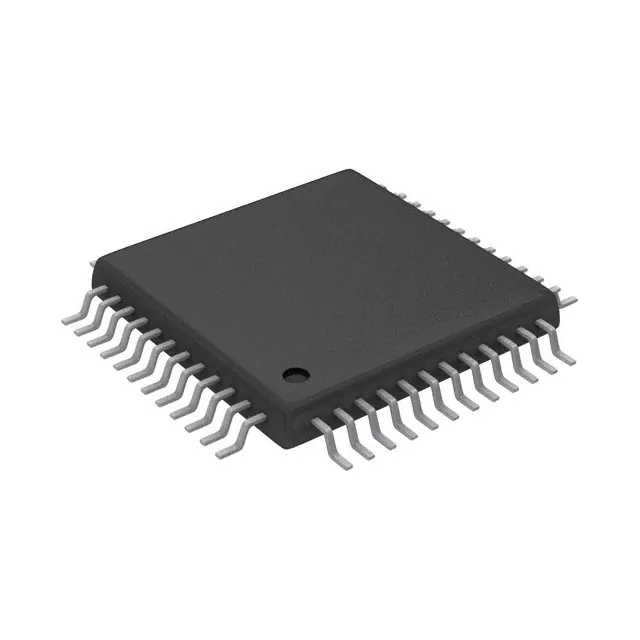
- Part No.:
- TB9057FG
- Manufacturer:
- Toshiba Semiconductor and Storage
- Category:
- Motor Drivers, Controllers
- Package:
- 48-LQFP
- Datasheet:
-
 TB9057FG.pdf
- Description:
- AUTOMOTIVE MOTOR H-BRIDGE DRIVER
- Quantity:
- Payment:

- Shipping:

Inventory:2,490
Please send an inquiry. Send us your inquiry, and we will respond immediately.
Product details
Overview
TB9057FG from Toshiba Electronic Devices & Storage Corporation is an automotive-grade pre-driver IC for DC brushed motor control, implementing dual half-bridge gate drive with integrated charge pump, current sensing (CS1/CS2), motor direction detection (MR1/MR2), and multi-level fault monitoring including over-temperature (170°C trip), VB/VDD low-voltage detection (4.0V/2.8V thresholds), and MOSFET/motor short detection. It operates from 5–21 V supply across −40 to +125°C and supports PWM-based speed regulation in power seat, window lift, and sunroof actuator systems.
For engineers reviewing the TB9057FG datasheet, TB9057FG pinout, TB9057FG application, or TB9057FG equivalent, this page delivers verified functional architecture, LQFP48 pin mapping with circuit role definitions, AEC-Q100 Grade 0 and ISO 26262 ASIL-D safety compliance details, and real-world design implications of its dual charge-pump outputs (PCCO/PCC1/PCC2), dead-time-controlled HO1/HO2/LO1/LO2 drivers, and configurable abnormality latching via DG1/DG2 status pins.
Technical Context
TB9057FG integrates two independent pre-driver channels-each with high-side (HO1/HO2) and low-side (LO1/LO2) outputs-driven by a dual-stage charge pump delivering regulated PCCO voltage up to SO+14.0 V (VB ≤ 21 V). Its internal error logic decodes DG1/DG2 output states (H/L, L/L, L/H, H/H) to distinguish normal operation, VB/VDD undervoltage, short faults, and over-temperature events with strict priority ordering.
The IC embeds two differential current-sense amplifiers (AMPP1/AMPM1/CS1 and AMPP2/AMPM2/CS2) supporting external shunt-based motor current measurement, plus motor direction detection via DR1/DR2 inputs and MR1/MR2 outputs that validate external MOSFET conduction sequence. All fault responses-including latch behavior on short detection and SEL-pin-controllable driver shutdown-are hardware-defined with no firmware dependency.
Key Specifications
| Parameter | Value and Actual Design Meaning |
|---|---|
| Supply Voltage Range | 5–21 V on VB1/VB2; enables direct battery connection in 12 V automotive systems without external regulators. |
| Operating Temperature | −40 to +125°C; qualified per AEC-Q100 Grade 0, supporting under-hood and cabin-mounted motor control. |
| Charge Pump Output | PCCO = SO+12 V typical (clamped at 36 V); powers external N-ch MOSFET gates directly without bootstrap capacitors. |
| Fault Detection Logic | DG1/DG2 dual-pin encoding: L/L = VB/VDD undervolt, L/H = short fault, H/H = over-temp (170°C), H/L = normal; priority order prevents masking. |
| Pre-Driver Output Drive | HO1/HO2: Voh = Vcp−1 V, Ronh = 4–10 Ω; LO1/LO2: Voh = 12 V typ, Ronl = 4–10 Ω; supports fast switching of 100 nC gate charges. |
| Dead Time | 0.25–0.75 μs; hardware-generated between HOx and LOx transitions to prevent shoot-through in H-bridge configurations. |
| Current Sense Interface | CS1/CS2 outputs with ±8 mV input offset and 6 V/μs slew rate; compatible with 1–10 mΩ shunts for ±50 A motor current measurement. |
Pinout & Package
Package: LQFP48-P-0707-0.50C (0.5 mm pitch, 7 mm × 7 mm body, exposed thermal pad).
| Pin/Terminal | Circuit Role | Design Meaning |
|---|---|---|
| HO1, HO2 | High-side pre-driver outputs | Drive gates of external N-ch MOSFETs in upper half-bridge; referenced to SO1/SO2, not ground. |
| LO1, LO2 | Low-side pre-driver outputs | Drive gates of external N-ch MOSFETs in lower half-bridge; referenced to PGND1/PGND2. |
| CS1, CS2 | Current sense amplifier outputs | Analog voltage proportional to motor phase current; used with external shunt resistors for closed-loop control. |
| MR1, MR2 | Motor direction detection outputs | Digital signals indicating forward/reverse motor rotation state; validate correct MOSFET turn-on sequence. |
| DG1, DG2 | Abnormality status outputs | Two-wire encoded fault reporting: simultaneous decoding required to identify VB undervolt, short, or over-temp condition. |
| PCCO, PCC1, PCC2 | Charge pump outputs | PCCO = final regulated high-side gate supply; PCC1/PCC2 = intermediate stages enabling multi-stage voltage boosting. |
| SEL | Fault response mode select | SEL = Low forces all HO/LO outputs low during VB undervolt or short fault; SEL = High maintains driver operation. |
| CRESET | Charge pump enable | Active-high signal to halt PCCO generation; when low, PCCO drops to VB−3 V, disabling high-side drive. |
Key Features
| Feature | Design Value |
|---|---|
| Dual independent half-bridge pre-driver channels | Enables bidirectional control of two DC motors (e.g., dual power seats) or one dual-wound motor with independent phase control. |
| Integrated dual-stage charge pump with overvoltage clamp | Eliminates need for external bootstrap diodes/capacitors; 36 V clamp protects against transients while maintaining SO+12 V gate drive headroom. |
| Configurable fault latching via SEL pin | SEL = Low forces safe shutdown on any fault; SEL = High allows continued operation during non-critical anomalies-critical for ASIL-D fail-operational designs. |
| Dedicated motor direction validation circuitry | MR1/MR2 outputs confirm correct high/low-side MOSFET sequencing before torque application-prevents unintended reverse motion in safety-critical actuators. |
| Hardware-based dead time insertion | Fixed 0.5 μs typical dead time prevents shoot-through without software timing loops or external RC networks-reduces BOM and improves reliability. |
Applications
| Power Seat Actuation | Automotive Window Lift |
|---|---|
|
Use Scenario: Precise bidirectional positioning of vehicle front/rear seats using dual DC motors for fore-aft and recline motion. IC Role / Device Role / Timing Role: TB9057FG acts as the gate driver pre-controller, translating MCU PWM commands into timed HO/LO signals while monitoring motor current and detecting jam conditions via short-circuit detection. Use Value: Dual-channel integration reduces component count vs. discrete drivers; ASIL-D compliance enables single-chip safety case for seat ECU certification. |
Use Scenario: Controlled lifting/lowering of side windows with anti-pinch functionality requiring real-time current profiling. IC Role / Device Role / Timing Role: TB9057FG provides current-sense feedback (CS1/CS2) to MCU for torque estimation and triggers DG1/DG2 fault flags on overcurrent events indicative of glass obstruction. Use Value: Built-in short-detection filter (adjustable via IN5 resistor) rejects PWM switching noise, eliminating false anti-pinch triggers during normal operation. |
| Sunroof Motor Control | Convertible Top Actuation |
|
Use Scenario: Smooth opening/closing of panoramic sunroofs with position feedback and stall detection. IC Role / Device Role / Timing Role: TB9057FG drives H-bridge MOSFETs while using MR1/MR2 outputs to verify motor rotation direction matches command-ensuring mechanical linkage integrity. Use Value: Direction validation prevents catastrophic binding if gear train slips; over-temperature detection (170°C trip) safeguards against prolonged stall-induced thermal runaway. |
Use Scenario: Synchronized deployment/retraction of multi-motor convertible top mechanisms requiring coordinated torque and timing. IC Role / Device Role / Timing Role: TB9057FG's dual-channel architecture controls two independent motors (e.g., front latch + rear bow), with DG1/DG2 status reporting consolidated at MCU for system-level fault arbitration. Use Value: Single-package solution replaces two discrete pre-drivers, reducing PCB area by 35% and interconnect complexity in space-constrained trunk modules. |
Equivalent & Alternatives
The following parts are listed as comparable options for similar pre-driver IC applications.
| Alternative Part | Technical Difference | Application Difference | Selection Advice |
|---|---|---|---|
| DRV8876-Q1 | Single-channel H-bridge pre-driver with integrated current sense; no dual charge pump or direction validation outputs. | Lacks MR1/MR2 direction confirmation and DG1/DG2 multi-fault encoding; requires external comparators for short detection. | Choose DRV8876-Q1 only for cost-sensitive single-motor applications where ASIL-D direction validation is not required. |
| BD95861MUV | Single-channel gate driver with external current sense interface; no built-in charge pump-requires external bootstrap circuitry. | Does not support direct 12 V battery operation without auxiliary supplies; lacks integrated short-detection filtering and latching. | Select BD95861MUV when existing designs already use external bootstrap networks and require minimal footprint-not for new ASIL-D systems. |
Compared with DRV8876-Q1 and BD95861MUV, TB9057FG uniquely combines dual-channel drive, hardware-enforced dead time, ASIL-D-compliant fault encoding, and motor direction validation in one LQFP48 package-making it the only option for new automotive seat/window ECUs requiring full functional safety certification without external support components.
Availability
TB9057FG is available at Aetrix Electronics and suitable for automotive power seat actuation, window lift control, sunroof motor management, and convertible top deployment requiring stable component supply across extended temperature ranges and long production lifecycles.
Supply support for TB9057FG includes scheduled delivery planning, volume procurement assistance, BOM continuity management, traceable sourcing, and lifecycle availability coordination for OEM customers, industrial embedded developers, connected-device designers, and electronics production programs.
Manufacturer
Toshiba Electronic Devices & Storage Corporation is a global semiconductor manufacturer specializing in power management, motor control, and automotive ICs, with decades of expertise in Bi-CMOS process technology and functional safety design.
TB9057FG belongs to Toshiba's automotive pre-driver product line, engineered specifically for ASIL-D compliant DC brushed motor systems in passenger vehicles-emphasizing integrated fault diagnostics, robust gate drive, and seamless integration with 32-bit MCUs.
FAQ
What is the primary function of TB9057FG in an automotive motor control system?
TB9057FG serves as a dual-channel pre-driver IC that translates MCU PWM signals into high-current gate drive for external N-channel MOSFETs in H-bridge configurations. It integrates charge pump generation, current sensing, motor direction validation, and multi-level fault detection-enabling safe, efficient, and certified control of DC brushed motors in seats, windows, and sunroofs. TB9057FG eliminates the need for external bootstrap circuits and discrete protection components.
How does TB9057FG implement over-temperature protection, and what is its trip threshold?
TB9057FG features duplicated over-temperature detection with a trip threshold of 170°C and hysteresis release at 160°C, ensuring reliable thermal shutdown even if one sensor fails. When triggered, DG1 and DG2 both go high (H/H state), signaling the host MCU to disable motor drive. This dual-redundant architecture meets ISO 26262 ASIL-D requirements for safety-critical automotive applications. TB9057FG's thermal protection operates independently of software control.
Can TB9057FG drive external MOSFETs directly from a 12 V battery without additional voltage boosting?
Yes-TB9057FG includes an integrated dual-stage charge pump that generates PCCO voltage up to SO+14.0 V (e.g., 17 V when SO = 3 V), enabling direct gate drive of N-channel MOSFETs without external bootstrap diodes or capacitors. The charge pump is clamped at 36 V to withstand load-dump transients, and CRESET pin allows hardware-controlled disablement. TB9057FG thus supports true 12 V battery-direct operation in automotive environments.
What diagnostic capabilities does TB9057FG provide for motor short-circuit detection?
TB9057FG implements hardware-based MOSFET and motor short detection by monitoring voltage across external driver source/drain pins (DR1/DR2) using internal comparators. Detection is filtered via resistor-connected IN5 pin to reject PWM noise, and latched via DG1/DG2 (L/H state). Short detection remains active even when ENA is low, ensuring fail-safe behavior. TB9057FG also supports adjustable detection thresholds via PD1/PD2 reference pins.
How does TB9057FG support functional safety compliance in ASIL-D systems?
TB9057FG was developed according to ISO 26262 ASIL-D requirements and includes duplicated over-temperature detection, priority-ordered fault reporting (VB undervolt > over-temp > short), hardware-dead-time insertion, and direction validation outputs (MR1/MR2) to confirm mechanical actuation integrity. Toshiba provides a Safety Manual and Safety Analysis Report for TB9057FG, enabling systematic integration into ASIL-D architectures without requiring additional safety mechanisms. TB9057FG's diagnostic coverage exceeds 90% for random hardware faults.
TB9057FG Specifications
- Product attributes
- Attribute value
- Manufacturer:
- Toshiba Semiconductor and Storage
- Series:
- -
- Package/Case:
- 48-LQFP
- Packaging:
- Tray
- Product Status:
- Active
- Motor Type - Stepper:
- Bipolar
- Motor Type - AC, DC:
- Brushed DC
- Function:
- Driver
- Output Configuration:
- Pre-Driver
- Interface:
- PWM
- Technology:
- Bi-CMOS
- Step Resolution:
- -
- Applications:
- -
- Current - Output:
- -
- Voltage - Supply:
- 5V ~ 21V
- Voltage - Load:
- -
- Operating Temperature:
- -40°C ~ 125°C
- Grade:
- Automotive
- Qualification:
- AEC-Q100
- Mounting Type:
- Surface Mount
- Supplier Device Package:
- 48-LQFP (7x7)
TB9057FG FAQ
1.How can I place an order for TB9057FG through Aetrix?
Please submit a Request for Quotation (RFQ) for TB9057FG on Aetrix. Our sales agent will provide a competitive quotation and guide you through the order confirmation once you accept the terms.
2.Are the price and stock information for TB9057FG reliable?
The price and inventory of TB9057FG are updated periodically and may fluctuate due to market conditions. Stock and pricing data are typically refreshed every 24 hours. Quotation validity for TB9057FG is usually 5 days.
3.What payment methods are accepted for TB9057FG?
We accept Wire Transfer, PayPal, Credit Card, Western Union, MoneyGram, and Escrow for TB9057FG transactions.
Note: Certain payment methods may incur a processing fee.
4.How is shipping managed for TB9057FG?
TB9057FG orders can be shipped via leading logistics carriers, including DHL, UPS, FedEx, TNT, or Registered Mail.
Once your TB9057FG order is processed, you will receive an email with the shipment details and tracking number.
Note: Tracking information may take up to 24 hours to appear. Express delivery typically takes 3–5 business days.
5.How can I obtain technical support or documentation for TB9057FG?
For technical support, including TB9057FG datasheets, pinout diagrams, or application guidance, please contact our engineering support team. They can provide detailed documentation and assistance for your TB9057FG requirements.
6.How does Aetrix verify that TB9057FG is sourced from the original manufacturer or authorized distributors?
All TB9057FG products on Aetrix are procured from qualified distributors and authorized channels. Our dedicated quality assurance team conducts strict verification, including traceability checks and, if necessary, third-party testing. This ensures that TB9057FG meets industry standards.
7.What is the process for return or replacement of TB9057FG?
All TB9057FG units undergo pre-shipment inspection (PSI). If there is an issue with TB9057FG, returns or replacements are accepted under the following conditions:
1.Quantity discrepancies, incorrect items, or visible external defects (such as breakage or corrosion), acknowledged by Aetrix.
2.The issue is reported within 90 days of delivery.
3.The TB9057FG part is unused and in its original packaging.
Return procedure for TB9057FG:
1.Submit a request within 90 days.
2.Obtain a Return Material Authorization (RMA) from Aetrix.
TB9057FG Tags
-
DRV2603RUNR
Texas Instruments
-
DRV8837CDSGR
Texas Instruments
-
DRV8837DSGR
Texas Instruments
-
DRV8838DSGR
Texas Instruments
-
DRV8839DSSR
Texas Instruments
-
EMC2301-1-ACZL-TR
Microchip Technology
-
DRV8231ADSGR
Texas Instruments
-
EMC2302-2-AIZL-TR
Microchip Technology
-
DRV8800PWPR
Texas Instruments
-
DRV8835DSSR
Texas Instruments
-
EMC2303-1-KP-TR
Microchip Technology
-
DRV8876PWPR
Texas Instruments
Tech Hub
Counterfeit components can hide behind convincing markings and passing basic function tests. This engineering reference covers source traceability, external inspection, X-ray, XRF, electrical testing, …

A practical engineering and sourcing framework covering lifecycle verification, lifetime-buy calculations, replacement qualification, supplier checks and counterfeit-risk controls.

TTL and CMOS logic families differ in thresholds, loading, output drive, power and timing. This engineering guide compares 74HC and 74HCT, calculates noise margins and checks 3.3 V/5 V compatibility.

A practical engineering guide to 3.3V and 5V logic compatibility, input thresholds, resistor dividers, translator ICs, MOSFET level shifting, I2C pull-ups, timing limits and power-sequencing risks.

The 74HC595 uses push-pull logic outputs, while the TPIC6B595 uses 50 V open-drain DMOS sinks for higher-power loads. This guide compares timing, current limits, 3.3 V interfacing, load wiring, thermal…

The 74HC595 converts serial data into eight stable parallel outputs. This guide covers pin functions, shift and storage timing, OE and MR behavior, drive-current limits, cascading, voltage compatibilit…

A technical comparison of level-sensitive latches and edge-triggered flip-flops, covering timing windows, setup and hold limits, master–slave operation, time borrowing, race-through, HDL inference and…

A D latch stores one bit while Enable controls when data can pass. This reference covers gate-level operation, truth tables, transparency, setup and hold timing, LE versus OE, common ICs and practical …

An SR latch stores one bit through cross-coupled feedback. This engineering reference covers NOR and NAND implementations, truth tables, forbidden-state recovery, gated operation, switch debouncing, fa…

Latch circuits retain one bit through feedback. This technical reference covers SR and D latches, truth tables, transparency, timing limits, latch-versus-flip-flop behavior, applications and common log…


