
 My Inquiry
 My Account


Toshiba Semiconductor and Storage TC32306FTG,EL
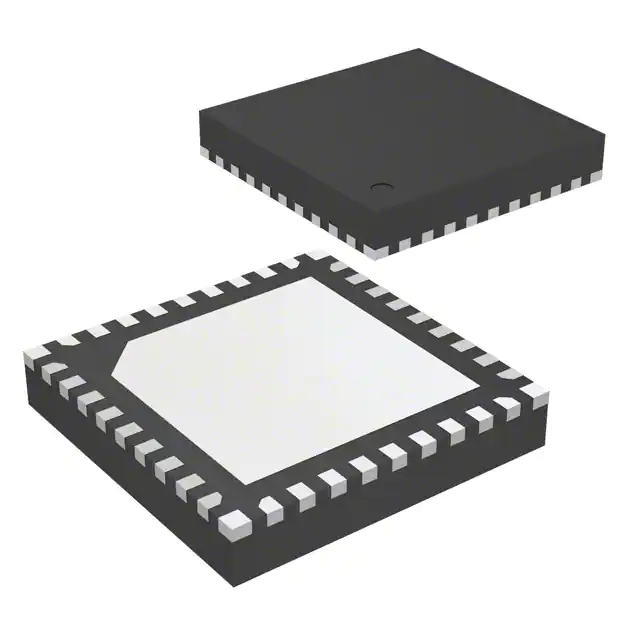
- Part No.:
- TC32306FTG,EL
- Manufacturer:
- Toshiba Semiconductor and Storage
- Category:
- RF Transceiver ICs
- Package:
- 36-VFQFN Exposed Pad
- Datasheet:
-
 TC32306FTG,EL.pdf
- Description:
- IC RF TXRX ISM<1GHZ 36QFN
- Quantity:
- Payment:

- Shipping:

Inventory:1,999
Please send an inquiry. Send us your inquiry, and we will respond immediately.
Product details
Overview
TC32306FTG from Toshiba is a single-chip UHF RF transceiver IC supporting ASK/FSK modulation across 315, 434, 868/915 MHz bands. It integrates LNA, mixer, IF filter (320 kHz / 270 kHz), RSSI detector, PLL/VCO, PA, and serial SPI/EEPROM control - enabling compact remote keyless entry and TPMS designs with ≤12 mA TX and 9.7 mA RX current consumption.
For engineers reviewing the TC32306FTG datasheet, TC32306FTG pinout, TC32306FTG application, or TC32306FTG equivalent, this page delivers verified functional block mapping, voltage-mode configuration logic (3V/5V selector pin), real-world receiver sensitivity (−116 dBm at 600 bps), antenna switch timing behavior, and confirmed alternative transceivers for RKE/TPMS system redesigns.
Technical Context
The TC32306FTG implements a single-conversion superheterodyne architecture with fractional-N PLL synthesizing local oscillator frequencies from a fixed 30.32 MHz crystal reference. Its dual IF filter bandwidths (320 kHz wide / 270 kHz mid) are selectable via register configuration to optimize noise immunity versus data rate in ASK/FSK demodulation.
Control is implemented via two distinct modes: SPI slave mode (MCU-driven register writes) and EEPROM master mode (autonomous boot-time configuration loading). Pin functions such as TX_SW/RX_SW, ENB, and MODE1/MODE2 dynamically reconfigure based on mode selection - with strict voltage domain isolation between analog (A_VDD_3V/A_VDD_5V), digital (D_REG), PLL (PLL_REG), and I/O (COM_VDD) supplies.
Key Specifications
| Parameter | Value and Actual Design Meaning |
|---|---|
| RF Bands | 315, 434, 868/915 MHz - supports global ISM band RKE and TPMS deployments without hardware change |
| Modulation Support | ASK and FSK - enables interoperability with legacy and modern remote control protocols |
| Receiver Sensitivity | −116 dBm at 600 bps, ±40 kHz deviation, 320 kHz IF BW - ensures reliable reception in low-SNR automotive environments |
| Transmit Output Power | +10 dBm typical - meets ETSI EN 300 220 and FCC Part 15.247 radiated emission limits with minimal external filtering |
| Supply Voltage Range | 2.0–3.3 V (3V mode) or 2.4–5.5 V (5V mode) - accommodates battery-powered systems with aging or wide-temperature operation |
| Current Consumption | TX: 12 mA, RX: 9.7 mA, Battery Saving: 0 μA - extends coin-cell life in intermittent wake-up applications |
| IF Filter Bandwidths | 320 kHz (wide) and 270 kHz (mid) - selectable per application to balance adjacent-channel rejection vs. timing jitter tolerance |
Pinout & Package
Package: QFN36-P-0606-0.50 (6 mm × 6 mm, 0.5 mm pitch, exposed thermal pad).
| Pin/Terminal | Circuit Role | Design Meaning |
|---|---|---|
| 1, 2, 4, 34 | DET_TMONI1–4 | Digital/analog monitor outputs for signal detection status, RSSI, preamble, PLL lock - used for host MCU diagnostics and state validation |
| 3, 29–32, 35 | ENB, CS, CLK, MOSI, MISO, DATA_IO | SPI interface pins (slave mode) - enable register-level configuration, real-time demodulated data output, and status feedback |
| 5, 10, 12, 13, 24, 28, 33 | 3V/5V, A_VDD_5V, A_VDD_3V, A_REG, PLL_REG, D_REG, COM_VDD | Separated supply domains - prevent noise coupling between analog RF, PLL, digital logic, and I/O blocks |
| 6, 7, 11, 15–19, 25–27 | RSSI_OUT, RX_SW, RF_OUT, IF_REF, PA_GND1/2, TX_SW, PLL_GND, X_IN/X_OUT | RF signal path terminals - require controlled-impedance routing, proper decoupling, and antenna switch timing coordination |
| 8, 9, 14, 20–23, 36 | RF_DEC, RF_IN, A_GND, RESET, MODE1/MODE2, TEST, IO_GND | Decoupling, ground, reset control, mode selection, and test access - critical for stable startup, mode persistence, and ESD robustness |
Key Features
| Feature | Design Value |
|---|---|
| Integrated RF front-end | LNA + Mixer + IF Filter + IF AMP + PA - eliminates ≥12 discrete RF components and matching networks |
| Dual IF filter bandwidth | Selectable 320 kHz (wide) or 270 kHz (mid) - adapts to data rate and channel spacing requirements without BOM change |
| Multi-mode control interface | SPI slave or EEPROM master - supports both MCU-driven flexibility and autonomous factory-programmed operation |
| Low-power battery saving | 0 μA quiescent current - enables >10-year shelf life in sealed TPMS sensors using CR2032 cells |
| Signal detection logic | Configurable RSSI + Noise + Preamble detection with DET_out/Un_DET_out outputs - reduces false triggers in noisy RF environments |
| Antenna switch control | Dedicated TX_SW/RX_SW outputs with pull-down default - simplifies external RF switch sequencing and prevents simultaneous TX/RX |
Applications
| Remote Keyless Entry (RKE) | Tire Pressure Monitoring System (TPMS) |
|---|---|
Use Scenario: Wireless door lock/unlock command transmission from handheld fob to vehicle receiver. IC Role / Device Role / Timing Role: Full-duplex-capable transceiver handling ASK-modulated commands at 315/434 MHz with fast wake-up and RSSI-based signal validation. Use Value: Enables sub-100 ms response time and −116 dBm sensitivity for reliable operation at 10+ meter range through car body shielding. | Use Scenario: Battery-powered sensor module mounted inside tire measuring pressure/temperature and transmitting alerts. IC Role / Device Role / Timing Role: Low-duty-cycle FSK transceiver operating in 868/915 MHz band with AutoOff-triggered wake-up and burst transmission. Use Value: Achieves >7-year battery life via 0 μA battery saving mode and optimized 9.7 mA RX current during periodic listen windows. |
| Industrial Remote Controller | Asset Tracking Beacon |
Use Scenario: Handheld transmitter controlling gate openers, lighting, or HVAC systems in factory settings. IC Role / Device Role / Timing Role: Robust ASK transceiver with noise detection and preamble validation to reject interference from motor drives and switching power supplies. Use Value: Maintains link integrity in electrically noisy environments using configurable 270 kHz IF filter and RSSI threshold adjustment. | Use Scenario: Compact GPS-less location beacon broadcasting ID and status via periodic UHF bursts. IC Role / Device Role / Timing Role: Ultra-low-power transceiver with EEPROM-mode autonomous operation - no MCU required for basic broadcast function. Use Value: Reduces BOM cost and PCB area by eliminating microcontroller and firmware development for simple beacon use cases. |
Equivalent & Alternatives
The following parts are listed as comparable options for similar RF transceiver applications.
| Alternative Part | Technical Difference | Application Difference | Selection Advice |
|---|---|---|---|
| Si4362-B1B-FMR | Sub-GHz transceiver with integrated DC-DC converter; supports OOK/FSK; −133 dBm sensitivity; 20-pin QFN | Higher sensitivity and integrated power management; requires different layout and register map | Preferred when extending range beyond 20 m or powering from single 1.8–3.6 V supply without external LDO |
| AX5043-DQ63 | Sub-GHz transceiver with embedded packet handler; supports GFSK/MSK; −120 dBm sensitivity; 32-pin QFN | On-chip packet encoding/decoding and CRC; larger footprint and higher BOM cost | Chosen when offloading MCU packet framing tasks or requiring certified wireless stack compatibility |
Compared with TC32306FTG, Si4362-B1B-FMR offers superior sensitivity and integrated power conversion but lacks EEPROM boot autonomy; AX5043-DQ63 adds packet intelligence at the cost of increased design complexity and footprint - making TC32306FTG optimal for cost-sensitive, MCU-coordinated RKE/TPMS where simplicity and proven field reliability are prioritized.
Availability
TC32306FTG is available at Aetrix Electronics and suitable for remote keyless entry, tire pressure monitoring systems, and industrial remote controllers requiring stable component supply, long-lifecycle support, and full traceability for automotive-grade production.
Supply support for TC32306FTG includes scheduled delivery planning, volume procurement assistance, BOM continuity management, traceable sourcing, and lifecycle availability coordination for OEM customers, industrial embedded developers, connected-device designers, and electronics production programs.
Manufacturer
Toshiba Electronic Devices & Storage Corporation designs high-reliability semiconductor solutions for automotive, industrial, and consumer applications, with emphasis on integration, low power, and system-level functionality.
The TC32306FTG belongs to Toshiba's UHF transceiver product line engineered specifically for battery-operated wireless sensing and control - delivering single-chip RF functionality with configurable IF filtering, multi-voltage operation, and dual-control-mode flexibility.
FAQ
What is the maximum output power of the TC32306FTG and under what conditions is it achieved?
The TC32306FTG achieves +10 dBm typical transmit output power when configured for maximum PA drive level and operating at 315/434/868/915 MHz bands with proper impedance matching to A_VDD_3V. This value is measured at the RF_OUT pin under 3V or 5V supply, with the PA enabled and all internal regulators stabilized - meeting regulatory limits for short-range ISM band devices without external amplification.
How does the TC32306FTG handle supply voltage selection between 3V and 5V operation?
TC32306FTG uses the dedicated 3V/5V pin to configure internal voltage domains: grounding this pin selects 3V mode (all supplies tied to 3V), while connecting it to 5V enables internal A_REG30 regulation to generate 3V for analog blocks (LNA/PA) from the 5V rail. The pin must never exceed COM_VDD voltage to avoid ESD protection latch-up - and A_VDD_3V must not be externally driven in 5V mode.
Can the TC32306FTG operate without an external microcontroller?
Yes - in EEPROM Mode, TC32306FTG boots autonomously by reading configuration registers from an external SPI EEPROM upon RESET release. No MCU is required for basic transmit/receive operation, as all RF parameters, modulation settings, and timing are preloaded. This mode is ideal for ultra-low-cost beacons or factory-programmed sensors where MCU integration adds unnecessary cost and complexity.
What are the supported IF filter bandwidths and how are they selected on the TC32306FTG?
The TC32306FTG supports two IF filter bandwidths: 320 kHz (wide) and 270 kHz (mid), optimized for different data rates and adjacent-channel rejection needs. Selection is performed via register bits h'0A[D5:D4], not hardware pins - allowing dynamic reconfiguration during runtime. The wide setting improves timing margin for low-rate ASK signals; the mid setting enhances selectivity in dense RF environments.
Does the TC32306FTG include built-in signal detection logic, and how is it used?
Yes - TC32306FTG integrates configurable signal detection combining RSSI, noise, and preamble detection. Outputs DET_out (signal present) and Un_DET_out (no signal) are available on DET_TMONI1/2 pins and can be latched or updated continuously via h'10[D2]. This logic replaces external comparators and timers in RKE/TPMS receivers, reducing component count and improving detection consistency across temperature and voltage variation.
TC32306FTG,EL Specifications
- Product attributes
- Attribute value
- Manufacturer:
- Toshiba Semiconductor and Storage
- Series:
- -
- Package/Case:
- 36-VFQFN Exposed Pad
- Packaging:
- Tape & Reel (TR)
- Product Status:
- Active
- Programmable:
- Not Verified
- Type:
- TxRx Only
- RF Family/Standard:
- General ISM < 1GHz
- Protocol:
- -
- Modulation:
- ASK, FSK
- Frequency:
- 315MHz, 434MHz, 868MHz, 915MHz
- Data Rate (Max):
- -
- Power - Output:
- 10dBm
- Sensitivity:
- -121dBm
- Memory Size:
- -
- Serial Interfaces:
- SPI
- GPIO:
- -
- Voltage - Supply:
- 2V ~ 3.3V, 2.4V ~ 5.5V
- Current - Receiving:
- 9.2mA ~ 11.1mA
- Current - Transmitting:
- 4.8mA ~ 12mA
- Operating Temperature:
- -40°C ~ 110°C
- Grade:
- -
- Qualification:
- -
- Supplier Device Package:
- 36-QFN (5.3x5.3)
TC32306FTG,EL FAQ
1.How can I place an order for TC32306FTG,EL through Aetrix?
Please submit a Request for Quotation (RFQ) for TC32306FTG,EL on Aetrix. Our sales agent will provide a competitive quotation and guide you through the order confirmation once you accept the terms.
2.Are the price and stock information for TC32306FTG,EL reliable?
The price and inventory of TC32306FTG,EL are updated periodically and may fluctuate due to market conditions. Stock and pricing data are typically refreshed every 24 hours. Quotation validity for TC32306FTG,EL is usually 5 days.
3.What payment methods are accepted for TC32306FTG,EL?
We accept Wire Transfer, PayPal, Credit Card, Western Union, MoneyGram, and Escrow for TC32306FTG,EL transactions.
Note: Certain payment methods may incur a processing fee.
4.How is shipping managed for TC32306FTG,EL?
TC32306FTG,EL orders can be shipped via leading logistics carriers, including DHL, UPS, FedEx, TNT, or Registered Mail.
Once your TC32306FTG,EL order is processed, you will receive an email with the shipment details and tracking number.
Note: Tracking information may take up to 24 hours to appear. Express delivery typically takes 3–5 business days.
5.How can I obtain technical support or documentation for TC32306FTG,EL?
For technical support, including TC32306FTG,EL datasheets, pinout diagrams, or application guidance, please contact our engineering support team. They can provide detailed documentation and assistance for your TC32306FTG,EL requirements.
6.How does Aetrix verify that TC32306FTG,EL is sourced from the original manufacturer or authorized distributors?
All TC32306FTG,EL products on Aetrix are procured from qualified distributors and authorized channels. Our dedicated quality assurance team conducts strict verification, including traceability checks and, if necessary, third-party testing. This ensures that TC32306FTG,EL meets industry standards.
7.What is the process for return or replacement of TC32306FTG,EL?
All TC32306FTG,EL units undergo pre-shipment inspection (PSI). If there is an issue with TC32306FTG,EL, returns or replacements are accepted under the following conditions:
1.Quantity discrepancies, incorrect items, or visible external defects (such as breakage or corrosion), acknowledged by Aetrix.
2.The issue is reported within 90 days of delivery.
3.The TC32306FTG,EL part is unused and in its original packaging.
Return procedure for TC32306FTG,EL:
1.Submit a request within 90 days.
2.Obtain a Return Material Authorization (RMA) from Aetrix.
TC32306FTG,EL Tags
-
ESP32-D0WD-V3
Espressif Systems
-
ESP8266EX
Espressif Systems

-
ESP32-S3
Espressif Systems
-
NRF24L01P-R7
Nordic Semiconductor ASA
-
NRF24L01P-R
Nordic Semiconductor ASA
-
ESP32-U4WDH
Espressif Systems
-
DA14531-00000OG2
Renesas
-
ESP32-C6FH4
Espressif Systems
-
DA14531-00000FX2
Renesas
-
NRF24L01P-T
Nordic Semiconductor ASA
-
NRF52810-QCAA-R
Nordic Semiconductor ASA
-
ESP32-S3FN8
Espressif Systems
Tech Hub

A practical engineering and sourcing framework covering lifecycle verification, lifetime-buy calculations, replacement qualification, supplier checks and counterfeit-risk controls.

TTL and CMOS logic families differ in thresholds, loading, output drive, power and timing. This engineering guide compares 74HC and 74HCT, calculates noise margins and checks 3.3 V/5 V compatibility.

A practical engineering guide to 3.3V and 5V logic compatibility, input thresholds, resistor dividers, translator ICs, MOSFET level shifting, I2C pull-ups, timing limits and power-sequencing risks.

The 74HC595 uses push-pull logic outputs, while the TPIC6B595 uses 50 V open-drain DMOS sinks for higher-power loads. This guide compares timing, current limits, 3.3 V interfacing, load wiring, thermal…

The 74HC595 converts serial data into eight stable parallel outputs. This guide covers pin functions, shift and storage timing, OE and MR behavior, drive-current limits, cascading, voltage compatibilit…

A technical comparison of level-sensitive latches and edge-triggered flip-flops, covering timing windows, setup and hold limits, master–slave operation, time borrowing, race-through, HDL inference and…

A D latch stores one bit while Enable controls when data can pass. This reference covers gate-level operation, truth tables, transparency, setup and hold timing, LE versus OE, common ICs and practical …

An SR latch stores one bit through cross-coupled feedback. This engineering reference covers NOR and NAND implementations, truth tables, forbidden-state recovery, gated operation, switch debouncing, fa…

Latch circuits retain one bit through feedback. This technical reference covers SR and D latches, truth tables, transparency, timing limits, latch-versus-flip-flop behavior, applications and common log…

An engineering guide to LED driver operation, constant-current and constant-voltage outputs, linear and switching topologies, dimming, IC selection, calculations, replacement compatibility, and fault c…


