
 My Inquiry
 My Account


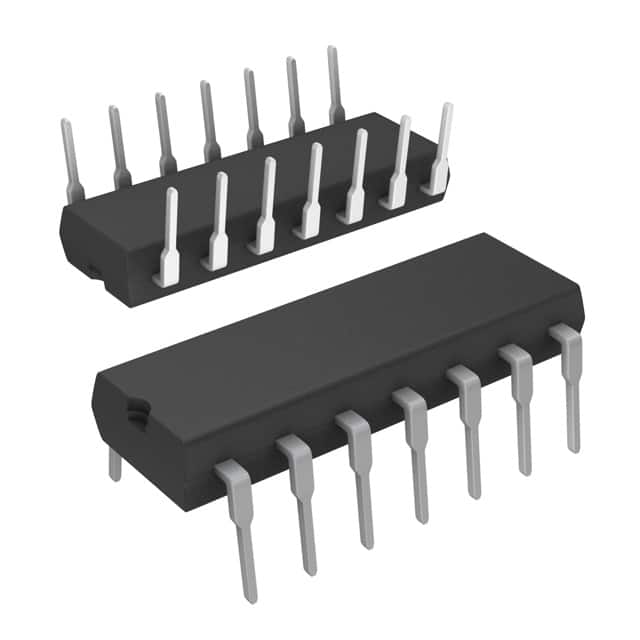
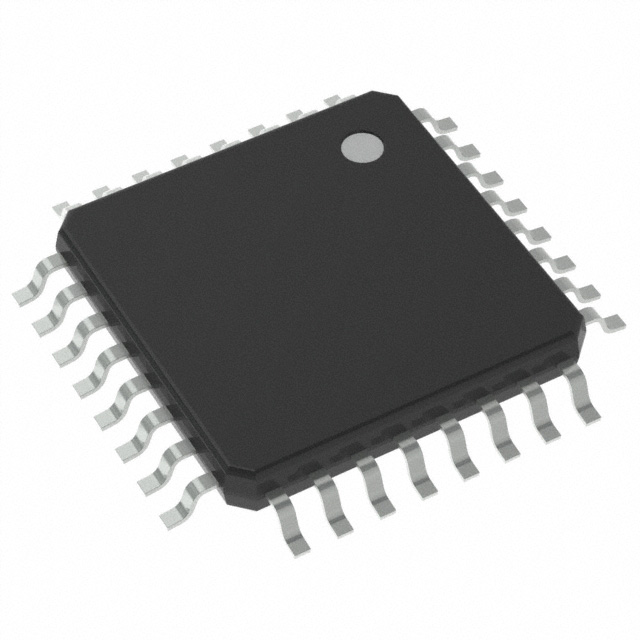
Infineon Technologies TCA305 CHIP
- Part No.:
- TCA305 CHIP
- Manufacturer:
- Infineon Technologies
- Category:
- Sensor, Capacitive Touch
- Package:
- -
- Datasheet:
-
 TCA305 CHIP.pdf
- Description:
- IC PROXIMITY SWITCH PDDIP-14
- Quantity:
- Payment:

- Shipping:

Inventory:4,140
Please send an inquiry. Send us your inquiry, and we will respond immediately.
Product details
Overview
TCA305 from Infineon Technologies is a bipolar monolithic integrated circuit designed as a dedicated inductive proximity switch controller IC. It integrates oscillator, amplitude detector, comparator with hysteresis, and dual complementary open-collector outputs (Q and Q̄), operates from 5–30 V supply, consumes ≤0.9 mA open-loop current, achieves up to 5 kHz switching frequency without external capacitor, and functions without external integrating capacitor-enabling compact metal-detection proximity sensors for industrial automation.
For engineers reviewing the TCA305 datasheet, TCA305 pinout, TCA305 application, or TCA305 equivalent, key selection considerations include its temperature-stable hysteresis, low saturation voltage (≤0.22 V at 50 mA), built-in turn-on delay control, RoHS-compliant PG-DIP-14-1 package, and compatibility with unshielded ferrite-core resonant coils per CENELEC flush-mount standards.
Technical Context
The TCA305 implements a self-oscillating LC tank interface where metal proximity damps oscillation amplitude, triggering output state change via internal comparator with fixed hysteresis (0.4–0.6 V). Its oscillator frequency is adjustable from 15 kHz to 1.5 MHz via external L/C components, and turn-on delay is programmable using an external resistor at Pin 3 (DD).
Unlike general-purpose comparators, the TCA305 embeds temperature-compensated reference generation, maintains constant hysteresis across –25°C to +85°C and supply voltages, and disables outputs below ~4.5 V supply while enabling only after oscillator stabilization at ≥5 V-ensuring reliable cold-start behavior in industrial power rails.
Key Specifications
| Parameter | Value and Actual Design Meaning |
|---|---|
| Supply voltage range | 5–30 V - supports wide industrial DC rails; operation down to ~2.5 V possible with VREF tied to VS |
| Open-loop current consumption | 0.6–0.9 mA - enables ultra-low-power proximity sensing in battery-backed or energy-constrained systems |
| Output saturation voltage | ≤0.22 V at 50 mA - minimizes power loss and heat rise in high-current switching loads |
| Switching frequency (no CI) | Up to 5 kHz - allows rapid detection response without external integration capacitor |
| Oscillator frequency range | 15 kHz–1.5 MHz - configurable via external L/C for tailored sensing distance and immunity |
| Turn-on delay control | Programmable via external resistor on Pin 3 - enables adjustable startup blanking to suppress power-rail transients |
| Hysteresis voltage | 0.4–0.6 V - ensures stable, chatter-free switching across temperature and supply variation |
Pinout & Package
Package: PG-DIP-14-1 (14-pin plastic dual in-line package, through-hole mount, 0.3 inch width).
| Pin/Terminal | Circuit Role | Design Meaning |
|---|---|---|
| 1 (VS) | Positive supply input | Accepts 5–30 V; output disable occurs below ~4.5 V; internal regulator reference derived here |
| 2 (Q) | Inverted open-collector output | Active-low output; sinks up to 50 mA; requires external pull-up for logic-level interfacing |
| 3 (DD) | Turn-on delay control | Resistor-to-VS sets delay time; open = no delay; 390 kΩ recommended for standard delay |
| 4 (VREF) | Internal reference voltage output | 2.1 V typical; can be tied to VS for sub-5 V operation (loses regulation) |
| 5 (RHy) | Hysteresis adjustment | Connects to external resistor (0 Ω typical) to set hysteresis width |
| 6 (RDi) | Distance adjustment | Connects to external resistor to calibrate switching threshold for target metal size/distance |
| 7 (GND) | Ground reference | Common return for supply, outputs, and resonant circuit ground |
| 8 (Q̄) | Non-inverted open-collector output | Complementary to Pin 2; enables push-pull-like logic drive with external pull-ups |
| 9 (CI) | Integrating capacitance input | Accepts 1 nF capacitor (or RC network) to improve noise immunity and stability |
| 10 (CD) | Delay capacitor connection | Optional capacitor to ground for additional timing control of turn-on delay |
| 11 (OSC) | Oscillator node | Connects to resonant coil (L₀) and capacitor (C₀); forms active LC tank |
| 12 (D) | Temperature compensation diode | Optional series diode for TC compensation of resonant circuit; not mandatory |
| 13 (RI) | Integration resistor | Used with CI (Pin 9) in RC configuration for enhanced EMI rejection |
| 14 (NC) | No connect | Internally unused; must remain unconnected |
Key Features
| Feature | Design Value |
|---|---|
| Zero external capacitor operation | Functions reliably without CI - reduces BOM count and PCB area in cost-sensitive proximity sensors |
| Temperature-stable hysteresis | Hysteresis remains constant over –25°C to +85°C and supply voltage - eliminates recalibration in varying ambient conditions |
| Short-circuit protected outputs | Outputs withstand temporary short-circuit (10 s–1 min) - improves field reliability during coil wiring faults or load surges |
| Integrated oscillator with wide tuning range | 15 kHz–1.5 MHz LC frequency control - supports diverse coil geometries (M12 to M30) and sensing distances |
| Pb-free, RoHS-compliant packaging | PG-DIP-14-1 with lead-free plating - meets global environmental compliance requirements for industrial equipment |
Applications
| Factory Floor Proximity Sensing | Machine Tool Position Detection |
|---|---|
Use Scenario: Detecting presence/absence of steel machine parts on conveyor lines under oil, dust, and vibration. IC Role / Device Role / Timing Role: Proximity switch controller generating clean ON/OFF signals from damped LC oscillation induced by ferrous targets. Use Value: Stable hysteresis prevents false triggers; low saturation voltage minimizes heat in continuous-duty solenoid interfaces. | Use Scenario: Monitoring tool holder position in CNC lathes with flush-mounted M18/M30 inductive sensors. IC Role / Device Role / Timing Role: Core analog front-end managing resonant coil excitation, amplitude demodulation, and dual-output logic translation. Use Value: Programmable turn-on delay suppresses power-up transients; wide supply range accommodates 24 VDC industrial bus fluctuations. |
| Automated Packaging Line End-of-Stroke | Material Handling Crane Limit Switch |
Use Scenario: Confirming cylinder rod extension in pneumatic actuators inside sealed enclosures. IC Role / Device Role / Timing Role: Inductive proximity controller driving PLC-compatible NPN/PNP outputs via Q/Q̄ pins. Use Value: Dual complementary outputs eliminate need for external inverters; RoHS package supports export-compliant equipment builds. | Use Scenario: Detecting overhead crane trolley position near end stops in dusty warehouse environments. IC Role / Device Role / Timing Role: Resonant circuit interface IC providing robust metal detection despite EMI from motor drives and variable cable lengths. Use Value: External RC integration (RI/CI) enables >60 dB noise immunity; temperature-stable hysteresis avoids drift across seasonal ambient shifts. |
Equivalent & Alternatives
The following parts are listed as comparable options for similar inductive proximity switch controller applications.
| Alternative Part | Technical Difference | Application Difference | Selection Advice |
|---|---|---|---|
| TLV3012IDBVR | Low-voltage comparator (1.8–5.5 V), no integrated oscillator or hysteresis control | Requires external oscillator, RC timing, and hysteresis network - increases design complexity and component count | Only suitable when full custom LC interface design is needed and supply is <5 V |
| MAX44267ASA+ | High-speed comparator with rail-to-rail I/O, no built-in oscillator or proximity-specific hysteresis | Lacks temperature-compensated hysteresis and resonant circuit interface - unsuitable for direct replacement in proximity sensor designs | Applicable only in non-inductive, high-speed signal conditioning roles outside proximity sensing |
Compared with TLV3012IDBVR and MAX44267ASA+, the TCA305 delivers a complete, single-chip inductive proximity solution - integrating oscillator, amplitude detection, hysteresis, and dual outputs - whereas alternatives require extensive external circuitry and lack temperature-stable switching thresholds essential for industrial reliability.
Availability
TCA305 is available at Aetrix Electronics and suitable for factory floor proximity sensing, machine tool position detection, and automated packaging line end-of-stroke applications requiring stable component supply and long-term industrial lifecycle support.
Supply support for TCA305 includes scheduled delivery planning, volume procurement assistance, BOM continuity management, traceable sourcing, and lifecycle availability coordination for OEM customers, industrial embedded developers, connected-device designers, and electronics production programs.
Manufacturer
Infineon Technologies is a German semiconductor manufacturer specializing in power management, automotive, industrial, and sensor solutions, with leadership in high-reliability analog and mixed-signal ICs.
The TCA305 belongs to Infineon's legacy Semiconductor Group proximity controller product line, engineered specifically for robust, low-cost inductive sensor designs in harsh industrial environments - emphasizing temperature stability, noise immunity, and minimal external component count.
FAQ
Can the TCA305 operate below 5 V?
Yes - the TCA305 can operate down to approximately 2.5 V if the VREF pin is externally connected to VS. In this mode, the internal reference is no longer regulated, and the turn-on delay pin (DD) must be tied to VS. Performance parameters such as hysteresis and oscillator stability may shift slightly, but functional operation is maintained per Infineon's application note AN2005-07.
What is the purpose of the NC pin (Pin 14)?
Pin 14 is a true no-connect terminal with no internal bond wire or circuit connection. It must remain unconnected in layout and assembly. Leaving it floating or grounding it has no effect on operation, but soldering or routing to it may risk mechanical stress or unintended coupling in high-density boards.
How does the TCA305 achieve temperature-stable hysteresis?
The TCA305 uses matched transistor pairs and curvature-compensated bandgap references to generate hysteresis that tracks supply and temperature variations. Unlike resistor-based hysteresis networks, its internal feedback structure maintains 0.4–0.6 V hysteresis across –25°C to +85°C and 5–30 V supply, eliminating calibration drift in field-deployed sensors.
Is the TCA305 still recommended for new designs?
No - Infineon marks the TCA305 as "Not for new design" (as noted in Semiconductor Group 1 documentation). While fully supported for existing production and repair, new projects should consider modern alternatives like the TLE4961-2K or BGT60TR13D, which offer improved ESD rating, wider temperature range, and integrated diagnostics - though they require redesign due to different pinouts and feature sets.
TCA305 CHIP Specifications
- Product attributes
- Attribute value
- Manufacturer:
- Infineon Technologies
- Package/Case:
- -
- Series:
- -
- Packaging:
- -
- Product Status:
- Obsolete
- Programmable:
- Not Verified
- Type:
- Proximity Only
- Proximity Detection:
- Yes
- Number of Inputs:
- 1
- LED Driver Channels:
- -
- Interface:
- -
- Resolution:
- -
- Voltage - Supply:
- 5V ~ 30V
- Current - Supply:
- 600µA
- Operating Temperature:
- -25°C ~ 85°C
- Grade:
- -
- Qualification:
- -
- Mounting Type:
- Through Hole
- Supplier Device Package:
- -
TCA305 CHIP FAQ
1.How can I place an order for TCA305 CHIP through Aetrix?
Please submit a Request for Quotation (RFQ) for TCA305 CHIP on Aetrix. Our sales agent will provide a competitive quotation and guide you through the order confirmation once you accept the terms.
2.Are the price and stock information for TCA305 CHIP reliable?
The price and inventory of TCA305 CHIP are updated periodically and may fluctuate due to market conditions. Stock and pricing data are typically refreshed every 24 hours. Quotation validity for TCA305 CHIP is usually 5 days.
3.What payment methods are accepted for TCA305 CHIP?
We accept Wire Transfer, PayPal, Credit Card, Western Union, MoneyGram, and Escrow for TCA305 CHIP transactions.
Note: Certain payment methods may incur a processing fee.
4.How is shipping managed for TCA305 CHIP?
TCA305 CHIP orders can be shipped via leading logistics carriers, including DHL, UPS, FedEx, TNT, or Registered Mail.
Once your TCA305 CHIP order is processed, you will receive an email with the shipment details and tracking number.
Note: Tracking information may take up to 24 hours to appear. Express delivery typically takes 3–5 business days.
5.How can I obtain technical support or documentation for TCA305 CHIP?
For technical support, including TCA305 CHIP datasheets, pinout diagrams, or application guidance, please contact our engineering support team. They can provide detailed documentation and assistance for your TCA305 CHIP requirements.
6.How does Aetrix verify that TCA305 CHIP is sourced from the original manufacturer or authorized distributors?
All TCA305 CHIP products on Aetrix are procured from qualified distributors and authorized channels. Our dedicated quality assurance team conducts strict verification, including traceability checks and, if necessary, third-party testing. This ensures that TCA305 CHIP meets industry standards.
7.What is the process for return or replacement of TCA305 CHIP?
All TCA305 CHIP units undergo pre-shipment inspection (PSI). If there is an issue with TCA305 CHIP, returns or replacements are accepted under the following conditions:
1.Quantity discrepancies, incorrect items, or visible external defects (such as breakage or corrosion), acknowledged by Aetrix.
2.The issue is reported within 90 days of delivery.
3.The TCA305 CHIP part is unused and in its original packaging.
Return procedure for TCA305 CHIP:
1.Submit a request within 90 days.
2.Obtain a Return Material Authorization (RMA) from Aetrix.
TCA305 CHIP Tags

-
IQS228B00000000TSR
Azoteq (Pty) Ltd

-
MTCH101T-I/OT
Microchip Technology
-
IQS323001CSR
Azoteq (Pty) Ltd

-
AT42QT1010-TSHR
Microchip Technology
-
AT42QT1012-TSHR
Microchip Technology
-
AT42QT1011-TSHR
Microchip Technology
-
CAP1206-1-SL-TR
Microchip Technology
-
MTCH102T-I/MS
Microchip Technology
-
IQS323001DNR
Azoteq (Pty) Ltd
-
AT42QT1070-SSUR
Microchip Technology
-
CAP1188-1-CP-TR
Microchip Technology
-
AT42QT1110-AUR
Microchip Technology
Tech Hub

An engineering guide to LED driver operation, constant-current and constant-voltage outputs, linear and switching topologies, dimming, IC selection, calculations, replacement compatibility, and fault c…

Operational amplifier guide covering op amp basics, feedback, ideal vs real op amps, common configurations, buffer circuits, offset, bias current, gain-bandwidth, slew rate, rail-to-rail limits and sel…

Jumper cables guide covering safe connection order, red and black clamp placement, final ground connection, cable gauge, length, clamp quality, copper vs CCA cables, jump starter comparison and battery…

LDO regulator guide covering low dropout voltage, power dissipation, thermal design, PSRR, output noise, capacitor stability, adjustable LDO circuits, LDO vs buck converter and datasheet selection chec…

Conditional Access Module guide covering CAM meaning, CI/CI+ interface, smart card authorization, DVB security workflow, TV and set-top box compatibility, internal electronics, ESD protection, connecto…

Guide to electronic component obsolescence covering EOL risk, PCN/PDN notices, last-time buy planning, replacement options, form-fit-function validation, counterfeit risk and BOM lifecycle management.

18650 battery guide covering lithium-ion cell basics, 3.6V/3.7V voltage, 4.2V charging, mAh and Wh capacity, protected cells, chargers, BMS, series-parallel packs, holders, welding and sourcing checks.…

Hall effect sensor guide covering working principle, linear and digital sensors, Arduino circuits, current sensing, speed detection, automotive applications, A3144 examples, signal filtering and datash…

Product Change Notification guide for electronic components, covering PCN meaning, PCN vs PDN/EOL, common change types, risk levels, form-fit-function review, engineering validation, BOM control, LTB/L…

A practical guide to blend door actuators, covering HVAC function, symptoms, location, AC and heater issues, reset and calibration, replacement cost, electrical diagnosis, compatibility checks, and rep…


