
 My Inquiry
 My Account


Infineon Technologies TCA505BG
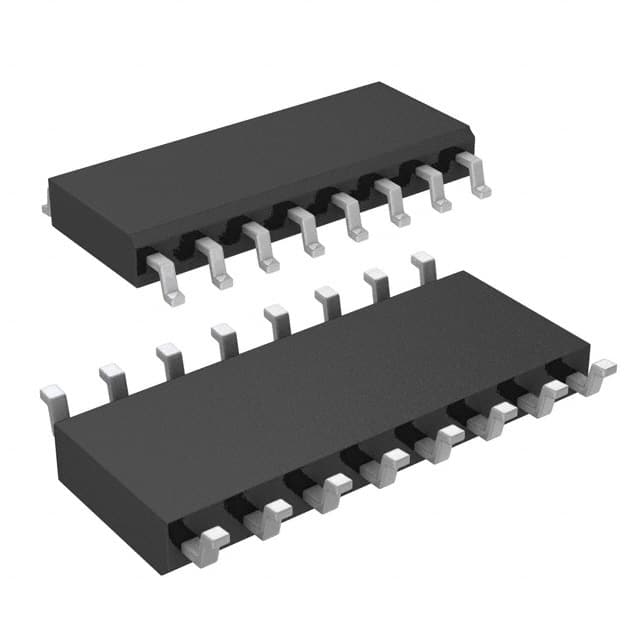
- Part No.:
- TCA505BG
- Manufacturer:
- Infineon Technologies
- Category:
- Sensor and Detector Interfaces
- Package:
- 16-SOIC (0.154", 3.90mm Width)
- Datasheet:
-
 TCA505BG.pdf
- Description:
- IC SWITCH PROX INDCT PDSO-16
- Quantity:
- Payment:

- Shipping:

Inventory:1,506
Please send an inquiry. Send us your inquiry, and we will respond immediately.
Product details
Overview
TCA505BG from Infineon Technologies is a bipolar monolithic IC designed specifically for inductive proximity switches, integrating oscillator, demodulator, and threshold switch functions with short-circuit protection, 4-output transistor stages (Q1–Q4), and two-wire AC operation support. It operates from 4–40 V (or 3.1–4.5 V with VREF tied to VS), delivers up to 60 mA total output current, features temperature-compensated coil response, and supports switching frequencies up to 5 kHz.
For engineers reviewing the TCA505BG datasheet, TCA505BG pinout, TCA505BG application, or TCA505BG equivalent, key selection considerations include its dual antiphase output pairs, programmable distance/hysteresis via RDi/RHy, short-circuit detection on pin SC, turn-on/off delay control via CD capacitor, and two-wire regulator activation via VT connection - all critical for robust industrial proximity sensing design.
Technical Context
The TCA505BG implements an LC oscillator whose amplitude shift-caused by metallic target proximity-is demodulated and compared against a threshold to trigger four configurable output transistors. Its internal reference voltage (~2.9 V on VREF) enables supply-independent analog functions when used in standard 4–40 V mode.
Short-circuit protection operates via pin SC with ≥0.3 V detection threshold, initiating periodic output disable/enable cycles (turn-off delay + ~200× pause). Pin CD sets both startup delay and short-circuit timing, while VT enables internal switching regulator mode for two-wire AC operation between 6–8 V switching thresholds.
Key Specifications
| Parameter | Value and Actual Design Meaning |
|---|---|
| Supply Voltage Range | 4–40 V (standard); 3.1–4.5 V (VREF tied to VS, analog functions voltage-dependent) |
| Output Current Capability | Up to 60 mA total across Q1–Q4; each stage internally limited to ≤250 mA during short-circuit |
| Switching Frequency | Up to 5 kHz - enables high-speed detection in automated machinery and conveyor systems |
| Operating Temperature | –40 °C to +110 °C - suitable for under-hood automotive and factory-floor environments |
| Noise Immunity | Enhanced via CI RC filter option and internal architecture - reduces false triggers in EMI-heavy industrial settings |
| Short-Circuit Protection | SC pin detects ≥0.3 V drop; initiates cyclic disable/enable with CD-defined timing - protects outputs and external transistors |
| Distance Adjustment | RDi resistor sets switching distance (0.1–0.6× ferrite diameter); RHy enables hysteresis via series/parallel configuration |
Pinout & Package
Package: PG-DSO-16-1 (16-pin SMD, RoHS-compliant, Pb-free lead plating).
| Pin/Terminal | Circuit Role | Design Meaning |
|---|---|---|
| 1 (LC) | LC Oscillator Node | Connects external resonant circuit (ferrite core + capacitor); amplitude shift detects metal proximity |
| 2 (RDi) | Distance Setting Input | Resistor to ground sets oscillator current and thus switching distance; higher R = greater distance |
| 4 (CI) | Noise Filtering Node | Optional RC network improves noise immunity; prevents false triggers at power-up |
| 5 (RHy) | Hysteresis Control | Configures distance hysteresis via series/parallel split with RDi - prevents oscillation near threshold |
| 6 (SC) | Short-Circuit Sense | Detects ≥0.3 V drop across external sense resistor; triggers cyclic output disable/enable |
| 7 (GND) | Ground Reference | Common return for oscillator, demodulator, and output stages |
| 8–11 (Q1–Q4) | Output Transistors | Two antiphase pairs (Q1/Q2 and Q3/Q4); configurable as open-collector, emitter-follower, or push-pull |
| 12 (VS) | Supply Input | Enables outputs above ~3.6 V; full functionality above 4 V; inhibits outputs during brown-out |
| 13 (VREF) | Stabilized Reference | ~2.9 V internal reference; powers analog blocks; ties to VS for low-voltage mode (3.1–4.5 V) |
| 14 (B) | Base Voltage Limit | Sets max base drive for Q2/Q4; connecting to VREF enables supply-independent constant-current output |
| 15 (CD) | Delay Timing | Capacitor defines turn-on delay, short-circuit pause, and glitch immunity during VS dips |
| 16 (VT) | Two-Wire Regulator Enable | Connect to VS to activate internal switching regulator for AC two-wire operation (6–8 V switching) |
Key Features
| Feature | Design Value |
|---|---|
| Integrated Oscillator + Demodulator + Threshold Switch | Single-chip solution eliminates discrete timing components and simplifies PCB layout for proximity sensor front-ends |
| Dual Antiphase Output Pairs (Q1/Q2 & Q3/Q4) | Enables differential signaling, push-pull drive, or parallel current sharing - increases flexibility in load interface design |
| Programmable Distance & Hysteresis (RDi + RHy) | Allows field-adjustable sensing range and stable on/off transitions without firmware or microcontroller intervention |
| Short-Circuit Protection with Cyclic Recovery (SC + CD) | Prevents thermal damage during sustained faults while maintaining automatic recovery - no manual reset required |
| Two-Wire AC Operation Support (VT pin) | Enables direct integration into legacy 2-wire industrial sensors powered from AC line - reduces system BOM and wiring cost |
Applications
| Industrial Proximity Sensors | Automotive Position Detection |
|---|---|
Use Scenario: Detecting metal parts on high-speed assembly lines with vibration, dust, and EMI. IC Role / Device Role / Timing Role: Core signal conditioning IC - converts LC resonance amplitude shift into clean digital output with hysteresis and short-circuit resilience. Use Value: Enables reliable 5 kHz switching in harsh environments without external protection circuitry or recalibration. | Use Scenario: Sensing camshaft or crankshaft position in engine control modules where space and thermal margin are constrained. IC Role / Device Role / Timing Role: Inductive front-end conditioner - provides temperature-compensated amplitude detection and robust output drive for downstream logic. Use Value: Compensates for coil thermal drift across –40 °C to +110 °C, eliminating calibration drift in under-hood applications. |
| Factory Automation Safety Gates | Material Handling Conveyor Systems |
Use Scenario: Monitoring guard door closure in ISO 13857-compliant safety interlocks requiring fail-safe behavior. IC Role / Device Role / Timing Role: Fault-tolerant proximity interface - SC/CD-based short-circuit recovery ensures continuous monitoring even during wiring faults. Use Value: Meets functional safety requirements via inherent hardware-level fault detection and autonomous recovery - no software watchdog needed. | Use Scenario: Detecting metal pallets or carriers on roller conveyors subject to voltage dips and electrical noise. IC Role / Device Role / Timing Role: Power-resilient sensor driver - CD capacitor suppresses false triggers during brief VS dips (<10 ms), maintaining uptime. Use Value: Eliminates nuisance shutdowns caused by line transients, improving OEE in continuous production lines. |
Equivalent & Alternatives
The following parts are listed as comparable options for similar inductive proximity switch applications.
| Alternative Part | Technical Difference | Application Difference | Selection Advice |
|---|---|---|---|
| TL494CN | PWM controller with error amp and dead-time control; no integrated oscillator/demodulator for inductive sensing | Requires external LC front-end, comparator, and protection logic - larger footprint and higher component count | Choose only if designing custom oscillator topology or needing PWM output modulation capability |
| MAX44267 | Low-power Hall-effect sensor interface IC; includes ADC, SPI, and diagnostics - not compatible with LC resonance sensing | Designed for magnetic field detection, not inductive proximity; lacks RDi/RHy distance tuning and SC protection | Select only for magnetic (not inductive) target detection or when digital interface and diagnostic reporting are mandatory |
Compared with TL494CN and MAX44267, the TCA505BG uniquely integrates LC oscillator, amplitude demodulation, threshold comparison, and four protected output stages in one DSO-16 package - delivering lower BOM cost, smaller size, and faster time-to-market for dedicated inductive proximity switch designs.
Availability
TCA505BG is available at Aetrix Electronics and suitable for industrial proximity sensors, automotive position detection, factory automation safety gates, and material handling conveyor systems requiring stable component supply across extended temperature ranges and long product lifecycles.
Supply support for TCA505BG includes scheduled delivery planning, volume procurement assistance, BOM continuity management, traceable sourcing, and lifecycle availability coordination for OEM customers, industrial embedded developers, connected-device designers, and electronics production programs.
Manufacturer
Infineon Technologies is a German semiconductor manufacturer specializing in power management, automotive electronics, and industrial control ICs, with leadership in ruggedized analog and mixed-signal solutions.
The TCA505BG belongs to Infineon's proximity sensor interface IC product line, engineered specifically to replace discrete transistor-based proximity switch designs with a single, temperature-stable, short-circuit-protected monolithic solution.
FAQ
What is the purpose of the CD pin capacitor?
The CD pin capacitor sets three timing functions: (1) turn-on delay after power-up to prevent false triggers during oscillator stabilization; (2) turn-off delay during brief VS dips to avoid spurious shutdowns; and (3) short-circuit protection cycle timing (turn-off duration and ~200× pause). Typical values range from 10 nF to 100 nF depending on required delay.
Can TCA505BG drive loads directly without external transistors?
Yes - the internal Q1–Q4 output transistors support up to 60 mA total current and include built-in short-circuit protection. For loads requiring >60 mA or higher voltage swing, external transistors can be driven using Q1–Q4 as base drivers, with SC protection extended to those devices via proper current-sense resistor placement.
How does the RDi and RHy configuration affect switching hysteresis?
RDi sets baseline switching distance; RHy adds hysteresis by creating a second resistance path that changes effective oscillator current based on output state. In series configuration, RHy increases off-to-on distance; in parallel, it decreases on-to-off distance - enabling stable transition windows without software or external comparators.
Is TCA505BG suitable for AC-powered two-wire proximity switches?
Yes - connecting VT to VS activates an internal switching regulator that enables operation from AC line via phase-controlled rectification. The IC switches outputs between 6 V (turn-on) and 8 V (turn-off) on VS, maintaining low quiescent current and supporting legacy two-wire sensor form factors without external regulators.
TCA505BG Specifications
- Product attributes
- Attribute value
- Manufacturer:
- Infineon Technologies
- Package/Case:
- 16-SOIC (0.154", 3.90mm Width)
- Series:
- -
- Packaging:
- Tube
- Product Status:
- Discontinued at Digi-Key
- Programmable:
- Not Verified
- Type:
- Proximity Detector
- Input Type:
- Analog
- Output Type:
- Analog
- Current - Supply:
- 550 µA
- Operating Temperature:
- -40°C ~ 110°C
- Grade:
- -
- Qualification:
- -
- Mounting Type:
- Surface Mount
- Supplier Device Package:
- PG-DSO-16-1
TCA505BG FAQ
1.How can I place an order for TCA505BG through Aetrix?
Please submit a Request for Quotation (RFQ) for TCA505BG on Aetrix. Our sales agent will provide a competitive quotation and guide you through the order confirmation once you accept the terms.
2.Are the price and stock information for TCA505BG reliable?
The price and inventory of TCA505BG are updated periodically and may fluctuate due to market conditions. Stock and pricing data are typically refreshed every 24 hours. Quotation validity for TCA505BG is usually 5 days.
3.What payment methods are accepted for TCA505BG?
We accept Wire Transfer, PayPal, Credit Card, Western Union, MoneyGram, and Escrow for TCA505BG transactions.
Note: Certain payment methods may incur a processing fee.
4.How is shipping managed for TCA505BG?
TCA505BG orders can be shipped via leading logistics carriers, including DHL, UPS, FedEx, TNT, or Registered Mail.
Once your TCA505BG order is processed, you will receive an email with the shipment details and tracking number.
Note: Tracking information may take up to 24 hours to appear. Express delivery typically takes 3–5 business days.
5.How can I obtain technical support or documentation for TCA505BG?
For technical support, including TCA505BG datasheets, pinout diagrams, or application guidance, please contact our engineering support team. They can provide detailed documentation and assistance for your TCA505BG requirements.
6.How does Aetrix verify that TCA505BG is sourced from the original manufacturer or authorized distributors?
All TCA505BG products on Aetrix are procured from qualified distributors and authorized channels. Our dedicated quality assurance team conducts strict verification, including traceability checks and, if necessary, third-party testing. This ensures that TCA505BG meets industry standards.
7.What is the process for return or replacement of TCA505BG?
All TCA505BG units undergo pre-shipment inspection (PSI). If there is an issue with TCA505BG, returns or replacements are accepted under the following conditions:
1.Quantity discrepancies, incorrect items, or visible external defects (such as breakage or corrosion), acknowledged by Aetrix.
2.The issue is reported within 90 days of delivery.
3.The TCA505BG part is unused and in its original packaging.
Return procedure for TCA505BG:
1.Submit a request within 90 days.
2.Obtain a Return Material Authorization (RMA) from Aetrix.
TCA505BG Tags

-
RE46C100S8TF
Microchip Technology
-
XTR111AIDRCR
Texas Instruments
-
XTR111AIDGQR
Texas Instruments
-
XTR117AIDGKR
Texas Instruments
-
XTR111AIDGQT
Texas Instruments

-
XTR115UA/2K5
Texas Instruments
-
MAX14626ETT+T
Analog Devices Inc./Maxim Integrated
-
XTR116UA/2K5
Texas Instruments
-
XTR115U/2K5
Texas Instruments
-
XTR116U/2K5
Texas Instruments
-
PGA308AIDGSR
Texas Instruments
-
XTR300AIRGWR
Texas Instruments
Tech Hub

Operational amplifier guide covering op amp basics, feedback, ideal vs real op amps, common configurations, buffer circuits, offset, bias current, gain-bandwidth, slew rate, rail-to-rail limits and sel…

Jumper cables guide covering safe connection order, red and black clamp placement, final ground connection, cable gauge, length, clamp quality, copper vs CCA cables, jump starter comparison and battery…

LDO regulator guide covering low dropout voltage, power dissipation, thermal design, PSRR, output noise, capacitor stability, adjustable LDO circuits, LDO vs buck converter and datasheet selection chec…

Conditional Access Module guide covering CAM meaning, CI/CI+ interface, smart card authorization, DVB security workflow, TV and set-top box compatibility, internal electronics, ESD protection, connecto…

Guide to electronic component obsolescence covering EOL risk, PCN/PDN notices, last-time buy planning, replacement options, form-fit-function validation, counterfeit risk and BOM lifecycle management.

18650 battery guide covering lithium-ion cell basics, 3.6V/3.7V voltage, 4.2V charging, mAh and Wh capacity, protected cells, chargers, BMS, series-parallel packs, holders, welding and sourcing checks.…

Hall effect sensor guide covering working principle, linear and digital sensors, Arduino circuits, current sensing, speed detection, automotive applications, A3144 examples, signal filtering and datash…

Product Change Notification guide for electronic components, covering PCN meaning, PCN vs PDN/EOL, common change types, risk levels, form-fit-function review, engineering validation, BOM control, LTB/L…

A practical guide to blend door actuators, covering HVAC function, symptoms, location, AC and heater issues, reset and calibration, replacement cost, electrical diagnosis, compatibility checks, and rep…

Engineering guide to Raspberry Pi alternatives, covering chip-level differences, Orange Pi, ROCK, Jetson, Banana Pi, NanoPi, Compute Module, Pico, GPIO, camera, HAT compatibility, and replacement risks…


