
 My Inquiry
 My Account


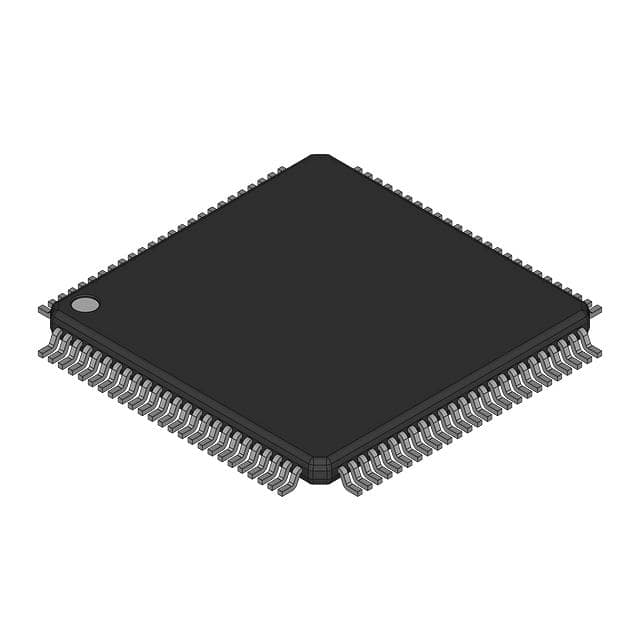
Texas Instruments TCM4300IPZ
- Part No.:
- TCM4300IPZ
- Manufacturer:
- Texas Instruments
- Category:
- Telecom
- Package:
- -
- Datasheet:
-
 TCM4300IPZ.pdf
- Description:
- TELECOM IC,
- Quantity:
- Payment:

- Shipping:

Inventory:15,435
Please send an inquiry. Send us your inquiry, and we will respond immediately.
Product details
Overview
TCM4300IPZ from Texas Instruments is an IS-54B dual-mode RF cellular telephone interface IC (ARCTIC™) integrating analog/digital baseband processing, π/4-DQPSK modulation encoding, dual 10-bit sigma-delta A/D and D/A converters, and wide-band data (WBD) Manchester FSK demodulation. It operates at 3.3 V or 5 V, supports FM and digital I/Q modes, and targets cellular handset baseband subsystems requiring low-power standby operation.
For engineers reviewing the TCM4300IPZ datasheet, TCM4300IPZ pinout, TCM4300IPZ application, or TCM4300IPZ equivalent, this page delivers verified functional identity, confirmed 100-pin PZ package mapping, validated microcontroller/DSP interface timing across Intel/Mitsubishi/Motorola protocols, exact WBD demodulator behavior (10 kb/s Manchester), and real-world power control roles for AGC, AFC, PWRCONT, and PAEN signals.
Technical Context
The TCM4300IPZ implements a dual-path architecture: in analog mode, it performs FM baseband filtering, 10-bit sigma-delta A/D conversion on RXI/RXQ inputs, and D/A conversion for TXI/TXQ outputs; in digital mode, it applies square-root raised-cosine (SQRC) filtering and π/4-DQPSK dibit-to-symbol encoding prior to transmit. Its internal clock generation derives 38.88 MHz from MCLKIN/XTAL and distributes CMCLK (2.048 MHz), CSCLK (8 kHz), and MCCLK (1.215 MHz at power-up).
Power management is hardware-integrated: dedicated DAC outputs (AGC, AFC, PWRCONT, LCDCONTR) drive external analog blocks, while digital enable signals (FMRXEN, IQRXEN, TXEN, PAEN) gate subsystem power. The WBD demodulator operates independently in analog standby mode, reducing DSP load with active-low DWBDINT and MWBDFINT signaling synchronized to MTS0/MTS1 configuration.
Key Specifications
| Parameter | Value and Actual Design Meaning |
|---|---|
| Function | IS-54B dual-mode cellular baseband interface IC with integrated A/D, D/A, SQRC filtering, π/4-DQPSK encoder, and WBD Manchester FSK demodulator |
| Supply Voltages | 3.3 V or 5 V digital/analog operation; separate AVDDREF, AVDDRX, AVDDTX, DVDD rails with dedicated ground pins (AVSSREF, AVSSRX, AVSSTX, DVSS) |
| A/D & D/A Resolution | Dual 10-bit sigma-delta converters for both receive (RXI/RXQ) and transmit (TXI/TXQ) paths, supporting analog FM and digital I/Q baseband modes |
| WBD Demodulation | 10 kb/s Manchester-coded FSK demodulator with dedicated interrupt outputs (DWBDINT, MWBDFINT) and independent analog-mode operation |
| Interface Support | Configurable microcontroller interface (Intel/Mitsubishi/Motorola 8-/16-bit) and parallel DSP interface (10-bit data, 4-bit address, read/write/strobe control) |
| Operating Temperature | –40°C to +85°C free-air range, qualified for cellular handset environmental stress and thermal cycling |
| Package | 100-pin PZ package (plastic quad flat pack), pin-compatible with industry-standard QFP footprints for high-density PCB layout |
Pinout & Package
TCM4300IPZ uses a 100-pin PZ package (plastic quad flat pack), thermally and electrically optimized for cellular handset baseband applications. Pin spacing is 0.5 mm, body size is 14 mm × 14 mm, and lead finish is matte tin.
| Pin/Terminal | Circuit Role | Design Meaning |
|---|---|---|
| RXIP / RXIN / RXQP / RXQN | Differential analog baseband receive inputs | Accept in-phase/quadrature differential signals from RF demodulator; enable analog FM or digital I/Q mode selection via internal configuration |
| TXIP / TXIN / TXQP / TXQN | Differential analog baseband transmit outputs | Drive RF modulator with filtered, encoded I/Q waveforms; output level controlled by internal DACs and external bias (RBIAS, VCM) |
| AGC / AFC / PWRCONT / LCDCONTR | Analog auxiliary DAC outputs | Provide voltage-controlled gain adjustment (AGC), frequency tuning (AFC), PA power scaling (PWRCONT), and LCD contrast (LCDCONTR) without external DACs |
| FMRXEN / IQRXEN / TXEN / PAEN | Subsystem power enable outputs | Assert high to activate FM receiver, I/Q receiver, transmitter, or RF power amplifier-enabling precise power sequencing and battery-aware operation |
| DWBDINT / MWBDFINT / CINT / DINT | Interrupt request outputs | Signal event-driven status (WBD traffic, microcontroller/DSP data ready, codec sample sync) with polarity configurable via MTS0/MTS1 |
| MCLKIN / XTAL / MCLKOUT / CMCLK / CSCLK / MCCLK | Clock generation and distribution | Support 38.88 MHz crystal oscillator input, generate speech codec clocks (2.048 MHz, 8 kHz), and provide programmable microcontroller clock (1.215 MHz default) |
Key Features
| Feature | Design Value |
|---|---|
| π/4-DQPSK modulation encoder | Performs dibit-to-symbol conversion in digital transmit mode, eliminating need for external symbol mapper and ensuring IS-54B-compliant spectral efficiency |
| Square-root raised-cosine (SQRC) filtering | Integrated digital filtering in transmit/receive paths reduces intersymbol interference and meets IS-54B pulse-shaping requirements without external FIR components |
| Wide-band data (WBD) Manchester demodulator | Offloads 10 kb/s FSK demodulation from DSP during analog standby, extending battery life by minimizing active processor time |
| Multi-protocol microcontroller interface | Hardware-configurable support for Intel, Mitsubishi, and Motorola 8-/16-bit bus timing eliminates need for glue logic or protocol translation firmware |
| Integrated power control supervision | Four dedicated DACs (AGC, AFC, PWRCONT, LCDCONTR) and five enable outputs (FMRXEN, IQRXEN, TXEN, PAEN, SCEN) enable full system-level power management from single IC |
Applications
| Cellular Handset Baseband | IS-54B Dual-Mode Transceiver |
|---|---|
Use Scenario: Dual-mode cellular phone implementing both analog FM and digital TDMA (IS-54B) air interfaces in a single PCB design. IC Role / Device Role / Timing Role: Central baseband interface IC handling A/D/D/A conversion, modulation/demodulation, clock distribution, and power sequencing between DSP, microcontroller, and RF front-end. Use Value: Reduces BOM count by integrating sigma-delta converters, SQRC filters, π/4-DQPSK encoder, and WBD demodulator-eliminating six discrete ICs and associated passive components. |
Use Scenario: Compact transceiver module requiring low-power analog standby and burst-mode digital transmission compliant with TIA IS-54B standard. IC Role / Device Role / Timing Role: Provides precise transmit power ramp-up/ramp-down timing (per Figure 4–2), synthesizer interface (SYNCLK/SYNDTA/SYNLE), and RF power amplifier enable/control (PAEN/PWRCONT). Use Value: Enables compliant TDMA burst transmission with <10 µs power ramp control and integrated AFC feedback loop-reducing RF calibration complexity and test time. |
| Speech Codec Interface | Battery-Monitored Portable System |
Use Scenario: Voice-centric portable device needing synchronous speech sampling, echo cancellation, and hands-free audio processing. IC Role / Device Role / Timing Role: Generates CMCLK (2.048 MHz) and CSCLK (8 kHz) for codec synchronization; provides SINT interrupt for DSP sample alignment; routes digitized voice via DSP interface. Use Value: Guarantees jitter-free codec timing with hardware-synchronized interrupts-avoiding software-based sample rate correction and improving voice quality. |
Use Scenario: Battery-powered handheld terminal requiring runtime monitoring of cell voltage and received signal strength for adaptive power management. IC Role / Device Role / Timing Role: Samples battery voltage (BAT) and RSSI level using integrated 10-bit A/D converter; provides results via microcontroller register map (0Bh/0Ch). Use Value: Delivers calibrated 10-bit ADC readings without external sensing circuitry-enabling accurate low-battery warnings and dynamic RF gain adjustment. |
Equivalent & Alternatives
The following parts are listed as comparable options for similar cellular baseband interface applications.
| Alternative Part | Technical Difference | Application Difference | Selection Advice |
|---|---|---|---|
| TCM4200IPZ | Lacks WBD Manchester demodulator and π/4-DQPSK encoder; supports only analog FM mode with basic A/D/D/A conversion | Restricted to analog-only IS-54A handsets; cannot process digital TDMA bursts or offload standby-mode demodulation | Select when cost-sensitive analog-only designs eliminate need for digital mode features and WBD processing |
| TLV320AIC10IPFB | Audio-focused 16-bit stereo codec with no RF interface, no synthesizer control, no WBD demodulator, and no PAEN/AGC/AFC outputs | Designed for general-purpose audio systems-not cellular RF baseband; requires external modulator/demodulator and power control logic | Select for non-cellular voice applications where high-fidelity audio replaces RF baseband functionality |
Compared with TCM4300IPZ, TCM4200IPZ omits digital-mode capability and WBD offload-reducing integration but limiting to legacy analog networks; TLV320AIC10IPFB provides higher-resolution audio conversion but lacks all RF-specific functions, requiring full external baseband implementation.
Availability
TCM4300IPZ is available at Aetrix Electronics and suitable for cellular handset design, dual-mode transceiver development, and IS-54B-compliant infrastructure equipment requiring stable component supply and long-term lifecycle support.
Supply support for TCM4300IPZ includes scheduled delivery planning, volume procurement assistance, BOM continuity management, traceable sourcing, and lifecycle availability coordination for OEM customers, industrial embedded developers, connected-device designers, and electronics production programs.
Manufacturer
Texas Instruments (TI) is a global semiconductor leader specializing in analog, embedded processing, and wireless connectivity solutions, with decades of experience in cellular infrastructure and handset IC design.
The TCM4300IPZ belongs to TI's ARCTIC™ (Advanced RF Cellular Telephone Interface Circuit) product line, engineered specifically for dual-mode IS-54B cellular handsets requiring integrated baseband processing, low-power standby, and RF subsystem control.
FAQ
What is the primary function of the TCM4300IPZ in a cellular handset design?
The TCM4300IPZ serves as the central baseband interface IC in IS-54B dual-mode cellular handsets, bridging the DSP, microcontroller, and RF front-end. It performs analog/digital receive and transmit signal conditioning-including dual 10-bit sigma-delta A/D and D/A conversion, π/4-DQPSK modulation encoding, square-root raised-cosine filtering, and wide-band data Manchester demodulation-while managing power control for the RF power amplifier, AGC, AFC, and LCD contrast. This integration reduces system-level component count and simplifies timing-critical RF interface design.
Does the TCM4300IPZ support both analog FM and digital TDMA modes?
Yes, the TCM4300IPZ natively supports both modes per TIA IS-54B specification. In analog mode, it processes FM discriminator output (FM pin) with baseband filtering and 10-bit sigma-delta A/D conversion. In digital mode, it accepts differential I/Q baseband inputs (RXIP/RXIN/RXQP/RXQN), applies SQRC filtering, and encodes dibits into π/4-DQPSK symbols for transmission. Mode selection is controlled via internal registers and enabled by corresponding path enables (FMRXEN, IQRXEN, TXEN).
How does the TCM4300IPZ handle clock generation and distribution?
The TCM4300IPZ integrates a complete clock system: it accepts a 38.88 MHz ±100 ppm reference via MCLKIN/XTAL, generates CMCLK (2.048 MHz) and CSCLK (8 kHz) for speech codec synchronization, provides MCCLK (1.215 MHz at power-up, adjustable) for microcontroller timing, and outputs MCLKOUT as a buffered version of MCLKIN. All clocks are phase-aligned and jitter-controlled to meet IS-54B timing budgets, eliminating need for external clock generators or buffers in the baseband subsystem.
What power control capabilities does the TCM4300IPZ provide for RF subsystems?
The TCM4300IPZ delivers comprehensive RF power control through four dedicated DAC outputs (AGC, AFC, PWRCONT, LCDCONTR) and five digital enable signals (FMRXEN, IQRXEN, TXEN, PAEN, SCEN). AGC adjusts receiver gain, AFC tunes TCXO frequency, PWRCONT scales RF power amplifier output, and PAEN directly gates the PA. These outputs operate over full temperature range and interface directly with external RF components-enabling closed-loop power management without external DACs or GPIO expansion.
Is the TCM4300IPZ pinout compatible with other devices in the TCM family?
The TCM4300IPZ uses a unique 100-pin PZ package with defined pin assignments for its specific feature set-including WBD demodulator interrupts (DWBDINT, MWBDFINT), synthesizer interface (SYNCLK, SYNDTA, SYNLE[2:0]), and multi-protocol microcontroller bus (MTS0/MTS1, MCCSL/MCCSH). While earlier variants like TCM4200IPZ share the same package footprint, pin functions differ significantly (e.g., TCM4200 lacks WBD and π/4-DQPSK signals), so PCB layout is not interchangeable without redesign.
TCM4300IPZ Specifications
- Product attributes
- Attribute value
- Manufacturer:
- Texas Instruments
- Series:
- *
- Package/Case:
- -
- Packaging:
- Bulk
- Product Status:
- Active
- Function:
- -
- Interface:
- -
- Number of Circuits:
- -
- Voltage - Supply:
- -
- Current - Supply:
- -
- Power (Watts):
- -
- Operating Temperature:
- -
- Grade:
- -
- Qualification:
- -
- Mounting Type:
- -
- Supplier Device Package:
- -
TCM4300IPZ FAQ
1.How can I place an order for TCM4300IPZ through Aetrix?
Please submit a Request for Quotation (RFQ) for TCM4300IPZ on Aetrix. Our sales agent will provide a competitive quotation and guide you through the order confirmation once you accept the terms.
2.Are the price and stock information for TCM4300IPZ reliable?
The price and inventory of TCM4300IPZ are updated periodically and may fluctuate due to market conditions. Stock and pricing data are typically refreshed every 24 hours. Quotation validity for TCM4300IPZ is usually 5 days.
3.What payment methods are accepted for TCM4300IPZ?
We accept Wire Transfer, PayPal, Credit Card, Western Union, MoneyGram, and Escrow for TCM4300IPZ transactions.
Note: Certain payment methods may incur a processing fee.
4.How is shipping managed for TCM4300IPZ?
TCM4300IPZ orders can be shipped via leading logistics carriers, including DHL, UPS, FedEx, TNT, or Registered Mail.
Once your TCM4300IPZ order is processed, you will receive an email with the shipment details and tracking number.
Note: Tracking information may take up to 24 hours to appear. Express delivery typically takes 3–5 business days.
5.How can I obtain technical support or documentation for TCM4300IPZ?
For technical support, including TCM4300IPZ datasheets, pinout diagrams, or application guidance, please contact our engineering support team. They can provide detailed documentation and assistance for your TCM4300IPZ requirements.
6.How does Aetrix verify that TCM4300IPZ is sourced from the original manufacturer or authorized distributors?
All TCM4300IPZ products on Aetrix are procured from qualified distributors and authorized channels. Our dedicated quality assurance team conducts strict verification, including traceability checks and, if necessary, third-party testing. This ensures that TCM4300IPZ meets industry standards.
7.What is the process for return or replacement of TCM4300IPZ?
All TCM4300IPZ units undergo pre-shipment inspection (PSI). If there is an issue with TCM4300IPZ, returns or replacements are accepted under the following conditions:
1.Quantity discrepancies, incorrect items, or visible external defects (such as breakage or corrosion), acknowledged by Aetrix.
2.The issue is reported within 90 days of delivery.
3.The TCM4300IPZ part is unused and in its original packaging.
Return procedure for TCM4300IPZ:
1.Submit a request within 90 days.
2.Obtain a Return Material Authorization (RMA) from Aetrix.
TCM4300IPZ Tags

-
LMC567CMX/NOPB
Texas Instruments
-
LM567CMX/NOPB
Texas Instruments
-
LM567CM/NOPB
Texas Instruments
-
VSC8531XMW-02
Microchip Technology
-
VSC8531XMW-05
Microchip Technology

-
GPY115C0VI
MaxLinear, Inc.
-
SI32185-A-FMR
Skyworks Solutions Inc.
-
VSC8541XMV-05
Microchip Technology
-
SI32178-B-FM1R
Skyworks Solutions Inc.
-
GPY215C0VI
MaxLinear, Inc.
-
CPC7514ZTR
Littelfuse Inc.
-
VSC8502XML-03
Microchip Technology
Tech Hub

A practical engineering guide to 3.3V and 5V logic compatibility, input thresholds, resistor dividers, translator ICs, MOSFET level shifting, I2C pull-ups, timing limits and power-sequencing risks.

The 74HC595 uses push-pull logic outputs, while the TPIC6B595 uses 50 V open-drain DMOS sinks for higher-power loads. This guide compares timing, current limits, 3.3 V interfacing, load wiring, thermal…

The 74HC595 converts serial data into eight stable parallel outputs. This guide covers pin functions, shift and storage timing, OE and MR behavior, drive-current limits, cascading, voltage compatibilit…

A technical comparison of level-sensitive latches and edge-triggered flip-flops, covering timing windows, setup and hold limits, master–slave operation, time borrowing, race-through, HDL inference and…

A D latch stores one bit while Enable controls when data can pass. This reference covers gate-level operation, truth tables, transparency, setup and hold timing, LE versus OE, common ICs and practical …

An SR latch stores one bit through cross-coupled feedback. This engineering reference covers NOR and NAND implementations, truth tables, forbidden-state recovery, gated operation, switch debouncing, fa…

Latch circuits retain one bit through feedback. This technical reference covers SR and D latches, truth tables, transparency, timing limits, latch-versus-flip-flop behavior, applications and common log…

An engineering guide to LED driver operation, constant-current and constant-voltage outputs, linear and switching topologies, dimming, IC selection, calculations, replacement compatibility, and fault c…

Operational amplifier guide covering op amp basics, feedback, ideal vs real op amps, common configurations, buffer circuits, offset, bias current, gain-bandwidth, slew rate, rail-to-rail limits and sel…

Jumper cables guide covering safe connection order, red and black clamp placement, final ground connection, cable gauge, length, clamp quality, copper vs CCA cables, jump starter comparison and battery…


