
 My Inquiry
 My Account


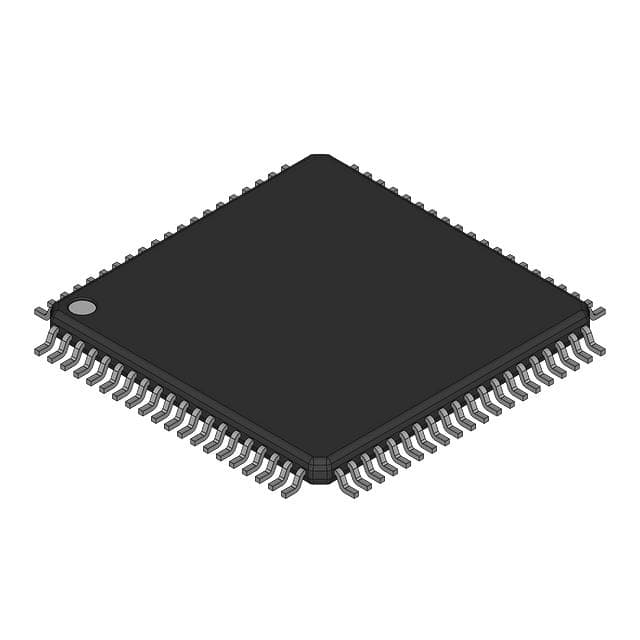
Texas Instruments TCM8030PN
- Part No.:
- TCM8030PN
- Manufacturer:
- Texas Instruments
- Category:
- Specialized
- Package:
- -
- Datasheet:
-
 TCM8030PN.pdf
- Description:
- BASEBAND CIRCUIT, CMOS, PQFP80
- Quantity:
- Payment:

- Shipping:

Inventory:222
Please send an inquiry. Send us your inquiry, and we will respond immediately.
Product details
Overview
TCM8030PN from Texas Instruments is a single-chip baseband processor for analog cellular telephones supporting AMPS, NAMPS, TACS, ETACS, JTACS, and NTACS standards. It integrates analog audio paths (MIC preamps, compandor, 32-Ω earpiece driver), digital data processing (BCH encoding/decoding, frame assembly), SAT/DSAT generation/detection, DTMF generation, and on-chip AFC - all operating from a 2.7–5.5 V supply with five power-saving modes.
For engineers reviewing the TCM8030PN datasheet, TCM8030PN pinout, TCM8030PN application, or TCM8030PN equivalent, this device is critical for legacy analog cellular handset design where integrated voice/data/SAT signal conditioning, low-voltage operation, and microcontroller serial interface compatibility are required.
Technical Context
The TCM8030PN implements dual-path analog signal processing: a transmit path with MICAMP1/2, compressor, limiter, TXTRIM, and SAT/DAT modulation stages; and a receive path with RXAMP, expandor, RXTRIM, VOL CTRL, and LS DRIVER driving differential RECP/RECN outputs. Its digital core handles BCH-coded data recovery, majority voting, and SAT regeneration using programmable coefficients stored in internal registers.
It communicates via a four-wire serial microcontroller interface (CLK, DATA, CS, STROBE) with defined write/read timing, supports multiple clock sources (on-chip crystal oscillator, external clock, or TCXO), and features dedicated configuration registers for audio path trim, power mode control (e.g., Total Power-Down, Tone Mode), and event-driven interrupt handling via E1/E2 status registers.
Key Specifications
| Parameter | Value and Actual Design Meaning |
|---|---|
| Supply Voltage | 2.7 V to 5.5 V - enables direct battery operation from single Li-ion or multi-cell alkaline packs without LDO regulation. |
| Operating Temperature | –40°C to +85°C - qualified for industrial-grade mobile handset environments including thermal cycling and humidity exposure. |
| Power Modes | 5 distinct modes (Total Power-Down, Shutdown, Idle, Tone, Full Operation) - allows dynamic current scaling from <1 µA to ~20 mA depending on call state and feature activation. |
| Digital Interface | 4-wire serial (CLK, DATA, CS, STROBE) - eliminates need for parallel bus, reduces MCU GPIO count and PCB routing complexity. |
| Audio Output Drive | Differential 32-Ω earpiece driver (RECP/RECN) - delivers line-level audio directly to standard telephone receivers without external amplification. |
| DTMF Generation | Integrated dual-tone generator compliant with ITU-T Q.23 - produces standardized keypad tones without external tone IC or DSP resources. |
| SAT Processing | Wideband SAT (10 kHz) and narrowband DSAT (6.9 kHz) detection/regeneration - meets AMPS/NAMPS/TACS supervisory tone requirements per FCC/ETSI specifications. |
Pinout & Package
TCM8030PN is housed in a 64-pin plastic quad flat package (PQFP) with 0.5 mm lead pitch, thermally enhanced for handheld RF environment operation.
| Pin/Terminal | Circuit Role | Design Meaning |
|---|---|---|
| VDD | Primary power supply input | Accepts 2.7–5.5 V; powers analog and digital sections; requires local 0.1 µF bypass to GND. |
| GND | Analog and digital ground reference | Single-point star grounding recommended to minimize noise coupling between audio and digital domains. |
| CLK | Microcontroller interface clock input | Drives internal serial shift register; timing-critical for reliable register read/write at up to 2 MHz. |
| DATA | Bidirectional serial data line | Carries address/data during writes; returns register contents during reads; high-impedance when CS inactive. |
| CS | Chip select input | Active-low enable for serial interface; must be asserted before CLK transitions to initiate communication. |
| STROBE | Write strobe input | Latches incoming DATA on rising edge; synchronizes register updates with microcontroller timing. |
| MIC1, MIC2 | Differential microphone inputs | Accepts electret mic signals; internal bias provided; supports noise-rejecting differential preamplification. |
| TXO | Transmit audio output | Single-ended output feeding IF modulator; includes SAT/DAT superposition and level trimming via TXTRIM register. |
| RECIN | Receive audio input | Accepts demodulated IF output; feeds RXAMP and subsequent filtering/expansion stages. |
| RECP, RECN | Differential earpiece driver outputs | Delivers 32-Ω-terminated audio directly to receiver; supports volume control via VOL CTRL register. |
| XIN, XOUT | Crystal oscillator terminals | Supports 13 MHz fundamental-mode crystal; internal capacitors eliminate need for external load caps. |
| TCXOIN | External TCXO input | Accepts buffered 13 MHz TCXO signal for improved frequency stability in temperature-varying environments. |
Key Features
| Feature | Design Value |
|---|---|
| CCITT-compatible compandor | Enables μ-law/A-law compression/expansion for PSTN interoperability without external codec IC. |
| On-chip AFC circuit | Automatically corrects IF frequency drift in narrowband systems (NAMPS/NTACS), reducing manual alignment and calibration effort. |
| Programmable SAT/DSAT coefficients | Allows field-updatable tone detection thresholds and lock timing via registers SATCOEF and NBCOEF for regional standard compliance. |
| Three 8-bit DACs (DAC1–DAC3) | Provide flexible analog control outputs for RF gain, AGC, or display backlight without external DAC components. |
| Independent watchdog timer | Prevents system hang during firmware faults; reset triggered by missing WDSTART command within configurable timeout window. |
| Keyboard interrupt port (4-bit) | Direct keypress sensing with debounce logic - reduces MCU polling overhead and simplifies keypad interface design. |
Applications
| AMPS Handset Baseband | NAMPS Mobile Terminal |
|---|---|
Use Scenario: Full-duplex analog cellular voice terminal operating in North American AMPS bands (800–900 MHz). IC Role / Device Role / Timing Role: Central baseband processor handling voice digitization, SAT generation/detection, DTMF signaling, and microcontroller coordination. Use Value: Integrates MIC preamp, compandor, earpiece driver, and SAT functions - eliminates ≥12 discrete analog components and two ICs in legacy designs. |
Use Scenario: Narrowband cellular terminal deployed in high-density urban networks requiring spectral efficiency. IC Role / Device Role / Timing Role: Baseband engine executing DSAT detection, BCH decoding, and AFC correction for NAMPS channel access and handoff. Use Value: On-chip AFC and DSAT processing reduce external component count and improve frequency stability over temperature vs. discrete solutions. |
| TACS/ETACS Portable Phone | JTACS/NTACS Handset |
Use Scenario: European TACS-based portable telephone supporting roaming across UK and Middle East networks. IC Role / Device Role / Timing Role: Signal processor managing receive audio expansion, transmit limiting, and SAT regeneration synchronized to 10 kHz tone period. Use Value: Single-chip support for TACS-specific SAT frequencies and frame timing eliminates custom FPGA logic or dual-processor architecture. |
Use Scenario: Japanese-market analog cellular handset complying with JTACS/NTACS regulatory requirements. IC Role / Device Role / Timing Role: Baseband controller implementing narrowband DSAT (6.9 kHz), DST filtering, and DTMF generation per ARIB STD-T28. Use Value: Integrated DSAT/DST processing and programmable trim registers ensure compliance without external tone filter banks or calibration hardware. |
Equivalent & Alternatives
The following parts are listed as comparable options for similar baseband processor applications.
| Alternative Part | Technical Difference | Application Difference | Selection Advice |
|---|---|---|---|
| MC33178P | Single-channel audio op-amp with rail-to-rail output; no digital baseband functionality, no SAT/DTMF, no microcontroller interface. | Only suitable for discrete analog audio buffering - cannot replace TCM8030PN's integrated signal chain or protocol handling. | Select only if designing custom baseband with separate MCU, codec, and tone generator; not a functional substitute. |
| TP3067 | PCM codec with compandor and serial interface; lacks SAT/DSAT generation/detection, AFC, DTMF, and power management modes. | Applicable for digital voice channels (e.g., T1/E1 interfaces) but not analog cellular supervisory tone or narrowband data protocols. | Use where PCM framing and μ-law conversion are primary needs; unsuitable for AMPS/NAMPS handset baseband integration. |
Compared with MC33178P and TP3067, the TCM8030PN uniquely combines analog audio conditioning, digital protocol processing (SAT/DSAT/BCH), and ultra-low-power modes in one die - enabling complete analog cellular baseband implementation without external signal processors or timing controllers.
Availability
TCM8030PN is available at Aetrix Electronics and suitable for AMPS handset manufacturing, NAMPS terminal refurbishment, and TACS/ETACS legacy system maintenance requiring stable component supply and long-term obsolescence mitigation.
Supply support for TCM8030PN includes scheduled delivery planning, volume procurement assistance, BOM continuity management, traceable sourcing, and lifecycle availability coordination for OEM customers, industrial embedded developers, connected-device designers, and electronics production programs.
Manufacturer
Texas Instruments is a global semiconductor leader founded in 1930, specializing in analog, embedded processing, and connectivity technologies with broad industrial, automotive, and communications portfolios.
The TCM8030PN belongs to TI's legacy cellular baseband product line, designed specifically to consolidate analog cellular telephone signal processing - voice, data, SAT, and control - into a single low-power CMOS IC for cost-sensitive, battery-operated handsets.
FAQ
What is the primary function of the TCM8030PN in analog cellular telephone systems?
The TCM8030PN serves as the complete baseband processor for analog cellular handsets, integrating microphone preamplification, CCITT compandor, SAT/DSAT generation and detection, DTMF tone synthesis, BCH data encoding/decoding, and microcontroller interface logic. It replaces multiple discrete analog and digital components in AMPS, NAMPS, TACS, and JTACS handsets, enabling full voice and signaling functionality within a single IC.
Does the TCM8030PN support both wideband and narrowband SAT standards?
Yes, the TCM8030PN supports wideband SAT (10 kHz) for AMPS/TACS and narrowband DSAT (6.9 kHz) for NAMPS/NTACS. Its SATCOEF and NBCOEF registers allow programmable lock timing and detection thresholds, and its dedicated SAT TRIM and DSAT processing blocks meet FCC and ARIB requirements without external filtering components.
How does the TCM8030PN achieve ultra-low power consumption in portable handsets?
The TCM8030PN achieves ultra-low power through five dedicated operating modes: Total Power-Down (<1 µA), Shutdown, Idle, Tone, and Full Operation. In Total Power-Down, it waits for keyboard wake-up; in Tone Mode, only DTMF and SAT circuits remain active. Its 2.7–5.5 V supply range and low-power CMOS process further reduce quiescent current across all states.
Can the TCM8030PN operate with an external TCXO, and why is that important?
Yes, the TCM8030PN accepts an external TCXO signal on the TCXOIN pin, providing superior frequency stability over temperature versus its internal crystal oscillator. This is critical for narrowband systems like NAMPS where AFC accuracy depends on precise reference frequency - improving channel selectivity and reducing dropped calls in varying environmental conditions.
What type of microcontroller interface does the TCM8030PN use, and what are its timing requirements?
The TCM8030PN uses a 4-wire serial interface (CLK, DATA, CS, STROBE) with defined setup/hold times per Figure 3–1 and 3–2 in the SLWS033A datasheet. Clock frequency supports up to 2 MHz; CS must be asserted before CLK starts; STROBE rising edge latches write data. This interface minimizes MCU pin usage and avoids complex parallel bus timing constraints.
TCM8030PN Specifications
- Product attributes
- Attribute value
- Manufacturer:
- Texas Instruments
- Series:
- *
- Package/Case:
- -
- Packaging:
- Bulk
- Product Status:
- Active
- Applications:
- -
- Interface:
- -
- Voltage - Supply:
- -
- Supplier Device Package:
- -
- Grade:
- -
- Qualification:
- -
- Mounting Type:
- -
TCM8030PN FAQ
1.How can I place an order for TCM8030PN through Aetrix?
Please submit a Request for Quotation (RFQ) for TCM8030PN on Aetrix. Our sales agent will provide a competitive quotation and guide you through the order confirmation once you accept the terms.
2.Are the price and stock information for TCM8030PN reliable?
The price and inventory of TCM8030PN are updated periodically and may fluctuate due to market conditions. Stock and pricing data are typically refreshed every 24 hours. Quotation validity for TCM8030PN is usually 5 days.
3.What payment methods are accepted for TCM8030PN?
We accept Wire Transfer, PayPal, Credit Card, Western Union, MoneyGram, and Escrow for TCM8030PN transactions.
Note: Certain payment methods may incur a processing fee.
4.How is shipping managed for TCM8030PN?
TCM8030PN orders can be shipped via leading logistics carriers, including DHL, UPS, FedEx, TNT, or Registered Mail.
Once your TCM8030PN order is processed, you will receive an email with the shipment details and tracking number.
Note: Tracking information may take up to 24 hours to appear. Express delivery typically takes 3–5 business days.
5.How can I obtain technical support or documentation for TCM8030PN?
For technical support, including TCM8030PN datasheets, pinout diagrams, or application guidance, please contact our engineering support team. They can provide detailed documentation and assistance for your TCM8030PN requirements.
6.How does Aetrix verify that TCM8030PN is sourced from the original manufacturer or authorized distributors?
All TCM8030PN products on Aetrix are procured from qualified distributors and authorized channels. Our dedicated quality assurance team conducts strict verification, including traceability checks and, if necessary, third-party testing. This ensures that TCM8030PN meets industry standards.
7.What is the process for return or replacement of TCM8030PN?
All TCM8030PN units undergo pre-shipment inspection (PSI). If there is an issue with TCM8030PN, returns or replacements are accepted under the following conditions:
1.Quantity discrepancies, incorrect items, or visible external defects (such as breakage or corrosion), acknowledged by Aetrix.
2.The issue is reported within 90 days of delivery.
3.The TCM8030PN part is unused and in its original packaging.
Return procedure for TCM8030PN:
1.Submit a request within 90 days.
2.Obtain a Return Material Authorization (RMA) from Aetrix.
TCM8030PN Tags
-
NVT4857UKAZ
NXP Semiconductors
-
TCA8418RTWR
Texas Instruments
-
PCA9546APWR
Texas Instruments

-
MD0100N8-G
Microchip Technology
-
PCA9548APW,118
NXP Semiconductors
-
PCA9540BDP,118
NXP Semiconductors
-
PCA9548APWR
Texas Instruments
-
PCA9546APW,118
NXP Semiconductors
-
PTN3360DBS,518
NXP Semiconductors
-
PCA9546ABS,118
NXP Semiconductors
-
PCA9518PWR
Texas Instruments
-
PCA9545APW,118
NXP Semiconductors
Tech Hub

A practical engineering guide to 3.3V and 5V logic compatibility, input thresholds, resistor dividers, translator ICs, MOSFET level shifting, I2C pull-ups, timing limits and power-sequencing risks.

The 74HC595 uses push-pull logic outputs, while the TPIC6B595 uses 50 V open-drain DMOS sinks for higher-power loads. This guide compares timing, current limits, 3.3 V interfacing, load wiring, thermal…

The 74HC595 converts serial data into eight stable parallel outputs. This guide covers pin functions, shift and storage timing, OE and MR behavior, drive-current limits, cascading, voltage compatibilit…

A technical comparison of level-sensitive latches and edge-triggered flip-flops, covering timing windows, setup and hold limits, master–slave operation, time borrowing, race-through, HDL inference and…

A D latch stores one bit while Enable controls when data can pass. This reference covers gate-level operation, truth tables, transparency, setup and hold timing, LE versus OE, common ICs and practical …

An SR latch stores one bit through cross-coupled feedback. This engineering reference covers NOR and NAND implementations, truth tables, forbidden-state recovery, gated operation, switch debouncing, fa…

Latch circuits retain one bit through feedback. This technical reference covers SR and D latches, truth tables, transparency, timing limits, latch-versus-flip-flop behavior, applications and common log…

An engineering guide to LED driver operation, constant-current and constant-voltage outputs, linear and switching topologies, dimming, IC selection, calculations, replacement compatibility, and fault c…

Operational amplifier guide covering op amp basics, feedback, ideal vs real op amps, common configurations, buffer circuits, offset, bias current, gain-bandwidth, slew rate, rail-to-rail limits and sel…

Jumper cables guide covering safe connection order, red and black clamp placement, final ground connection, cable gauge, length, clamp quality, copper vs CCA cables, jump starter comparison and battery…


