
 My Inquiry
 My Account


NXP Semiconductors TDA18211HD/C2,551
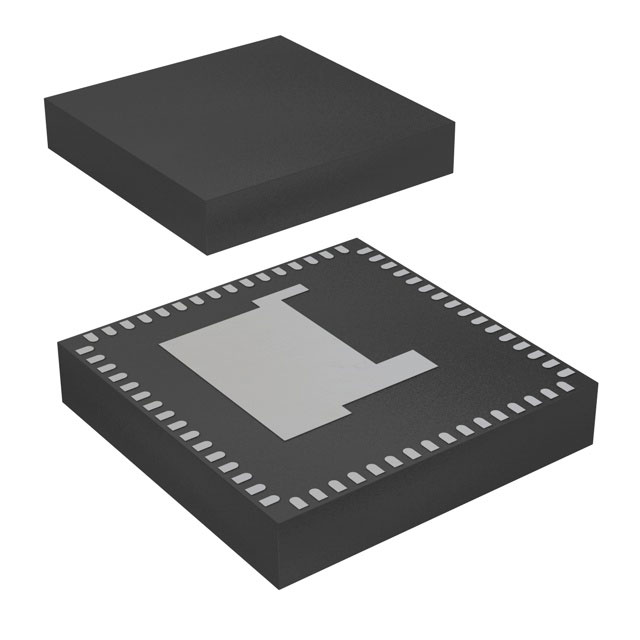
- Part No.:
- TDA18211HD/C2,551
- Manufacturer:
- NXP Semiconductors
- Category:
- Video Processing
- Package:
- 64-PowerLFQFN
- Datasheet:
-
 TDA18211HD/C2,551.pdf
- Description:
- IC VIDEO SILICON TUNER 64HLFQFN
- Quantity:
- Payment:

- Shipping:

Inventory:4,546
Please send an inquiry. Send us your inquiry, and we will respond immediately.
Product details
Overview
TDA18211HD/C2,551 from NXP Semiconductors is a silicon-based DVB-T tuner IC for digital terrestrial TV reception. It integrates RF tracking filters, IF selectivity (6/7/8 MHz), low-IF output, and a single 16 MHz crystal oscillator - delivering 5.5 dB typical noise figure, −82 dBm digital sensitivity, and 780 mW power dissipation in STB applications.
For engineers reviewing the TDA18211HD/C2,551 datasheet, TDA18211HD/C2,551 pinout, TDA18211HD/C2,551 application, or TDA18211HD/C2,551 equivalent, key selection considerations include dual-tuner synchronization via MASTERSYNC/FREEZE, crystal oscillator buffer output (XTOUTP/XTOUTN), RF loop-through (LT) and slave-tuner output (STO), and I²C-compatible 3.3 V/5 V interface support.
Technical Context
The TDA18211HD/C2,551 implements a direct-conversion architecture with integrated polyphase RF and IF filters, image-rejection mixer, and dual synthesizers (main LO + calibration PLL). Its RF front end includes alignment-free AGC with RF and IF gain control paths, while the digital calibration engine supports RFCAL and IRCAL modes using internal tone generation and detector feedback.
It operates in three standby modes - including device-off mode - with configurable XTOUT_MS pin selection for master/slave dual-tuner operation. The chip uses a single 16 MHz crystal (e.g., NDK NX5032) and provides differential 16 MHz clock outputs (XTOUTP/XTOUTN) to synchronize external channel decoders without requiring additional timing components.
Key Specifications
| Parameter | Value and Actual Design Meaning |
|---|---|
| RF Frequency Range | 174–864 MHz center frequency - covers full UHF/VHF DVB-T broadcast band without external tuning elements. |
| Noise Figure | 5.5 dB typ - enables robust reception under weak-signal conditions in urban multipath environments. |
| Digital Sensitivity | −82 dBm @ 64-QAM 2/3, BER = 2×10⁻⁴ - meets DVB-T minimum signal level requirements for standard-definition and high-definition content. |
| Power Dissipation | 780 mW - optimized for thermally constrained STB PCB layouts with integrated thermal sensor monitoring. |
| IF Output Level | 2 V (p-p) nominal - compatible with standard low-IF demodulators such as TDA10048HN without level-shifting circuitry. |
| Image Rejection | 65 dB min - achieved via calibrated polyphase filtering and mixer optimization, eliminating need for external image-reject SAW filters. |
| Supply Voltage | 3.3 V single supply - simplifies power design and reduces BOM count versus multi-rail tuner solutions. |
Pinout & Package
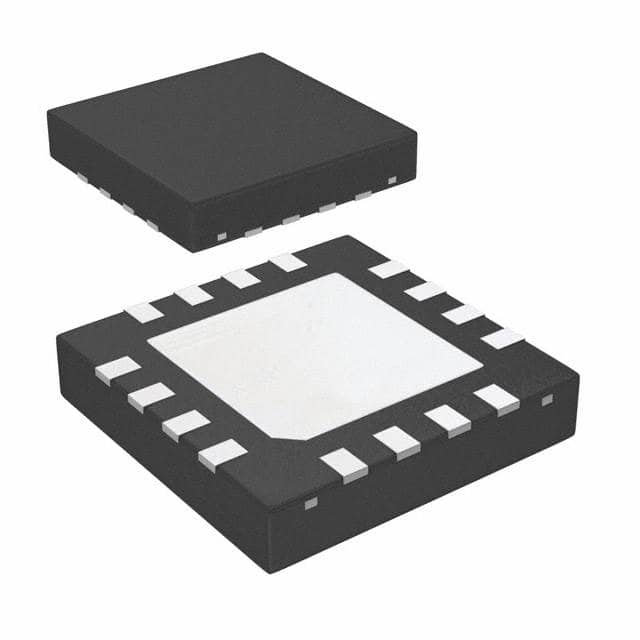
Package: HLQFN64R - plastic thermal-enhanced low-profile quad flat package, 9 × 9 × 1.6 mm body, 64-terminal no-lead construction (SOT903-1).
| Pin/Terminal | Circuit Role | Design Meaning |
|---|---|---|
| RF_IN (10) | Unbalanced RF input | Accepts 75 Ω antenna signal directly; supports −5 dBm analog TV input compression point. |
| LT (13) | Loop-through output | 0 dB gain path to downstream tuners or analog circuits; enables cascaded STB architectures. |
| STO (15) | Slave tuner output | RF feed to second TDA18211HD in dual-tuner configuration; gain auto-compensated via MASTERSYNC/FREEZE handshake. |
| XTOUTP / XTOUTN (30/31) | Differential 16 MHz clock output | Drives channel decoder (e.g., TDA10048HN) synchronously; eliminates need for separate crystal oscillator. |
| SCL / SDA (38/39) | I²C-bus interface | 3.3 V/5 V tolerant; supports up to 4 devices on same bus via AS pin address selection (MA[1:0]). |
| MASTERSYNC (19) | Dual-tuner sync control | Enables coordinated calibration and frequency locking between master and slave tuners in PVR/DVR systems. |
Key Features
| Feature | Design Value |
|---|---|
| Fully integrated RF tracking filters | Eliminates external varactor diodes and tuning inductors; enables board-level integration without manual alignment. |
| Integrated IF selectivity (6/7/8 MHz) | Removes requirement for external SAW filters - reduces component count, cost, and board area by >30% vs. can-tuner designs. |
| Crystal oscillator output buffer | Provides clean, buffered 16 MHz differential clock to external demodulator - avoids clock jitter degradation from shared crystal loading. |
| Three programmable standby modes | Includes device-off mode (<1 µA) for power-sensitive DVR recording functions while retaining I²C accessibility. |
| Input power level indicator | 9-bit composite gain readout (RF+IF AGC) via I²C - enables real-time signal strength monitoring for UI display or adaptive gain algorithms. |
| Integrated die thermal sensor | Monitors junction temperature (60–90 °C range) using internal 16 MHz clock - supports thermal derating and fan control in enclosed STB enclosures. |
Applications
| DVB-T Set-Top Box (STB) | Dual-Tuner DVR System |
|---|---|
Use Scenario: Integrated into mainstream DVB-T STBs for terrestrial broadcast reception in Europe and Asia. IC Role / Device Role / Timing Role: Primary RF tuner providing low-IF output to channel decoder; supplies synchronized 16 MHz clock via XTOUTP/XTOUTN. Use Value: Reduces total tuner solution size by >50% vs. legacy can tuners while maintaining −82 dBm sensitivity and 65 dB image rejection. | Use Scenario: Paired with second TDA18211HD/C2,551 in PVR-capable STBs for simultaneous record-and-play functionality. IC Role / Device Role / Timing Role: Slave tuner receiving RF via STO pin and clock via XTALP/XTALN from master; synchronized via MASTERSYNC/FREEZE signals. Use Value: Enables zero-latency dual-channel tuning without external clock distribution or RF splitters - improves channel change time and recording reliability. |
| Compact Digital TV Receiver | Multi-Standard Broadcast Platform |
Use Scenario: Embedded in space-constrained all-in-one digital TVs with integrated DVB-T demodulation. IC Role / Device Role / Timing Role: Single-chip tuner delivering low-IF signal and thermal monitoring; powered from 3.3 V rail shared with SoC. Use Value: Eliminates discrete LNA, filter, and mixer stages - cuts BOM cost by ~$0.80/unit and reduces layout complexity. | Use Scenario: Used alongside FM/ATSC tuners in hybrid broadcast receivers supporting multiple regional standards. IC Role / Device Role / Timing Role: DVB-T front end operating in parallel with other tuners; isolated via RF loop-through (LT) and independent I²C addressing. Use Value: Shared crystal resource (via XTOUTP/XTOUTN) and common power domain simplify multi-standard timing architecture. |
Equivalent & Alternatives
The following parts are listed as comparable options for similar DVB-T tuner applications.
| Alternative Part | Technical Difference | Application Difference | Selection Advice |
|---|---|---|---|
| MAX2160ETJ+T | Higher 1.2 W power dissipation; requires external 24.576 MHz crystal; no integrated thermal sensor. | Targeted at industrial-grade receivers with wider temperature range; lacks slave-tuner output and MASTERSYNC protocol. | Choose when higher RF linearity (>103 dBµV Vi(max)) is required over thermal monitoring or dual-tuner coordination. |
| SI2151-A10-GM | Supports DVB-T2 and ATSC 3.0; uses 24 MHz crystal; offers ZIF architecture instead of low-IF; no loop-through output. | Designed for next-gen broadcast standards; incompatible with legacy DVB-T-only channel decoders like TDA10048HN. | Choose only if migrating to DVB-T2/ATSC 3.0 platforms; not drop-in compatible with TDA18211HD/C2,551 hardware or firmware. |
Compared with MAX2160ETJ+T and SI2151-A10-GM, the TDA18211HD/C2,551 delivers lower power (780 mW), native dual-tuner synchronization, and full DVB-T optimization - making it optimal for cost-sensitive, space-constrained STBs requiring proven interoperability with TDA10048HN decoders.
Availability
TDA18211HD/C2,551 is available at Aetrix Electronics and suitable for DVB-T set-top boxes, dual-tuner DVR systems, and compact digital TV receivers requiring stable component supply and long-term production continuity.
Supply support for TDA18211HD/C2,551 includes scheduled delivery planning, volume procurement assistance, BOM continuity management, traceable sourcing, and lifecycle availability coordination for OEM customers, industrial embedded developers, connected-device designers, and electronics production programs.
Manufacturer
NXP Semiconductors is a global semiconductor leader focused on secure connectivity solutions for automotive, industrial, and consumer electronics markets.
The TDA18211HD product line was engineered specifically for digital terrestrial TV reception, emphasizing integration density, thermal efficiency, and seamless interoperability with NXP's channel decoder portfolio (e.g., TDA10048HN).
FAQ
What is the primary function of the TDA18211HD/C2,551 in a DVB-T system?
The TDA18211HD/C2,551 serves as a fully integrated silicon tuner IC that receives and downconverts terrestrial broadcast RF signals (174–864 MHz) to a low-IF output for demodulation. It replaces traditional can tuners by integrating RF filtering, mixing, IF filtering, and clock generation - all within a single HLQFN64R package. Its design eliminates external SAW filters and manual alignment, enabling compact, cost-effective DVB-T receiver implementations.
Does the TDA18211HD/C2,551 require an external crystal, and what are the supported types?
Yes, the TDA18211HD/C2,551 requires a single 16 MHz fundamental-mode crystal connected to XTALP and XTALN pins. Validated crystals include NDK NX5032, Siward SX-5032, TXC 9C series, and Chungho Elcom HC49/S profile units rated for ≥100 µW drive level. An external 5.6 pF shunt capacitor is also required per the reference schematic. In dual-tuner configurations, only the master unit connects the crystal; slaves receive clock via XTOUTP/XTOUTN.
How does the TDA18211HD/C2,551 support dual-tuner operation in DVR applications?
The TDA18211HD/C2,551 supports dual-tuner operation through dedicated pins: MASTERSYNC (19), FREEZE (28), and STO (15). One device is configured as master (XTOUT_MS = 0 V), driving the crystal and broadcasting clock and sync signals; the second is set as slave (XTOUT_MS = 0.4–0.6 VCC), receiving RF via STO and clock via XTALP/XTALN. This architecture ensures phase-coherent tuning and coordinated calibration without external timing circuitry.
What are the power supply requirements and thermal management features of the TDA18211HD/C2,551?
The TDA18211HD/C2,551 operates from a single 3.3 V supply and dissipates 780 mW typical power. It integrates a die-temperature sensor accessible via I²C register TM_D[3:0], with selectable 60–90 °C or 92–122 °C measurement ranges. Thermal data is used for real-time derating and system-level thermal management. The HLQFN64R package includes an exposed die pad for enhanced PCB heat sinking, critical for sustained operation in enclosed STB chassis.
Can the TDA18211HD/C2,551 be used with non-NXP channel decoders?
Yes, the TDA18211HD/C2,551 is compatible with any low-IF demodulator accepting 2 V (p-p) differential IF input and supporting 6/7/8 MHz channel bandwidths. While optimized for NXP's TDA10048HN, its IFOUTP/IFOUTN outputs meet standard AC-coupled LVDS-like levels. Clock synchronization via XTOUTP/XTOUTN is optional - systems may use independent oscillators if timing tolerance permits. I²C interface remains fully functional regardless of decoder vendor.
TDA18211HD/C2,551 Specifications
- Product attributes
- Attribute value
- Manufacturer:
- NXP Semiconductors
- Series:
- -
- Package/Case:
- 64-PowerLFQFN
- Packaging:
- Tray
- Product Status:
- Obsolete
- Function:
- Tuner
- Applications:
- Consumer Video
- Standards:
- DVB-T
- Control Interface:
- I2C
- Voltage - Supply:
- 3.13V ~ 3.47V
- Mounting Type:
- Surface Mount
- Grade:
- -
- Qualification:
- -
- Supplier Device Package:
- 64-HLQFN (9x9)
TDA18211HD/C2,551 FAQ
1.How can I place an order for TDA18211HD/C2,551 through Aetrix?
Please submit a Request for Quotation (RFQ) for TDA18211HD/C2,551 on Aetrix. Our sales agent will provide a competitive quotation and guide you through the order confirmation once you accept the terms.
2.Are the price and stock information for TDA18211HD/C2,551 reliable?
The price and inventory of TDA18211HD/C2,551 are updated periodically and may fluctuate due to market conditions. Stock and pricing data are typically refreshed every 24 hours. Quotation validity for TDA18211HD/C2,551 is usually 5 days.
3.What payment methods are accepted for TDA18211HD/C2,551?
We accept Wire Transfer, PayPal, Credit Card, Western Union, MoneyGram, and Escrow for TDA18211HD/C2,551 transactions.
Note: Certain payment methods may incur a processing fee.
4.How is shipping managed for TDA18211HD/C2,551?
TDA18211HD/C2,551 orders can be shipped via leading logistics carriers, including DHL, UPS, FedEx, TNT, or Registered Mail.
Once your TDA18211HD/C2,551 order is processed, you will receive an email with the shipment details and tracking number.
Note: Tracking information may take up to 24 hours to appear. Express delivery typically takes 3–5 business days.
5.How can I obtain technical support or documentation for TDA18211HD/C2,551?
For technical support, including TDA18211HD/C2,551 datasheets, pinout diagrams, or application guidance, please contact our engineering support team. They can provide detailed documentation and assistance for your TDA18211HD/C2,551 requirements.
6.How does Aetrix verify that TDA18211HD/C2,551 is sourced from the original manufacturer or authorized distributors?
All TDA18211HD/C2,551 products on Aetrix are procured from qualified distributors and authorized channels. Our dedicated quality assurance team conducts strict verification, including traceability checks and, if necessary, third-party testing. This ensures that TDA18211HD/C2,551 meets industry standards.
7.What is the process for return or replacement of TDA18211HD/C2,551?
All TDA18211HD/C2,551 units undergo pre-shipment inspection (PSI). If there is an issue with TDA18211HD/C2,551, returns or replacements are accepted under the following conditions:
1.Quantity discrepancies, incorrect items, or visible external defects (such as breakage or corrosion), acknowledged by Aetrix.
2.The issue is reported within 90 days of delivery.
3.The TDA18211HD/C2,551 part is unused and in its original packaging.
Return procedure for TDA18211HD/C2,551:
1.Submit a request within 90 days.
2.Obtain a Return Material Authorization (RMA) from Aetrix.
TDA18211HD/C2,551 Tags
-
HDMI2C1-6C1
STMicroelectronics
-
ADA4430-1YKSZ-R7
Analog Devices Inc.

-
LM1881MX/NOPB
Texas Instruments
-
SN75DP130SSRGZR
Texas Instruments
-
EQCO30T5.2
Microchip Technology
-
LMH1980MM/NOPB
Texas Instruments
-
EQCO30R5.D
Microchip Technology

-
SII9022ACNU
Lattice Semiconductor Corporation
-
SN65DP159RGZR
Texas Instruments
-
SN65DP159RSBR
Texas Instruments
-
SN65DP141RLJR
Texas Instruments
-
LMH0303SQ/NOPB
Texas Instruments
Tech Hub

A practical engineering guide to 3.3V and 5V logic compatibility, input thresholds, resistor dividers, translator ICs, MOSFET level shifting, I2C pull-ups, timing limits and power-sequencing risks.

The 74HC595 uses push-pull logic outputs, while the TPIC6B595 uses 50 V open-drain DMOS sinks for higher-power loads. This guide compares timing, current limits, 3.3 V interfacing, load wiring, thermal…

The 74HC595 converts serial data into eight stable parallel outputs. This guide covers pin functions, shift and storage timing, OE and MR behavior, drive-current limits, cascading, voltage compatibilit…

A technical comparison of level-sensitive latches and edge-triggered flip-flops, covering timing windows, setup and hold limits, master–slave operation, time borrowing, race-through, HDL inference and…

A D latch stores one bit while Enable controls when data can pass. This reference covers gate-level operation, truth tables, transparency, setup and hold timing, LE versus OE, common ICs and practical …

An SR latch stores one bit through cross-coupled feedback. This engineering reference covers NOR and NAND implementations, truth tables, forbidden-state recovery, gated operation, switch debouncing, fa…

Latch circuits retain one bit through feedback. This technical reference covers SR and D latches, truth tables, transparency, timing limits, latch-versus-flip-flop behavior, applications and common log…

An engineering guide to LED driver operation, constant-current and constant-voltage outputs, linear and switching topologies, dimming, IC selection, calculations, replacement compatibility, and fault c…

Operational amplifier guide covering op amp basics, feedback, ideal vs real op amps, common configurations, buffer circuits, offset, bias current, gain-bandwidth, slew rate, rail-to-rail limits and sel…

Jumper cables guide covering safe connection order, red and black clamp placement, final ground connection, cable gauge, length, clamp quality, copper vs CCA cables, jump starter comparison and battery…


