
 My Inquiry
 My Account


STMicroelectronics TDA7331DTR
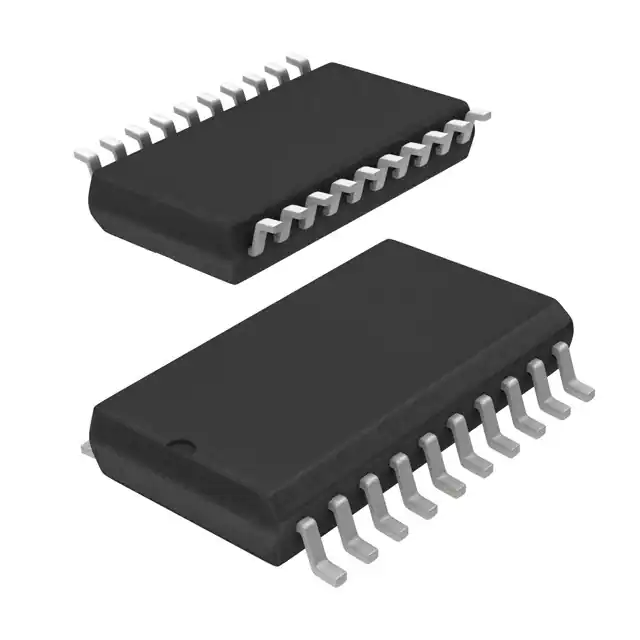
- Part No.:
- TDA7331DTR
- Manufacturer:
- STMicroelectronics
- Category:
- RF Demodulators
- Package:
- 20-SOIC (0.295", 7.50mm Width)
- Datasheet:
-
 TDA7331DTR.pdf
- Description:
- RF DEMODULATOR IC 20SO
- Quantity:
- Payment:

- Shipping:

Inventory:4,049
Please send an inquiry. Send us your inquiry, and we will respond immediately.
Product details
Overview
TDA7331DTR from STMicroelectronics is a single-chip RDS (Radio Data System) demodulator with integrated 8th-order switched-capacitor bandpass filter, operating at 57 kHz center frequency and supporting EBU-compliant FM radio broadcast data recovery. It delivers purely digital RDS demodulation without external components, provides ARI indication and RDS signal quality outputs, and uses low-noise CMOS technology for high RDS demodulation quality in automotive and consumer radio head units.
For engineers reviewing the TDA7331DTR datasheet, TDA7331DTR pinout, TDA7331DTR application, or TDA7331DTR equivalent, key selection considerations include its 57 kHz bandpass filter performance (±4 kHz attenuation ≥18 dB), 1187.5 Hz RDCL clock output timing validity window (416.7 µs), selectable crystal oscillator frequencies (4.332/8.664/17.328 MHz), and dual-mode oscillator control (internal quartz or external drive via OSEL).
Technical Context
The TDA7331DTR implements a cascaded antialiasing + 8th-order SC bandpass filter architecture to precisely isolate the 57 kHz RDS subcarrier, followed by a PLL-based biphase decoder that recovers RDDA and RDCL synchronized to the incoming MPX signal. Its internal 57 kHz PLL locks to the RDS subcarrier and drives a 1187.5 Hz clock divider for bit-synchronous data extraction.
It supports three oscillator configurations via FSEL and OSEL pins: internal 4.332 MHz crystal (default), or 8.664/17.328 MHz crystals with external resistor bias; alternatively, OSEL grounded enables external sinusoidal drive at OSCIN with as low as 60 mVpp input amplitude while retaining FSEL-based frequency scaling.
Key Specifications
| Parameter | Value and Actual Design Meaning |
|---|---|
| Center Frequency | 57 kHz ±0.5 kHz - precisely targets RDS subcarrier per EBU spec |
| Filter Order | 8th-order SC bandpass - achieves >50 dB attenuation at 38 kHz and >35 dB at 67 kHz |
| RDS Clock Output | 1187.5 Hz RDCL - edge-aligned to data with 416.7 µs validity window for decoder sampling |
| Supply Current | 7.5–11.0 mA at 5 V - enables low-power operation in battery-backed radio modules |
| Input Impedance (MPX) | 80–150 kΩ - matches standard FM IF output stages without loading distortion |
| Signal-to-Noise Ratio | 30–40 dB at 3 mVRMS MPX input - ensures robust RDS decoding under weak-signal conditions |
| Oscillator Options | 4.332 / 8.664 / 17.328 MHz - selectable via FSEL; OSEL enables external 60–150 mVpp drive |
Pinout & Package
Package: SO20 (Small Outline, 20-pin, 0.65 mm pitch, 12.6 × 7.5 mm body). Thermal resistance: 200 °C/W (junction-to-ambient).
| Pin/Terminal | Circuit Role | Design Meaning |
|---|---|---|
| 1 MPX | RDS subcarrier input | Accepts composite FM MPX signal; high-impedance (120 kΩ typ) interface to IF stage |
| 3 OSEL | Oscillator mode select | Open or pulled to VS → internal quartz oscillator; pulled to GND → external drive mode |
| 12 RDCL | RDS clock output | 1187.5 Hz TTL-compatible clock synchronized to RDS data transitions |
| 13 RDDA | RDS data output | Bitstream of recovered RDS data (biphase-decoded), valid relative to RDCL edges |
| 14 QUAL | Signal quality indicator | Active-high output indicating sufficient RDS carrier SNR and PLL lock stability |
| 15 ARI | ARI presence indicator | High when ARI (Attention Request Indicator) is detected, regardless of RDS presence |
| 18 FSEL | Crystal frequency select | Configures internal divider for 4.332 MHz (open), 8.664 MHz (VS), or 17.328 MHz (100 kΩ to VS) |
| 20 EXTRES | Reset control | Pulled to VS → forces reset; open → normal run mode; internal pull-down ensures default operation |
Key Features
| Feature | Design Value |
|---|---|
| Purely digital RDS demodulation | No external analog components required - reduces BOM count and layout sensitivity |
| Integrated 8th-order SC bandpass filter | Eliminates need for discrete LC or ceramic filters while meeting EBU stopband rejection specs |
| Selectable oscillator frequencies | Supports 4.332/8.664/17.328 MHz crystals or external drive - enables design reuse across regional FM standards |
| Dual-mode oscillator control (OSEL) | Reduces EMI by disabling internal oscillator and accepting low-amplitude external drive (≥60 mVpp) |
| ARI and QUAL status outputs | Provides real-time diagnostic signals for host microcontroller without additional ADC or logic |
Applications
| Automotive Radio Head Units | Consumer FM Tuner Modules |
|---|---|
Use Scenario: Integrated RDS decoding in OEM dashboard radios receiving traffic announcements and station name display. IC Role / Device Role / Timing Role: Primary RDS demodulator extracting 1187.5 Hz clock and biphase data stream from MPX output of IF amplifier. Use Value: Enables real-time display of program service names and traffic message channel (TMC) alerts using only one IC and no external filter components. | Use Scenario: Compact tabletop FM receivers requiring station identification and program type (PTY) information. IC Role / Device Role / Timing Role: Standalone RDS front-end delivering synchronized RDCL/RDDA to an 8-bit microcontroller GPIO interface. Use Value: Achieves EBU-compliant RDS decoding with <40 dB harmonic distortion at 57 kHz and 30+ dB SNR at 3 mVRMS input level. |
| Portable Digital Radios | FM Broadcast Monitoring Equipment |
Use Scenario: Battery-powered portable radios needing low quiescent current and minimal external parts. IC Role / Device Role / Timing Role: Low-power RDS demodulator with 7.5 mA typical supply current and internal reference (VREF = VS/2). Use Value: Extends battery life while maintaining reliable RDS lock under marginal signal conditions via QUAL output feedback. | Use Scenario: Field test equipment verifying RDS transmission integrity and ARI flag compliance of broadcast transmitters. IC Role / Device Role / Timing Role: Precision RDS signal analyzer providing T57 (57 kHz test clock), QUAL, and ARI outputs for real-time diagnostics. Use Value: Delivers traceable 57 kHz timing reference (T57 pin) and pass/fail signal quality indication without external instrumentation. |
Equivalent & Alternatives
The following parts are listed as comparable options for similar RDS demodulation applications.
| Alternative Part | Technical Difference | Application Difference | Selection Advice |
|---|---|---|---|
| Si4702-A10 | Software-defined radio IC with integrated tuner and RDS engine; requires I²C host control and firmware | Replaces entire IF + demod + decoder chain; not pin-compatible; needs MCU host | Choose for new designs requiring full software-configurable FM+RDS receiver with digital audio output |
| TDA7330B | Predecessor with identical pinout but lower filter order (6th vs 8th), reduced stopband attenuation, and no FSEL/OSEL flexibility | Drop-in replacement only if legacy board uses 4.332 MHz crystal and no ARI/QUAL diagnostics needed | Choose only for backward compatibility where TDA7331DTR's enhanced filter and oscillator options are unnecessary |
Compared with Si4702-A10, TDA7331DTR offers simpler analog integration and zero-firmware operation; compared with TDA7330B, it delivers superior 57 kHz selectivity and flexible clock sourcing - making it optimal for cost-sensitive, fixed-function RDS front-ends.
Availability
TDA7331DTR is available at Aetrix Electronics and suitable for automotive infotainment systems, consumer FM tuners, and portable radio receivers requiring stable component supply and long-lifecycle support.
Supply support for TDA7331DTR includes scheduled delivery planning, volume procurement assistance, BOM continuity management, traceable sourcing, and lifecycle availability coordination for OEM customers, industrial embedded developers, connected-device designers, and electronics production programs.
Manufacturer
STMicroelectronics is a global semiconductor leader headquartered in Geneva, designing and manufacturing analog, mixed-signal, power, and microcontroller solutions for industrial, automotive, and consumer markets.
The TDA7331DTR belongs to ST's audio signal processing product line, engineered specifically for high-fidelity, low-component-count RDS demodulation in FM radio systems compliant with EBU RDS specifications.
FAQ
What is the function of the OSEL pin on the TDA7331DTR?
OSEL selects the oscillator source: open or pulled to VS enables the internal 4.332 MHz crystal oscillator; pulling OSEL to GND disables the internal oscillator and allows external sinusoidal drive at OSCIN. In external mode, input amplitude can be as low as 60 mVpp, reducing EMI and enabling use with low-power clock sources.
How does the FSEL pin configure the crystal frequency?
FSEL sets the internal clock divider ratio: open circuit selects 4.332 MHz; pulled to VS selects 8.664 MHz; and a 100 kΩ resistor to VS selects 17.328 MHz. This allows one PCB layout to support multiple crystal options without redesign, accommodating regional FM broadcast timing requirements.
What is the timing relationship between RDCL and RDDA outputs?
RDCL is a 1187.5 Hz clock synchronized to the RDS data stream; RDDA changes on either the rising or falling edge depending on internal PLL lock condition. Data remains valid for 416.7 µs after each clock transition, allowing host microcontrollers to sample reliably using either edge-triggered or level-sensitive capture logic.
Can the TDA7331DTR operate without an external crystal?
No - the TDA7331DTR requires either a 4.332/8.664/17.328 MHz crystal connected between OSCIN and OSCOUT, or an external 57 kHz-related sine wave applied to OSCIN when OSEL is grounded. The internal oscillator circuitry is not self-starting without a resonant element or driven signal.
TDA7331DTR Specifications
- Product attributes
- Attribute value
- Manufacturer:
- STMicroelectronics
- Series:
- -
- Packaging:
- Tape & Reel (TR)
- Product Status:
- Obsolete
- Function:
- Demodulator, Filter
- LO Frequency:
- -
- RF Frequency:
- -
- P1dB:
- -
- Gain:
- -
- Noise Figure:
- -
- Current - Supply:
- 11 mA
- Voltage - Supply:
- 4.5V ~ 5.5V
- Mounting Type:
- Surface Mount
- Supplier Device Package:
- 20-SO
TDA7331DTR FAQ
1.How can I place an order for TDA7331DTR through Aetrix?
Please submit a Request for Quotation (RFQ) for TDA7331DTR on Aetrix. Our sales agent will provide a competitive quotation and guide you through the order confirmation once you accept the terms.
2.Are the price and stock information for TDA7331DTR reliable?
The price and inventory of TDA7331DTR are updated periodically and may fluctuate due to market conditions. Stock and pricing data are typically refreshed every 24 hours. Quotation validity for TDA7331DTR is usually 5 days.
3.What payment methods are accepted for TDA7331DTR?
We accept Wire Transfer, PayPal, Credit Card, Western Union, MoneyGram, and Escrow for TDA7331DTR transactions.
Note: Certain payment methods may incur a processing fee.
4.How is shipping managed for TDA7331DTR?
TDA7331DTR orders can be shipped via leading logistics carriers, including DHL, UPS, FedEx, TNT, or Registered Mail.
Once your TDA7331DTR order is processed, you will receive an email with the shipment details and tracking number.
Note: Tracking information may take up to 24 hours to appear. Express delivery typically takes 3–5 business days.
5.How can I obtain technical support or documentation for TDA7331DTR?
For technical support, including TDA7331DTR datasheets, pinout diagrams, or application guidance, please contact our engineering support team. They can provide detailed documentation and assistance for your TDA7331DTR requirements.
6.How does Aetrix verify that TDA7331DTR is sourced from the original manufacturer or authorized distributors?
All TDA7331DTR products on Aetrix are procured from qualified distributors and authorized channels. Our dedicated quality assurance team conducts strict verification, including traceability checks and, if necessary, third-party testing. This ensures that TDA7331DTR meets industry standards.
7.What is the process for return or replacement of TDA7331DTR?
All TDA7331DTR units undergo pre-shipment inspection (PSI). If there is an issue with TDA7331DTR, returns or replacements are accepted under the following conditions:
1.Quantity discrepancies, incorrect items, or visible external defects (such as breakage or corrosion), acknowledged by Aetrix.
2.The issue is reported within 90 days of delivery.
3.The TDA7331DTR part is unused and in its original packaging.
Return procedure for TDA7331DTR:
1.Submit a request within 90 days.
2.Obtain a Return Material Authorization (RMA) from Aetrix.
TDA7331DTR Tags
-
ADL5387ACPZ-R7
Analog Devices Inc.
-
ADL5380ACPZ-R7
Analog Devices Inc.
-
LTC5584IUF#TRPBF
Analog Devices Inc.
-
LTC5584IUF#PBF
Analog Devices Inc.
-
AD8348ARUZ-REEL7
Analog Devices Inc.

-
LT5575EUF#PBF
Analog Devices Inc.
-
LTC5586IUH#TRPBF
Analog Devices Inc.
-
HMC908ALC5
Analog Devices Inc.
-
LMX8410RGZT
Texas Instruments
-
AD8347ARUZ
Analog Devices Inc.
-
ADL5382ACPZ-R7
Analog Devices Inc.
-
AD8348ARUZ
Analog Devices Inc.
Tech Hub

Operational amplifier guide covering op amp basics, feedback, ideal vs real op amps, common configurations, buffer circuits, offset, bias current, gain-bandwidth, slew rate, rail-to-rail limits and sel…

Jumper cables guide covering safe connection order, red and black clamp placement, final ground connection, cable gauge, length, clamp quality, copper vs CCA cables, jump starter comparison and battery…

LDO regulator guide covering low dropout voltage, power dissipation, thermal design, PSRR, output noise, capacitor stability, adjustable LDO circuits, LDO vs buck converter and datasheet selection chec…

Conditional Access Module guide covering CAM meaning, CI/CI+ interface, smart card authorization, DVB security workflow, TV and set-top box compatibility, internal electronics, ESD protection, connecto…

Guide to electronic component obsolescence covering EOL risk, PCN/PDN notices, last-time buy planning, replacement options, form-fit-function validation, counterfeit risk and BOM lifecycle management.

18650 battery guide covering lithium-ion cell basics, 3.6V/3.7V voltage, 4.2V charging, mAh and Wh capacity, protected cells, chargers, BMS, series-parallel packs, holders, welding and sourcing checks.…

Hall effect sensor guide covering working principle, linear and digital sensors, Arduino circuits, current sensing, speed detection, automotive applications, A3144 examples, signal filtering and datash…

Product Change Notification guide for electronic components, covering PCN meaning, PCN vs PDN/EOL, common change types, risk levels, form-fit-function review, engineering validation, BOM control, LTB/L…

A practical guide to blend door actuators, covering HVAC function, symptoms, location, AC and heater issues, reset and calibration, replacement cost, electrical diagnosis, compatibility checks, and rep…

Engineering guide to Raspberry Pi alternatives, covering chip-level differences, Orange Pi, ROCK, Jetson, Banana Pi, NanoPi, Compute Module, Pico, GPIO, camera, HAT compatibility, and replacement risks…


