
 My Inquiry
 My Account


STMicroelectronics TDA7419TR
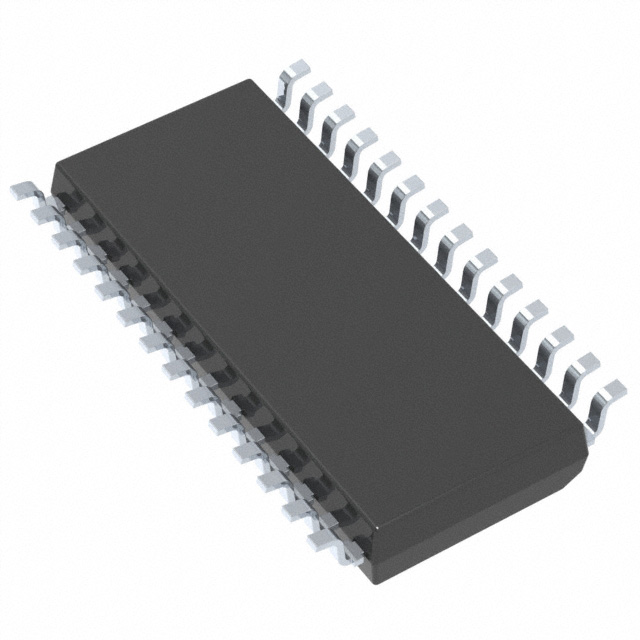
- Part No.:
- TDA7419TR
- Manufacturer:
- STMicroelectronics
- Category:
- Audio Special Purpose
- Package:
- 28-SOIC (0.295", 7.50mm Width)
- Datasheet:
-
 TDA7419TR.pdf
- Description:
- IC AUDIO SIGNAL PROCESSOR 28SO
- Quantity:
- Payment:

- Shipping:

Inventory:2,911
Please send an inquiry. Send us your inquiry, and we will respond immediately.
Product details
Overview
TDA7419TR from STMicroelectronics is a 3-band car audio signal processor IC with integrated analog audio filters, I²C digital control, and 4 stereo inputs. It delivers soft-step volume/tone control, independent speaker/subwoofer outputs, 7-band spectrum analysis, and low-noise BICMOS architecture (THD < 0.1%, SNR = 100 dB). Used in OEM automotive head units for real-time equalization and source mixing.
For engineers reviewing the TDA7419TR datasheet, TDA7419TR pinout, TDA7419TR application, or TDA7419TR equivalent, key selection criteria include its SO-28 package, 8–10 V supply range, ±15 dB bass/middle/treble control with programmable center frequencies, subwoofer LPF corner (72–176 Hz), and I²C-configurable loudness profiles for cabin-acoustic compensation.
Technical Context
The TDA7419TR implements a fully analog audio signal path with digitally programmable filter coefficients via I²C, enabling runtime reconfiguration of bass (54–220 Hz), middle (400 Hz–3 kHz), and treble (8–21 kHz) bands using 2nd-order peaking/ shelving topologies. Its AutoZero circuit reduces DC offset to ≤0.5 mV across temperature.
It integrates four independent stereo input channels-quasi-differential (QD), three single-ended (SE1–SE3), and AC-coupled HPF inputs-with selectable gain (−1 to +17 dB) and 80–100 dB channel separation. The 7-band spectrum analyzer uses internal clocking (3–100 kHz) and outputs logarithmic amplitude data on SAOUT.
Key Specifications
| Parameter | Value and Actual Design Meaning |
|---|---|
| Supply Voltage | 8.0–10.0 V - supports automotive battery range with 60 dB ripple rejection at 1 kHz |
| THD+N | 0.01–0.1% - ensures clean audio output up to 2 VRMS clipping level without audible distortion |
| SNR | 100 dB - enables high-fidelity playback in noisy vehicle environments |
| Bass Center Frequencies | 54–220 Hz (4 points) - configurable shelving/peaking response for cabin-specific low-end tuning |
| Subwoofer LPF Corner | 72–176 Hz (3 settings) - precise crossover alignment with passive or active sub enclosures |
| Spectrum Analyzer Bands | 7 fixed bands (5.5 Hz–17.6 kHz) - real-time frequency-domain feedback for UI visualization |
| I²C Interface | Standard-mode (100 kHz max) - allows host MCU to update all tone, mute, and routing parameters dynamically |
Pinout & Package
SO-28 surface-mount package (body size 17.9 × 7.5 mm, lead pitch 1.27 mm), thermally optimized for automotive PCBs with Rθj-pins = 85 °C/W.
| Pin/Terminal | Circuit Role | Design Meaning |
|---|---|---|
| 1 ACOUTR / AC2OUTR | AC-coupled HPF output (right) | Drives high-pass filtered signal to tweeters or midrange drivers; eliminates DC bias |
| 5 SE3L / ACINL | Single-ended input 3 left / AC coupling input | Flexible input assignment: accepts line-level source or feeds HPF stage for speaker protection |
| 16 OUTSW / OUTLR2 | Subwoofer output / rear left output 2 | Dual-function pin enables shared routing for subwoofer or auxiliary rear channel |
| 22 SCL | I²C clock input | Controls synchronous communication with host microcontroller; supports multi-device bus sharing |
| 26 SAOUT | Spectrum analyzer analog output | Provides voltage-proportional amplitude per band for LED bar-graph or digital FFT display |
| 28 MIX / OUTSW / OUTRR2 | Mix input / subwoofer output / rear right output 2 | Enables signal injection into mixing stage or direct subwoofer drive; simplifies board layout |
Key Features
| Feature | Design Value |
|---|---|
| Soft-step volume control | 1 dB resolution with <1 mV DC step error - eliminates audible zipper noise during fade/mute transitions |
| Loudness compensation | Programmable 400/800/2400 Hz peak frequencies with ±15 dB boost - restores perceived bass/treble at low listening volumes |
| AutoZero offset cancellation | ≤0.5 mV residual offset - prevents speaker pop at power-on and maintains DC stability over −40°C to +85°C |
| Independent speaker/subwoofer attenuation | −83 to +16 dB range, 0.5 dB steps - enables precise channel balancing and acoustic time-alignment |
| 7-band real-time spectrum analyzer | Internal 50 ms repeat rate, 0–3.3 V output - provides immediate visual feedback without external ADC or processing |
Applications
| Automotive Head Unit | OEM Infotainment System |
|---|---|
|
Use Scenario: Integrated radio/navigation/audio hub in passenger vehicles with AM/FM, Bluetooth, and USB sources. IC Role / Device Role / Timing Role: Central audio processor handling input multiplexing, loudness compensation, tone shaping, and speaker/subwoofer routing. Use Value: Enables factory-tuned EQ profiles per vehicle model using I²C-programmable filter coefficients and subwoofer LPF corners. |
Use Scenario: High-volume production infotainment platform supporting multiple trim levels and regional audio standards. IC Role / Device Role / Timing Role: Audio signal conditioner providing consistent THD (<0.1%), SNR (100 dB), and channel separation (≥80 dB) across variants. Use Value: Reduces calibration effort via AutoZero and soft-step controls, minimizing post-assembly audio tuning labor. |
| Aftermarket Car Stereo | Multi-Zone Audio Distribution |
|
Use Scenario: Compact aftermarket receiver with front/rear/subwoofer outputs and mobile app EQ control. IC Role / Device Role / Timing Role: Tone and volume processor interfacing with MCU over I²C to implement user-adjustable 3-band EQ and loudness. Use Value: Delivers 7-band spectrum visualization via SAOUT pin, enabling real-time UI feedback without additional signal chain components. |
Use Scenario: Vehicle-wide audio system distributing distinct content to driver, front passenger, and rear zones. IC Role / Device Role / Timing Role: Input selector and mixer managing four stereo sources with independent gain/attenuation per output path. Use Value: Supports simultaneous front-channel EQ and rear-channel HPF filtering using SE3/ACIN pins and MIX/OUTSW dual-role terminal. |
Equivalent & Alternatives
The following parts are listed as comparable options for similar car audio processor applications.
| Alternative Part | Technical Difference | Application Difference | Selection Advice |
|---|---|---|---|
| TDA7418TR | Lower integration: no spectrum analyzer, only 3-band EQ (no loudness), no subwoofer LPF | Suitable for cost-sensitive entry-level radios without visualization or advanced cabin compensation | Select when full 7-band analysis and programmable loudness are not required |
| STA333BW | Digital-input (I²S) Class-D audio processor with integrated amplifier drivers; no analog inputs | Targets amplified speaker modules rather than line-level signal conditioning stages | Choose for systems integrating amplification and DSP in one chip, not analog front-end processing |
Compared with TDA7419TR, TDA7418TR omits spectrum analysis and loudness features but reduces BOM count; STA333BW shifts architecture to digital-input Class-D, eliminating analog input flexibility but adding power-stage integration.
Availability
TDA7419TR is available at Aetrix Electronics and suitable for automotive head units, OEM infotainment systems, and aftermarket car stereos requiring stable component supply, long lifecycle support, and AEC-Q100-aligned thermal performance.
Supply support for TDA7419TR includes scheduled delivery planning, volume procurement assistance, BOM continuity management, traceable sourcing, and lifecycle availability coordination for OEM customers, industrial embedded developers, connected-device designers, and electronics production programs.
Manufacturer
STMicroelectronics is a global semiconductor leader headquartered in Geneva, specializing in automotive, industrial, and power management ICs with broad analog and mixed-signal portfolio coverage.
The TDA7419TR belongs to ST's automotive audio processor product line, engineered specifically for high-fidelity, low-distortion signal conditioning in vehicle cabins under wide temperature and supply-voltage variation.
FAQ
What is the maximum operating temperature for the TDA7419TR?
The TDA7419TR is rated for continuous operation from −40°C to +85°C ambient temperature, validated per automotive-grade thermal specifications with Rθj-pins = 85 °C/W. Its BICMOS process ensures stable analog performance across this range, including reliable AutoZero operation and consistent THD/N.
Does the TDA7419TR support hardware mute independent of I²C control?
Yes - Pin 21 (MUTE) provides direct hardware mute functionality. When pulled low, it applies ≥80 dB attenuation to all audio paths within 170 ms (T3 delay), bypassing I²C commands. This enables fail-safe muting during power transients or MCU reset events without software intervention.
Can the spectrum analyzer output be used with an external microcontroller ADC?
Yes - SAOUT (Pin 26) delivers a 0–3.3 V analog voltage proportional to each of the 7 frequency bands' RMS amplitude. With a 50 ms repeat rate and 2 µs analog delay, it interfaces directly with standard 10-bit+ MCUs (e.g., STM32, NXP S32K) for real-time LED bar graphs or FFT-based UI rendering.
How does the "soft-step" feature reduce audible artifacts during volume changes?
Soft-step uses controlled current-stepping and internal slew-rate limiting to ensure <1 mV DC voltage change between adjacent attenuation steps. Combined with 0.5–1.5 dB resolution and <2 dB tracking error, it eliminates zipper noise and transient pops - critical for seamless fade-to-mute transitions in automotive UX.
TDA7419TR Specifications
- Product attributes
- Attribute value
- Manufacturer:
- STMicroelectronics
- Series:
- -
- Package/Case:
- 28-SOIC (0.295", 7.50mm Width)
- Packaging:
- Tape & Reel (TR)
- Product Status:
- Obsolete
- Function:
- Audio Signal Processor
- Applications:
- Audio
- Number of Channels:
- 4
- Interface:
- I2C
- Voltage - Supply:
- 8V ~ 10V
- Operating Temperature:
- -40°C ~ 85°C (TA)
- Specifications:
- -
- Mounting Type:
- Surface Mount
- Grade:
- Automotive
TDA7419TR FAQ
1.How can I place an order for TDA7419TR through Aetrix?
Please submit a Request for Quotation (RFQ) for TDA7419TR on Aetrix. Our sales agent will provide a competitive quotation and guide you through the order confirmation once you accept the terms.
2.Are the price and stock information for TDA7419TR reliable?
The price and inventory of TDA7419TR are updated periodically and may fluctuate due to market conditions. Stock and pricing data are typically refreshed every 24 hours. Quotation validity for TDA7419TR is usually 5 days.
3.What payment methods are accepted for TDA7419TR?
We accept Wire Transfer, PayPal, Credit Card, Western Union, MoneyGram, and Escrow for TDA7419TR transactions.
Note: Certain payment methods may incur a processing fee.
4.How is shipping managed for TDA7419TR?
TDA7419TR orders can be shipped via leading logistics carriers, including DHL, UPS, FedEx, TNT, or Registered Mail.
Once your TDA7419TR order is processed, you will receive an email with the shipment details and tracking number.
Note: Tracking information may take up to 24 hours to appear. Express delivery typically takes 3–5 business days.
5.How can I obtain technical support or documentation for TDA7419TR?
For technical support, including TDA7419TR datasheets, pinout diagrams, or application guidance, please contact our engineering support team. They can provide detailed documentation and assistance for your TDA7419TR requirements.
6.How does Aetrix verify that TDA7419TR is sourced from the original manufacturer or authorized distributors?
All TDA7419TR products on Aetrix are procured from qualified distributors and authorized channels. Our dedicated quality assurance team conducts strict verification, including traceability checks and, if necessary, third-party testing. This ensures that TDA7419TR meets industry standards.
7.What is the process for return or replacement of TDA7419TR?
All TDA7419TR units undergo pre-shipment inspection (PSI). If there is an issue with TDA7419TR, returns or replacements are accepted under the following conditions:
1.Quantity discrepancies, incorrect items, or visible external defects (such as breakage or corrosion), acknowledged by Aetrix.
2.The issue is reported within 90 days of delivery.
3.The TDA7419TR part is unused and in its original packaging.
Return procedure for TDA7419TR:
1.Submit a request within 90 days.
2.Obtain a Return Material Authorization (RMA) from Aetrix.
TDA7419TR Tags
-
SA571DR2G
onsemi
-
ADAU7002ACBZ-R7
Analog Devices Inc.

-
DRV135UA/2K5
Texas Instruments
-
DRV134UA/1K
Texas Instruments
-
DRV134PA
Texas Instruments
-
DRV134UA
Texas Instruments
-
DRV135UA
Texas Instruments
-
SA572DR2G
onsemi
-
PGA2311U/1K
Texas Instruments
-
SI8244BB-D-IS1R
Skyworks Solutions Inc.

-
CS8416K-CZZR
Cirrus Logic Inc.
-
SRC4392IPFBR
Texas Instruments
Tech Hub

A practical engineering and sourcing framework covering lifecycle verification, lifetime-buy calculations, replacement qualification, supplier checks and counterfeit-risk controls.

TTL and CMOS logic families differ in thresholds, loading, output drive, power and timing. This engineering guide compares 74HC and 74HCT, calculates noise margins and checks 3.3 V/5 V compatibility.

A practical engineering guide to 3.3V and 5V logic compatibility, input thresholds, resistor dividers, translator ICs, MOSFET level shifting, I2C pull-ups, timing limits and power-sequencing risks.

The 74HC595 uses push-pull logic outputs, while the TPIC6B595 uses 50 V open-drain DMOS sinks for higher-power loads. This guide compares timing, current limits, 3.3 V interfacing, load wiring, thermal…

The 74HC595 converts serial data into eight stable parallel outputs. This guide covers pin functions, shift and storage timing, OE and MR behavior, drive-current limits, cascading, voltage compatibilit…

A technical comparison of level-sensitive latches and edge-triggered flip-flops, covering timing windows, setup and hold limits, master–slave operation, time borrowing, race-through, HDL inference and…

A D latch stores one bit while Enable controls when data can pass. This reference covers gate-level operation, truth tables, transparency, setup and hold timing, LE versus OE, common ICs and practical …

An SR latch stores one bit through cross-coupled feedback. This engineering reference covers NOR and NAND implementations, truth tables, forbidden-state recovery, gated operation, switch debouncing, fa…

Latch circuits retain one bit through feedback. This technical reference covers SR and D latches, truth tables, transparency, timing limits, latch-versus-flip-flop behavior, applications and common log…

An engineering guide to LED driver operation, constant-current and constant-voltage outputs, linear and switching topologies, dimming, IC selection, calculations, replacement compatibility, and fault c…


