
 My Inquiry
 My Account


STMicroelectronics TDA7430TR
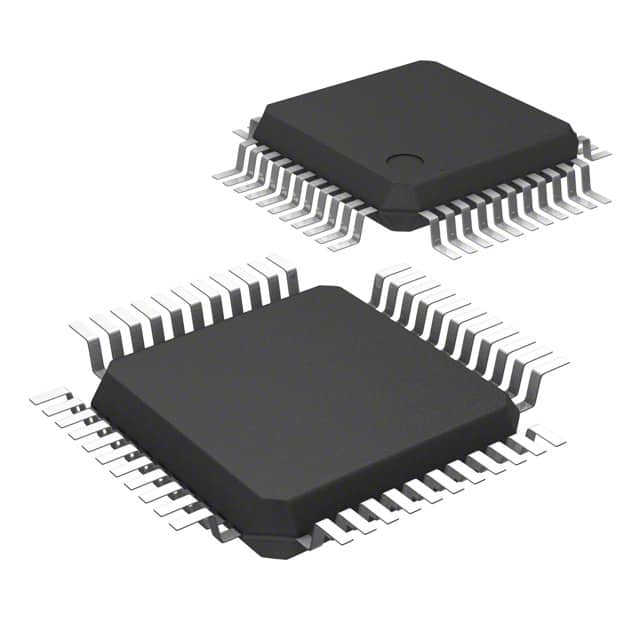
- Part No.:
- TDA7430TR
- Manufacturer:
- STMicroelectronics
- Category:
- Audio Special Purpose
- Package:
- 44-LQFP
- Datasheet:
-
 TDA7430TR.pdf
- Description:
- IC AUDIO TONE PROCESSOR 44TQFP
- Quantity:
- Payment:

- Shipping:

Inventory:2,761
Please send an inquiry. Send us your inquiry, and we will respond immediately.
Product details
Overview
TDA7430TR from STMicroelectronics is a digitally controlled audio processor IC designed for car radio and Hi-Fi systems, integrating stereo volume/tone/balance control, voice canceller, 3-band equalization (bass/middle/treble), and programmable surround sound matrix with 256 selectable responses in Movie/Simulated mode. It operates from 7–10.2 V supply, delivers ≤0.1% THD at 1 Vrms input, supports I²C serial bus programming, and features independent speaker/recording attenuators with 79 dB range.
For engineers reviewing the TDA7430TR datasheet, TDA7430TR pinout, TDA7430TR application, or TDA7430TR equivalent, this device is selected for automotive infotainment audio signal conditioning where precise digital tone shaping, multi-mode surround synthesis, and low-noise analog signal path integrity are required - especially in systems requiring voice cancellation and external passive filter network integration.
Technical Context
The TDA7430TR implements a bipolar/CMOS hybrid architecture to achieve low distortion (0.01% typ.), low noise (4 µVrms output noise in mute state), and DC step-free attenuation. Its analog signal path uses resistor networks and op-amps for AC signal setting, while all functions-including treble/middle/bass (±14 dB, 2 dB steps), balance (1 dB step), and surround mode selection-are controlled via I²C interface.
Surround processing relies on four programmable phase shifters (RPS1–RPS4) and a signal matrix to generate Music (4 responses), Movie (256), and Simulated modes. Voice cancellation is implemented as a dedicated analog subtraction circuit with three configurable outputs (AVO1–AVO3), and loudspeaker equalization is enabled via external components connected to BASS_LI/BASS_LO/MIDDLE_LI/etc. pins.
Key Specifications
| Parameter | Value and Actual Design Meaning |
|---|---|
| Supply Voltage | 7–10.2 V - Supports automotive battery voltage fluctuations without regulation |
| THD+N | 0.01% typ. - Enables high-fidelity audio reproduction without audible distortion |
| Signal-to-Noise Ratio | 106 dB - Ensures clean output even at low volume levels |
| Channel Separation | 90 dB - Prevents crosstalk between left/right audio paths |
| Tone Control Range | ±14 dB per band (bass/middle/treble) - Full-range tonal shaping for diverse acoustic environments |
| Surround Modes | Music (4), Movie (256), Simulated (256) - Configurable immersive audio rendering |
| I²C Interface | Standard two-wire bus (SDA/SCL) - Enables microcontroller-based system-level audio configuration |
| Mute Attenuation | 100 dB - Complete audio silencing for transient suppression or power management |
Pinout & Package
TDA7430TR is packaged in TQFP44 (10 × 10 × 1.4 mm, 0.8 mm pitch) with exposed thermal pad - suitable for compact automotive PCB layouts requiring efficient heat dissipation.
| Pin/Terminal | Circuit Role | Design Meaning |
|---|---|---|
| L_IN1–L_IN4 / R_IN1–R_IN4 | Stereo input channels | Four independent left/right input pairs support multi-source routing (e.g., tuner, CD, AUX) |
| MIX | Voice canceller mix input | Accepts microphone or reference signal for adaptive voice subtraction |
| L_OUT / R_OUT | Main speaker outputs | Low-impedance (10–70 Ω) buffered outputs drive 4–8 Ω speakers directly |
| RECOUT_L / RECOUT_R | Recording outputs | Dedicated line-level outputs with independent 1 dB-step attenuation for tape/digital recording |
| BASS_LI / BASS_LO / MIDDLE_LI / MIDDLE_LO / TREBLE_L / TREBLE_R | Equalizer filter nodes | External RC networks set frequency response; enables fixed or user-tuned EQ curves |
| PS1–PS4 / LP | Surround phase shifter inputs | Connect external resistors to configure 4-stage phase shift network for surround matrix |
| SDA / SCL | I²C serial interface | Two-wire bidirectional communication for register writes and status reads |
| VAR_L / VAR_R | Volume control inputs | Accept external variable resistors or DACs for analog volume override |
| AGND / DIG_GND | Analog/digital ground | Separate ground planes minimize digital switching noise coupling into audio path |
Key Features
| Feature | Design Value |
|---|---|
| Digitally programmable tone control | Independent ±14 dB bass/middle/treble adjustment in 2 dB steps via I²C |
| Multi-mode surround synthesis | 256 selectable Movie/Simulated responses + 4 Music presets using 4-phase shifter matrix |
| Integrated voice canceller | Three operational outputs (AVO1–AVO3) with 5–7 dB gain for adaptive vocal suppression |
| Independent dual-path attenuation | Separate 79 dB speaker (L/R) and record (L/R) attenuators, each with 1 dB resolution |
| External EQ flexibility | Pin-accessible BASS/MIDDLE/TREBLE nodes allow custom RC networks for application-specific frequency shaping |
| Automotive-grade operation | 0–70 °C ambient range and 11 V absolute max supply withstand typical vehicle electrical conditions |
Applications
| Car Radio Audio Processor | Aftermarket Head Unit |
|---|---|
Use Scenario: OEM and aftermarket car radios requiring digital tone/surround control with minimal MCU overhead. IC Role / Device Role / Timing Role: Central audio signal conditioner handling input mixing, 3-band EQ, voice cancellation, and speaker/record path attenuation. Use Value: Eliminates need for discrete op-amp EQ stages and external surround logic; reduces BOM count by >12 components versus discrete implementation. |
Use Scenario: Compact head units with space-constrained PCBs needing integrated audio processing and I²C configurability. IC Role / Device Role / Timing Role: Primary audio DSP front-end managing up to 4 stereo inputs, surround matrix, and dual-output attenuation. Use Value: Enables full surround mode selection (Movie/Simulated) and real-time tone adjustment via single I²C bus - no additional timing-critical firmware. |
| Hi-Fi Stereo Receiver | Audio Test Bench Signal Generator |
Use Scenario: High-fidelity home audio receivers requiring precise analog tone control and low-noise signal routing. IC Role / Device Role / Timing Role: Analog audio processor providing DC-free volume ramping, 106 dB SNR, and 90 dB channel separation. Use Value: Delivers audiophile-grade THD (0.01% typ.) and channel isolation without requiring precision trimming or calibration. |
Use Scenario: Lab equipment generating calibrated test signals with programmable EQ and surround characteristics. IC Role / Device Role / Timing Role: Reference audio source with repeatable, register-controlled tone/surround profiles for validation testing. Use Value: Provides traceable, stable 2 dB-step tone control and 256-surround-response repeatability - critical for production line audio verification. |
Equivalent & Alternatives
The following parts are listed as comparable options for similar audio processor applications.
| Alternative Part | Technical Difference | Application Difference | Selection Advice |
|---|---|---|---|
| TDA7431S | SDIP42 package; identical core functionality but different pinout and thermal resistance (85 °C/W vs TQFP44's lower Rth) | Preferred for through-hole prototyping or legacy board reuse; lacks TQFP44's compact footprint | Select when mechanical compatibility with SDIP sockets or manual assembly is required |
| CS4272-CZZ | 24-bit stereo DAC + ADC with digital EQ; requires external op-amps for analog signal conditioning; no built-in surround matrix | Used in PC audio or USB DAC designs - not drop-in compatible due to missing voice canceller and analog surround synthesis | Choose only if digital-domain EQ suffices and system already includes high-performance DAC/ADC |
Compared with TDA7431S, the TDA7430TR offers superior thermal performance in surface-mount automotive layouts; compared with CS4272-CZZ, it provides fully integrated analog surround generation and voice cancellation without external signal chain components.
Availability
TDA7430TR is available at Aetrix Electronics and suitable for automotive infotainment, aftermarket head units, and Hi-Fi receiver designs requiring stable component supply, long-lifecycle support, and consistent electrical performance across production batches.
Supply support for TDA7430TR includes scheduled delivery planning, volume procurement assistance, BOM continuity management, traceable sourcing, and lifecycle availability coordination for OEM customers, industrial embedded developers, connected-device designers, and electronics production programs.
Manufacturer
STMicroelectronics is a global semiconductor leader specializing in automotive, industrial, and consumer ICs, with deep expertise in analog and mixed-signal audio solutions.
The TDA7430TR belongs to ST's TDA7xxx family of automotive-grade audio processors, designed specifically for cost-sensitive, high-reliability car radio and multimedia head unit applications requiring integrated tone control, surround synthesis, and voice cancellation.
FAQ
What is the function of the PS1–PS4 pins on the TDA7430TR?
The PS1–PS4 pins connect external resistors to configure the four programmable phase shifters used in the surround sound matrix. Each pin sets one stage of the 4-stage phase network (RPS1–RPS4), enabling precise control over surround effect depth and spatial imaging in Movie and Simulated modes. Resistor values determine phase shift magnitude per stage, with documented ranges from 4 kΩ to 50.75 kΩ depending on digital control bits.
Does the TDA7430TR require external clocking for I²C operation?
No external clock is required for I²C operation - the TDA7430TR uses the SCL line provided by the master microcontroller as its sole timing reference. The device operates as a standard I²C slave with 7-bit address 0x80 (when ADDR pin is open) or 0x82 (when ADDR is tied to VS), and supports both incremental and non-incremental bus protocols per its software specification.
Can the voice canceller be disabled independently of other functions?
Yes - the voice canceller is controlled via dedicated bits in the "Voice Canceller/Input/RecOut" register (Subaddress 0x8A). Setting D7=0 and D6=1 disables the canceller while preserving all other audio processing functions including tone control, surround, and attenuation. No hardware modification or pin strapping is needed.
What is the purpose of the CREF pin?
CREF is the reference capacitor pin for the internal charge pump generating bias voltages for analog circuitry. A 100 nF ceramic capacitor must be connected between CREF and AGND to stabilize the internal reference and ensure low-noise operation. Omitting or undersizing this capacitor causes increased THD and reduced channel separation due to reference ripple coupling into the signal path.
TDA7430TR Specifications
- Product attributes
- Attribute value
- Manufacturer:
- STMicroelectronics
- Series:
- -
- Package/Case:
- 44-LQFP
- Packaging:
- Tape & Reel (TR)
- Product Status:
- Obsolete
- Function:
- Audio Tone Processor
- Applications:
- Audio
- Number of Channels:
- 2
- Interface:
- I2C
- Voltage - Supply:
- 7V ~ 10.2V
- Operating Temperature:
- 0°C ~ 70°C (TA)
- Specifications:
- 0.5dB
- Mounting Type:
- Surface Mount
- Grade:
- Automotive
TDA7430TR FAQ
1.How can I place an order for TDA7430TR through Aetrix?
Please submit a Request for Quotation (RFQ) for TDA7430TR on Aetrix. Our sales agent will provide a competitive quotation and guide you through the order confirmation once you accept the terms.
2.Are the price and stock information for TDA7430TR reliable?
The price and inventory of TDA7430TR are updated periodically and may fluctuate due to market conditions. Stock and pricing data are typically refreshed every 24 hours. Quotation validity for TDA7430TR is usually 5 days.
3.What payment methods are accepted for TDA7430TR?
We accept Wire Transfer, PayPal, Credit Card, Western Union, MoneyGram, and Escrow for TDA7430TR transactions.
Note: Certain payment methods may incur a processing fee.
4.How is shipping managed for TDA7430TR?
TDA7430TR orders can be shipped via leading logistics carriers, including DHL, UPS, FedEx, TNT, or Registered Mail.
Once your TDA7430TR order is processed, you will receive an email with the shipment details and tracking number.
Note: Tracking information may take up to 24 hours to appear. Express delivery typically takes 3–5 business days.
5.How can I obtain technical support or documentation for TDA7430TR?
For technical support, including TDA7430TR datasheets, pinout diagrams, or application guidance, please contact our engineering support team. They can provide detailed documentation and assistance for your TDA7430TR requirements.
6.How does Aetrix verify that TDA7430TR is sourced from the original manufacturer or authorized distributors?
All TDA7430TR products on Aetrix are procured from qualified distributors and authorized channels. Our dedicated quality assurance team conducts strict verification, including traceability checks and, if necessary, third-party testing. This ensures that TDA7430TR meets industry standards.
7.What is the process for return or replacement of TDA7430TR?
All TDA7430TR units undergo pre-shipment inspection (PSI). If there is an issue with TDA7430TR, returns or replacements are accepted under the following conditions:
1.Quantity discrepancies, incorrect items, or visible external defects (such as breakage or corrosion), acknowledged by Aetrix.
2.The issue is reported within 90 days of delivery.
3.The TDA7430TR part is unused and in its original packaging.
Return procedure for TDA7430TR:
1.Submit a request within 90 days.
2.Obtain a Return Material Authorization (RMA) from Aetrix.
TDA7430TR Tags
-
SA571DR2G
onsemi
-
ADAU7002ACBZ-R7
Analog Devices Inc.

-
DRV135UA/2K5
Texas Instruments
-
DRV134UA/1K
Texas Instruments
-
DRV134PA
Texas Instruments
-
DRV134UA
Texas Instruments
-
DRV135UA
Texas Instruments
-
SA572DR2G
onsemi
-
PGA2311U/1K
Texas Instruments
-
SI8244BB-D-IS1R
Skyworks Solutions Inc.

-
CS8416K-CZZR
Cirrus Logic Inc.
-
SRC4392IPFBR
Texas Instruments
Tech Hub

A practical engineering and sourcing framework covering lifecycle verification, lifetime-buy calculations, replacement qualification, supplier checks and counterfeit-risk controls.

TTL and CMOS logic families differ in thresholds, loading, output drive, power and timing. This engineering guide compares 74HC and 74HCT, calculates noise margins and checks 3.3 V/5 V compatibility.

A practical engineering guide to 3.3V and 5V logic compatibility, input thresholds, resistor dividers, translator ICs, MOSFET level shifting, I2C pull-ups, timing limits and power-sequencing risks.

The 74HC595 uses push-pull logic outputs, while the TPIC6B595 uses 50 V open-drain DMOS sinks for higher-power loads. This guide compares timing, current limits, 3.3 V interfacing, load wiring, thermal…

The 74HC595 converts serial data into eight stable parallel outputs. This guide covers pin functions, shift and storage timing, OE and MR behavior, drive-current limits, cascading, voltage compatibilit…

A technical comparison of level-sensitive latches and edge-triggered flip-flops, covering timing windows, setup and hold limits, master–slave operation, time borrowing, race-through, HDL inference and…

A D latch stores one bit while Enable controls when data can pass. This reference covers gate-level operation, truth tables, transparency, setup and hold timing, LE versus OE, common ICs and practical …

An SR latch stores one bit through cross-coupled feedback. This engineering reference covers NOR and NAND implementations, truth tables, forbidden-state recovery, gated operation, switch debouncing, fa…

Latch circuits retain one bit through feedback. This technical reference covers SR and D latches, truth tables, transparency, timing limits, latch-versus-flip-flop behavior, applications and common log…

An engineering guide to LED driver operation, constant-current and constant-voltage outputs, linear and switching topologies, dimming, IC selection, calculations, replacement compatibility, and fault c…


