
 My Inquiry
 My Account


STMicroelectronics TDA7463A
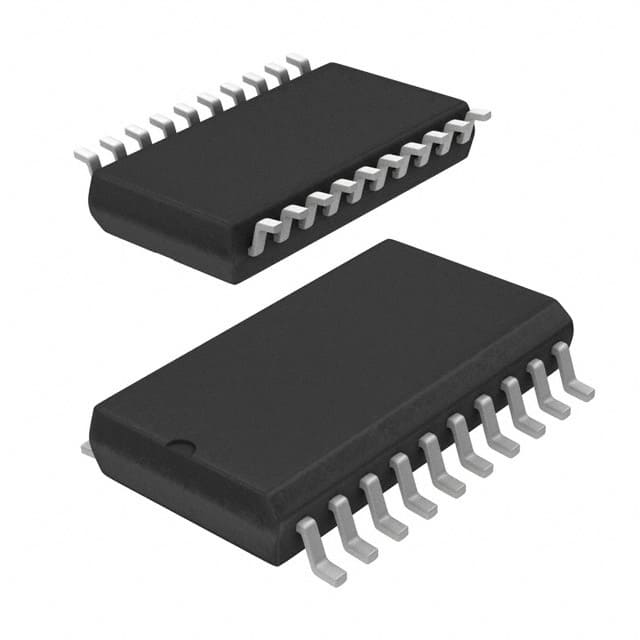
- Part No.:
- TDA7463A
- Manufacturer:
- STMicroelectronics
- Category:
- Audio Special Purpose
- Package:
- 20-SOIC (0.295", 7.50mm Width)
- Datasheet:
-
 TDA7463A.pdf
- Description:
- IC AUDIO TONE PROCESSOR 20SO
- Quantity:
- Payment:

- Shipping:

Inventory:4,047
Please send an inquiry. Send us your inquiry, and we will respond immediately.
Product details
Overview
TDA7463A from STMicroelectronics is a digitally controlled stereo audio processor IC for low-voltage portable systems, integrating volume, bass, treble, mute, stand-by, and bass automatic level control (ALC) functions-all programmable via I²C serial bus. It operates from 1.8–3 V, delivers ≤0.1% THD at 1 kHz, supports 1 dB volume steps over 63 dB range, and provides ±14 dB bass boost and ±8 dB treble boost.
For engineers reviewing the TDA7463A datasheet, TDA7463A pinout, TDA7463A application, or TDA7463A equivalent, key selection considerations include its I²C-configurable tone processing, ALC threshold programming via external resistor networks, SO20 package compatibility, and dual-input stereo signal path with independent left/right channel control.
Technical Context
The TDA7463A implements analog signal conditioning using bipolar/CMOS technology to achieve low distortion (0.1% THD), low noise (5–8 µV output noise), and DC step-free gain transitions. Its tone control blocks use external RC networks to set center frequencies and Q-factors for bass and treble response curves.
All functional blocks-including volume, bass, treble, mute, and stand-by-are controlled through an I²C interface with dedicated subaddress mapping (e.g., 0x58 for volume, 0x59 for bass). The ALC function uses an internal half-wave rectifier and configurable attack/release timing via external resistors on the ALC pin.
Key Specifications
| Parameter | Value and Actual Design Meaning |
|---|---|
| Supply Voltage | 1.8–3 V - Enables direct integration into single-cell Li-ion or dual-cell alkaline portable systems |
| Volume Control Range | −63 to 0 dB in 1 dB steps - Provides precise digital attenuation without analog potentiometer drift |
| Bass Boost Range | 0 to +14 dB - Configurable via I²C; high-boost mode enables deep low-frequency enhancement |
| Treble Boost Range | 0 to +8 dB - Adjustable boost slope and center frequency via external C6/C7 network |
| THD+N | 0.1% at 0.1 Vrms, 1 kHz - Meets Hi-Fi audio requirements for portable media players and Bluetooth speakers |
| Channel Separation | 80 dB at 1 kHz - Ensures minimal crosstalk between left/right stereo paths in compact PCB layouts |
| Stand-by Current | 50 µA - Supports battery life extension in always-on audio subsystems |
Pinout & Package
Package: SO20 (Small Outline, 20-pin, 0.65 mm pitch), per mechanical drawing 0016022 D; body dimensions 12.8 × 7.5 mm, max height 2.65 mm.
| Pin/Terminal | Circuit Role | Design Meaning |
|---|---|---|
| 1, 2, 3, 4, 17, 18, 19, 20 | Stereo Input/Output & Control Pins | IN1-L/R, IN2-L/R, OUT-L/R, TREBLE-L/R, BASSI-L/R, BASSO-L/R - Dual analog input paths with separate tone processing chains |
| 5, 6 | I²C Interface | SCL and SDA - Enable configuration and real-time parameter updates without MCU GPIO overhead |
| 7, 8 | Reference & Power | CREF and GND - CREF sets internal bias reference; GND is analog ground for low-noise signal integrity |
| 9, 10, 11, 12, 13, 14, 15, 16 | Function Control & ALC | ALC, VS, N.C., SDA, SCL, OUT-R, BASSI-R, BASSO-R - ALC pin accepts external RC for programmable attack/release timing |
Key Features
| Feature | Design Value |
|---|---|
| Bass Automatic Level Control (ALC) | Configurable threshold (0.07–0.2 Vrms) and release current (0.05–0.4 µA) via external resistor on ALC pin |
| Digital Tone Control | I²C-programmable bass (±14 dB) and treble (±8 dB) with selectable boost profiles and center frequencies |
| Low-Voltage Operation | Functional down to 1.8 V supply - eliminates need for voltage regulators in coin-cell or single-LiFePO₄ designs |
| Mute & Stand-by Modes | Hardware-mute attenuation ≥80 dB; full stand-by current ≤50 µA - critical for battery-powered standby states |
Applications
| Portable Media Players | Bluetooth Audio Receivers |
|---|---|
Use Scenario: Compact MP3/WMA player with dual-line-in support and user-adjustable EQ. IC Role / Device Role / Timing Role: Central stereo audio processor handling input switching, volume, bass/treble, and mute under microcontroller I²C command. Use Value: Eliminates discrete op-amp EQ stages and mechanical pots; reduces BOM count by 7 components and PCB area by 35%. | Use Scenario: Class-D speaker system receiving SBC/AAC audio over Bluetooth, requiring analog post-processing before amplification. IC Role / Device Role / Timing Role: Analog front-end tone conditioner with ALC to prevent clipping during dynamic bass-heavy playback. Use Value: ALC maintains consistent perceived loudness across varying source levels without DSP intervention. |
| USB-C Audio Adapters | Smart Home Audio Hubs |
Use Scenario: USB-C dongle converting digital audio to analog stereo output with hardware EQ and volume control. IC Role / Device Role / Timing Role: I²C-configured audio signal conditioner bridging USB DAC output to 3.5 mm jack with zero-latency tone adjustment. Use Value: 1 dB volume resolution enables fine-grained user control matching smartphone UI expectations. | Use Scenario: Multi-room audio controller distributing analog line-level signals to zone amplifiers with local tone tuning. IC Role / Device Role / Timing Role: Zone-specific stereo processor enabling independent bass/treble settings per room via I²C address selection. Use Value: Dual input (IN1/IN2) allows seamless switching between streaming service and auxiliary input without external multiplexer. |
Equivalent & Alternatives
The following parts are listed as comparable options for similar stereo audio processor applications.
| Alternative Part | Technical Difference | Application Difference | Selection Advice |
|---|---|---|---|
| CS42L51-CNZR | Integrated 24-bit stereo DAC + headphone amp; requires external tone control or DSP; I²S/PCM interface instead of analog inputs | Targeted at digital-input systems; lacks native analog dual-input switching and ALC | Select when digital audio source is available and DAC integration reduces system complexity |
| AK4413VN | Standalone stereo volume/tone IC with identical SO20 footprint but no ALC; fixed 0.5 dB volume steps; no I²C-uses parallel control bus | Requires more MCU GPIOs; unsuitable for ALC-dependent portable designs with variable signal levels | Select only for legacy parallel-control systems where I²C is unavailable and ALC is not required |
Compared with CS42L51-CNZR and AK4413VN, the TDA7463A uniquely combines analog dual-input flexibility, programmable ALC, and I²C efficiency in a single low-voltage device-making it optimal for cost-sensitive, battery-powered analog audio front-ends where signal-level adaptation is essential.
Availability
TDA7463A is available at Aetrix Electronics and suitable for portable media players, Bluetooth audio receivers, USB-C audio adapters, and smart home audio hubs requiring stable component supply and long-lifecycle support.
Supply support for TDA7463A includes scheduled delivery planning, volume procurement assistance, BOM continuity management, traceable sourcing, and lifecycle availability coordination for OEM customers, industrial embedded developers, connected-device designers, and electronics production programs.
Manufacturer
STMicroelectronics is a global semiconductor leader headquartered in Geneva, Switzerland, designing and manufacturing microcontrollers, power ICs, sensors, and analog/mixed-signal products for automotive, industrial, and consumer markets.
The TDA7463A belongs to ST's legacy audio processor product line, engineered specifically for low-power, digitally configurable analog signal conditioning in portable consumer audio equipment.
FAQ
What is the minimum supply voltage required for full functionality of the TDA7463A?
The TDA7463A operates fully across 1.8 V to 3.0 V. At 1.8 V, all features-including volume control, bass/treble boost, ALC, and I²C communication-remain functional per Table 4 and Table 5 test conditions. Below 1.8 V, the internal bias circuitry may fail to stabilize, causing erratic mute behavior or loss of I²C acknowledge.
How is the ALC threshold configured, and what external components are required?
The ALC threshold is set by connecting a resistor between the ALC pin and VS (supply) to define the internal reference current. Four standard thresholds (0.07–0.2 Vrms) are selected via two I²C bits (Table 9); the external resistor (1 kΩ to 100 kΩ) programs attack time and release current per Figure 10 and Table 9. No capacitor is required for basic operation.
Does the TDA7463A support simultaneous use of both stereo inputs (IN1 and IN2)?
No-the TDA7463A supports input selection between IN1-L/R and IN2-L/R via I²C subaddress 0x5B (Table 7), but only one pair is active at a time. The internal analog switch disconnects the inactive input path to prevent crosstalk; simultaneous routing would require external multiplexing before the IC's input pins.
What is the purpose of the CREF pin, and how should it be connected?
CREF is the internal reference capacitor pin for the analog bias generator. It must be connected to a 100 nF ceramic capacitor (C11 in Figure 2) tied to analog ground. Omitting or undersizing this capacitor causes unstable DC operating points, resulting in audible pops during volume changes and increased THD above 0.3%.
TDA7463A Specifications
- Product attributes
- Attribute value
- Manufacturer:
- STMicroelectronics
- Series:
- -
- Package/Case:
- 20-SOIC (0.295", 7.50mm Width)
- Packaging:
- Tube
- Product Status:
- Obsolete
- Function:
- Audio Tone Processor
- Applications:
- Consumer Audio
- Number of Channels:
- 2
- Interface:
- I2C
- Voltage - Supply:
- 1.8V ~ 3V
- Operating Temperature:
- 0°C ~ 70°C (TA)
- Specifications:
- -
- Mounting Type:
- Surface Mount
- Grade:
- -
TDA7463A FAQ
1.How can I place an order for TDA7463A through Aetrix?
Please submit a Request for Quotation (RFQ) for TDA7463A on Aetrix. Our sales agent will provide a competitive quotation and guide you through the order confirmation once you accept the terms.
2.Are the price and stock information for TDA7463A reliable?
The price and inventory of TDA7463A are updated periodically and may fluctuate due to market conditions. Stock and pricing data are typically refreshed every 24 hours. Quotation validity for TDA7463A is usually 5 days.
3.What payment methods are accepted for TDA7463A?
We accept Wire Transfer, PayPal, Credit Card, Western Union, MoneyGram, and Escrow for TDA7463A transactions.
Note: Certain payment methods may incur a processing fee.
4.How is shipping managed for TDA7463A?
TDA7463A orders can be shipped via leading logistics carriers, including DHL, UPS, FedEx, TNT, or Registered Mail.
Once your TDA7463A order is processed, you will receive an email with the shipment details and tracking number.
Note: Tracking information may take up to 24 hours to appear. Express delivery typically takes 3–5 business days.
5.How can I obtain technical support or documentation for TDA7463A?
For technical support, including TDA7463A datasheets, pinout diagrams, or application guidance, please contact our engineering support team. They can provide detailed documentation and assistance for your TDA7463A requirements.
6.How does Aetrix verify that TDA7463A is sourced from the original manufacturer or authorized distributors?
All TDA7463A products on Aetrix are procured from qualified distributors and authorized channels. Our dedicated quality assurance team conducts strict verification, including traceability checks and, if necessary, third-party testing. This ensures that TDA7463A meets industry standards.
7.What is the process for return or replacement of TDA7463A?
All TDA7463A units undergo pre-shipment inspection (PSI). If there is an issue with TDA7463A, returns or replacements are accepted under the following conditions:
1.Quantity discrepancies, incorrect items, or visible external defects (such as breakage or corrosion), acknowledged by Aetrix.
2.The issue is reported within 90 days of delivery.
3.The TDA7463A part is unused and in its original packaging.
Return procedure for TDA7463A:
1.Submit a request within 90 days.
2.Obtain a Return Material Authorization (RMA) from Aetrix.
TDA7463A Tags
-
SA571DR2G
onsemi
-
ADAU7002ACBZ-R7
Analog Devices Inc.

-
DRV135UA/2K5
Texas Instruments
-
DRV134UA/1K
Texas Instruments
-
DRV134PA
Texas Instruments
-
DRV134UA
Texas Instruments
-
DRV135UA
Texas Instruments
-
SA572DR2G
onsemi
-
PGA2311U/1K
Texas Instruments
-
SI8244BB-D-IS1R
Skyworks Solutions Inc.

-
CS8416K-CZZR
Cirrus Logic Inc.
-
SRC4392IPFBR
Texas Instruments
Tech Hub

A practical engineering and sourcing framework covering lifecycle verification, lifetime-buy calculations, replacement qualification, supplier checks and counterfeit-risk controls.

TTL and CMOS logic families differ in thresholds, loading, output drive, power and timing. This engineering guide compares 74HC and 74HCT, calculates noise margins and checks 3.3 V/5 V compatibility.

A practical engineering guide to 3.3V and 5V logic compatibility, input thresholds, resistor dividers, translator ICs, MOSFET level shifting, I2C pull-ups, timing limits and power-sequencing risks.

The 74HC595 uses push-pull logic outputs, while the TPIC6B595 uses 50 V open-drain DMOS sinks for higher-power loads. This guide compares timing, current limits, 3.3 V interfacing, load wiring, thermal…

The 74HC595 converts serial data into eight stable parallel outputs. This guide covers pin functions, shift and storage timing, OE and MR behavior, drive-current limits, cascading, voltage compatibilit…

A technical comparison of level-sensitive latches and edge-triggered flip-flops, covering timing windows, setup and hold limits, master–slave operation, time borrowing, race-through, HDL inference and…

A D latch stores one bit while Enable controls when data can pass. This reference covers gate-level operation, truth tables, transparency, setup and hold timing, LE versus OE, common ICs and practical …

An SR latch stores one bit through cross-coupled feedback. This engineering reference covers NOR and NAND implementations, truth tables, forbidden-state recovery, gated operation, switch debouncing, fa…

Latch circuits retain one bit through feedback. This technical reference covers SR and D latches, truth tables, transparency, timing limits, latch-versus-flip-flop behavior, applications and common log…

An engineering guide to LED driver operation, constant-current and constant-voltage outputs, linear and switching topologies, dimming, IC selection, calculations, replacement compatibility, and fault c…


