
 My Inquiry
 My Account


Nexperia USA Inc. TDZ22J,115
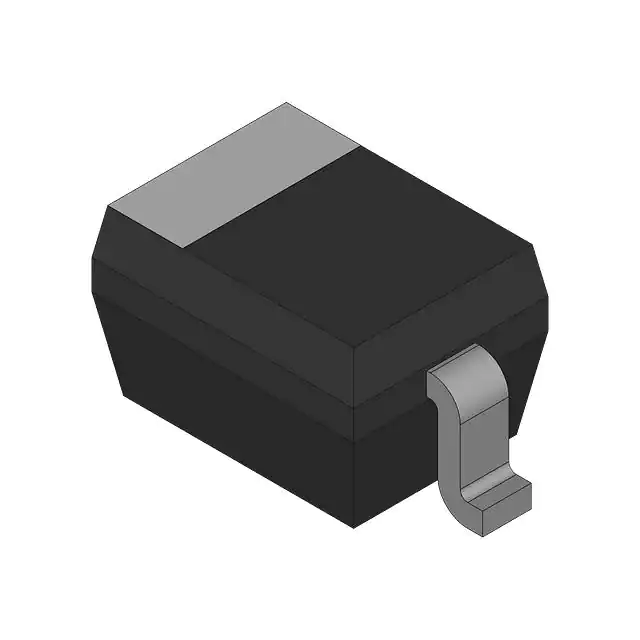
- Part No.:
- TDZ22J,115
- Manufacturer:
- Nexperia USA Inc.
- Category:
- Single Zener Diodes
- Package:
- SC-90, SOD-323F
- Datasheet:
-
 TDZ22J,115.pdf
- Description:
- DIODE ZENER 22V 500MW SOD323F
- Quantity:
- Payment:

- Shipping:

Inventory:6,535
Please send an inquiry. Send us your inquiry, and we will respond immediately.
Product details
Overview
TDZ22J,115 from Nexperia is a single Zener diode in SOD323F (SC-90) package, designed for precision voltage regulation and overvoltage protection in space-constrained PCBs. It delivers a nominal Zener voltage of 22 V at 5 mA, with differential resistance ≤250 Ω, total power dissipation up to 500 mW at 25 °C ambient, and AEC-Q101 qualification for automotive use.
For engineers reviewing the TDZ22J,115 datasheet, TDZ22J,115 pinout, TDZ22J,115 application, or TDZ22J,115 equivalent, key selection factors include its 21.6–22.4 V working voltage range, low thermal resistance (25 K/W junction-to-solder-point), 150 °C max junction temperature, and suitability for transient suppression in 12 V/24 V automotive subsystems.
Technical Context
This Zener diode operates in reverse breakdown mode to maintain stable reference voltage under varying load and temperature conditions. Its temperature coefficient of +15.4 to +16.4 mV/K at 5 mA enables predictable drift compensation in bias networks.
The device supports non-repetitive peak reverse power dissipation up to 40 W (tp = 100 µs), with thermal resistance from junction to ambient of 250 K/W in free air - critical for short-duration surge clamping in ESD-protected interfaces.
Key Specifications
| Parameter | Value and Actual Design Meaning |
|---|---|
| Zener Voltage (VZ) | 21.6 V to 22.4 V at IZ = 5 mA - defines precise clamping threshold for 24 V rail protection |
| Differential Resistance (rdif) | ≤250 Ω at IZ = 5 mA - ensures minimal output voltage variation under load current changes |
| Total Power Dissipation (Ptot) | 500 mW at Tamb ≤ 25 °C - sets continuous DC power limit for thermal design on FR4 PCB |
| Non-repetitive Peak Reverse Power (PZSM) | 40 W at tp = 100 µs - supports transient surge handling per ISO 7637-2 Pulse 1/2a |
| Reverse Current (IR) | ≤0.05 µA at VR = 17.6 V - guarantees low leakage in high-impedance reference circuits |
| Junction Temperature (Tj) | −55 °C to +150 °C - enables operation in under-hood automotive environments |
| AEC-Q101 Qualified | Yes - validated for automotive-grade reliability including HTOL, TC, and ESD testing |
Pinout & Package
SOD323F (SC-90) surface-mount plastic package: 2.7 mm × 1.6 mm footprint, 0.65 mm height, cathode marked by bar on top surface.
| Pin/Terminal | Circuit Role | Design Meaning |
|---|---|---|
| 1 | Cathode | Connected to regulated output node; marking bar identifies this terminal for correct PCB orientation |
| 2 | Anode | Connected to ground or lower-potential rail; forms reverse-biased junction during regulation |
Key Features
| Feature | Design Value |
|---|---|
| Ultra-small SMD footprint | SOD323F package enables placement in <1.0 mm² board area - ideal for dense automotive ECUs |
| Low thermal resistance | Rth(j-sp) = 25 K/W to solder point - improves power handling without heatsinking on standard FR4 |
| Precision Zener voltage tolerance | ±2.3 % at 22 V nominal - reduces need for post-production trimming in voltage reference designs |
| Automotive-grade reliability | AEC-Q101 qualified with 150 °C Tj rating - meets ASIL-B supporting component requirements |
| Controlled temperature coefficient | +15.4 to +16.4 mV/K - allows predictable bias point shift across −40 °C to +125 °C operating range |
Applications
| Automotive Body Control Module (BCM) | Industrial Sensor Signal Conditioning |
|---|---|
Use Scenario: Regulating 5 V reference for LIN transceiver biasing in door module PCBs. IC Role / Device Role / Timing Role: Zener diode provides stable shunt reference for LDO input stage under battery voltage fluctuations (9–16 V). Use Value: Maintains ±1 % reference accuracy across temperature while occupying <0.5 mm² area - enabling compact multi-node LIN architecture. |
Use Scenario: Clamping analog sensor output (0–10 V) before ADC input in PLC analog input modules. IC Role / Device Role / Timing Role: Acts as overvoltage protector against field-wiring transients induced by relay switching. Use Value: Limits excursion to ≤24 V with 40 W pulse handling, preventing ADC saturation and protecting downstream op-amps. |
| Automotive Infotainment Power Sequencing | Consumer IoT Battery Monitoring |
Use Scenario: Providing enable threshold for PMIC reset circuit triggered at 22 V during cold-crank recovery. IC Role / Device Role / Timing Role: Zener voltage defines precise turn-on point for comparator-based power-good detection. Use Value: Enables reliable sequencing after engine start with <0.1 V hysteresis margin - eliminating false resets during 6–20 V battery recovery. |
Use Scenario: Reference element in coulomb counter IC bias network for Li-ion battery fuel gauging. IC Role / Device Role / Timing Role: Supplies stable 22 V reference to precision current-sense amplifier in battery pack monitor. Use Value: Achieves <0.5 % full-scale current measurement accuracy over −20 °C to +70 °C due to matched TC with sense resistor. |
Equivalent & Alternatives
The following parts are listed as comparable options for similar Zener regulation applications.
| Alternative Part | Technical Difference | Application Difference | Selection Advice |
|---|---|---|---|
| BZX384-B22,115 | Same SOD323F package; VZ = 21.7–22.3 V at 5 mA; rdif = 220 Ω; Ptot = 300 mW | Lower power rating limits continuous dissipation in high-current clamp scenarios | Select when thermal budget is constrained and peak surges are infrequent |
| MMSZ5247B-TP | SOD-123 package; VZ = 21.2–22.8 V at 20 mA; rdif = 35 Ω; Ptot = 500 mW; no AEC-Q101 qualification | Larger footprint (3.7 × 1.6 mm) and unqualified status restrict automotive use | Prefer for cost-sensitive industrial designs where AEC compliance is not required |
Compared with BZX384-B22,115 and MMSZ5247B-TP, TDZ22J,115 uniquely combines AEC-Q101 qualification, 250 K/W junction-to-ambient thermal resistance, and 22 V regulation in the smallest SOD323F footprint - making it optimal for space- and reliability-critical automotive voltage references.
Availability
TDZ22J,115 is available at Aetrix Electronics and suitable for automotive body electronics, industrial sensor interfaces, and consumer battery management systems requiring stable component supply with full traceability and long-term lifecycle support.
Supply support for TDZ22J,115 includes scheduled delivery planning, volume procurement assistance, BOM continuity management, traceable sourcing, and lifecycle availability coordination for OEM customers, industrial embedded developers, connected-device designers, and electronics production programs.
Manufacturer
Nexperia is a global semiconductor expert focused on high-volume, high-reliability discrete and logic devices, with leadership in automotive-qualified components and advanced packaging.
The TDZxJ series targets space-constrained voltage regulation and transient protection in automotive and industrial applications, emphasizing AEC-Q101 compliance, thermal efficiency, and ultra-small SMD form factors.
FAQ
What is the maximum continuous reverse current the TDZ22J,115 can sustain at 25 °C ambient?
The TDZ22J,115 sustains up to 22.7 mA continuous reverse current at 25 °C ambient, calculated from its 500 mW total power dissipation rating and nominal 22 V Zener voltage (Ptot/VZ = 0.5 W / 22 V). This assumes no additional thermal derating and proper PCB copper area for heat dissipation.
How does the cathode marking appear on the TDZ22J,115 package?
The cathode is identified by a visible bar marking on the top surface of the SOD323F package, aligned with pin 1. The physical outline shows two terminals: pin 1 (cathode, marked) and pin 2 (anode, unmarked), consistent with the simplified graphic symbol in Nexperia's data sheet Rev. 2 (2011).
Is the TDZ22J,115 suitable for bidirectional ESD protection?
No - the TDZ22J,115 is a unidirectional Zener diode optimized for reverse-bias regulation and clamping. It lacks symmetrical breakdown characteristics required for bidirectional ESD protection; dedicated TVS diodes like PESD5V0S1BA should be used instead for IEC 61000-4-2 compliance.
What is the recommended soldering profile for TDZ22J,115?
Nexperia specifies reflow soldering only, with peak temperature ≤260 °C for ≤10 seconds, preheat ramp rate ≤3 °C/s, and time above 217 °C limited to 60–150 seconds. The SOD323F package requires strict adherence to these parameters to avoid delamination or internal bond damage.
TDZ22J,115 Specifications
- Product attributes
- Attribute value
- Manufacturer:
- Nexperia USA Inc.
- Series:
- TDZxJ
- Package/Case:
- SC-90, SOD-323F
- Packaging:
- Tape & Reel (TR)
- Product Status:
- Active
- Voltage - Zener (Nom) (Vz):
- 22 V
- Tolerance:
- ±2%
- Power - Max:
- 500 mW
- Impedance (Max) (Zzt):
- 25 Ohms
- Current - Reverse Leakage @ Vr:
- 50 nA @ 15.4 V
- Voltage - Forward (Vf) (Max) @ If:
- 1.1 V @ 100 mA
- Operating Temperature:
- -55°C ~ 150°C
- Grade:
- Automotive
- Qualification:
- AEC-Q101
- Mounting Type:
- Surface Mount
- Supplier Device Package:
- SOD-323F
TDZ22J,115 FAQ
1.How can I place an order for TDZ22J,115 through Aetrix?
Please submit a Request for Quotation (RFQ) for TDZ22J,115 on Aetrix. Our sales agent will provide a competitive quotation and guide you through the order confirmation once you accept the terms.
2.Are the price and stock information for TDZ22J,115 reliable?
The price and inventory of TDZ22J,115 are updated periodically and may fluctuate due to market conditions. Stock and pricing data are typically refreshed every 24 hours. Quotation validity for TDZ22J,115 is usually 5 days.
3.What payment methods are accepted for TDZ22J,115?
We accept Wire Transfer, PayPal, Credit Card, Western Union, MoneyGram, and Escrow for TDZ22J,115 transactions.
Note: Certain payment methods may incur a processing fee.
4.How is shipping managed for TDZ22J,115?
TDZ22J,115 orders can be shipped via leading logistics carriers, including DHL, UPS, FedEx, TNT, or Registered Mail.
Once your TDZ22J,115 order is processed, you will receive an email with the shipment details and tracking number.
Note: Tracking information may take up to 24 hours to appear. Express delivery typically takes 3–5 business days.
5.How can I obtain technical support or documentation for TDZ22J,115?
For technical support, including TDZ22J,115 datasheets, pinout diagrams, or application guidance, please contact our engineering support team. They can provide detailed documentation and assistance for your TDZ22J,115 requirements.
6.How does Aetrix verify that TDZ22J,115 is sourced from the original manufacturer or authorized distributors?
All TDZ22J,115 products on Aetrix are procured from qualified distributors and authorized channels. Our dedicated quality assurance team conducts strict verification, including traceability checks and, if necessary, third-party testing. This ensures that TDZ22J,115 meets industry standards.
7.What is the process for return or replacement of TDZ22J,115?
All TDZ22J,115 units undergo pre-shipment inspection (PSI). If there is an issue with TDZ22J,115, returns or replacements are accepted under the following conditions:
1.Quantity discrepancies, incorrect items, or visible external defects (such as breakage or corrosion), acknowledged by Aetrix.
2.The issue is reported within 90 days of delivery.
3.The TDZ22J,115 part is unused and in its original packaging.
Return procedure for TDZ22J,115:
1.Submit a request within 90 days.
2.Obtain a Return Material Authorization (RMA) from Aetrix.
TDZ22J,115 Tags
-
MMBZ5240B-7-F
Diodes Incorporated
-
BZT52C5V6T-7
Diodes Incorporated
-
MMSZ5231B-7-F
Diodes Incorporated
-
BZT52C15-7-F
Diodes Incorporated
-
BZX84C3V3LT1G
onsemi
-
MMSZ5245BS-7-F
Diodes Incorporated
-
MMSZ4682T1G
onsemi
-
BZT52C15S-7-F
Diodes Incorporated
-
MM5Z5V1ST1G
onsemi
-
SMAJ4744A-TP
Micro Commercial Co
-
BZT52C3V6LP-7
Diodes Incorporated
-
SMAZ12-13-F
Diodes Incorporated
Tech Hub

A practical engineering guide to 3.3V and 5V logic compatibility, input thresholds, resistor dividers, translator ICs, MOSFET level shifting, I2C pull-ups, timing limits and power-sequencing risks.

The 74HC595 uses push-pull logic outputs, while the TPIC6B595 uses 50 V open-drain DMOS sinks for higher-power loads. This guide compares timing, current limits, 3.3 V interfacing, load wiring, thermal…

The 74HC595 converts serial data into eight stable parallel outputs. This guide covers pin functions, shift and storage timing, OE and MR behavior, drive-current limits, cascading, voltage compatibilit…

A technical comparison of level-sensitive latches and edge-triggered flip-flops, covering timing windows, setup and hold limits, master–slave operation, time borrowing, race-through, HDL inference and…

A D latch stores one bit while Enable controls when data can pass. This reference covers gate-level operation, truth tables, transparency, setup and hold timing, LE versus OE, common ICs and practical …

An SR latch stores one bit through cross-coupled feedback. This engineering reference covers NOR and NAND implementations, truth tables, forbidden-state recovery, gated operation, switch debouncing, fa…

Latch circuits retain one bit through feedback. This technical reference covers SR and D latches, truth tables, transparency, timing limits, latch-versus-flip-flop behavior, applications and common log…

An engineering guide to LED driver operation, constant-current and constant-voltage outputs, linear and switching topologies, dimming, IC selection, calculations, replacement compatibility, and fault c…

Operational amplifier guide covering op amp basics, feedback, ideal vs real op amps, common configurations, buffer circuits, offset, bias current, gain-bandwidth, slew rate, rail-to-rail limits and sel…

Jumper cables guide covering safe connection order, red and black clamp placement, final ground connection, cable gauge, length, clamp quality, copper vs CCA cables, jump starter comparison and battery…


