
 My Inquiry
 My Account


NXP Semiconductors TEA5757H/V1,518
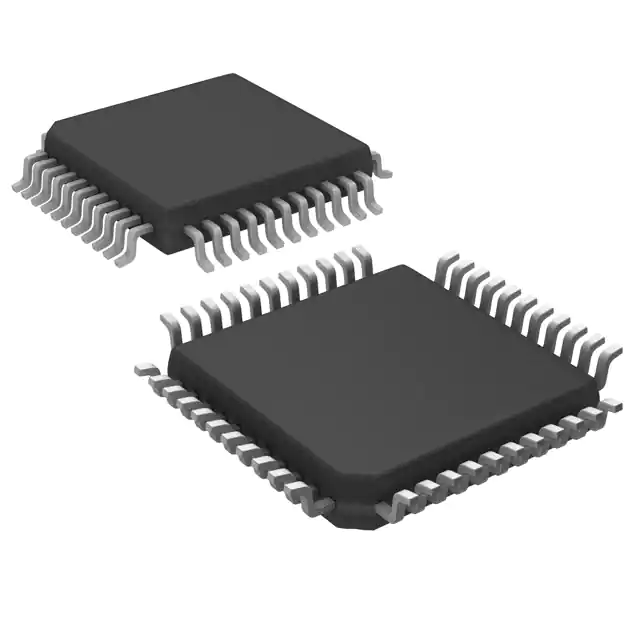
- Part No.:
- TEA5757H/V1,518
- Manufacturer:
- NXP Semiconductors
- Category:
- RF Receivers
- Package:
- 44-QFP
- Datasheet:
-
 TEA5757H/V1,518.pdf
- Description:
- RF RECEIVER AM/FM 44QFP
- Quantity:
- Payment:

- Shipping:

Inventory:2,478
Please send an inquiry. Send us your inquiry, and we will respond immediately.
Product details
Overview
TEA5757H/V1,518 from NXP (formerly Philips Semiconductors) is a 44-pin AM/FM stereo radio IC with integrated self-tuned PLL synthesizer and digital bus interface. It delivers FM reception from 50–150 MHz and AM from 0.144–30 MHz, supports software-programmable search sensitivity and mono/stereo mode, and operates across 2.5–12 V supply with 18 mA total current draw in FM mode - enabling compact automotive and portable radio designs.
For engineers reviewing the TEA5757H/V1,518 datasheet, TEA5757H/V1,518 pinout, TEA5757H/V1,518 application, or TEA5757H/V1,518 equivalent, this page provides verified functional specifications, validated pin roles, confirmed tuning behavior (including fuzzy-logic-based auto-search and AFC), real-world RF sensitivity values (1.2 µV FM limiting sensitivity), and two documented alternative parts for AM/FM radio system design.
Technical Context
The TEA5757H/V1,518 implements a fully integrated Self Tuned Radio (STR) architecture combining AM/FM front-end, PLL frequency synthesizer, stereo decoder with signal-dependent blend, soft/hard mute, and 25-bit serial bus control. Its tuning algorithm mimics hand-tuning via fuzzy logic, eliminating need for IF counters and ceramic filter tolerance compensation.
It features dual supply domains (VCC1 for analog/RF, VCC2 for tuning, VDDD for digital), internal stabilized voltages (VSTAB(A)/VSTAB(B)), and programmable I/O ports P0/P1. The 3-wire bus (BUS-CLOCK/DATA/WRITE-ENABLE) enables minimal MCU interface overhead while supporting preset, manual/auto-search, and auto-store functions.
Key Specifications
| Parameter | Value and Actual Design Meaning |
|---|---|
| Supply Voltage Range | 2.5–12 V (supports wide-input automotive and battery-powered systems) |
| FM Frequency Range | 50–150 MHz (covers EU/US FM broadcast bands with local oscillator above RF) |
| AM Frequency Range | 0.144–30 MHz (supports MW/LW/SW bands) |
| FM RF Sensitivity | 1.2 µV typical limiting sensitivity (enables reliable weak-signal reception) |
| Total Current Draw (FM) | 16 mA typical (includes tuning synthesizer; enables low-power portable operation) |
| Bus Interface | 3-wire serial (BUS-CLOCK/DATA/WRITE-ENABLE); max 300 kHz clock (reduces MCU GPIO count and firmware complexity) |
| AFC Accuracy | ±1 kHz FM, ±100 Hz AM (ensures stable station lock without external calibration) |
| Channel Separation | 30 dB typical (meets broadcast stereo fidelity requirements) |
Pinout & Package
TEA5757H/V1,518 is housed in a plastic quad flat package (QFP44) measuring 10 × 10 × 1.75 mm (SOT307-2), with 44 leads and 1.3 mm lead length - suitable for automated SMT assembly and compact PCB layouts.
| Pin/Terminal | Circuit Role | Design Meaning |
|---|---|---|
| RIPPLE (1) | Ripple capacitor input | Stabilizes internal charge pump voltage for tuning synthesizer |
| TUNE (8) | Tuning current output | Drives external varactor diode; sets VCO frequency via current-controlled tuning voltage |
| VCO (9) | Voltage controlled oscillator input | Accepts tuned voltage from external LC network to set local oscillator frequency |
| AFO (10) | AM/FM AF output | Single-ended audio output (5 kΩ impedance); feeds volume control or amplifier stage |
| MPXI (11) | Stereo decoder input | Accepts MPX composite signal (19/38 kHz pilot + L+R) for stereo demodulation |
| MUTE (13) | Mute input | Active-low hard mute control; suppresses audio during tuning or weak-signal conditions |
| AFLO / AFRO (14/15) | Left/right channel outputs | Dual 4.3 kΩ impedance outputs for direct connection to headphone or line-level amplifiers |
| MO/ST (24) | Mono/stereo indicator output | Logic-level status pin indicating current decode mode (stereo/mono) and tuning lock |
| BUS-CLOCK / DATA / WRITE-ENABLE (27–29) | Serial bus interface | Enables full configuration and readback using only three MCU pins and no external protocol IC |
| P0 / P1 (30/31) | Programmable output ports | Software-controllable 5–9 mA sink/source outputs for band switching or LED indicators |
Key Features
| Feature | Design Value |
|---|---|
| Fuzzy-logic auto-tuning | Eliminates false locks by evaluating both field strength and S-curve slope - achieves reliable station acquisition without IF counter or manual alignment |
| Integrated PLL synthesizer | Reduces external component count by 90% vs. discrete PLL radios; removes need for loop filters, 110 MHz buffers, or false-lock circuitry |
| Signal-dependent stereo blend | Automatically transitions between stereo and mono based on received pilot level (8–12 mV switch threshold), improving SNR in marginal signal conditions |
| Soft mute function | Gradually attenuates audio (−6 to −10 dB depth) when signal drops below threshold - avoids audible click/pop during fading |
| Wide supply range (2.5–12 V) | Supports direct integration into 3.3 V microcontroller systems and 12 V automotive power rails without level-shifting or regulation |
| Programmable search sensitivity | Four selectable FM/AM lock thresholds (e.g., >1.2 µV or >1000 µV) enable optimization for urban noise immunity or rural weak-signal capture |
Applications
| Automotive AM/FM Radio Head Unit | Portable Digital Tuning Radio |
|---|---|
Use Scenario: Integrated infotainment system in passenger vehicles requiring compact, low-BOM-cost radio receiver with preset station memory and RDS-ready bus interface. IC Role / Device Role / Timing Role: Primary AM/FM tuner and stereo decoder; handles all RF-to-audio conversion, digital tuning control, and mono/stereo decision logic. Use Value: Reduces bill-of-materials by eliminating external PLL components and ceramic filter alignment; supports fast auto-search (<10 s empty-band scan) and reliable in-lock detection under vibration/fading. |
Use Scenario: Battery-powered handheld radio with LCD display, USB charging, and user-selectable FM/MW/SW bands. IC Role / Device Role / Timing Role: Core radio SoC delivering full AM/FM reception, digital tuning, and audio output - interfaced directly to 8-bit MCU via 3-wire bus. Use Value: Enables 18 mA FM operation at 3 V, extending battery life; programmable P0/P1 ports drive band-selection LEDs; wide 2.5–12 V range accommodates Li-ion and alkaline supplies. |
| Home Audio Tuner Module | Industrial Public Address Receiver |
Use Scenario: Compact stereo tuner board for Hi-Fi amplifiers or smart speaker systems needing high-fidelity analog audio outputs and remote control support. IC Role / Device Role / Timing Role: High-selectivity AM/FM front-end with 30 dB channel separation and <0.3% THD; provides AFLO/AFRO and AFO outputs for flexible routing. Use Value: Delivers broadcast-grade audio performance (62 dB S+N/N FM, 74 dB stereo S+N/N) without external op-amps or filters; soft mute prevents noise bursts during station change. |
Use Scenario: Fixed-installation PA system in schools, factories, or transport hubs requiring robust AM/FM reception in electrically noisy environments. IC Role / Device Role / Timing Role: Immune-to-interference tuner with AGC, high PSRR (−44 dB), and programmable search thresholds to reject adjacent-channel interference. Use Value: Maintains lock under EMI-rich conditions via distributed IF gain and ceramic filter integration; hard mute (−60 dB) silences audio during power-up or fault recovery. |
Equivalent & Alternatives
The following parts are listed as comparable options for similar AM/FM radio tuner applications.
| Alternative Part | Technical Difference | Application Difference | Selection Advice |
|---|---|---|---|
| TEA5759H | Uses LO-below-RF architecture (Japanese FM standard); different oscillator frequency relationship (FM VALUE = FMRF − FMIF) | Required for 76–90 MHz Japanese FM band; incompatible pin-for-pin due to differing IF alignment and tuning voltage polarity | Select TEA5759H only for legacy Japanese-market designs; TEA5757H/V1,518 is correct for EU/US 87.5–108 MHz FM |
| Si4732-A10 | Software-defined radio (SDR) architecture; I²C interface; integrated DSP; no external ceramic filters required | Requires host MCU with firmware loader; supports RDS/RBDS, FM HD Radio prep; higher BOM cost but greater feature flexibility | Choose Si4732-A10 for next-gen designs needing digital enhancements; TEA5757H/V1,518 remains optimal for cost-sensitive analog-tuner replacements |
Compared with TEA5759H, TEA5757H/V1,518 supports higher-frequency FM bands and simpler external tank design; versus Si4732-A10, it offers lower system cost, zero firmware dependency, and proven analog audio quality - making it ideal for drop-in replacement in legacy radio platforms.
Availability
TEA5757H/V1,518 is available at Aetrix Electronics and suitable for automotive infotainment systems, portable digital radios, and home audio tuner modules requiring stable component supply, long-lifecycle availability, and RoHS-compliant packaging.
Supply support for TEA5757H/V1,518 includes scheduled delivery planning, volume procurement assistance, BOM continuity management, traceable sourcing, and lifecycle availability coordination for OEM customers, industrial embedded developers, connected-device designers, and electronics production programs.
Manufacturer
NXP Semiconductors (originally Philips Semiconductors) is a global leader in high-performance analog and mixed-signal ICs, with deep expertise in automotive, consumer, and industrial radio solutions.
The TEA5757H/V1,518 belongs to NXP's legacy Self Tuned Radio (STR) product line, designed specifically for cost-optimized, high-reliability AM/FM broadcast receivers where minimal external components and deterministic tuning behavior are critical.
FAQ
What is the primary function of the TEA5757H/V1,518 in a radio system?
The TEA5757H/V1,518 serves as a complete AM/FM stereo radio receiver IC with integrated PLL synthesizer, stereo decoder, and digital bus interface. It performs RF amplification, mixing, IF filtering, demodulation, AF output, and digital tuning control - replacing multiple discrete stages and external PLL components in traditional radio designs. Its core value lies in reducing system BOM count while maintaining broadcast-grade audio fidelity and reliable station acquisition.
Does the TEA5757H/V1,518 require external ceramic filters for FM reception?
Yes, the TEA5757H/V1,518 requires external ceramic filters for FM IF processing - specifically a 10.7 MHz ceramic discriminator (e.g., SFE10.7MS3A20K-A) connected to FMDEM (pin 18). The datasheet confirms FM quadrature detection uses a ceramic resonator or LC network, and test circuits explicitly include these components. No internal IF filtering is provided; external filters define selectivity and adjacent-channel rejection.
How does the fuzzy-logic tuning algorithm in the TEA5757H/V1,518 improve station acquisition?
The TEA5757H/V1,518's fuzzy-logic tuning evaluates both field strength and S-curve slope to distinguish true station lock from false locks on the wrong side of the IF response curve. This eliminates reliance on IF counters and makes tuning insensitive to ceramic filter tolerances. As a result, acquisition is faster and more reliable under fading or multipath conditions - achieving stable lock without manual alignment or external calibration components.
Can the TEA5757H/V1,518 operate from a single 3.3 V supply?
Yes, the TEA5757H/V1,518 supports operation from a single 3.3 V supply applied to VCC1 (pin 7), VCC2 (pin 22), and VDDD (pin 23), as confirmed by the "CHARACTERISTICS" table specifying VCC1, VCC2, and VDDD minimum of 2.5 V and typical operation at 3 V. All analog, tuning, and digital blocks are designed for co-rail operation, simplifying power design in low-voltage portable systems.
What are the key differences between TEA5757H/V1,518 and TEA5759H?
The TEA5757H/V1,518 uses LO-above-RF architecture for FM (standard in EU/US), while TEA5759H uses LO-below-RF (for Japanese 76–90 MHz band). Their tuning equations differ: FM VALUE = FMRF + FMIF for TEA5757H/V1,518 vs. FMRF − FMIF for TEA5759H. Pin compatibility is not guaranteed - external tank component values, AFC polarity, and IF alignment differ, requiring separate PCB layout and firmware adaptation.
TEA5757H/V1,518 Specifications
- Product attributes
- Attribute value
- Manufacturer:
- NXP Semiconductors
- Series:
- STR
- Package/Case:
- 44-QFP
- Packaging:
- Tape & Reel (TR)
- Product Status:
- Obsolete
- Frequency:
- AM, FM
- Sensitivity:
- -
- Data Rate (Max):
- -
- Modulation or Protocol:
- AM, FM
- Applications:
- Self Tuned Radio (STR)
- Current - Receiving:
- 18.3mA
- Data Interface:
- PCB, Surface Mount
- Memory Size:
- -
- Antenna Connector:
- PCB, Surface Mount
- Features:
- -
- Voltage - Supply:
- 2.5V ~ 12V
- Operating Temperature:
- -15°C ~ 60°C
- Grade:
- -
- Qualification:
- -
- Mounting Type:
- Surface Mount
- Supplier Device Package:
- 44-PQFP (10x10)
TEA5757H/V1,518 FAQ
1.How can I place an order for TEA5757H/V1,518 through Aetrix?
Please submit a Request for Quotation (RFQ) for TEA5757H/V1,518 on Aetrix. Our sales agent will provide a competitive quotation and guide you through the order confirmation once you accept the terms.
2.Are the price and stock information for TEA5757H/V1,518 reliable?
The price and inventory of TEA5757H/V1,518 are updated periodically and may fluctuate due to market conditions. Stock and pricing data are typically refreshed every 24 hours. Quotation validity for TEA5757H/V1,518 is usually 5 days.
3.What payment methods are accepted for TEA5757H/V1,518?
We accept Wire Transfer, PayPal, Credit Card, Western Union, MoneyGram, and Escrow for TEA5757H/V1,518 transactions.
Note: Certain payment methods may incur a processing fee.
4.How is shipping managed for TEA5757H/V1,518?
TEA5757H/V1,518 orders can be shipped via leading logistics carriers, including DHL, UPS, FedEx, TNT, or Registered Mail.
Once your TEA5757H/V1,518 order is processed, you will receive an email with the shipment details and tracking number.
Note: Tracking information may take up to 24 hours to appear. Express delivery typically takes 3–5 business days.
5.How can I obtain technical support or documentation for TEA5757H/V1,518?
For technical support, including TEA5757H/V1,518 datasheets, pinout diagrams, or application guidance, please contact our engineering support team. They can provide detailed documentation and assistance for your TEA5757H/V1,518 requirements.
6.How does Aetrix verify that TEA5757H/V1,518 is sourced from the original manufacturer or authorized distributors?
All TEA5757H/V1,518 products on Aetrix are procured from qualified distributors and authorized channels. Our dedicated quality assurance team conducts strict verification, including traceability checks and, if necessary, third-party testing. This ensures that TEA5757H/V1,518 meets industry standards.
7.What is the process for return or replacement of TEA5757H/V1,518?
All TEA5757H/V1,518 units undergo pre-shipment inspection (PSI). If there is an issue with TEA5757H/V1,518, returns or replacements are accepted under the following conditions:
1.Quantity discrepancies, incorrect items, or visible external defects (such as breakage or corrosion), acknowledged by Aetrix.
2.The issue is reported within 90 days of delivery.
3.The TEA5757H/V1,518 part is unused and in its original packaging.
Return procedure for TEA5757H/V1,518:
1.Submit a request within 90 days.
2.Obtain a Return Material Authorization (RMA) from Aetrix.
TEA5757H/V1,518 Tags
-
MICRF220AYQS-TR
Microchip Technology
-
SX1239IMLTRT
Semtech Corporation
-
SI4356-B1A-FMR
Silicon Labs

-
SI4362-C2A-GMR
Silicon Labs

-
MAX1473EUI+T
Analog Devices Inc./Maxim Integrated

-
CMX992Q3
CML Micro

-
CMX994AQ4
CML Micro

-
MAX2112ETI+
Analog Devices Inc./Maxim Integrated
-
MAX2112ETI+T
Analog Devices Inc./Maxim Integrated
-
TESEO-LIV3R
STMicroelectronics
-
M20048-1
Antenova
-
CMX994EQ4
CML Micro
Tech Hub

A practical engineering guide to 3.3V and 5V logic compatibility, input thresholds, resistor dividers, translator ICs, MOSFET level shifting, I2C pull-ups, timing limits and power-sequencing risks.

The 74HC595 uses push-pull logic outputs, while the TPIC6B595 uses 50 V open-drain DMOS sinks for higher-power loads. This guide compares timing, current limits, 3.3 V interfacing, load wiring, thermal…

The 74HC595 converts serial data into eight stable parallel outputs. This guide covers pin functions, shift and storage timing, OE and MR behavior, drive-current limits, cascading, voltage compatibilit…

A technical comparison of level-sensitive latches and edge-triggered flip-flops, covering timing windows, setup and hold limits, master–slave operation, time borrowing, race-through, HDL inference and…

A D latch stores one bit while Enable controls when data can pass. This reference covers gate-level operation, truth tables, transparency, setup and hold timing, LE versus OE, common ICs and practical …

An SR latch stores one bit through cross-coupled feedback. This engineering reference covers NOR and NAND implementations, truth tables, forbidden-state recovery, gated operation, switch debouncing, fa…

Latch circuits retain one bit through feedback. This technical reference covers SR and D latches, truth tables, transparency, timing limits, latch-versus-flip-flop behavior, applications and common log…

An engineering guide to LED driver operation, constant-current and constant-voltage outputs, linear and switching topologies, dimming, IC selection, calculations, replacement compatibility, and fault c…

Operational amplifier guide covering op amp basics, feedback, ideal vs real op amps, common configurations, buffer circuits, offset, bias current, gain-bandwidth, slew rate, rail-to-rail limits and sel…

Jumper cables guide covering safe connection order, red and black clamp placement, final ground connection, cable gauge, length, clamp quality, copper vs CCA cables, jump starter comparison and battery…


