
 My Inquiry
 My Account


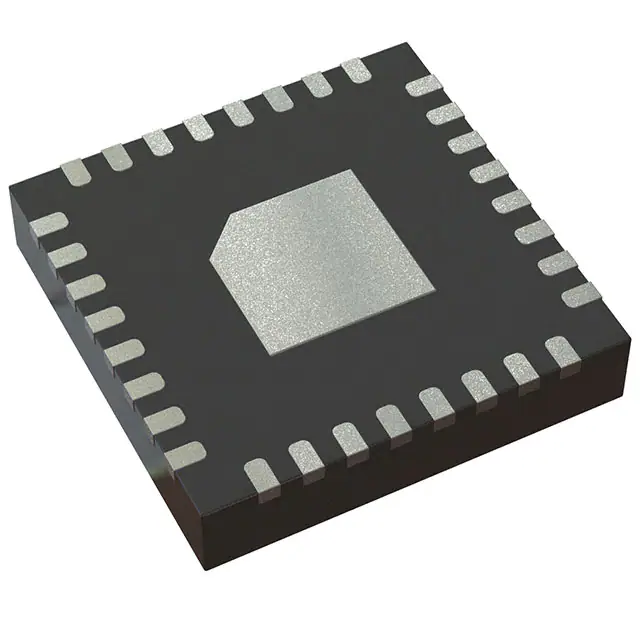
Texas Instruments THS6226IRHBR
- Part No.:
- THS6226IRHBR
- Manufacturer:
- Texas Instruments
- Category:
- Telecom
- Package:
- 32-VFQFN Exposed Pad
- Datasheet:
-
 THS6226IRHBR.pdf
- Description:
- IC TELECOM INTERFACE 32VQFN
- Quantity:
- Payment:

- Shipping:

Inventory:3,871
Please send an inquiry. Send us your inquiry, and we will respond immediately.
Product details
Overview
THS6226IRHBR from Texas Instruments is a dual-port, gated-class H, current-feedback differential line driver IC designed for VDSL2 systems. It delivers up to +20.5 dBm line power (8.5 MHz), supports G.993.2 Profile 8b, achieves –91 dBc HD3 at 1 MHz (60 Ω differential), and provides digitally adjustable quiescent current (7.6–23.0 mA per port) for dynamic power optimization in DSL central office and remote terminal applications.
For engineers reviewing the THS6226IRHBR datasheet, THS6226IRHBR pinout, THS6226IRHBR application, or THS6226IRHBR equivalent, key selection criteria include its class H voltage boost capability (±5.5 V to ±17.5 V swing), 125 MHz bandwidth, 90 dB port-to-port separation, programmable bias via 2-pin serial interface, and QFN-32 PowerPAD™ thermal performance.
Technical Context
The THS6226IRHBR implements two independent class H amplifier channels (AB and CD), each with integrated charge-pump voltage boost circuitry enabling output swings beyond the +12 V supply rail-up to ±17.5 V differential under full capacitor charge. Its current-feedback architecture delivers wide bandwidth (125 MHz) and fast slew rate (1500 V/μs) while maintaining low distortion across VDSL2 frequency bands.
Digital bias control (B6–B9 bits) sets per-port quiescent current in 1.0 mA steps from 7.6 mA to 23.0 mA, supporting profile-specific power scaling (e.g., ADSL2+ at 7.6 mA, Profile 30a at 23.0 mA). Independent enable/disable of class H mode (VH_ENAB/VH_ENCD) and line termination mode (B4/B5 = 00/01) allows granular power-state management without external components.
Key Specifications
| Parameter | Value and Actual Design Meaning |
|---|---|
| Supply Voltage | +12 V nominal; class H operation supports up to +12.5 V max for boosted output swing |
| Output Swing | 40 VPP differential into 60 Ω with 1:1.4 transformer and fully charged capacitors |
| Bandwidth | 125 MHz (–3 dB), enabling support for VDSL2 up to 30 MHz and G.993.2 Profile 8b |
| Harmonic Distortion | –91 dBc HD3 at 1 MHz, –75 dBc HD3 at 5 MHz (full bias, 60 Ω differential) |
| Quiescent Current | Digitally adjustable 7.6–23.0 mA per port in 1.0 mA steps; line termination mode draws 4.4 mA/port |
| Port Separation | 90 dB at 1 MHz, minimizing crosstalk between dual VDSL2 ports |
| PSRR | 70 dB at 1 MHz, ensuring robust immunity to supply noise in noisy DSL line card environments |
Pinout & Package
The THS6226IRHBR is housed in a thermally enhanced VQFN-32 (RHB) package with an exposed PowerPAD™ on the underside, requiring solder connection to a PCB thermal plane for reliable operation at full output power.
| Pin/Terminal | Circuit Role | Design Meaning |
|---|---|---|
| GND (Pins 1, 8, 12, 29) | Analog ground reference | Four dedicated analog ground pins minimize ground bounce and ensure stable biasing for dual amplifiers |
| INA/INB/INC/IND (Pins 7, 6, 3, 2) | Differential input pairs | Accept balanced xDSL signal inputs for AB and CD amplifier channels |
| OUTA/OUTB/OUTC/OUTD (Pins 17, 20, 21, 24) | Differential output drivers | Drive transformer-coupled DSL lines with class H boosted voltage swing |
| VH_ENAB/VH_ENCD (Pins 9, 32) | Class H enable control | Independent digital control of charge-pump activation per port |
| CLK/DATA (Pins 5, 4) | 2-wire serial programming interface | Configure bias current, power-down mode, and channel selection without external MCU |
| VLL_AB/VHH_AB/CAPL_AB/CAPH_AB (Pins 10, 16, 11, 15) | Class H pump supply and capacitor terminals | Support external 33 nF charge-pump capacitors per channel for rail extension |
Key Features
| Feature | Design Value |
|---|---|
| Dual independent class H ports | Enables simultaneous operation of two VDSL2 lines with separate bias and enable control |
| Digitally adjustable quiescent current | 16-step (7.6–23.0 mA/port) programming via B6–B9 bits optimizes power vs. line length/performance |
| Integrated mid-supply buffer | Eliminates need for external bias networks, simplifying layout and reducing component count |
| Active output impedance control | FB_A/FB_B/FB_C/FB_D pins enable precise 100 Ω line matching through transformer-coupled feedback |
| Low-power line termination mode | 4.4 mA/port draw maintains impedance match during idle periods, reducing system standby power |
Applications
| VDSL2 Central Office Line Card | VDSL2 Remote Terminal Unit |
|---|---|
Use Scenario: High-density DSLAM with multiple VDSL2 ports operating at G.993.2 Profiles 8b/17a/30a over varying loop lengths. IC Role / Device Role / Timing Role: Dual-port line driver providing class H boosted output swing and programmable bias to meet spectral mask and power requirements per profile. Use Value: Enables single-chip dual-port implementation with 90 dB isolation, reducing board area and inter-channel interference versus discrete solutions. | Use Scenario: Compact street cabinet RTU serving short-loop VDSL2 subscribers with strict thermal and power constraints. IC Role / Device Role / Timing Role: Differential line driver delivering +19.8 dBm output power at 5 MHz while operating from +12 V supply with minimal heatsinking. Use Value: Achieves >70 dB MTPR with –91 dBc HD3 at 1 MHz, meeting G.993.2 linearity specs without external linearization circuitry. |
| ADSL2+/ADSL2++ Backward Compatibility | Multi-Profile xDSL Test Equipment |
Use Scenario: Legacy DSL infrastructure upgrade where new line cards must support older ADSL2+ services alongside VDSL2. IC Role / Device Role / Timing Role: Programmable line driver configured for low-bias ADSL2+ mode (7.6 mA/port) while retaining full VDSL2 capability. Use Value: Single hardware design supports multiple DSL standards via firmware-controlled bias settings, lowering inventory and qualification costs. | Use Scenario: Automated test platform validating line driver performance across G.993.2 profiles, frequencies, and load conditions. IC Role / Device Role / Timing Role: Reference-grade differential driver with known distortion, bandwidth, and output swing characteristics for calibration and benchmarking. Use Value: Provides traceable 125 MHz bandwidth and <2.8 ns rise time for accurate high-frequency signal generation and measurement. |
Equivalent & Alternatives
The following parts are listed as comparable options for similar dual-port DSL line driver applications.
| Alternative Part | Technical Difference | Application Difference | Selection Advice |
|---|---|---|---|
| THS6216IRHBR | Single-port version; identical bias control, bandwidth (125 MHz), and class H architecture but half the channel count | Suitable only for single-line DSLAM modules or cost-sensitive designs where dual-port integration is unnecessary | Select when board space or channel density permits use of two single-port devices instead of one dual-port |
| LMH6882EVM | Evaluation module for LMH6882 - a wideband RF VGA with 3.5 GHz bandwidth, not a class H line driver; no integrated charge pump or DSL-specific bias modes | Used for broadband signal generation or lab characterization, not production DSL line driving | Choose only for bench evaluation of high-speed analog paths-not as a functional replacement for THS6226IRHBR in VDSL2 systems |
Compared with THS6226IRHBR, THS6216IRHBR offers identical per-port performance but requires two units for dual-line operation, increasing BOM count and layout complexity; LMH6882EVM serves only as a development tool and lacks the integrated class H architecture, programmable bias, and DSL-optimized distortion performance required for production line cards.
Availability
THS6226IRHBR is available at Aetrix Electronics and suitable for VDSL2 central office line cards, remote terminal units, ADSL2+ backward-compatible DSLAMs, and multi-profile xDSL test equipment requiring stable component supply and long-term industrial availability.
Supply support for THS6226IRHBR includes scheduled delivery planning, volume procurement assistance, BOM continuity management, traceable sourcing, and lifecycle availability coordination for OEM customers, industrial embedded developers, connected-device designers, and electronics production programs.
Manufacturer
Texas Instruments is a global semiconductor leader specializing in analog, embedded processing, and connectivity technologies, with decades of expertise in high-performance signal chain and power management solutions.
The THS6226IRHBR belongs to TI's high-speed line driver product line, engineered specifically for xDSL infrastructure applications demanding high linearity, programmable power efficiency, and robust thermal performance in space-constrained line cards.
FAQ
What is the maximum output power capability of the THS6226IRHBR in VDSL2 applications?
The THS6226IRHBR delivers up to +20.5 dBm line power into a 100 Ω differential load (via 1:1.4 transformer) at 8.5 MHz under G.993.2 Profile 8b conditions. This is achieved using class H operation with fully charged external 33 nF pump capacitors and +12 V supply. The THS6226IRHBR maintains >70 dB MTPR and –91 dBc HD3 at 1 MHz, meeting stringent VDSL2 spectral mask requirements.
How does the THS6226IRHBR achieve class H voltage boosting without external DC-DC converters?
The THS6226IRHBR integrates on-die charge-pump circuitry controlled by VH_ENAB and VH_ENCD pins. External 33 nF capacitors (CAPL_AB/CAPH_AB and CAPL_CD/CAPH_CD) store energy from the +12 V supply, allowing transient output voltage excursions up to ±17.5 V differential-exceeding the supply rails. This eliminates need for external boost converters while maintaining fast transient response essential for VDSL2 multi-tone signals.
Can the THS6226IRHBR be used in ADSL2+ systems, and what configuration is required?
Yes, the THS6226IRHBR is backward-compatible with ADSL2+ systems. Configure it in low-bias mode (B6–B9 = 0000) for 7.6 mA/port quiescent current, disable class H (VH_ENAB/VH_ENCD = low), and operate in class AB mode. This yields +14.5 dBm line power up to 30 MHz with reduced power consumption-ideal for shorter loops where full VDSL2 performance is unnecessary. The THS6226IRHBR maintains all ADSL2+ spectral compliance in this mode.
What thermal management is required for the THS6226IRHBR in continuous full-power operation?
The THS6226IRHBR uses a VQFN-32 PowerPAD™ package requiring solder connection of the exposed thermal pad to a large internal copper plane. With θJB = 7.0 °C/W, sustained 10.2 W dissipation (per datasheet thermal info) demands ≥4 cm² of 2-oz copper connected via ≥8 thermal vias to inner layers. Ambient temperature must remain ≤+85°C; junction temperature must stay below +130°C for long-term reliability. Thermal simulation is recommended for high-density line card layouts.
How is the THS6226IRHBR's 2-wire serial interface programmed, and what parameters can be set?
The THS6226IRHBR uses CLK (Pin 5) and DATA (Pin 4) for asynchronous serial programming. A 12-bit word configures channel select (B2/B3), power-down mode (B4/B5), quiescent current (B6–B9), parity (B10), and stop bit (B11). This enables real-time adjustment of per-port bias current (7.6–23.0 mA), class H enable/disable, line termination mode, and independent channel control-all without external microcontroller intervention during system operation.
THS6226IRHBR Specifications
- Product attributes
- Attribute value
- Manufacturer:
- Texas Instruments
- Series:
- -
- Package/Case:
- 32-VFQFN Exposed Pad
- Packaging:
- Tape & Reel (TR)
- Product Status:
- Obsolete
- Function:
- VDSL2 Line Driver Amplifier
- Interface:
- Serial
- Number of Circuits:
- 2
- Voltage - Supply:
- 10V ~ 12.5V
- Current - Supply:
- 23.5mA
- Power (Watts):
- -
- Operating Temperature:
- -40°C ~ 85°C
- Grade:
- -
- Qualification:
- -
- Mounting Type:
- Surface Mount
- Supplier Device Package:
- 32-VQFN (5x5)
THS6226IRHBR FAQ
1.How can I place an order for THS6226IRHBR through Aetrix?
Please submit a Request for Quotation (RFQ) for THS6226IRHBR on Aetrix. Our sales agent will provide a competitive quotation and guide you through the order confirmation once you accept the terms.
2.Are the price and stock information for THS6226IRHBR reliable?
The price and inventory of THS6226IRHBR are updated periodically and may fluctuate due to market conditions. Stock and pricing data are typically refreshed every 24 hours. Quotation validity for THS6226IRHBR is usually 5 days.
3.What payment methods are accepted for THS6226IRHBR?
We accept Wire Transfer, PayPal, Credit Card, Western Union, MoneyGram, and Escrow for THS6226IRHBR transactions.
Note: Certain payment methods may incur a processing fee.
4.How is shipping managed for THS6226IRHBR?
THS6226IRHBR orders can be shipped via leading logistics carriers, including DHL, UPS, FedEx, TNT, or Registered Mail.
Once your THS6226IRHBR order is processed, you will receive an email with the shipment details and tracking number.
Note: Tracking information may take up to 24 hours to appear. Express delivery typically takes 3–5 business days.
5.How can I obtain technical support or documentation for THS6226IRHBR?
For technical support, including THS6226IRHBR datasheets, pinout diagrams, or application guidance, please contact our engineering support team. They can provide detailed documentation and assistance for your THS6226IRHBR requirements.
6.How does Aetrix verify that THS6226IRHBR is sourced from the original manufacturer or authorized distributors?
All THS6226IRHBR products on Aetrix are procured from qualified distributors and authorized channels. Our dedicated quality assurance team conducts strict verification, including traceability checks and, if necessary, third-party testing. This ensures that THS6226IRHBR meets industry standards.
7.What is the process for return or replacement of THS6226IRHBR?
All THS6226IRHBR units undergo pre-shipment inspection (PSI). If there is an issue with THS6226IRHBR, returns or replacements are accepted under the following conditions:
1.Quantity discrepancies, incorrect items, or visible external defects (such as breakage or corrosion), acknowledged by Aetrix.
2.The issue is reported within 90 days of delivery.
3.The THS6226IRHBR part is unused and in its original packaging.
Return procedure for THS6226IRHBR:
1.Submit a request within 90 days.
2.Obtain a Return Material Authorization (RMA) from Aetrix.
THS6226IRHBR Tags

-
LMC567CMX/NOPB
Texas Instruments
-
LM567CMX/NOPB
Texas Instruments
-
LM567CM/NOPB
Texas Instruments
-
VSC8531XMW-02
Microchip Technology
-
VSC8531XMW-05
Microchip Technology

-
GPY115C0VI
MaxLinear, Inc.
-
SI32185-A-FMR
Skyworks Solutions Inc.
-
VSC8541XMV-05
Microchip Technology
-
SI32178-B-FM1R
Skyworks Solutions Inc.
-
GPY215C0VI
MaxLinear, Inc.
-
CPC7514ZTR
Littelfuse Inc.
-
VSC8502XML-03
Microchip Technology
Tech Hub

A practical engineering guide to 3.3V and 5V logic compatibility, input thresholds, resistor dividers, translator ICs, MOSFET level shifting, I2C pull-ups, timing limits and power-sequencing risks.

The 74HC595 uses push-pull logic outputs, while the TPIC6B595 uses 50 V open-drain DMOS sinks for higher-power loads. This guide compares timing, current limits, 3.3 V interfacing, load wiring, thermal…

The 74HC595 converts serial data into eight stable parallel outputs. This guide covers pin functions, shift and storage timing, OE and MR behavior, drive-current limits, cascading, voltage compatibilit…

A technical comparison of level-sensitive latches and edge-triggered flip-flops, covering timing windows, setup and hold limits, master–slave operation, time borrowing, race-through, HDL inference and…

A D latch stores one bit while Enable controls when data can pass. This reference covers gate-level operation, truth tables, transparency, setup and hold timing, LE versus OE, common ICs and practical …

An SR latch stores one bit through cross-coupled feedback. This engineering reference covers NOR and NAND implementations, truth tables, forbidden-state recovery, gated operation, switch debouncing, fa…

Latch circuits retain one bit through feedback. This technical reference covers SR and D latches, truth tables, transparency, timing limits, latch-versus-flip-flop behavior, applications and common log…

An engineering guide to LED driver operation, constant-current and constant-voltage outputs, linear and switching topologies, dimming, IC selection, calculations, replacement compatibility, and fault c…

Operational amplifier guide covering op amp basics, feedback, ideal vs real op amps, common configurations, buffer circuits, offset, bias current, gain-bandwidth, slew rate, rail-to-rail limits and sel…

Jumper cables guide covering safe connection order, red and black clamp placement, final ground connection, cable gauge, length, clamp quality, copper vs CCA cables, jump starter comparison and battery…


