
 My Inquiry
 My Account


Texas Instruments THVD1450DGKR
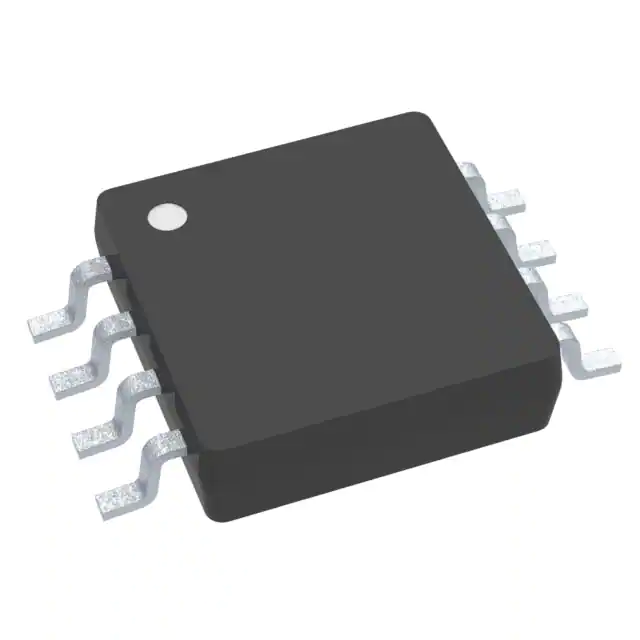
- Part No.:
- THVD1450DGKR
- Manufacturer:
- Texas Instruments
- Category:
- Drivers, Receivers, Transceivers
- Package:
- 8-TSSOP, 8-MSOP (0.118", 3.00mm Width)
- Datasheet:
-
 THVD1450DGKR.pdf
- Description:
- IC TRANSCEIVER HALF 1/1 8VSSOP
- Quantity:
- Payment:

- Shipping:

Inventory:14,480
Please send an inquiry. Send us your inquiry, and we will respond immediately.
Product details
Overview
THVD1450DGKR from Texas Instruments is a half-duplex RS-485 transceiver in VSSOP-8 package, operating from 3.3 V to 5.5 V supply, supporting up to 50 Mbps data rate, ±15 V extended common-mode range, and ±18 kV IEC 61000-4-2 contact ESD protection on bus pins-designed for robust industrial communication in motor drives and factory automation.
For engineers reviewing the THVD1450DGKR datasheet, THVD1450DGKR pinout, THVD1450DGKR application, or THVD1450DGKR equivalent, key selection criteria include its 50 Mbps signaling capability, low 1 µA standby current, PROFIBUS-compatible differential output (>2.1 V at 5 V), fail-safe receiver behavior, and compatibility with long-cable multi-point networks under harsh EMI/ESD conditions.
Technical Context
The THVD1450DGKR implements a half-duplex RS-485 interface with separate driver enable (DE, active-high, 2-MΩ internal pull-down) and receiver enable (RE, active-low, 2-MΩ internal pull-up), enabling precise control of bus directionality. Its driver delivers ≥2.1 V differential output into 54 Ω under 5 V supply, meeting PROFIBUS Class 3 requirements.
It features large receiver hysteresis (30 mV), open/short/idle bus failsafe, and thermal shutdown at 170°C. The device operates across –40°C to +125°C ambient temperature and supports hot-plug operation with glitch-free power-up/down sequencing.
Key Specifications
| Parameter | Value and Actual Design Meaning |
|---|---|
| Supply Voltage | 3.3 V to 5.5 V - enables direct interfacing with both 3.3-V and 5-V logic systems without level-shifting. |
| Max Data Rate | 50 Mbps - supports high-speed industrial Ethernet backbones, real-time motion control, and fast sensor aggregation. |
| Differential Output (VOD) | ≥2.1 V (min) at 5 V supply, RL = 54 Ω - ensures reliable PROFIBUS Class 3 compliance and noise margin over long cables. |
| Common-Mode Range | ±15 V - allows stable operation in electrically noisy environments with ground potential differences across nodes. |
| ESD Protection | ±18 kV IEC 61000-4-2 contact discharge on bus pins - eliminates need for external TVS diodes in most industrial installations. |
| Standby Current | <1 µA - enables ultra-low-power sleep modes in battery-backed or energy-harvested remote nodes. |
| Operating Temperature | –40°C to +125°C - qualified for under-hood automotive, motor drive cabinets, and outdoor grid infrastructure. |
Pinout & Package
VSSOP-8 (DGK) package: 3.00 mm × 3.00 mm, 0.65 mm pitch, exposed thermal pad (internally unconnected, recommended tied to GND).
| Pin | Circuit Role | Design Meaning |
|---|---|---|
| A | Bus I/O (complementary) | Differential bus terminal; paired with B to form RS-485 A/B differential pair; must be routed as matched-length controlled-impedance trace. |
| B | Bus I/O (complementary) | Differential bus terminal; complementary to A; defines polarity per TIA/EIA-485A standard (B low / A high = logic 1). |
| D | Driver Input | CMOS-level digital input controlling driver output state; accepts 0 V to VCC; no external pull required. |
| DE | Driver Enable (active-high) | Enables driver output when high; internal 2-MΩ pull-down ensures driver disabled on power-up/reset; critical for bus arbitration. |
| GND | Ground Reference | Analog/digital ground reference for all internal circuitry; thermal pad must be connected to PCB ground plane for thermal performance. |
| R | Receiver Output | CMOS-level digital output reflecting bus state; high-impedance when RE = high; drives standard logic loads (≤8 mA). |
| VCC | Power Supply | Single 3.3–5.5 V supply powering both driver and receiver; bypass capacitor (0.1 µF) required near pin. |
| RE | Receiver Enable (active-low) | Enables receiver output when low; internal 2-MΩ pull-up ensures receiver enabled on power-up; controls listen-only mode. |
Key Features
| Feature | Design Value |
|---|---|
| PROFIBUS-compliant VOD | Guarantees ≥2.1 V differential output at 5 V supply into 54 Ω, satisfying IEC 61158-2 Class 3 for deterministic fieldbus operation. |
| Failsafe receiver | Outputs logic high during open, shorted, or idle bus conditions-prevents undefined states and spurious interrupts in multi-drop networks. |
| Hot-plug capable | Glitch-free power-up/down sequencing prevents bus contention or false edges during live insertion/removal in modular PLC backplanes. |
| 1/8 unit load | Supports up to 256 nodes on a single RS-485 bus segment-enables large-scale distributed I/O without repeaters. |
| Low EMI driver | Controlled 1–6 ns rise/fall times (50 Mbps mode) minimize harmonic content and radiated emissions in EMC-sensitive environments. |
Applications
| Motor Drive Communication | Factory Automation Network |
|---|---|
|
Use Scenario: Bidirectional command and status exchange between PLC and servo/inverter drives over 100+ meter twisted-pair cabling in electrically noisy factory floors. IC Role / Device Role / Timing Role: Half-duplex RS-485 transceiver providing galvanically isolated physical layer interface with ±15 V common-mode tolerance and 50 Mbps timing headroom. Use Value: Enables deterministic cycle times (<100 µs propagation delay) and immunity to ground loops and EFT bursts common in VFD-rich environments. |
Use Scenario: Multi-node sensor/actuator network in programmable logic controller (PLC) racks, where space-constrained VSSOP packaging reduces board area by 40% vs SOIC. IC Role / Device Role / Timing Role: Physical-layer transceiver managing bus arbitration via DE/RE control, supporting up to 256 nodes with 1/8 unit load scalability. Use Value: Eliminates external ESD protection components (±18 kV IEC contact), reducing BOM cost and layout complexity while maintaining IEC 61000-4-2 compliance. |
| Grid Infrastructure Monitoring | HVAC System Control |
|
Use Scenario: Remote telemetry from substation RTUs and smart meters using long-distance RS-485 links exposed to lightning-induced surges and wide ambient temperature swings. IC Role / Device Role / Timing Role: Robust bus interface IC with thermal shutdown (170°C), –40°C to +125°C operation, and ±25 kV IEC air-gap ESD rating. Use Value: Ensures uninterrupted communication during extreme thermal cycling and transient events-reducing field failure rates in unattended outdoor deployments. |
Use Scenario: Centralized HVAC controller communicating with distributed zone sensors, dampers, and chillers across commercial buildings using daisy-chained RS-485 wiring. IC Role / Device Role / Timing Role: Low-power half-duplex transceiver enabling <1 µA standby current during non-scheduled polling intervals to extend battery life in wireless gateways. Use Value: Supports energy-efficient polling architecture while maintaining failsafe logic-high output during cable disconnects-preventing system lockup or false alarms. |
Equivalent & Alternatives
The following parts are listed as comparable options for similar RS-485 transceiver applications.
| Alternative Part | Technical Difference | Application Difference | Selection Advice |
|---|---|---|---|
| THVD1410DR | Slower max rate (500 kbps), same VSSOP-8 package, identical pinout and enable logic-but lacks PROFIBUS VOD guarantee and has higher propagation delay (250–500 ns). | Suitable for legacy Modbus RTU or low-speed sensor networks where timing budget exceeds 500 ns and ESD is less severe. | Select THVD1410DR only if data rate ≤500 kbps and cost sensitivity outweighs need for 50 Mbps headroom or PROFIBUS compliance. |
| MAX13487EASA+ | Pin-compatible VSSOP-8, 16 Mbps max rate, ±35 kV HBM ESD, but no IEC 61000-4-2 rating and narrower common-mode (±12 V). | Preferred in medical or lab equipment where HBM dominates threat model, but unsuitable for industrial ESD/EMI environments requiring IEC certification. | Choose MAX13487EASA+ only when HBM robustness is primary concern and IEC 61000-4-2 compliance is not mandated by end-equipment standards. |
Compared with THVD1410DR and MAX13487EASA+, THVD1450DGKR uniquely delivers 50 Mbps speed with guaranteed PROFIBUS VOD, ±18 kV IEC contact ESD, and ±15 V common-mode range-making it the only option among the three qualified for high-speed, safety-critical industrial fieldbus deployments.
Availability
THVD1450DGKR is available at Aetrix Electronics and suitable for motor drives, factory automation networks, and grid infrastructure monitoring requiring stable component supply, long-term industrial lifecycle support, and guaranteed RS-485 interoperability.
Supply support for THVD1450DGKR includes scheduled delivery planning, volume procurement assistance, BOM continuity management, traceable sourcing, and lifecycle availability coordination for OEM customers, industrial embedded developers, connected-device designers, and electronics production programs.
Manufacturer
Texas Instruments is a global semiconductor leader specializing in analog, embedded processing, and connectivity solutions for industrial, automotive, and communications markets.
The THVD14xx family was designed specifically for rugged RS-485/RS-422 communication in harsh industrial environments-emphasizing ESD resilience, wide temperature operation, and PROFIBUS compatibility without external protection components.
FAQ
What is the maximum data rate supported by THVD1450DGKR?
The THVD1450DGKR supports up to 50 Mbps signaling rate under recommended operating conditions (VCC = 5 V, RL = 54 Ω, CL = 50 pF). This is verified in Section 7.8 of the official TI datasheet SLLSEY3E, with typical rise/fall times of 1–6 ns and propagation delay of 3–20 ns. THVD1450DGKR achieves this while maintaining ESD robustness and failsafe operation-unlike slower variants such as THVD1410DR.
Does THVD1450DGKR require external ESD protection on the bus lines?
No, THVD1450DGKR does not require external ESD protection on bus pins A and B. It integrates ±18 kV IEC 61000-4-2 contact discharge and ±25 kV air-gap ESD protection directly on the bus I/Os, as confirmed in Sections 7.2 and 7.3 of the TI datasheet. This eliminates TVS diodes in most industrial designs, reducing BOM count and PCB area-provided system-level surge requirements (e.g., IEC 61000-4-5) are handled separately.
What is the function of the thermal pad on the THVD1450DGKR VSSOP package?
THVD1450DGKR's VSSOP-8 package includes an exposed thermal pad with no electrical connection. Per TI's Pin Configuration documentation (Section 6), it must be soldered to a PCB ground plane to optimize thermal performance-reducing junction-to-board thermal resistance to 42.5°C/W. Failure to connect the pad may cause thermal shutdown (TSD = 170°C) under sustained 50 Mbps operation at high ambient temperatures.
How does THVD1450DGKR handle bus idle, open, or short conditions?
THVD1450DGKR implements true failsafe receiver behavior: its R output goes high during bus idle, open-circuit, or short-circuit (A-B ≈ 0 V) conditions. This is achieved via internal biasing and 30 mV hysteresis (Section 7.7), ensuring deterministic logic-high output without external resistors. This prevents spurious interrupts in multi-drop networks where bus termination may be dynamically enabled/disabled.
Is THVD1450DGKR pin-compatible with THVD1410DR?
Yes, THVD1450DGKR and THVD1410DR share identical VSSOP-8 (DGK) pinout, supply voltage range (3.3–5.5 V), enable logic (DE active-high, RE active-low), and functional block diagram. However, THVD1450DGKR delivers 50 Mbps vs THVD1410DR's 500 kbps, and guarantees ≥2.1 V VOD for PROFIBUS-making it a performance upgrade with no PCB changes required.
THVD1450DGKR Specifications
- Product attributes
- Attribute value
- Manufacturer:
- Texas Instruments
- Series:
- -
- Package/Case:
- 8-TSSOP, 8-MSOP (0.118", 3.00mm Width)
- Packaging:
- Tape & Reel (TR)
- Product Status:
- Active
- Type:
- Transceiver
- Protocol:
- RS485
- Number of Drivers/Receivers:
- 1/1
- Duplex:
- Half
- Receiver Hysteresis:
- 30 mV
- Data Rate:
- 50Mbps
- Voltage - Supply:
- 3V ~ 5.5V
- Operating Temperature:
- -40°C ~ 125°C (TA)
- Grade:
- -
- Qualification:
- -
- Mounting Type:
- Surface Mount
- Supplier Device Package:
- 8-VSSOP
THVD1450DGKR FAQ
1.How can I place an order for THVD1450DGKR through Aetrix?
Please submit a Request for Quotation (RFQ) for THVD1450DGKR on Aetrix. Our sales agent will provide a competitive quotation and guide you through the order confirmation once you accept the terms.
2.Are the price and stock information for THVD1450DGKR reliable?
The price and inventory of THVD1450DGKR are updated periodically and may fluctuate due to market conditions. Stock and pricing data are typically refreshed every 24 hours. Quotation validity for THVD1450DGKR is usually 5 days.
3.What payment methods are accepted for THVD1450DGKR?
We accept Wire Transfer, PayPal, Credit Card, Western Union, MoneyGram, and Escrow for THVD1450DGKR transactions.
Note: Certain payment methods may incur a processing fee.
4.How is shipping managed for THVD1450DGKR?
THVD1450DGKR orders can be shipped via leading logistics carriers, including DHL, UPS, FedEx, TNT, or Registered Mail.
Once your THVD1450DGKR order is processed, you will receive an email with the shipment details and tracking number.
Note: Tracking information may take up to 24 hours to appear. Express delivery typically takes 3–5 business days.
5.How can I obtain technical support or documentation for THVD1450DGKR?
For technical support, including THVD1450DGKR datasheets, pinout diagrams, or application guidance, please contact our engineering support team. They can provide detailed documentation and assistance for your THVD1450DGKR requirements.
6.How does Aetrix verify that THVD1450DGKR is sourced from the original manufacturer or authorized distributors?
All THVD1450DGKR products on Aetrix are procured from qualified distributors and authorized channels. Our dedicated quality assurance team conducts strict verification, including traceability checks and, if necessary, third-party testing. This ensures that THVD1450DGKR meets industry standards.
7.What is the process for return or replacement of THVD1450DGKR?
All THVD1450DGKR units undergo pre-shipment inspection (PSI). If there is an issue with THVD1450DGKR, returns or replacements are accepted under the following conditions:
1.Quantity discrepancies, incorrect items, or visible external defects (such as breakage or corrosion), acknowledged by Aetrix.
2.The issue is reported within 90 days of delivery.
3.The THVD1450DGKR part is unused and in its original packaging.
Return procedure for THVD1450DGKR:
1.Submit a request within 90 days.
2.Obtain a Return Material Authorization (RMA) from Aetrix.
THVD1450DGKR Tags

-
ATA6561-GAQW-N
Microchip Technology
-
ATA6561-GBQW-N
Microchip Technology
-
AM26LS32ACDR
Texas Instruments

-
SP485CN-L/TR
MaxLinear, Inc.
-
SP485EN-L/TR
MaxLinear, Inc.
-
SP485EEN-L/TR
MaxLinear, Inc.
-
SP485ECN-L/TR
MaxLinear, Inc.
-
THVD1400DR
Texas Instruments
-
AM26C31IDR
Texas Instruments

-
TLIN1021ADRQ1
Texas Instruments
-
MAX232IDR
Texas Instruments
-
AM26C32IDR
Texas Instruments
Tech Hub

A practical engineering guide to 3.3V and 5V logic compatibility, input thresholds, resistor dividers, translator ICs, MOSFET level shifting, I2C pull-ups, timing limits and power-sequencing risks.

The 74HC595 uses push-pull logic outputs, while the TPIC6B595 uses 50 V open-drain DMOS sinks for higher-power loads. This guide compares timing, current limits, 3.3 V interfacing, load wiring, thermal…

The 74HC595 converts serial data into eight stable parallel outputs. This guide covers pin functions, shift and storage timing, OE and MR behavior, drive-current limits, cascading, voltage compatibilit…

A technical comparison of level-sensitive latches and edge-triggered flip-flops, covering timing windows, setup and hold limits, master–slave operation, time borrowing, race-through, HDL inference and…

A D latch stores one bit while Enable controls when data can pass. This reference covers gate-level operation, truth tables, transparency, setup and hold timing, LE versus OE, common ICs and practical …

An SR latch stores one bit through cross-coupled feedback. This engineering reference covers NOR and NAND implementations, truth tables, forbidden-state recovery, gated operation, switch debouncing, fa…

Latch circuits retain one bit through feedback. This technical reference covers SR and D latches, truth tables, transparency, timing limits, latch-versus-flip-flop behavior, applications and common log…

An engineering guide to LED driver operation, constant-current and constant-voltage outputs, linear and switching topologies, dimming, IC selection, calculations, replacement compatibility, and fault c…

Operational amplifier guide covering op amp basics, feedback, ideal vs real op amps, common configurations, buffer circuits, offset, bias current, gain-bandwidth, slew rate, rail-to-rail limits and sel…

Jumper cables guide covering safe connection order, red and black clamp placement, final ground connection, cable gauge, length, clamp quality, copper vs CCA cables, jump starter comparison and battery…


