
 My Inquiry
 My Account


Texas Instruments TIC10024QDCPRQ1
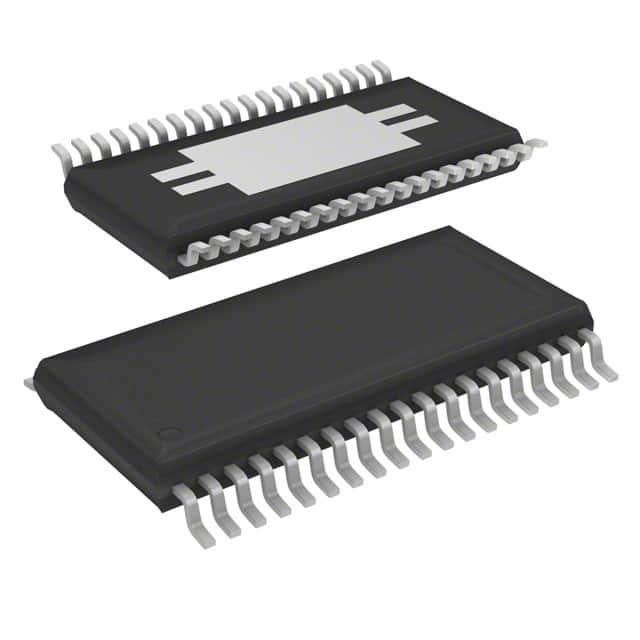
- Part No.:
- TIC10024QDCPRQ1
- Manufacturer:
- Texas Instruments
- Category:
- Specialized
- Package:
- 38-PowerTFSOP (0.173", 4.40mm Width)
- Datasheet:
-
 TIC10024QDCPRQ1.pdf
- Description:
- IC INTFACE SPECIALIZED 38HTSSOP
- Quantity:
- Payment:

- Shipping:

Inventory:3,922
Please send an inquiry. Send us your inquiry, and we will respond immediately.
Product details
Overview
TIC10024QDCPRQ1 from Texas Instruments is an AEC-Q100 Grade 1 (–40°C to 125°C) automotive Multiple Switch Detection Interface (MSDI) IC that monitors up to 24 mechanical switch inputs in 12-V systems, supports 6 programmable wetting currents (0–15 mA), delivers ultra-low 68 μA polling-mode supply current, and interfaces directly to MCU via 3.3 V/5 V SPI - used in body control modules for reliable, low-power switch status reporting.
For engineers reviewing the TIC10024QDCPRQ1 datasheet, TIC10024QDCPRQ1 pinout, TIC10024QDCPRQ1 application, or TIC10024QDCPRQ1 equivalent, key selection criteria include wetting current configurability per input, ±24 V reverse-polarity tolerance, integrated comparator with four programmable thresholds, ISO-10605 ±8 kV ESD protection on inputs, and support for wake-up interrupt generation across all 24 channels.
Technical Context
The TIC10024QDCPRQ1 implements dual operational modes: continuous wetting current delivery for real-time monitoring and low-duty-cycle polling mode (64 ms interval, 128 μs active window) to reduce system power consumption. Its architecture integrates a pre-regulator, analog/digital LDOs, and independent current sources/sinks per input channel, enabling flexible ground- or battery-referenced switch detection.
It features a fully programmable SPI interface (up to 4 MHz) with CRC-enabled register access, hardware reset via dedicated /RESET pin, and fault detection logic for over-voltage (35–40 V), under-voltage (3.7–4.5 V), and over-temperature events - all signaled via open-drain /INT output with configurable assertion timing (1.5–2.5 ms).
Key Specifications
| Parameter | Value and Actual Design Meaning |
|---|---|
| Input count | 24 total switch inputs: 14 fixed ground-referenced + 10 configurable for ground or battery reference |
| Wetting current range | 6 settings: 0 mA, 1 mA, 2 mA, 5 mA, 10 mA, 15 mA - programmable per input to accommodate contact resistance and contamination |
| Supply voltage range | VS = 4.5 V to 35 V - supports 12-V automotive systems including load dump (40 V) and reverse polarity (–24 V) |
| Quiescent current | 68 μA typical in polling mode (tPOLL = 64 ms, all 24 inputs active, comparator enabled, switches open) |
| SPI interface | 3.3 V / 5 V compatible, up to 4 MHz clock rate, with /CS, SCLK, SI, SO, and /INT signals |
| ESD protection | ±8 kV contact discharge per ISO-10605 on IN0–IN23 pins (with external 15 nF/10 Ω network) |
| Operating temperature | AEC-Q100 Grade 1: –40°C to +125°C ambient - qualified for under-hood and cabin applications |
Pinout & Package
38-pin TSSOP package (9.70 mm × 4.40 mm), thermally enhanced with exposed pad (EP) connected to PCB ground for optimal thermal and ESD performance. Pin functions validated per TI SCPS268A datasheet Rev. FEBRUARY 2022.
| Pin/Terminal | Circuit Role | Design Meaning |
|---|---|---|
| IN0–IN23 | Configurable switch input | I/O pins supporting wetting current sink/source; 10 inputs programmable for GND or VBAT reference |
| /CS, SCLK, SI, SO | SPI interface | Standard 4-wire SPI bus; /CS active-low enables communication; SO is open-drain capable |
| /INT | Interrupt output | Open-drain signal asserted low on switch state change or fault (OV/UV/TSD); requires external pull-up |
| VS (pins 37, 38) | Main power supply | Dual VS pins reduce IR drop and improve current handling for 4.5–35 V automotive battery rail |
| VDD (pin 19) | Logic supply | 3.0–5.5 V supply setting SPI I/O voltage levels; removal disables SPI but preserves register state |
| RESET (pin 21) | Hardware reset | Pulled low by internal 1 MΩ resistor; driven high ≥2 μs to perform full device reset |
| CAP_PRE, CAP_A, CAP_D | External capacitor nodes | 1 μF on CAP_PRE; 100 nF on CAP_A and CAP_D - required for pre-regulator and analog/digital LDO stability |
Key Features
| Feature | Design Value |
|---|---|
| Programmable wetting current per input | 6 discrete settings (0/1/2/5/10/15 mA) enable optimization for switch contact resistance, corrosion, and system power budget |
| Integrated comparator with 4 thresholds | Configurable 2 V / 2.7 V / 3 V / 4 V thresholds allow robust digital switch detection independent of MCU timing constraints |
| Low-power polling mode | 68 μA typical supply current achieved by activating wetting current only during 128 μs sampling windows every 64 ms |
| Automotive-grade fault detection | Real-time monitoring of VS over-voltage (35–40 V), under-voltage (3.7–4.5 V), and junction temperature with /INT flagging |
| Functional safety documentation support | TI-provided FIT data, failure mode analysis, and safety manual aid ISO 26262 ASIL-B system-level compliance efforts |
Applications
| Body Control Module (BCM) | Automotive Lighting |
|---|---|
Use Scenario: Monitoring door lock/unlock, trunk release, and hood open switches in centralized vehicle body controller. IC Role / Device Role / Timing Role: MSDI interface converting mechanical switch closures into SPI-accessible digital status, enabling MCU sleep/wake coordination. Use Value: Eliminates need for discrete pull-up resistors and level shifters while reducing BCM standby current by >90% versus continuous-sensing solutions. | Use Scenario: Detecting headlight high/low beam selector, fog lamp toggle, and interior dome light switches. IC Role / Device Role / Timing Role: Provides isolated, ESD-hardened switch sensing with ±24 V reverse-polarity tolerance for under-hood lighting harnesses. Use Value: Enables single-chip replacement of multiple discrete switch interfaces, simplifying PCB layout and improving EMC robustness. |
| Heating & Cooling Controls | Power Seat & Mirror Actuation |
Use Scenario: Reading HVAC mode selector, fan speed dial, and temperature adjustment switches in climate control units. IC Role / Device Role / Timing Role: Delivers accurate wetting current (1–15 mA) to overcome oxidation on potentiometer wipers and rotary encoder contacts. Use Value: Prevents false switch readings caused by contact film buildup, extending functional lifetime in high-humidity cabin environments. | Use Scenario: Monitoring seat position memory buttons, mirror fold/unfold toggles, and lumbar adjustment controls. IC Role / Device Role / Timing Role: Supports battery-referenced switch configurations for direct connection to 12-V actuator power rails without level translation. Use Value: Reduces BOM count by integrating fault-tolerant wetting current sources and comparator-based debouncing in one package. |
Equivalent & Alternatives
The following parts are listed as comparable options for similar multiple switch detection interface applications.
| Alternative Part | Technical Difference | Application Difference | Selection Advice |
|---|---|---|---|
| TPS65381A-Q1 | Integrated 3-channel PMIC + 12-input MSDI; lacks 24-input count and programmable wetting current per pin | Better suited for compact ECUs requiring power management co-location; not scalable to full BCM switch counts | Select when combined power regulation and limited switch monitoring are prioritized over channel density and per-input current tuning |
| MAX14919A | 8-channel industrial-grade MSDI with 100 mA max wetting current; no AEC-Q100 qualification or automotive temp grade | Targeted at non-automotive industrial panels; lacks ISO-10605 ESD rating and load-dump tolerance | Select for cost-sensitive non-automotive applications where extended voltage range and automotive qualification are unnecessary |
Compared with TPS65381A-Q1 and MAX14919A, the TIC10024QDCPRQ1 uniquely delivers 24 fully configurable inputs with per-pin wetting current selection, AEC-Q100 Grade 1 operation, and integrated ±8 kV ISO-10605 ESD protection - making it the only option qualified for full-featured automotive BCM and gateway switch monitoring.
Availability
TIC10024QDCPRQ1 is available at Aetrix Electronics and suitable for body control modules, automotive lighting systems, and HVAC control units requiring stable component supply, long-term automotive lifecycle support, and guaranteed AEC-Q100 compliance.
Supply support for TIC10024QDCPRQ1 includes scheduled delivery planning, volume procurement assistance, BOM continuity management, traceable sourcing, and lifecycle availability coordination for OEM customers, industrial embedded developers, connected-device designers, and electronics production programs.
Manufacturer
Texas Instruments is a global semiconductor company specializing in analog, embedded processing, and automotive ICs, with decades of leadership in automotive electronics and functional safety design.
The TIC10024QDCPRQ1 belongs to TI's automotive switch detection interface product line, engineered specifically to replace discrete switch-sensing circuits in 12-V vehicle networks while meeting stringent AEC-Q100, ISO-26262, and EMC requirements.
FAQ
What is the maximum input voltage tolerance of the TIC10024QDCPRQ1, and how is it protected?
The TIC10024QDCPRQ1 withstands up to +40 V on VS and INx pins (load dump condition) and down to –24 V (reverse polarity), verified per AEC-Q100 stress testing. Protection is implemented via integrated ESD structures and internal clamping diodes - no external TVS required for basic compliance. For ISO-10605 ±8 kV contact discharge, external 15 nF/10 Ω RC network on each INx pin is mandatory per datasheet Figure 7-2.
How does the TIC10024QDCPRQ1 achieve ultra-low power consumption in polling mode?
The TIC10024QDCPRQ1 achieves 68 μA typical supply current in polling mode by activating wetting current only during precisely timed 128 μs sampling windows every 64 ms - reducing duty cycle to ~0.2%. This is controlled by an internal oscillator and state machine, eliminating MCU involvement during idle periods. All 24 inputs remain monitored, and /INT asserts immediately upon state change to wake the host MCU.
Can the TIC10024QDCPRQ1 monitor switches connected to battery (VBAT) instead of ground?
Yes - 10 of the 24 inputs (IN0–IN9) are configurable as either ground-referenced or battery-referenced (VBAT) switch monitors via register settings. This allows direct connection to 12-V loads like power seat motors or mirror actuators without external level-shifting circuitry. The remaining 14 inputs (IN10–IN23) are fixed ground-referenced.
What SPI interface voltage levels does the TIC10024QDCPRQ1 support, and how is logic compatibility ensured?
The TIC10024QDCPRQ1 supports 3.3 V or 5 V logic levels on its SPI interface (SCLK, SI, SO, /CS) via the VDD pin (3.0–5.5 V). Input thresholds scale with VDD (VIH = 0.7×VDD, VIL = 0.3×VDD), and SO output swing is rail-to-rail (VOH = 0.8×VDD, VOL = 0.2×VDD at 2 mA). This ensures interoperability with both 3.3 V and 5 V MCUs without level translators.
Does the TIC10024QDCPRQ1 provide built-in diagnostics, and how are faults reported?
Yes - the TIC10024QDCPRQ1 provides real-time diagnostics for over-voltage (35–40 V), under-voltage (3.7–4.5 V), and over-temperature conditions. Faults are reported via dedicated bits in the INT_STAT register and simultaneously asserted on the open-drain /INT pin. Each fault type has defined hysteresis (e.g., 1–3.5 V for OV) to prevent chatter during threshold crossings.
TIC10024QDCPRQ1 Specifications
- Product attributes
- Attribute value
- Manufacturer:
- Texas Instruments
- Series:
- -
- Package/Case:
- 38-PowerTFSOP (0.173", 4.40mm Width)
- Packaging:
- Tape & Reel (TR)
- Product Status:
- Active
- Applications:
- Switch Monitoring
- Interface:
- MSDI (Multiple Switch Detection)
- Voltage - Supply:
- 4.5V ~ 35V
- Supplier Device Package:
- 38-HTSSOP
- Grade:
- Automotive
- Qualification:
- AEC-Q100
- Mounting Type:
- Surface Mount
TIC10024QDCPRQ1 FAQ
1.How can I place an order for TIC10024QDCPRQ1 through Aetrix?
Please submit a Request for Quotation (RFQ) for TIC10024QDCPRQ1 on Aetrix. Our sales agent will provide a competitive quotation and guide you through the order confirmation once you accept the terms.
2.Are the price and stock information for TIC10024QDCPRQ1 reliable?
The price and inventory of TIC10024QDCPRQ1 are updated periodically and may fluctuate due to market conditions. Stock and pricing data are typically refreshed every 24 hours. Quotation validity for TIC10024QDCPRQ1 is usually 5 days.
3.What payment methods are accepted for TIC10024QDCPRQ1?
We accept Wire Transfer, PayPal, Credit Card, Western Union, MoneyGram, and Escrow for TIC10024QDCPRQ1 transactions.
Note: Certain payment methods may incur a processing fee.
4.How is shipping managed for TIC10024QDCPRQ1?
TIC10024QDCPRQ1 orders can be shipped via leading logistics carriers, including DHL, UPS, FedEx, TNT, or Registered Mail.
Once your TIC10024QDCPRQ1 order is processed, you will receive an email with the shipment details and tracking number.
Note: Tracking information may take up to 24 hours to appear. Express delivery typically takes 3–5 business days.
5.How can I obtain technical support or documentation for TIC10024QDCPRQ1?
For technical support, including TIC10024QDCPRQ1 datasheets, pinout diagrams, or application guidance, please contact our engineering support team. They can provide detailed documentation and assistance for your TIC10024QDCPRQ1 requirements.
6.How does Aetrix verify that TIC10024QDCPRQ1 is sourced from the original manufacturer or authorized distributors?
All TIC10024QDCPRQ1 products on Aetrix are procured from qualified distributors and authorized channels. Our dedicated quality assurance team conducts strict verification, including traceability checks and, if necessary, third-party testing. This ensures that TIC10024QDCPRQ1 meets industry standards.
7.What is the process for return or replacement of TIC10024QDCPRQ1?
All TIC10024QDCPRQ1 units undergo pre-shipment inspection (PSI). If there is an issue with TIC10024QDCPRQ1, returns or replacements are accepted under the following conditions:
1.Quantity discrepancies, incorrect items, or visible external defects (such as breakage or corrosion), acknowledged by Aetrix.
2.The issue is reported within 90 days of delivery.
3.The TIC10024QDCPRQ1 part is unused and in its original packaging.
Return procedure for TIC10024QDCPRQ1:
1.Submit a request within 90 days.
2.Obtain a Return Material Authorization (RMA) from Aetrix.
TIC10024QDCPRQ1 Tags
-
NVT4857UKAZ
NXP Semiconductors
-
TCA8418RTWR
Texas Instruments

-
PCA9546APWR
Texas Instruments

-
MD0100N8-G
Microchip Technology
-
PCA9548APW,118
NXP Semiconductors
-
PCA9540BDP,118
NXP Semiconductors
-
PCA9548APWR
Texas Instruments
-
PCA9546APW,118
NXP Semiconductors
-
PTN3360DBS,518
NXP Semiconductors
-
PCA9546ABS,118
NXP Semiconductors
-
PCA9518PWR
Texas Instruments
-
PCA9545APW,118
NXP Semiconductors
Tech Hub

A practical engineering guide to 3.3V and 5V logic compatibility, input thresholds, resistor dividers, translator ICs, MOSFET level shifting, I2C pull-ups, timing limits and power-sequencing risks.

The 74HC595 uses push-pull logic outputs, while the TPIC6B595 uses 50 V open-drain DMOS sinks for higher-power loads. This guide compares timing, current limits, 3.3 V interfacing, load wiring, thermal…

The 74HC595 converts serial data into eight stable parallel outputs. This guide covers pin functions, shift and storage timing, OE and MR behavior, drive-current limits, cascading, voltage compatibilit…

A technical comparison of level-sensitive latches and edge-triggered flip-flops, covering timing windows, setup and hold limits, master–slave operation, time borrowing, race-through, HDL inference and…

A D latch stores one bit while Enable controls when data can pass. This reference covers gate-level operation, truth tables, transparency, setup and hold timing, LE versus OE, common ICs and practical …

An SR latch stores one bit through cross-coupled feedback. This engineering reference covers NOR and NAND implementations, truth tables, forbidden-state recovery, gated operation, switch debouncing, fa…

Latch circuits retain one bit through feedback. This technical reference covers SR and D latches, truth tables, transparency, timing limits, latch-versus-flip-flop behavior, applications and common log…

An engineering guide to LED driver operation, constant-current and constant-voltage outputs, linear and switching topologies, dimming, IC selection, calculations, replacement compatibility, and fault c…

Operational amplifier guide covering op amp basics, feedback, ideal vs real op amps, common configurations, buffer circuits, offset, bias current, gain-bandwidth, slew rate, rail-to-rail limits and sel…

Jumper cables guide covering safe connection order, red and black clamp placement, final ground connection, cable gauge, length, clamp quality, copper vs CCA cables, jump starter comparison and battery…


