
 My Inquiry
 My Account


NXP Semiconductors TJA1021TK/20/C,118
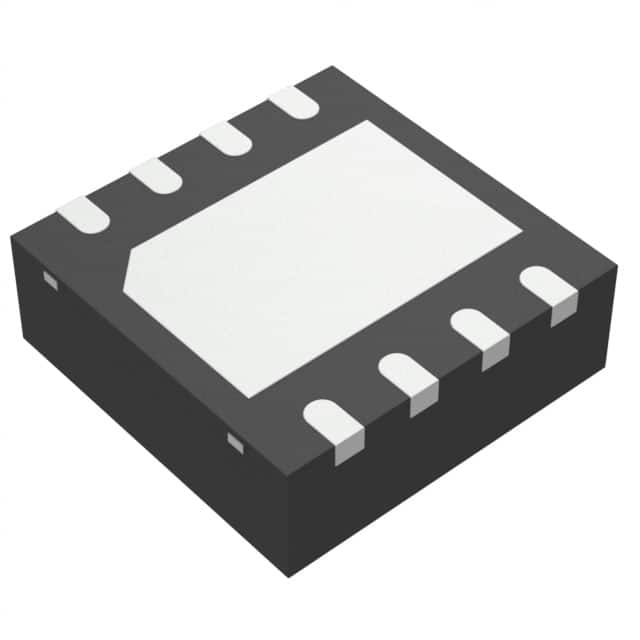
- Part No.:
- TJA1021TK/20/C,118
- Manufacturer:
- NXP Semiconductors
- Category:
- Drivers, Receivers, Transceivers
- Package:
- 8-VDFN Exposed Pad
- Datasheet:
-
 TJA1021TK/20/C,118.pdf
- Description:
- IC TRANSCEIVER FULL 1/1 8HVSON
- Quantity:
- Payment:

- Shipping:

Inventory:4,879
Please send an inquiry. Send us your inquiry, and we will respond immediately.
Product details
Overview
TJA1021TK/20/C,118 from NXP Semiconductors is an ISO 17987/LIN 2.x/SAE J2602-compliant automotive transceiver for Local Interconnect Network physical layer interfacing. It supports up to 20 kBd baud rate, features integrated 30 kΩ LIN responder termination, operates from 5.5 V to 27 V battery supply, and delivers ≤10 μA sleep current. It is used in vehicle sub-networks such as door modules, seat controllers, and climate actuators requiring robust low-speed serial communication.
For engineers reviewing the TJA1021TK/20/C,118 datasheet, TJA1021TK/20/C,118 pinout, TJA1021TK/20/C,118 application, or TJA1021TK/20/C,118 equivalent, key selection criteria include LIN 2.2A compliance, HVSON8 thermal performance (Rth(j-a) = 54 K/W), wake-up source recognition (local vs. remote), TXD dominant time-out protection, and fail-safe behavior during VBAT undervoltage or thermal overload.
Technical Context
The TJA1021TK/20/C,118 implements a LIN physical layer compliant with ISO 17987-4:2016 (12 V), SAE J2602, and LIN 2.0–2.2A standards. Its transmitter applies optimized slew-rate control and wave shaping to minimize electromagnetic emission (EME), while the receiver incorporates supply-voltage–referenced thresholds with hysteresis and integrated noise filtering.
It supports three operating modes: Sleep (≤10 μA), Standby (wakeup-activated, INH HIGH, 30 kΩ termination enabled), and Normal (full TX/RX operation). Wake-up detection occurs via LIN bus dominant state (≥80 μs), WAKE_N negative edge (≥30 μs), or SLP_N transition - with wake-source flag signaled on TXD in Standby mode.
Key Specifications
| Parameter | Value and Actual Design Meaning |
|---|---|
| Baud Rate Support | Up to 20 kBd - enables full LIN 2.2A timing compliance for high-speed sub-networks |
| Sleep Current | 2–10 μA - ensures ultra-low power consumption for always-on vehicle nodes |
| Supply Voltage Range | 5.5 V to 27 V - accommodates wide automotive battery variation including cold-crank conditions |
| LIN Bus Termination | Integrated 30 kΩ resistor between LIN and VBAT - eliminates external component for responder applications |
| ESD Robustness | ±6 kV HBM on LIN, VBAT, WAKE_N - meets IEC 61000-4-2 for harsh automotive environments |
| Thermal Shutdown | Triggers at 150–200 °C junction temperature - protects against sustained overtemperature failure |
| TXD Dominant Time-out | Disables transmitter if TXD held LOW > tto(dom) - prevents bus lockup due to MCU/software fault |
Pinout & Package
HVSON8 package (3.0 mm × 3.0 mm × 0.85 mm), leadless, thermally enhanced, with exposed center pad connected to GND for improved thermal dissipation (Rth(j-c) = 15 K/W) and AOI compatibility.
| Pin/Terminal | Circuit Role | Design Meaning |
|---|---|---|
| RXD | Open-drain receive data output | Signals recessive/dominant bus state to MCU; active-LOW wake-up interrupt in Standby mode |
| SLP_N | Active-LOW sleep control input | Controls mode transition; resets wake-up flags on rising edge; internal pull-down ensures safe Sleep entry if unconnected |
| WAKE_N | Active-LOW local wake-up input | Negative-edge triggered; internal pull-up to VBAT; distinguishes local wake-up source in Standby mode |
| TXD | Transmit data input | Drives LIN bus via internal driver; wake-source flag (weak vs. strong pull-down) readable in Standby mode |
| GND | Ground reference | Die supply ground tied to both pin and exposed pad; pad soldering recommended for thermal/electrical integrity |
| LIN | Bi-directional LIN bus interface | Receives and transmits differential-like signals; includes internal pull-up (50–250 kΩ) in Sleep mode |
| VBAT | Battery supply input | Powers all internal circuitry; monitors VBAT for POR and undervoltage shutdown (Vth(VBATL) = 4.4 V) |
| INH | Active-HIGH inhibit output | Enables external voltage regulator upon wake-up; driven HIGH in Standby/Normal modes; floats in Sleep |
Key Features
| Feature | Design Value |
|---|---|
| LIN 2.2A / ISO 17987-4:2016 compliance | Guarantees interoperability with certified LIN master nodes and legacy 1.x responders without protocol translation |
| Wake-up source recognition | Distinguishes local (WAKE_N) vs. remote (LIN dominant) wake events via TXD pull-down strength - enables context-aware firmware response |
| Integrated responder termination | 30 kΩ resistor between LIN and VBAT eliminates external component count and layout area for slave-node designs |
| Fail-safe VBAT undervoltage protection | Disables LIN driver when VBAT drops below 4.4 V - prevents undefined bus states during brownout conditions |
| Thermal shutdown with auto-recovery | Shuts down output driver above 150–200 °C junction temperature and re-enables only after cooling and recessive TXD level |
| K-line compatibility | Supports legacy diagnostics via shared physical layer signaling - simplifies migration paths in mixed-protocol ECUs |
Applications
| Door Control Module | Seat Position Controller |
|---|---|
Use Scenario: LIN-connected actuator controlling window lift, mirror adjustment, and lock status in automotive door assemblies. IC Role / Device Role / Timing Role: Physical layer transceiver translating MCU UART signals to LIN bus; handles wake/sleep transitions synchronized with vehicle ignition state. Use Value: Enables <10 μA standby current to meet OEM off-mode leakage budgets while supporting reliable remote wake-up via LIN bus commands. |
Use Scenario: Motorized seat position memory system using LIN to report potentiometer feedback and execute movement commands. IC Role / Device Role / Timing Role: LIN bus interface with integrated 30 kΩ termination - eliminates external resistor and reduces BOM cost per node. Use Value: Delivers ±6 kV ESD robustness on LIN pin to withstand assembly handling and in-vehicle EMI, reducing field return rates. |
| Climate Control Actuator | Roof Module (Sunroof/Blinds) |
Use Scenario: HVAC flap motor controller receiving setpoint commands and reporting temperature sensor data over LIN. IC Role / Device Role / Timing Role: LIN transceiver with TXD dominant time-out - prevents bus lockup if MCU freezes during command execution. Use Value: Ensures network-level fault containment: faulty node enters recessive state without disrupting other LIN slaves. |
Use Scenario: Sunroof or power blind module communicating position, obstruction detection, and calibration status via LIN sub-network. IC Role / Device Role / Timing Role: Low-power LIN interface with dual wake-up sources - responds to both local (WAKE_N button press) and remote (master query) triggers. Use Value: Supports <5 μs go-to-normal time (tgotonorm) enabling rapid response to user-initiated motion commands. |
Equivalent & Alternatives
The following parts are listed as comparable options for similar LIN transceiver applications.
| Alternative Part | Technical Difference | Application Difference | Selection Advice |
|---|---|---|---|
| TJA1021T/20 | SO8 package (SOT96-1); higher Rth(j-a) = 93 K/W; no exposed thermal pad | Suitable for non-thermally constrained PCB layouts; requires external termination for responder use | Select when board space allows SO8 and thermal load is moderate; avoid in sealed enclosures with limited airflow |
| MC33662B | Pin-compatible but lacks integrated LIN termination; different wake-up timing (twake(dom) = 100 μs vs. 80 μs); no VBAT undervoltage shutdown | Requires external 30 kΩ resistor; less robust under battery brownout; needs additional firmware validation for wake latency | Choose only if legacy MC33662B design reuse is mandatory; verify wake-up timing and fault-handling behavior in target ECU |
Compared with TJA1021TK/20/C,118, the TJA1021T/20 offers identical electrical functionality in a larger SO8 package with reduced thermal efficiency, while the MC33662B requires external components and lacks critical fail-safes - making the TJA1021TK/20/C,118 optimal for new compact, thermally demanding, or safety-critical LIN node designs.
Availability
TJA1021TK/20/C,118 is available at Aetrix Electronics and suitable for automotive door modules, seat position controllers, climate actuators, and roof modules requiring stable component supply across extended production lifecycles.
Supply support for TJA1021TK/20/C,118 includes scheduled delivery planning, volume procurement assistance, BOM continuity management, traceable sourcing, and lifecycle availability coordination for OEM customers, industrial embedded developers, connected-device designers, and electronics production programs.
Manufacturer
NXP Semiconductors is a global semiconductor leader focused on automotive, industrial, and IoT applications, with deep expertise in automotive networking and functional safety.
The TJA1021 series is part of NXP's automotive LIN transceiver portfolio, designed specifically for cost-sensitive, low-power, and thermally constrained in-vehicle sub-networks requiring AEC-Q100 qualification and long-term supply stability.
FAQ
What LIN protocol versions does the TJA1021TK/20/C,118 support?
The TJA1021TK/20/C,118 supports LIN 2.0, LIN 2.1, LIN 2.2, LIN 2.2A, SAE J2602, and ISO 17987-4:2016 (12 V). It is backward compatible with earlier LIN 1.x physical layers, enabling interoperability with legacy nodes without protocol translation. This multi-standard compliance is verified per official NXP documentation and conformance test reports.
Does the TJA1021TK/20/C,118 require external termination resistors?
No - the TJA1021TK/20/C,118 integrates a 30 kΩ responder termination resistor between LIN and VBAT pins, eliminating the need for external components in slave-node applications. Commander configurations still require an external diode-resistor network between INH/VBAT and LIN, as specified in Figure 7 of the datasheet.
How does wake-up source recognition work on the TJA1021TK/20/C,118?
In Standby mode, the TJA1021TK/20/C,118 signals local wake-up (WAKE_N edge) as a strong pull-down on TXD, and remote wake-up (LIN dominant) as a weak pull-down. An external pull-up on TXD allows the MCU to distinguish sources by reading TXD logic level - a key feature confirmed in Section 7.8 of the datasheet.
What protection features prevent bus lockup in case of MCU failure?
The TJA1021TK/20/C,118 includes a TXD dominant time-out function that disables the transmitter if TXD remains LOW beyond tto(dom), forcing the bus into recessive state. It also features thermal shutdown, VBAT undervoltage disable, and short-circuit protection - all documented in Sections 7.9 and 7.10 of the datasheet.
Is the TJA1021TK/20/C,118 pin-compatible with the TJA1020?
Yes - the TJA1021TK/20/C,118 is explicitly stated as pin-to-pin compatible with the TJA1020 and MC33662(B) in Section 1 of the datasheet. This allows direct replacement in existing SO8 or HVSON8 layouts, provided the /20 speed grade and thermal requirements are verified for the target application.
TJA1021TK/20/C,118 Specifications
- Product attributes
- Attribute value
- Manufacturer:
- NXP Semiconductors
- Series:
- -
- Package/Case:
- 8-VDFN Exposed Pad
- Packaging:
- Tape & Reel (TR)
- Product Status:
- Active
- Type:
- Transceiver
- Protocol:
- LINbus
- Number of Drivers/Receivers:
- 1/1
- Duplex:
- Full
- Receiver Hysteresis:
- 175 mV
- Data Rate:
- -
- Voltage - Supply:
- 5.5V ~ 27V
- Operating Temperature:
- -
- Grade:
- Automotive
- Qualification:
- AEC-Q100
- Mounting Type:
- Surface Mount
- Supplier Device Package:
- 8-HVSON (3x3)
TJA1021TK/20/C,118 FAQ
1.How can I place an order for TJA1021TK/20/C,118 through Aetrix?
Please submit a Request for Quotation (RFQ) for TJA1021TK/20/C,118 on Aetrix. Our sales agent will provide a competitive quotation and guide you through the order confirmation once you accept the terms.
2.Are the price and stock information for TJA1021TK/20/C,118 reliable?
The price and inventory of TJA1021TK/20/C,118 are updated periodically and may fluctuate due to market conditions. Stock and pricing data are typically refreshed every 24 hours. Quotation validity for TJA1021TK/20/C,118 is usually 5 days.
3.What payment methods are accepted for TJA1021TK/20/C,118?
We accept Wire Transfer, PayPal, Credit Card, Western Union, MoneyGram, and Escrow for TJA1021TK/20/C,118 transactions.
Note: Certain payment methods may incur a processing fee.
4.How is shipping managed for TJA1021TK/20/C,118?
TJA1021TK/20/C,118 orders can be shipped via leading logistics carriers, including DHL, UPS, FedEx, TNT, or Registered Mail.
Once your TJA1021TK/20/C,118 order is processed, you will receive an email with the shipment details and tracking number.
Note: Tracking information may take up to 24 hours to appear. Express delivery typically takes 3–5 business days.
5.How can I obtain technical support or documentation for TJA1021TK/20/C,118?
For technical support, including TJA1021TK/20/C,118 datasheets, pinout diagrams, or application guidance, please contact our engineering support team. They can provide detailed documentation and assistance for your TJA1021TK/20/C,118 requirements.
6.How does Aetrix verify that TJA1021TK/20/C,118 is sourced from the original manufacturer or authorized distributors?
All TJA1021TK/20/C,118 products on Aetrix are procured from qualified distributors and authorized channels. Our dedicated quality assurance team conducts strict verification, including traceability checks and, if necessary, third-party testing. This ensures that TJA1021TK/20/C,118 meets industry standards.
7.What is the process for return or replacement of TJA1021TK/20/C,118?
All TJA1021TK/20/C,118 units undergo pre-shipment inspection (PSI). If there is an issue with TJA1021TK/20/C,118, returns or replacements are accepted under the following conditions:
1.Quantity discrepancies, incorrect items, or visible external defects (such as breakage or corrosion), acknowledged by Aetrix.
2.The issue is reported within 90 days of delivery.
3.The TJA1021TK/20/C,118 part is unused and in its original packaging.
Return procedure for TJA1021TK/20/C,118:
1.Submit a request within 90 days.
2.Obtain a Return Material Authorization (RMA) from Aetrix.
TJA1021TK/20/C,118 Tags

-
ATA6561-GAQW-N
Microchip Technology
-
ATA6561-GBQW-N
Microchip Technology
-
AM26LS32ACDR
Texas Instruments

-
SP485CN-L/TR
MaxLinear, Inc.
-
SP485EN-L/TR
MaxLinear, Inc.
-
SP485EEN-L/TR
MaxLinear, Inc.
-
SP485ECN-L/TR
MaxLinear, Inc.
-
THVD1400DR
Texas Instruments
-
AM26C31IDR
Texas Instruments

-
TLIN1021ADRQ1
Texas Instruments
-
MAX232IDR
Texas Instruments
-
AM26C32IDR
Texas Instruments
Tech Hub

A practical engineering guide to 3.3V and 5V logic compatibility, input thresholds, resistor dividers, translator ICs, MOSFET level shifting, I2C pull-ups, timing limits and power-sequencing risks.

The 74HC595 uses push-pull logic outputs, while the TPIC6B595 uses 50 V open-drain DMOS sinks for higher-power loads. This guide compares timing, current limits, 3.3 V interfacing, load wiring, thermal…

The 74HC595 converts serial data into eight stable parallel outputs. This guide covers pin functions, shift and storage timing, OE and MR behavior, drive-current limits, cascading, voltage compatibilit…

A technical comparison of level-sensitive latches and edge-triggered flip-flops, covering timing windows, setup and hold limits, master–slave operation, time borrowing, race-through, HDL inference and…

A D latch stores one bit while Enable controls when data can pass. This reference covers gate-level operation, truth tables, transparency, setup and hold timing, LE versus OE, common ICs and practical …

An SR latch stores one bit through cross-coupled feedback. This engineering reference covers NOR and NAND implementations, truth tables, forbidden-state recovery, gated operation, switch debouncing, fa…

Latch circuits retain one bit through feedback. This technical reference covers SR and D latches, truth tables, transparency, timing limits, latch-versus-flip-flop behavior, applications and common log…

An engineering guide to LED driver operation, constant-current and constant-voltage outputs, linear and switching topologies, dimming, IC selection, calculations, replacement compatibility, and fault c…

Operational amplifier guide covering op amp basics, feedback, ideal vs real op amps, common configurations, buffer circuits, offset, bias current, gain-bandwidth, slew rate, rail-to-rail limits and sel…

Jumper cables guide covering safe connection order, red and black clamp placement, final ground connection, cable gauge, length, clamp quality, copper vs CCA cables, jump starter comparison and battery…


