
 My Inquiry
 My Account


Texas Instruments TL16C554AIPN
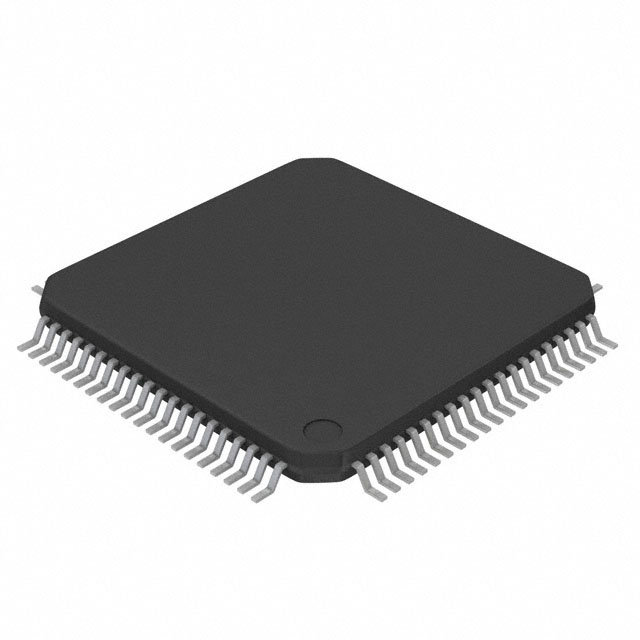
- Part No.:
- TL16C554AIPN
- Manufacturer:
- Texas Instruments
- Package:
- 80-LQFP
- Datasheet:
-
 TL16C554AIPN.pdf
- Description:
- IC ASYNC COMM ELEMENT 80-LQFP
- Quantity:
- Payment:

- Shipping:

Inventory:1,500
Please send an inquiry. Send us your inquiry, and we will respond immediately.
Product details
Overview
TL16C554AIPN from Texas Instruments is a quadruple UART (asynchronous communications element) integrating four enhanced TL16C550C ACEs with shared steering logic. It supports 5–8-bit character framing, programmable baud rates up to 1 Mbit/s, 16-byte FIFO buffering per channel, and dual-voltage operation (3.3 V/5 V). It is used in industrial serial gateways requiring multi-port RS-232/RS-422 interface consolidation with CPU interrupt reduction.
For engineers reviewing the TL16C554AIPN datasheet, TL16C554AIPN pinout, TL16C554AIPN application, or TL16C554AIPN equivalent, key selection factors include its 80-pin TQFP (PN) package, 16-MHz clock support, auto-RTS/CTS flow control, FIFO threshold programmability, and compatibility with legacy TL16C450 register mapping.
Technical Context
The TL16C554AIPN implements four independent UART channels sharing a common 8-bit bidirectional data bus, address decoding (A0–A2), and chip-select lines (CSA–CSD). Each channel features a fully programmable baud-rate generator with 16-bit divisor (1 to 65,535), internal 16× oversampling clock, and selectable TL16C450 or FIFO operational mode.
Its interrupt architecture supports prioritized, individually maskable interrupts per channel (INTA–INTD), with INTN enabling global interrupt gating. Modem control logic handles RTS/CTS/DTR/DSR/DCD/RI signals, and autoflow control automates RTS assertion based on receiver FIFO fill level-reducing host software overhead in high-throughput serial applications.
Key Specifications
| Parameter | Value and Actual Design Meaning |
|---|---|
| Channels | Four independent UARTs with shared bus interface and discrete modem control I/O. |
| Max Baud Rate | 1 Mbit/s at 16-MHz input clock - enables full-speed RS-232 communication without external clock dividers. |
| FIFO Depth | 16 bytes per channel (RX/TX), plus 3-bit error tagging per received byte - reduces CPU interrupt frequency by >90% vs. 1-byte buffering. |
| Supply Voltage | 3.0–3.6 V or 4.75–5.25 V - supports mixed-voltage system integration and legacy 5-V board compatibility. |
| Operating Temp | 0°C to +70°C - qualified for commercial/industrial ambient environments without derating. |
| Package | 80-pin TQFP (PN), 12 × 12 mm body, 0.5-mm pitch - surface-mount compatible with standard reflow profiles. |
| Logic Interface | 8-bit multiplexed data bus (D0–D7), three address lines (A0–A2), four chip selects (CSA–CSD), and separate IOR/IOW strobes - matches ISA-bus timing and simplifies microcontroller interfacing. |
Pinout & Package
TL16C554AIPN is packaged in an 80-pin thin quad flatpack (TQFP, PN package) with exposed thermal pad. Pin functions are defined per channel (A–D) and include dedicated modem control, serial I/O, bus interface, and clock terminals.
| Pin/Terminal | Circuit Role | Design Meaning |
|---|---|---|
| D0–D7 | Bidirectional data bus | 8-bit parallel path for register reads/writes; 3-state outputs enable direct connection to shared microcontroller data bus. |
| A0–A2 | Register address select | Selects one of eight internal registers (e.g., RBR, THR, IER, LCR) during read/write cycles per active CSx. |
| CSA–CSD | Channel chip select | Enables access to UART A, B, C, or D independently; allows per-channel register programming without cross-talk. |
| TXA–TXD / RXA–RXD | Serial transmit/receive I/O | Four isolated TTL-level UART interfaces; require external line drivers (e.g., MAX232) for RS-232 voltage translation. |
| RTSA–RTSD / CTSA–CTSD | Modem flow control | Hardware handshaking signals supporting auto-RTS (FIFO-threshold-triggered) and auto-CTS (transmit-gated) modes. |
| INTA–INTD / INTN | Interrupt outputs | Four channel-specific open-drain interrupts plus global INTN enable - supports daisy-chained or vectored interrupt handling. |
| XTAL1 / XTAL2 | Crystal oscillator interface | Accepts 1–16 MHz crystal or external clock; generates internal 16× baud clock for precise asynchronous timing. |
Key Features
| Feature | Design Value |
|---|---|
| 16-byte FIFO per channel | Reduces host CPU interrupt load by buffering up to 16 characters per direction, enabling burst transfers and deterministic latency. |
| Programmable baud-rate divisor | 16-bit divisor (1–65,535) enables exact standard and non-standard baud rates from DC to 1 Mbit/s using a single reference clock. |
| Auto-RTS/CTS flow control | Hardware-managed RTS assertion based on RX FIFO fill level eliminates software polling and improves real-time throughput predictability. |
| TL16C450 register compatibility | Backward-compatible with industry-standard 8250/16450 register map - enables drop-in replacement in legacy BIOS and OS UART drivers. |
| False start-bit detection | Rejects spurious noise-induced start bits before sampling, improving reliability in electrically noisy industrial serial environments. |
Applications
| Industrial Serial Gateway | Medical Device Data Hub |
|---|---|
Use Scenario: Aggregating serial data from multiple patient monitors (ECG, SpO₂, NIBP) into a central clinical server via RS-232/422 links. IC Role / Device Role / Timing Role: Quadruple UART bridges four legacy medical peripherals to a single ARM-based host processor using shared memory-mapped I/O. Use Value: 16-byte FIFOs prevent data loss during high-priority interrupt servicing; auto-RTS ensures no overrun when host processing lags. | Use Scenario: Enabling simultaneous firmware updates over serial to four embedded subsystems (pump controller, display, sensor hub, battery manager) in a portable diagnostic device. IC Role / Device Role / Timing Role: Centralized UART resource managing concurrent full-duplex update streams with independent baud rate and parity settings per port. Use Value: Independent programmable divisors allow each channel to run at optimal speed (e.g., 115.2 kbps for display, 9600 bps for sensors), maximizing bandwidth utilization. |
| POS Terminal Expansion Card | Rack-Mounted Test Equipment |
Use Scenario: Adding four RS-232 ports to a Windows-based point-of-sale terminal for connecting barcode scanners, receipt printers, magnetic stripe readers, and cash drawers. IC Role / Device Role / Timing Role: PCI/PCIe add-in card UART controller providing COM1–COM4 under standard Windows serial driver stack. Use Value: TL16C450 register compatibility ensures zero-driver-modification deployment; 5-V tolerant I/O supports legacy peripheral voltage levels. | Use Scenario: Integrating serial instrumentation interfaces (oscilloscopes, power supplies, multimeters) into a Linux-based automated test rack controller. IC Role / Device Role / Timing Role: Embedded UART subsystem handling SCPI command/response traffic across four independent instruments with hardware flow control. Use Value: Auto-CTS gating prevents TX buffer overflow when instrument response latency exceeds host expectations; INTN simplifies interrupt routing in multi-UART systems. |
Equivalent & Alternatives
The following parts are listed as comparable options for similar quadruple UART applications.
| Alternative Part | Technical Difference | Application Difference | Selection Advice |
|---|---|---|---|
| TL16C554IPN | Same functionality and pinout, but rated for −40°C to +85°C industrial temperature range; higher ICC (40 mA @ 3.3 V). | Required for extended-temperature deployments (e.g., outdoor kiosks, factory-floor controllers); otherwise functionally identical. | Select TL16C554IPN when operating ambient exceeds 70°C or requires automotive-grade thermal margin. |
| SC16C554BIA44 | NXP variant with identical register set and 44-pin PLCC package; lacks TQFP option and has lower max clock (14 MHz). | Suitable for space-constrained legacy designs using PLCC sockets; not pin-compatible with TL16C554AIPN's 80-pin TQFP footprint. | Choose SC16C554BIA44 only for PLCC-based redesigns where board layout cannot accommodate TQFP. |
Compared with TL16C554IPN, TL16C554AIPN offers lower cost and commercial-temp qualification, while SC16C554BIA44 trades package flexibility and clock headroom for legacy socket compatibility - making TL16C554AIPN optimal for new 80-pin TQFP designs targeting 0°C–70°C environments.
Availability
TL16C554AIPN is available at Aetrix Electronics and suitable for industrial serial gateways, medical data concentrators, POS terminal expansion cards, and rack-mounted test equipment requiring stable component supply and long-term manufacturability.
Supply support for TL16C554AIPN includes scheduled delivery planning, volume procurement assistance, BOM continuity management, traceable sourcing, and lifecycle availability coordination for OEM customers, industrial embedded developers, connected-device designers, and electronics production programs.
Manufacturer
Texas Instruments is a U.S.-based semiconductor company specializing in analog, embedded processing, and connectivity solutions with broad industrial and automotive qualification.
The TL16C554A product line delivers high-density, register-compatible UART solutions for legacy and modern serial interface consolidation - designed specifically to reduce host CPU overhead in multi-peripheral embedded systems.
FAQ
What is the maximum clock frequency supported by TL16C554AIPN?
The TL16C554AIPN supports an input clock frequency up to 16 MHz, enabling reliable operation at baud rates up to 1 Mbit/s. This specification is validated across both 3.3-V and 5-V supply conditions and within its 0°C to +70°C operating temperature range. The internal baud-rate generator uses this clock to derive precise 16× oversampling timing for robust asynchronous communication.
Does TL16C554AIPN support hardware flow control?
Yes, TL16C554AIPN supports full hardware flow control via RTS/CTS signals on all four channels. It implements programmable auto-RTS (triggered by configurable RX FIFO thresholds) and auto-CTS (which gates transmitter output when CTS is deasserted). These features operate independently per channel and require no host CPU intervention once configured.
Is TL16C554AIPN pin-compatible with other packages of the same part number?
No - TL16C554AIPN refers specifically to the 80-pin TQFP (PN) package. The same part number is also offered in 68-pin PLCC (FN) and 64-pin PQFP (PM) variants, which have different pin counts, layouts, and signal assignments. Board design must match the exact package variant; interchanging packages requires PCB redesign.
Can TL16C554AIPN operate with a 3.3-V supply?
Yes, TL16C554AIPN is fully specified for 3.3-V nominal operation (3.0–3.6 V range), including all electrical characteristics, timing parameters, and functional modes. Its I/O pins are 5-V tolerant, allowing safe interfacing with 5-V peripherals without level shifters - a key advantage in mixed-voltage system designs.
How does the FIFO mode differ from TL16C450 mode in TL16C554AIPN?
In TL16C450 mode, TL16C554AIPN uses single-byte hold/shift registers and requires precise CPU synchronization; in FIFO mode, it enables 16-byte transmit/receive buffers with programmable trigger levels and timeout interrupts. FIFO mode reduces interrupt frequency, supports burst transfers, and adds autoflow control - all configurable per channel via the FIFO Control Register (FCR).
TL16C554AIPN Specifications
- Product attributes
- Attribute value
- Manufacturer:
- Texas Instruments
- Package/Case:
- 80-LQFP
- Series:
- -
- Packaging:
- Bulk
- Product Status:
- Active
- Features:
- -
- Number of Channels:
- 4, QUART
- FIFO's:
- 16 Byte
- Protocol:
- -
- Data Rate (Max):
- 1Mbps
- Voltage - Supply:
- 3V ~ 5.25V
- With Auto Flow Control:
- Yes
- With IrDA Encoder/Decoder:
- -
- With False Start Bit Detection:
- Yes
- With Modem Control:
- Yes
- Grade:
- -
- Qualification:
- -
- Mounting Type:
- Surface Mount
- Supplier Device Package:
- 80-LQFP (12x12)
TL16C554AIPN FAQ
1.How can I place an order for TL16C554AIPN through Aetrix?
Please submit a Request for Quotation (RFQ) for TL16C554AIPN on Aetrix. Our sales agent will provide a competitive quotation and guide you through the order confirmation once you accept the terms.
2.Are the price and stock information for TL16C554AIPN reliable?
The price and inventory of TL16C554AIPN are updated periodically and may fluctuate due to market conditions. Stock and pricing data are typically refreshed every 24 hours. Quotation validity for TL16C554AIPN is usually 5 days.
3.What payment methods are accepted for TL16C554AIPN?
We accept Wire Transfer, PayPal, Credit Card, Western Union, MoneyGram, and Escrow for TL16C554AIPN transactions.
Note: Certain payment methods may incur a processing fee.
4.How is shipping managed for TL16C554AIPN?
TL16C554AIPN orders can be shipped via leading logistics carriers, including DHL, UPS, FedEx, TNT, or Registered Mail.
Once your TL16C554AIPN order is processed, you will receive an email with the shipment details and tracking number.
Note: Tracking information may take up to 24 hours to appear. Express delivery typically takes 3–5 business days.
5.How can I obtain technical support or documentation for TL16C554AIPN?
For technical support, including TL16C554AIPN datasheets, pinout diagrams, or application guidance, please contact our engineering support team. They can provide detailed documentation and assistance for your TL16C554AIPN requirements.
6.How does Aetrix verify that TL16C554AIPN is sourced from the original manufacturer or authorized distributors?
All TL16C554AIPN products on Aetrix are procured from qualified distributors and authorized channels. Our dedicated quality assurance team conducts strict verification, including traceability checks and, if necessary, third-party testing. This ensures that TL16C554AIPN meets industry standards.
7.What is the process for return or replacement of TL16C554AIPN?
All TL16C554AIPN units undergo pre-shipment inspection (PSI). If there is an issue with TL16C554AIPN, returns or replacements are accepted under the following conditions:
1.Quantity discrepancies, incorrect items, or visible external defects (such as breakage or corrosion), acknowledged by Aetrix.
2.The issue is reported within 90 days of delivery.
3.The TL16C554AIPN part is unused and in its original packaging.
Return procedure for TL16C554AIPN:
1.Submit a request within 90 days.
2.Obtain a Return Material Authorization (RMA) from Aetrix.
TL16C554AIPN Tags
-
SC16IS741AIPWJ
NXP Semiconductors

-
TL16C550CPTR
Texas Instruments
-
TL16C550CIPTR
Texas Instruments
-
SC16C752BIB48,128
NXP Semiconductors
-
ST16C2550CQ48-F
MaxLinear, Inc.
-
ST16C2550CJ44-F
MaxLinear, Inc.
-
ST16C2552CJ44-F
MaxLinear, Inc.
-
ST16C1550IQ48-F
MaxLinear, Inc.
-
ST16C2550IQ48-F
MaxLinear, Inc.
-
ST16C554DIQ64-F
MaxLinear, Inc.
-
ST16C554DCQ64-F
MaxLinear, Inc.
-
XR17V352IB113-F
MaxLinear, Inc.
Tech Hub

A practical engineering guide to 3.3V and 5V logic compatibility, input thresholds, resistor dividers, translator ICs, MOSFET level shifting, I2C pull-ups, timing limits and power-sequencing risks.

The 74HC595 uses push-pull logic outputs, while the TPIC6B595 uses 50 V open-drain DMOS sinks for higher-power loads. This guide compares timing, current limits, 3.3 V interfacing, load wiring, thermal…

The 74HC595 converts serial data into eight stable parallel outputs. This guide covers pin functions, shift and storage timing, OE and MR behavior, drive-current limits, cascading, voltage compatibilit…

A technical comparison of level-sensitive latches and edge-triggered flip-flops, covering timing windows, setup and hold limits, master–slave operation, time borrowing, race-through, HDL inference and…

A D latch stores one bit while Enable controls when data can pass. This reference covers gate-level operation, truth tables, transparency, setup and hold timing, LE versus OE, common ICs and practical …

An SR latch stores one bit through cross-coupled feedback. This engineering reference covers NOR and NAND implementations, truth tables, forbidden-state recovery, gated operation, switch debouncing, fa…

Latch circuits retain one bit through feedback. This technical reference covers SR and D latches, truth tables, transparency, timing limits, latch-versus-flip-flop behavior, applications and common log…

An engineering guide to LED driver operation, constant-current and constant-voltage outputs, linear and switching topologies, dimming, IC selection, calculations, replacement compatibility, and fault c…

Operational amplifier guide covering op amp basics, feedback, ideal vs real op amps, common configurations, buffer circuits, offset, bias current, gain-bandwidth, slew rate, rail-to-rail limits and sel…

Jumper cables guide covering safe connection order, red and black clamp placement, final ground connection, cable gauge, length, clamp quality, copper vs CCA cables, jump starter comparison and battery…


