
 My Inquiry
 My Account


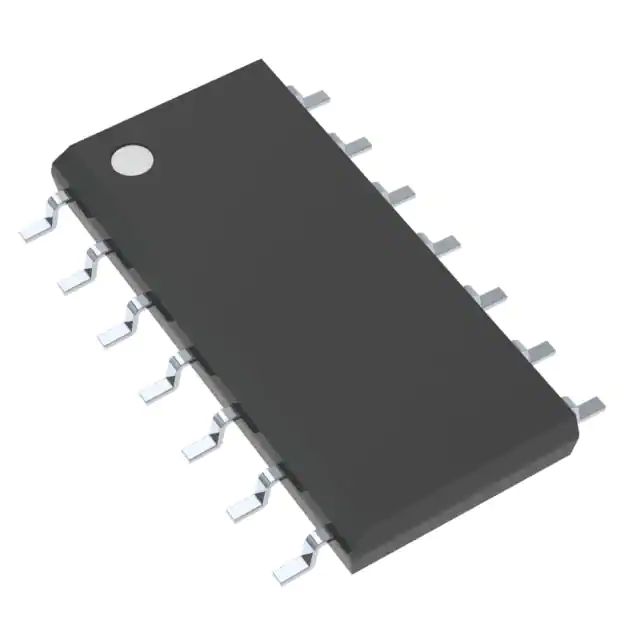
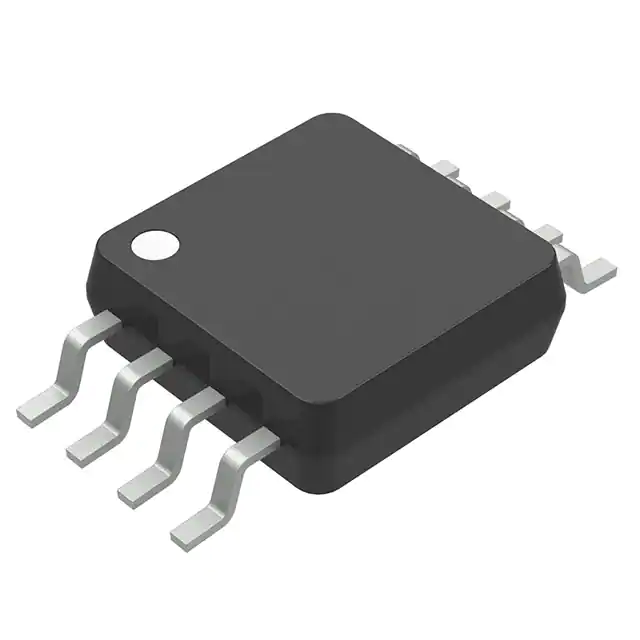
Texas Instruments TLC0834IDR
- Part No.:
- TLC0834IDR
- Manufacturer:
- Texas Instruments
- Category:
- Analog to Digital Converters (ADC)
- Package:
- 14-SOIC (0.154", 3.90mm Width)
- Datasheet:
-
 TLC0834IDR.pdf
- Description:
- IC ADC 8BIT SAR 14SOIC
- Quantity:
- Payment:

- Shipping:

Inventory:1,341
Please send an inquiry. Send us your inquiry, and we will respond immediately.
Product details
Overview
TLC0834IDR from Texas Instruments is a 4-channel, 8-bit successive-approximation analog-to-digital converter (ADC) with serial control interface, ratiometric operation capability, and single 5-V supply support. It delivers ±1 LSB total unadjusted error, 32 µs conversion time at 250 kHz clock, and supports single-ended or differential input configurations for industrial sensor interfacing and embedded data acquisition.
For engineers reviewing the TLC0834IDR datasheet, TLC0834IDR pinout, TLC0834IDR application, or TLC0834IDR equivalent, key selection criteria include its SOIC-14 package, –40°C to 85°C operating temperature range, software-configurable multiplexer addressing, MSB/LSB-first serial output mode, and compatibility with TTL/MOS logic levels in microprocessor-connected systems.
Technical Context
The TLC0834IDR implements a sample-data-comparator architecture with an internal SAR (successive-approximation register) and resistive ladder DAC. Its 4-channel analog multiplexer is controlled via a 3–4-bit serial address word shifted in on DI, enabling channel selection and input polarity assignment (single-ended, differential, or pseudodifferential).
Conversion initiation requires CS low, followed by clocked serial address input; SARS goes high during conversion and low upon completion. Output data appears on DO with MSB-first format, and the device supports bidirectional single-wire interface by leveraging DI/DO timing isolation-DI active only during address setup, DO enabled after multiplexer settling.
Key Specifications
| Parameter | Value and Actual Design Meaning |
|---|---|
| Resolution | 8-bit - provides 256 discrete digital codes for analog input quantization |
| Conversion Time | 32 µs at fCLK = 250 kHz - defines minimum cycle time between successive conversions |
| Total Unadjusted Error | ±1 LSB - specifies worst-case deviation from ideal transfer curve without calibration |
| Input Range | 0 V to 5 V with single 5-V supply - enables direct connection to standard logic-referenced sensors |
| Operating Temperature | –40°C to +85°C - qualifies for industrial-grade environmental robustness |
| Supply Current | 0.6–1.25 mA - determines power budget impact in battery- or energy-constrained systems |
| Logic Compatibility | TTL and MOS - ensures interoperability with legacy and modern microcontrollers without level-shifting |
Pinout & Package
TLC0834IDR is housed in a 14-pin SOIC (D) package with 1.27 mm pitch, RoHS-compliant NiPdAu lead finish, and moisture sensitivity level 1 (260°C peak reflow). Pin 1 orientation follows quadrant Q1 tape-and-reel standard.
| Pin/Terminal | Circuit Role | Design Meaning |
|---|---|---|
| 1 (NC) | No internal connection | Unused pad; must be left floating or tied to ground per layout best practice |
| 2 (CS) | Chip select | Active-low enable that initiates serial addressing and conversion sequence |
| 3–6 (CH0–CH3) | Analog input channels | Four configurable inputs supporting single-ended, differential, or pseudodifferential modes |
| 7 (DGTL GND) | Digital ground | Reference return for digital I/O pins; separate from analog ground to minimize noise coupling |
| 8 (VCC) | Power supply | Single 4.5–5.5 V supply powering both digital logic and analog circuitry |
| 9 (DI) | Serial data input | Receives multiplexer address bits and start bit under CS control |
| 10 (CLK) | Serial clock input | Synchronizes address shifting and conversion timing; supports 10–600 kHz frequency |
| 11 (SARS) | Start-of-conversion status | Open-drain output high during conversion; used for polling or interrupt generation |
| 12 (DO) | Serial data output | MSB-first 8-bit result plus leading zero; tri-stated when CS high |
| 13 (REF) | Reference voltage input | Accepts external 0–5 V reference; enables ratiometric or fixed-scale encoding |
| 14 (ANLG GND) | Analog ground | Return path for analog inputs and reference; must be star-grounded separately from DGTL GND |
Key Features
| Feature | Design Value |
|---|---|
| Software-configurable multiplexer | Enables dynamic channel selection and input polarity assignment via serial command, eliminating hardware jumpers or switches |
| Differential input support | Allows adjacent channel pairs (e.g., CH0/CH1) to operate differentially for common-mode noise rejection in noisy environments |
| Ratiometric operation | Permits use of supply rail as reference, simplifying design when VCC is stable and sensor output scales with it |
| Single-supply 5-V operation | Eliminates need for dual supplies or charge pumps, reducing BOM count and PCB area in cost-sensitive applications |
| High-impedance tri-state outputs | Enables bus sharing across multiple devices using shared CLK/DI/DO lines with individual CS control |
Applications
| Industrial Sensor Interface | Embedded Data Acquisition |
|---|---|
Use Scenario: Monitoring temperature, pressure, or current signals from 4-channel industrial transducers in PLC I/O modules. IC Role / Device Role / Timing Role: ADC front-end converting analog sensor outputs into digital values for microcontroller processing. Use Value: ±1 LSB accuracy and –40°C to 85°C rating ensure reliable measurement across factory-floor thermal extremes. | Use Scenario: Digitizing analog signals from potentiometers, thermistors, or light sensors in smart home controllers. IC Role / Device Role / Timing Role: Serial-interface ADC minimizing GPIO usage on resource-constrained MCUs. Use Value: MSB-first serial output and 32 µs conversion enable rapid sampling without dedicated parallel bus resources. |
| Automotive Body Electronics | Test & Measurement Equipment |
Use Scenario: Reading cabin ambient sensors (humidity, CO₂, UV) in automotive HVAC control units. IC Role / Device Role / Timing Role: Ratiometric ADC referenced to vehicle's 5-V supply rail for stable scaling against battery fluctuations. Use Value: Single 5-V supply operation and TTL-compatible I/O simplify integration with existing automotive MCU peripherals. | Use Scenario: Low-cost benchtop multimeter or signal analyzer requiring multi-channel analog digitization. IC Role / Device Role / Timing Role: Standalone ADC with serial interface enabling compact, low-pin-count instrument designs. Use Value: Configurable differential inputs suppress noise from long sensor leads, improving effective resolution in lab environments. |
Equivalent & Alternatives
The following parts are listed as comparable options for similar analog-to-digital conversion applications.
| Alternative Part | Technical Difference | Application Difference | Selection Advice |
|---|---|---|---|
| ADC0834CN | Lacks internal Zener regulator network; otherwise functionally identical pinout and timing | Same 4-channel, 8-bit SAR architecture but rated only for 0°C to 70°C operation | Select ADC0834CN for commercial-temperature applications where cost is prioritized over extended temperature range |
| TLC0834CDR | Identical electrical specs and pinout; differs only in temperature grade (0°C to 70°C vs. –40°C to 85°C) | Same SOIC-14 packaging and serial interface, but unsuitable for industrial or automotive ambient conditions | Choose TLC0834CDR for non-critical environments where extended temperature qualification is unnecessary |
Compared with ADC0834CN and TLC0834CDR, the TLC0834IDR uniquely supports –40°C to 85°C operation while retaining full functional equivalence-making it the sole option among these three for designs requiring industrial-grade thermal resilience without architectural compromise.
Availability
TLC0834IDR is available at Aetrix Electronics and suitable for industrial sensor interface, embedded data acquisition, automotive body electronics, and test & measurement equipment requiring stable component supply across extended temperature ranges.
Supply support for TLC0834IDR includes scheduled delivery planning, volume procurement assistance, BOM continuity management, traceable sourcing, and lifecycle availability coordination for OEM customers, industrial embedded developers, connected-device designers, and electronics production programs.
Manufacturer
Texas Instruments is a global semiconductor leader specializing in analog, embedded processing, and connectivity technologies with decades of precision data converter expertise.
The TLC0834 product line was designed for cost-sensitive, microprocessor-connected systems needing flexible, serial-controlled analog digitization in space-constrained industrial and automotive applications.
FAQ
What is the operating temperature range specified for the TLC0834IDR?
The TLC0834IDR is characterized for operation from –40°C to +85°C, making it suitable for industrial and automotive environments where ambient temperatures exceed commercial-grade limits. This specification is confirmed in the "Available Options" table and "Recommended Operating Conditions" section of the SLAS094E datasheet. The 'I' suffix explicitly denotes the industrial temperature grade, distinct from the 'C' (commercial) variant.
Does the TLC0834IDR require an external reference voltage, or can it operate ratiometrically?
The TLC0834IDR supports both modes: it can accept an external reference voltage on the REF pin (0–5 V), or operate ratiometrically using VCC as the reference. Ratiometric operation eliminates reference drift errors when the analog sensor output scales with the same supply rail, which is especially valuable in systems with shared 5-V power domains. The device maintains ±1 LSB total unadjusted error in either configuration per datasheet specifications.
How many analog input channels does the TLC0834IDR support, and what input configurations are available?
The TLC0834IDR supports four analog input channels (CH0–CH3) with software-selectable configurations: single-ended, differential (adjacent pairs only, e.g., CH0/CH1), or pseudodifferential. Channel selection and polarity are controlled via a 3–4-bit serial address word shifted in on the DI pin. This flexibility allows noise rejection in differential mode or simplified wiring in single-ended mode-all without changing hardware connections.
What is the maximum clock frequency supported by the TLC0834IDR, and how does it affect conversion time?
The TLC0834IDR supports clock frequencies from 10 kHz to 600 kHz. At the recommended 250 kHz, conversion time is fixed at 32 µs (8 clock periods). Higher clock frequencies reduce conversion time linearly, but timing margins (setup/hold times) must still be met. The datasheet specifies minimum pulse duration and duty-cycle constraints to ensure reliable operation across the full frequency range.
Is the TLC0834IDR pin-compatible with other members of the TLC083x family, such as the TLC0838IDR?
No, the TLC0834IDR is not pin-compatible with the TLC0838IDR. The TLC0834IDR uses a 14-pin SOIC (D) package with four analog inputs, while the TLC0838IDR uses a 20-pin package (DW or PW) with eight analog inputs. Their pinouts differ significantly-e.g., TLC0834IDR has pins 3–6 assigned to CH0–CH3, whereas TLC0838IDR dedicates pins 1–8 to CH0–CH7. Interchangeability requires PCB redesign.
TLC0834IDR Specifications
- Product attributes
- Attribute value
- Manufacturer:
- Texas Instruments
- Series:
- -
- Package/Case:
- 14-SOIC (0.154", 3.90mm Width)
- Packaging:
- Tape & Reel (TR)
- Product Status:
- Active
- Number of Bits:
- 8
- Sampling Rate (Per Second):
- 20k
- Number of Inputs:
- 2, 3, 4
- Input Type:
- Differential, Pseudo-Differential, Single Ended
- Data Interface:
- SPI
- Configuration:
- MUX-ADC
- Ratio - S/H:ADC:
- -
- Number of A/D Converters:
- 1
- Architecture:
- SAR
- Reference Type:
- External
- Voltage - Supply, Analog:
- 5V
- Voltage - Supply, Digital:
- 5V
- Features:
- -
- Operating Temperature:
- -40°C ~ 85°C
- Supplier Device Package:
- 14-SOIC
- Mounting Type:
- Surface Mount
- Grade:
- -
- Qualification:
- -
TLC0834IDR FAQ
1.How can I place an order for TLC0834IDR through Aetrix?
Please submit a Request for Quotation (RFQ) for TLC0834IDR on Aetrix. Our sales agent will provide a competitive quotation and guide you through the order confirmation once you accept the terms.
2.Are the price and stock information for TLC0834IDR reliable?
The price and inventory of TLC0834IDR are updated periodically and may fluctuate due to market conditions. Stock and pricing data are typically refreshed every 24 hours. Quotation validity for TLC0834IDR is usually 5 days.
3.What payment methods are accepted for TLC0834IDR?
We accept Wire Transfer, PayPal, Credit Card, Western Union, MoneyGram, and Escrow for TLC0834IDR transactions.
Note: Certain payment methods may incur a processing fee.
4.How is shipping managed for TLC0834IDR?
TLC0834IDR orders can be shipped via leading logistics carriers, including DHL, UPS, FedEx, TNT, or Registered Mail.
Once your TLC0834IDR order is processed, you will receive an email with the shipment details and tracking number.
Note: Tracking information may take up to 24 hours to appear. Express delivery typically takes 3–5 business days.
5.How can I obtain technical support or documentation for TLC0834IDR?
For technical support, including TLC0834IDR datasheets, pinout diagrams, or application guidance, please contact our engineering support team. They can provide detailed documentation and assistance for your TLC0834IDR requirements.
6.How does Aetrix verify that TLC0834IDR is sourced from the original manufacturer or authorized distributors?
All TLC0834IDR products on Aetrix are procured from qualified distributors and authorized channels. Our dedicated quality assurance team conducts strict verification, including traceability checks and, if necessary, third-party testing. This ensures that TLC0834IDR meets industry standards.
7.What is the process for return or replacement of TLC0834IDR?
All TLC0834IDR units undergo pre-shipment inspection (PSI). If there is an issue with TLC0834IDR, returns or replacements are accepted under the following conditions:
1.Quantity discrepancies, incorrect items, or visible external defects (such as breakage or corrosion), acknowledged by Aetrix.
2.The issue is reported within 90 days of delivery.
3.The TLC0834IDR part is unused and in its original packaging.
Return procedure for TLC0834IDR:
1.Submit a request within 90 days.
2.Obtain a Return Material Authorization (RMA) from Aetrix.
TLC0834IDR Tags
-
ADC081C021CIMKX/NOPB
Texas Instruments
-
MCP3021A5T-E/OT
Microchip Technology
-
TLA2024IRUGR
Texas Instruments
-
MCP3221A5T-E/OT
Microchip Technology
-
MCP3221A5T-I/OT
Microchip Technology
-
MCP3221A4T-E/OT
Microchip Technology
-
MCP3221A6T-E/OT
Microchip Technology
-
MCP3221A0T-E/OT
Microchip Technology
-
MCP3221A1T-E/OT
Microchip Technology

-
ADC121S021CIMFX/NOPB
Texas Instruments
-
MCP3001-I/MS
Microchip Technology

-
MCP3001-I/SN
Microchip Technology
Tech Hub

A practical engineering guide to 3.3V and 5V logic compatibility, input thresholds, resistor dividers, translator ICs, MOSFET level shifting, I2C pull-ups, timing limits and power-sequencing risks.

The 74HC595 uses push-pull logic outputs, while the TPIC6B595 uses 50 V open-drain DMOS sinks for higher-power loads. This guide compares timing, current limits, 3.3 V interfacing, load wiring, thermal…

The 74HC595 converts serial data into eight stable parallel outputs. This guide covers pin functions, shift and storage timing, OE and MR behavior, drive-current limits, cascading, voltage compatibilit…

A technical comparison of level-sensitive latches and edge-triggered flip-flops, covering timing windows, setup and hold limits, master–slave operation, time borrowing, race-through, HDL inference and…

A D latch stores one bit while Enable controls when data can pass. This reference covers gate-level operation, truth tables, transparency, setup and hold timing, LE versus OE, common ICs and practical …

An SR latch stores one bit through cross-coupled feedback. This engineering reference covers NOR and NAND implementations, truth tables, forbidden-state recovery, gated operation, switch debouncing, fa…

Latch circuits retain one bit through feedback. This technical reference covers SR and D latches, truth tables, transparency, timing limits, latch-versus-flip-flop behavior, applications and common log…

An engineering guide to LED driver operation, constant-current and constant-voltage outputs, linear and switching topologies, dimming, IC selection, calculations, replacement compatibility, and fault c…

Operational amplifier guide covering op amp basics, feedback, ideal vs real op amps, common configurations, buffer circuits, offset, bias current, gain-bandwidth, slew rate, rail-to-rail limits and sel…

Jumper cables guide covering safe connection order, red and black clamp placement, final ground connection, cable gauge, length, clamp quality, copper vs CCA cables, jump starter comparison and battery…


