
 My Inquiry
 My Account


Texas Instruments TLC5917ING4
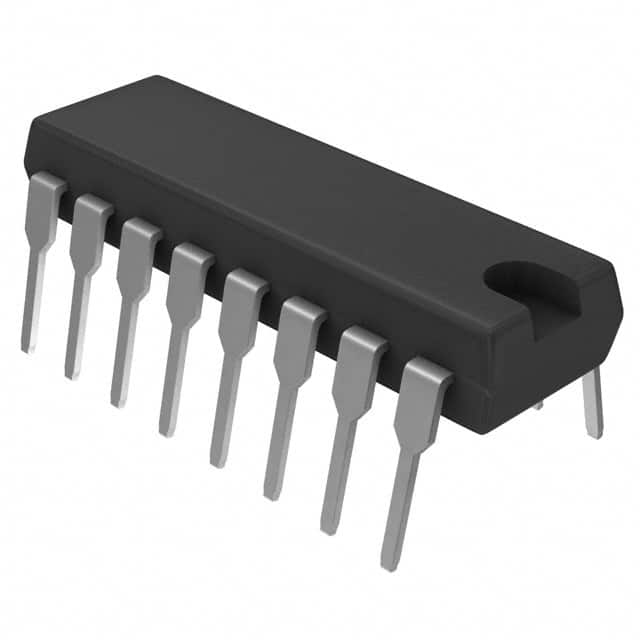
- Part No.:
- TLC5917ING4
- Manufacturer:
- Texas Instruments
- Category:
- LED Drivers
- Package:
- 16-DIP (0.300", 7.62mm)
- Datasheet:
-
 TLC5917ING4.pdf
- Description:
- IC LED DRIVER LINEAR 120MA 16DIP
- Quantity:
- Payment:

- Shipping:

Inventory:3,394
Please send an inquiry. Send us your inquiry, and we will respond immediately.
Product details
Overview
TLC5917ING4 from Texas Instruments is an 8-channel constant-current LED sink driver IC designed for precision LED current control in display and signage systems. It delivers 3–120 mA per channel with ±3% inter-channel current accuracy, supports 30-MHz serial data clocking, and operates from 3.0 V to 5.5 V supply. Its integrated open-load, short-load (TLC5917-specific), and overtemperature detection enable robust fault monitoring in LED panel applications.
For engineers reviewing the TLC5917ING4 datasheet, TLC5917ING4 pinout, TLC5917ING4 application, or TLC5917ING4 equivalent, key selection considerations include its 16-pin SOIC package, R-EXT–based current programming, error-detection mode via OE(ED2)/LE(ED1), SDO-based status readback, and compatibility with cascaded LED driver architectures.
Technical Context
The TLC5917ING4 implements an 8-bit shift register with parallel output latches, enabling serial-to-parallel LED control. Its output stage uses matched current-regulating transistors with a single external R-EXT resistor setting all eight channels' sink current simultaneously.
It supports two operational modes: Normal Mode for LED data loading and latching, and Special Mode-activated by pulse-triggered OE(ED2)-for reading 8-bit error status (open-load, short-load, overtemperature) or writing 256-step global current gain codes. Short-circuit detection (VOUT,TTh = 2.5–3.1 V; VOUT,RTh = 2.2 V) is exclusive to TLC5917, distinguishing it from TLC5916.
Key Specifications
| Parameter | Value and Actual Design Meaning |
|---|---|
| Output channels | 8 independent constant-current sink outputs (OUT0–OUT7) |
| Output current range | 3 mA to 120 mA per channel, set by single R-EXT resistor |
| Current accuracy | ±3% max between channels; ±6% max between ICs at 25°C |
| Max LED voltage | 20 V - supports multi-LED strings or high-VF LEDs without external boost |
| Serial interface speed | 30 MHz max CLK frequency - enables fast refresh in high-resolution LED panels |
| Fault detection | Open-load, short-load (TLC5917 only), and overtemperature per channel |
| Supply voltage | 3.0 V to 5.5 V - compatible with both 3.3 V and 5 V controller logic domains |
Pinout & Package
Package: SOIC (16-pin), body size 9.90 mm × 3.91 mm, RoHS-compliant, surface-mount.
| Pin/Terminal | Circuit Role | Design Meaning |
|---|---|---|
| GND (Pin 1) | Ground reference | Common return for logic and current-sink paths; must be low-impedance for stable current regulation |
| SDI (Pin 2) | Serial data input | Accepts 30-MHz SPI-compatible data stream; Schmitt-trigger input ensures noise immunity |
| CLK (Pin 3) | Serial clock input | Rising-edge triggered; minimum 20 ns pulse width required for reliable data shifting |
| LE(ED1) (Pin 4) | Data latch / mode control | Latches shift register to output latches in Normal Mode; selects Special Mode function (error read or gain write) |
| OUT0–OUT7 (Pins 5–12) | Constant-current sink outputs | Each drives one LED anode (or string anode) to VLED; sinks up to 120 mA with <1% skew at 25°C |
| VDD (Pin 16) | Power supply | 3.0–5.5 V logic and bias supply; decoupling capacitor required near pin for switching stability |
| R-EXT (Pin 15) | Current-setting reference | Connects external resistor to GND; sets full-scale current (e.g., 720 Ω → 26 mA; 360 Ω → 52 mA) |
| SDO (Pin 14) | Serial data output | Shifts out error status or configuration code in Special Mode; enables daisy-chaining of multiple TLC5917s |
| OE(ED2) (Pin 13) | Output enable / mode trigger | Active-low output enable; one-clock pulse initiates Special Mode entry; internal pullup simplifies control |
Key Features
| Feature | Design Value |
|---|---|
| Single-resistor current programming | One R-EXT sets identical current across all 8 channels - eliminates per-channel trimming and reduces BOM count |
| 256-step global current gain | Runtime-adjustable gain (1/12 to 127/128) compensates inter-IC current mismatch to <1%, critical for white-balanced RGB panels |
| TLC5917-exclusive short-load detection | Detects LED short-to-VLED via VOUT threshold comparison (2.5–3.1 V trigger; 2.2 V reset) - adds layer of reliability not present in TLC5916 |
| Per-channel overtemperature shutdown | Independent thermal sensing per output prevents localized LED overheating while maintaining operation of unaffected channels |
| Schmitt-trigger inputs | CLK, LE(ED1), OE(ED2), and SDI tolerate slow-rising or noisy signals - improves robustness in electrically noisy industrial environments |
Applications
| LED Video Billboards | 7-Segment Display Modules |
|---|---|
|
Use Scenario: Outdoor full-color video billboard with high-density SMD LED arrays requiring uniform brightness and fault resilience. IC Role / Device Role / Timing Role: TLC5917ING4 acts as column driver, sinking current from red/green/blue LED strings; synchronized via 30-MHz CLK for >1 kHz refresh rates. Use Value: ±3% inter-channel current matching ensures consistent color point across modules; short-load detection identifies failed LED shorts before thermal runaway occurs. |
Use Scenario: Industrial control panel with multiplexed 7-segment numeric displays operating in wide temperature ranges. IC Role / Device Role / Timing Role: TLC5917ING4 drives segment anodes in static or multiplexed mode; OE(ED2) blanks entire display during digit switching. Use Value: Open-load detection flags broken segments in real time; overtemperature shutdown protects against ambient heat buildup in enclosed enclosures. |
| Gaming Machine Lighting | White Goods LED Indicators |
|
Use Scenario: Slot machine front-panel lighting with dynamic color effects and high-reliability requirements under continuous operation. IC Role / Device Role / Timing Role: TLC5917ING4 controls RGB LED clusters per game zone; cascaded SDO→SDI links reduce microcontroller GPIO usage. Use Value: 256-step current gain allows fine-tuning of white balance across batches; error status readback enables predictive maintenance alerts. |
Use Scenario: Refrigerator or washing machine control board with status LEDs exposed to condensation and thermal cycling. IC Role / Device Role / Timing Role: TLC5917ING4 serves as isolated LED driver, decoupling microcontroller I/O from high-current LED loads. Use Value: 20-V output capability accommodates long LED strings without external boost; ±6% inter-IC accuracy ensures consistent indicator brightness across production units. |
Equivalent & Alternatives
The following parts are listed as comparable options for similar constant-current LED sink driver applications.
| Alternative Part | Technical Difference | Application Difference | Selection Advice |
|---|---|---|---|
| TLC5916IN | Lacks short-load detection circuitry; otherwise identical pinout, timing, and current specs | Not suitable where LED short-to-rail faults must be detected; lower cost where only open-load/thermal protection is needed | Select TLC5916IN only if short-circuit detection is unnecessary and BOM cost reduction is prioritized |
| MAX7219CWG+ | Integrated 4-wire SPI interface, on-chip decoding, and 8×8 matrix support; no R-EXT current setting | Designed for 7-segment/matrix displays with built-in scan control; less flexible for custom LED string topologies | Choose MAX7219CWG+ when driving standard numeric displays with minimal firmware overhead; avoid for high-current or non-matrix LED layouts |
Compared with TLC5916IN, TLC5917ING4 adds critical short-load detection for safety-critical signage; compared with MAX7219CWG+, it offers higher per-channel current (120 mA vs. 40 mA), external current tuning, and direct support for arbitrary LED configurations beyond fixed matrices.
Availability
TLC5917ING4 is available at Aetrix Electronics and suitable for LED video billboards, gaming machine lighting, 7-segment display modules, and white goods indicator systems requiring stable component supply and long-term industrial availability.
Supply support for TLC5917ING4 includes scheduled delivery planning, volume procurement assistance, BOM continuity management, traceable sourcing, and lifecycle availability coordination for OEM customers, industrial embedded developers, connected-device designers, and electronics production programs.
Manufacturer
Texas Instruments is a global semiconductor leader specializing in analog, embedded processing, and power management technologies, with decades of expertise in LED driver innovation.
The TLC591x product line was engineered specifically for high-reliability LED display and signage applications demanding precise current matching, cascaded architecture support, and comprehensive fault diagnostics - including TLC5917ING4's unique short-circuit detection capability.
FAQ
What is the maximum output voltage rating for TLC5917ING4?
The TLC5917ING4 supports a maximum output voltage (VOUT) of 20 V across all eight sink outputs (OUT0–OUT7). This allows direct driving of multi-LED series strings - such as three white LEDs (VF ≈ 3.2 V each) plus margin - without requiring external boost circuitry. The 20-V rating is specified under absolute maximum conditions and applies regardless of current level or ambient temperature.
How does TLC5917ING4 implement short-circuit detection, and is it available on all variants?
TLC5917ING4 implements short-circuit detection by monitoring output voltage (VOUT) against programmable thresholds: a trigger threshold of 2.5–3.1 V and a return threshold of 2.2 V. When VOUT exceeds the trigger level while the channel is active, a short-to-VLED condition is flagged in the error register. This feature is exclusive to the TLC5917 family - the TLC5916 variant lacks short-load detection entirely.
Can TLC5917ING4 be used in cascaded configurations, and how is data passed between devices?
Yes, TLC5917ING4 supports daisy-chain cascading via its SDO (serial data out) and SDI (serial data in) pins. In Normal Mode, serial data shifted into the first device's SDI propagates through each subsequent device's SDO→SDI path. In Special Mode, error status or gain codes are shifted out from the last device's SDO, allowing a single microcontroller to monitor or configure an entire chain using only three wires (CLK, LE, OE).
What is the role of the R-EXT pin on TLC5917ING4, and how does it affect output current accuracy?
The R-EXT pin on TLC5917ING4 connects to an external resistor tied to GND, establishing the reference for all eight output current regulators. Output current scales inversely with R-EXT value (e.g., 720 Ω yields ~26 mA; 360 Ω yields ~52 mA). Inter-channel current matching remains within ±3% due to on-die resistor and transistor matching, while inter-IC variation is ±6% - improved to <1% using the 256-step programmable global gain feature.
Does TLC5917ING4 require external components for basic operation, and what are the minimum requirements?
Yes, TLC5917ING4 requires three external components for functional operation: (1) a decoupling capacitor (≥0.1 µF ceramic) between VDD and GND, (2) an R-EXT resistor from Pin 15 to GND to set output current, and (3) current-limiting resistors are not needed since current regulation is internal. No external pull-up/pull-down resistors are required - LE(ED1) has an internal pulldown and OE(ED2) an internal pullup - simplifying PCB layout and reducing BOM count.
TLC5917ING4 Specifications
- Product attributes
- Attribute value
- Manufacturer:
- Texas Instruments
- Series:
- -
- Package/Case:
- 16-DIP (0.300", 7.62mm)
- Packaging:
- Tube
- Product Status:
- Discontinued at Digi-Key
- Type:
- Linear
- Topology:
- Shift Register
- Internal Switch(s):
- Yes
- Number of Outputs:
- 8
- Voltage - Supply (Min):
- 3V
- Voltage - Supply (Max):
- 5.5V
- Voltage - Output:
- 20V
- Current - Output / Channel:
- 120mA
- Frequency:
- 30MHz
- Dimming:
- -
- Applications:
- Signage
- Operating Temperature:
- -40°C ~ 125°C (TA)
- Grade:
- -
- Qualification:
- -
- Mounting Type:
- Through Hole
- Supplier Device Package:
- 16-PDIP
TLC5917ING4 FAQ
1.How can I place an order for TLC5917ING4 through Aetrix?
Please submit a Request for Quotation (RFQ) for TLC5917ING4 on Aetrix. Our sales agent will provide a competitive quotation and guide you through the order confirmation once you accept the terms.
2.Are the price and stock information for TLC5917ING4 reliable?
The price and inventory of TLC5917ING4 are updated periodically and may fluctuate due to market conditions. Stock and pricing data are typically refreshed every 24 hours. Quotation validity for TLC5917ING4 is usually 5 days.
3.What payment methods are accepted for TLC5917ING4?
We accept Wire Transfer, PayPal, Credit Card, Western Union, MoneyGram, and Escrow for TLC5917ING4 transactions.
Note: Certain payment methods may incur a processing fee.
4.How is shipping managed for TLC5917ING4?
TLC5917ING4 orders can be shipped via leading logistics carriers, including DHL, UPS, FedEx, TNT, or Registered Mail.
Once your TLC5917ING4 order is processed, you will receive an email with the shipment details and tracking number.
Note: Tracking information may take up to 24 hours to appear. Express delivery typically takes 3–5 business days.
5.How can I obtain technical support or documentation for TLC5917ING4?
For technical support, including TLC5917ING4 datasheets, pinout diagrams, or application guidance, please contact our engineering support team. They can provide detailed documentation and assistance for your TLC5917ING4 requirements.
6.How does Aetrix verify that TLC5917ING4 is sourced from the original manufacturer or authorized distributors?
All TLC5917ING4 products on Aetrix are procured from qualified distributors and authorized channels. Our dedicated quality assurance team conducts strict verification, including traceability checks and, if necessary, third-party testing. This ensures that TLC5917ING4 meets industry standards.
7.What is the process for return or replacement of TLC5917ING4?
All TLC5917ING4 units undergo pre-shipment inspection (PSI). If there is an issue with TLC5917ING4, returns or replacements are accepted under the following conditions:
1.Quantity discrepancies, incorrect items, or visible external defects (such as breakage or corrosion), acknowledged by Aetrix.
2.The issue is reported within 90 days of delivery.
3.The TLC5917ING4 part is unused and in its original packaging.
Return procedure for TLC5917ING4:
1.Submit a request within 90 days.
2.Obtain a Return Material Authorization (RMA) from Aetrix.
TLC5917ING4 Tags
-
BCR402RE6327HTSA1
Infineon Technologies

-
BCR430UXTSA2
Infineon Technologies
-
BCR420UE6433HTMA1
Infineon Technologies
-
BCR420UE6327HTSA1
Infineon Technologies
-
BCR421UE6327HTSA1
Infineon Technologies
-
LYT1604D-TL
Power Integrations

-
HV9910CLG-G
Microchip Technology
-
CL2N8-G
Microchip Technology
-
BCR420UW6-7
Diodes Incorporated
-
BCR421UW6-7
Diodes Incorporated
-
BCR420UFD-7
Diodes Incorporated
-
BCR421UFD-7
Diodes Incorporated
Tech Hub

A practical engineering guide to 3.3V and 5V logic compatibility, input thresholds, resistor dividers, translator ICs, MOSFET level shifting, I2C pull-ups, timing limits and power-sequencing risks.

The 74HC595 uses push-pull logic outputs, while the TPIC6B595 uses 50 V open-drain DMOS sinks for higher-power loads. This guide compares timing, current limits, 3.3 V interfacing, load wiring, thermal…

The 74HC595 converts serial data into eight stable parallel outputs. This guide covers pin functions, shift and storage timing, OE and MR behavior, drive-current limits, cascading, voltage compatibilit…

A technical comparison of level-sensitive latches and edge-triggered flip-flops, covering timing windows, setup and hold limits, master–slave operation, time borrowing, race-through, HDL inference and…

A D latch stores one bit while Enable controls when data can pass. This reference covers gate-level operation, truth tables, transparency, setup and hold timing, LE versus OE, common ICs and practical …

An SR latch stores one bit through cross-coupled feedback. This engineering reference covers NOR and NAND implementations, truth tables, forbidden-state recovery, gated operation, switch debouncing, fa…

Latch circuits retain one bit through feedback. This technical reference covers SR and D latches, truth tables, transparency, timing limits, latch-versus-flip-flop behavior, applications and common log…

An engineering guide to LED driver operation, constant-current and constant-voltage outputs, linear and switching topologies, dimming, IC selection, calculations, replacement compatibility, and fault c…

Operational amplifier guide covering op amp basics, feedback, ideal vs real op amps, common configurations, buffer circuits, offset, bias current, gain-bandwidth, slew rate, rail-to-rail limits and sel…

Jumper cables guide covering safe connection order, red and black clamp placement, final ground connection, cable gauge, length, clamp quality, copper vs CCA cables, jump starter comparison and battery…


