
 My Inquiry
 My Account


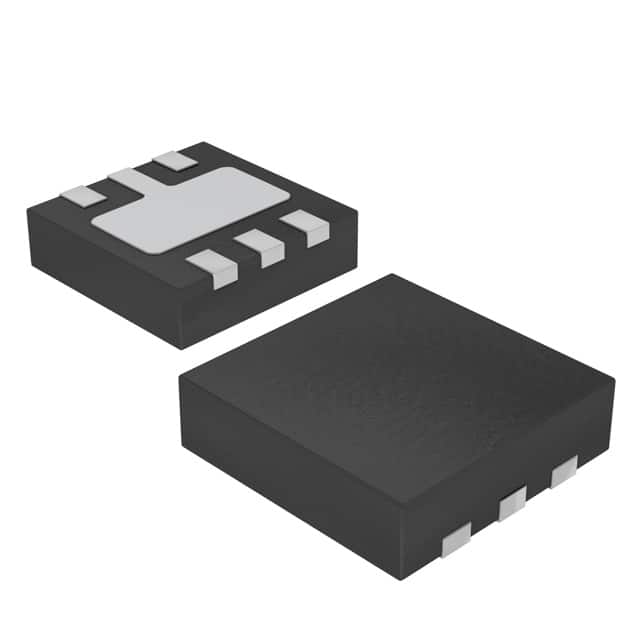
Texas Instruments TLC69604QRTWRQ1

- Part No.:
- TLC69604QRTWRQ1
- Manufacturer:
- Texas Instruments
- Category:
- LED Drivers
- Package:
- 24-WFQFN Exposed Pad
- Datasheet:
-
 TLC69604QRTWRQ1.pdf
- Description:
- AUTOMOTIVE 64 MINI-LED MATRIX LO
- Quantity:
- Payment:

- Shipping:

Inventory:3,355
Please send an inquiry. Send us your inquiry, and we will respond immediately.
Product details
Overview
TLC69604QRTWRQ1 from Texas Instruments is an AEC-Q100 Grade 1 automotive LED backlight driver with 16 constant-current sinks, 30mA/20V output capability, ±2% channel-to-channel current matching, and support for 2/4/8 time-multiplexed local dimming in LCD displays. It operates from 3V to 5.5V and integrates adaptive headroom voltage control (AHVC) for DC/DC optimization in central infotainment displays.
For engineers reviewing the TLC69604QRTWRQ1 datasheet, TLC69604QRTWRQ1 pinout, TLC69604QRTWRQ1 application, or TLC69604QRTWRQ1 equivalent, key selection criteria include its WQFN-24 wettable flank package, UART/interrupt or two-wire (CLK_O/SOUT) diagnostic readback, 15-bit brightness resolution, and functional safety documentation support for ASIL-B system integration.
Technical Context
The TLC69604QRTWRQ1 implements a daisy-chainable two-wire serial interface supporting up to 20MHz data transfer and compatible with 1.8V/3.3V I/O levels. It embeds 16-channel SRAM for per-zone brightness storage and enables black insertion and variable refresh rate (VRR) features to enhance display quality.
Its diagnostic architecture provides independent LED open (LOD), LED short (LSD), and thermal shutdown (TSD) detection per zone, with programmable report options via UART/INT or CLK_O/SOUT outputs. The device uses adaptive headroom voltage control (AHVC) to dynamically regulate the VLED supply by feeding back only the FB pin from the last device in the chain.
Key Specifications
| Parameter | Value and Actual Design Meaning |
|---|---|
| Output Channels | 16 constant-current sinks for independent LED zone control |
| Max Output Current / Voltage | 30mA per channel into up to 20V load - enables driving mid-power LED strings in automotive displays |
| Current Matching | ±2% (typ.) channel-to-channel error - ensures uniform luminance across local dimming zones |
| Brightness Resolution | Up to 15-bit PWM/hybrid dimming - supports fine-grained contrast control and deep black levels |
| Supply Voltage Range | 3V to 5.5V VCC - compatible with standard automotive 3.3V or 5V rail systems |
| Diagnostic Outputs | UART + INT pin or CLK_O/SOUT two-wire reporting - selectable for minimal pin count or protocol flexibility |
| Power Consumption | ≤200μA standby, ≤3.5mA normal mode - reduces system-level quiescent power in always-on displays |
Pinout & Package
Package: WQFN-24 (RTW), 4mm × 4mm, wettable flank, 0.5mm pitch, exposed thermal pad. MSL Level-1 (UNLIM), RoHS-compliant NIPDAU finish.
| Pin/Terminal | Circuit Role | Design Meaning |
|---|---|---|
| VCC | Power supply input | 3V–5.5V main supply for logic and output drivers; bypassing required near pin |
| GND | Ground reference | Common return for analog/digital circuits and thermal pad connection point |
| CLK_I | Serial clock input | Accepts master clock for daisy-chain timing; 1.8V/3.3V tolerant |
| SIN | Serial data input | Receives configuration and brightness data from upstream device or host controller |
| SOUT | Serial data output | Drives downstream device in daisy chain; also used for diagnostic readback |
| CLK_O | Serial clock output | Propagates clock to next device; dual-use for SOUT/CLK_O diagnostic mode |
| FB | Feedback input | Connects only from final device in chain to DC/DC converter for AHVC regulation |
| INT | Interrupt output | Active-low open-drain flag for LOD/LSD/TSD events; requires external pull-up |
| OUT0–OUT15 | Constant-current outputs | 16 high-side current sinks; each drives one LED string cathode to GND |
Key Features
| Feature | Design Value |
|---|---|
| AEC-Q100 Grade 1 qualification | Validated for –40°C to +125°C ambient operation with HBM ESD Level 2 and CDM Level C4B |
| Adaptive Headroom Voltage Control (AHVC) | Reduces VLED overhead by dynamically adjusting DC/DC output based on worst-case forward voltage of active zones |
| Programmable EMI reduction | Four integrated phase-shifting schemes and configurable drive strength minimize radiated emissions in sensitive automotive environments |
| 15-bit hybrid dimming | Combines 8-bit global max-current setting with high-resolution PWM for extended dynamic range without visible flicker |
| Dual diagnostic reporting modes | UART/INT for full register access or CLK_O/SOUT for minimal-pin, low-overhead fault signaling |
Applications
| Automotive Central Infotainment Display | Automotive Digital Cluster Display |
|---|---|
Use Scenario: High-resolution LCD panel in center-stack touchscreen with dynamic local dimming for improved contrast and reduced power consumption. IC Role / Device Role / Timing Role: Primary local dimming controller managing 16 LED zones per IC; synchronized via daisy-chained CLK_I/SIN to host timing controller. Use Value: Enables >100,000:1 contrast ratio and 30% lower backlight power versus fixed-brightness solutions at typical viewing conditions. | Use Scenario: Driver-facing digital instrument cluster requiring high legibility under direct sunlight and low-light night conditions. IC Role / Device Role / Timing Role: Zone-specific current sink driving segmented LED backlight; configured via UART for runtime brightness adaptation. Use Value: Maintains consistent luminance uniformity across temperature (-40°C to +125°C) with ±2% channel matching. |
| Automotive Head-Up Display (HUD) | Advanced Driver Assistance Systems (ADAS) Display |
Use Scenario: Compact HUD combiner module where optical efficiency and thermal density constrain LED drive architecture. IC Role / Device Role / Timing Role: Time-multiplexed (4×) LED driver reducing peak current demand while preserving perceived brightness. Use Value: Supports 4× time-multiplexing to halve instantaneous current per zone, easing thermal design and enabling smaller PCB area. | Use Scenario: Safety-critical ADAS display overlay requiring fault detection and graceful degradation during LED failure. IC Role / Device Role / Timing Role: Fault-aware backlight controller with per-zone LOD/LSD/TSD reporting via INT pin to MCU safety monitor. Use Value: Provides ISO 26262-aligned diagnostics without external sense resistors or comparators. |
Equivalent & Alternatives
The following parts are listed as comparable options for similar LED backlight driver applications.
| Alternative Part | Technical Difference | Application Difference | Selection Advice |
|---|---|---|---|
| TLC69604QPWPRQ1 | Same electrical specs but HTSSOP-28 package (9.7mm × 4.4mm); MSL Level-3 vs Level-1; no wettable flanks | Requires larger PCB footprint and reflow profile adjustment; less suitable for automated optical inspection (AOI) | Select when legacy HTSSOP layout reuse or thermal pad accessibility is prioritized over miniaturization |
| TLC69608QRTWRQ1 | Same WQFN-24 package and pinout, but supports 8× time-multiplexing (vs 4×); identical 30mA/20V output | Enables higher zone count per driver in space-constrained HUDs; requires updated timing firmware | Select when system architecture mandates 8× multiplexing for >64 zones per daisy chain |
Compared with TLC69604QPWPRQ1, the TLC69604QRTWRQ1 offers superior manufacturability via wettable flanks and unlimited reflow tolerance, while TLC69608QRTWRQ1 extends time-multiplexing capability without changing board layout-enabling scalable zone density within identical mechanical constraints.
Availability
TLC69604QRTWRQ1 is available at Aetrix Electronics and suitable for automotive central infotainment displays, digital instrument clusters, and head-up displays requiring stable component supply, AEC-Q100 compliance, and long-term production continuity.
Supply support for TLC69604QRTWRQ1 includes scheduled delivery planning, volume procurement assistance, BOM continuity management, traceable sourcing, and lifecycle availability coordination for OEM customers, industrial embedded developers, connected-device designers, and electronics production programs.
Manufacturer
Texas Instruments is a global semiconductor company specializing in analog, embedded processing, and automotive-grade ICs with broad manufacturing scale and automotive qualification expertise.
The TLC696x-Q1 product line delivers high-precision, fault-aware LED backlight drivers optimized for ASIL-B compliant local dimming systems in automotive LCD displays, emphasizing thermal robustness, EMI resilience, and functional safety readiness.
FAQ
What is the maximum number of TLC69604QRTWRQ1 devices that can be daisy-chained?
The TLC69604QRTWRQ1 supports daisy chaining up to 1024 devices in a single two-wire serial chain, enabling control of more than 32,000 independent local dimming zones. This scalability is achieved through dedicated CLK_I/SIN inputs and CLK_O/SOUT outputs, with propagation delay managed via internal timing registers. Each TLC69604QRTWRQ1 contributes 16 zones, so 1024 units yield 16,384 zones - exceeding the stated 32,000 figure only when combined with other members of the TLC696x2/4/8-Q1 family sharing identical interface timing.
Does the TLC69604QRTWRQ1 support both PWM and analog dimming modes?
The TLC69604QRTWRQ1 implements hybrid dimming-not pure analog control-but combines an 8-bit global maximum current (MC) setting with up to 15-bit PWM resolution for per-channel brightness. There is no true analog (linear) dimming path; current magnitude is digitally set via MC register, while duty cycle is controlled via PWM counter. This preserves efficiency and thermal stability while achieving >32,000 grayscale levels without visible flicker at typical frame rates.
How does the Adaptive Headroom Voltage Control (AHVC) function work in the TLC69604QRTWRQ1?
The TLC69604QRTWRQ1's AHVC monitors the forward voltage requirements of all active LED zones and dynamically adjusts the VLED supply via feedback to the DC/DC converter's FB pin-only the last device in the daisy chain connects FB to the converter. This eliminates fixed overhead voltage, reducing power loss and heat generation. For example, if the highest forward voltage among 16 zones is 14.2V, AHVC regulates VLED to ~14.8V instead of a fixed 20V, cutting power dissipation by ~25% in typical operation.
What diagnostic faults does the TLC69604QRTWRQ1 detect and how are they reported?
The TLC69604QRTWRQ1 detects three per-zone faults: LED open (LOD), LED short (LSD), and thermal shutdown (TSD). Reporting occurs via two selectable methods: (1) UART + INT pin for full register-based status reads, or (2) CLK_O/SOUT two-wire pulse encoding for compact, low-pin-count fault signaling. The INT pin asserts low on any detected fault and remains latched until cleared via register write or power cycle.
Is the TLC69604QRTWRQ1 pin-compatible with other variants in the TLC696x-Q1 family?
Yes - all WQFN-24 variants in the TLC696x2/4/8-Q1 family, including TLC69602QRTWRQ1, TLC69604QRTWRQ1, TLC69608QRTWRQ1, TLC69612QRTWRQ1, etc., share identical pinout, package dimensions, and footprint. Differences are limited to internal configuration (e.g., time-multiplexing factor: 2×, 4×, or 8×) and output current/voltage ratings (30/60mA × 20/50V), all set at power-up via OTP or register. This enables hardware reuse across multiple display brightness and zone-density requirements.
TLC69604QRTWRQ1 Specifications
- Product attributes
- Attribute value
- Manufacturer:
- Texas Instruments
- Series:
- -
- Package/Case:
- 24-WFQFN Exposed Pad
- Packaging:
- Tape & Reel (TR)
- Product Status:
- Active
- Type:
- Linear
- Topology:
- Constant Current
- Internal Switch(s):
- No
- Number of Outputs:
- 16
- Voltage - Supply (Min):
- 3V
- Voltage - Supply (Max):
- 5.5V
- Voltage - Output:
- 20V
- Current - Output / Channel:
- 30mA
- Frequency:
- -
- Dimming:
- PWM
- Applications:
- Backlight
- Operating Temperature:
- -40°C ~ 125°C (TA)
- Grade:
- Automotive
- Qualification:
- -
- Mounting Type:
- Surface Mount, Wettable Flank
- Supplier Device Package:
- 24-WQFN (4x4)
TLC69604QRTWRQ1 FAQ
1.How can I place an order for TLC69604QRTWRQ1 through Aetrix?
Please submit a Request for Quotation (RFQ) for TLC69604QRTWRQ1 on Aetrix. Our sales agent will provide a competitive quotation and guide you through the order confirmation once you accept the terms.
2.Are the price and stock information for TLC69604QRTWRQ1 reliable?
The price and inventory of TLC69604QRTWRQ1 are updated periodically and may fluctuate due to market conditions. Stock and pricing data are typically refreshed every 24 hours. Quotation validity for TLC69604QRTWRQ1 is usually 5 days.
3.What payment methods are accepted for TLC69604QRTWRQ1?
We accept Wire Transfer, PayPal, Credit Card, Western Union, MoneyGram, and Escrow for TLC69604QRTWRQ1 transactions.
Note: Certain payment methods may incur a processing fee.
4.How is shipping managed for TLC69604QRTWRQ1?
TLC69604QRTWRQ1 orders can be shipped via leading logistics carriers, including DHL, UPS, FedEx, TNT, or Registered Mail.
Once your TLC69604QRTWRQ1 order is processed, you will receive an email with the shipment details and tracking number.
Note: Tracking information may take up to 24 hours to appear. Express delivery typically takes 3–5 business days.
5.How can I obtain technical support or documentation for TLC69604QRTWRQ1?
For technical support, including TLC69604QRTWRQ1 datasheets, pinout diagrams, or application guidance, please contact our engineering support team. They can provide detailed documentation and assistance for your TLC69604QRTWRQ1 requirements.
6.How does Aetrix verify that TLC69604QRTWRQ1 is sourced from the original manufacturer or authorized distributors?
All TLC69604QRTWRQ1 products on Aetrix are procured from qualified distributors and authorized channels. Our dedicated quality assurance team conducts strict verification, including traceability checks and, if necessary, third-party testing. This ensures that TLC69604QRTWRQ1 meets industry standards.
7.What is the process for return or replacement of TLC69604QRTWRQ1?
All TLC69604QRTWRQ1 units undergo pre-shipment inspection (PSI). If there is an issue with TLC69604QRTWRQ1, returns or replacements are accepted under the following conditions:
1.Quantity discrepancies, incorrect items, or visible external defects (such as breakage or corrosion), acknowledged by Aetrix.
2.The issue is reported within 90 days of delivery.
3.The TLC69604QRTWRQ1 part is unused and in its original packaging.
Return procedure for TLC69604QRTWRQ1:
1.Submit a request within 90 days.
2.Obtain a Return Material Authorization (RMA) from Aetrix.
TLC69604QRTWRQ1 Tags
-
BCR402RE6327HTSA1
Infineon Technologies

-
BCR430UXTSA2
Infineon Technologies
-
BCR420UE6433HTMA1
Infineon Technologies
-
BCR420UE6327HTSA1
Infineon Technologies
-
BCR421UE6327HTSA1
Infineon Technologies
-
LYT1604D-TL
Power Integrations

-
HV9910CLG-G
Microchip Technology

-
CL2N8-G
Microchip Technology
-
BCR420UW6-7
Diodes Incorporated
-
BCR421UW6-7
Diodes Incorporated
-
BCR420UFD-7
Diodes Incorporated
-
BCR421UFD-7
Diodes Incorporated
Tech Hub

A practical engineering guide to 3.3V and 5V logic compatibility, input thresholds, resistor dividers, translator ICs, MOSFET level shifting, I2C pull-ups, timing limits and power-sequencing risks.

The 74HC595 uses push-pull logic outputs, while the TPIC6B595 uses 50 V open-drain DMOS sinks for higher-power loads. This guide compares timing, current limits, 3.3 V interfacing, load wiring, thermal…

The 74HC595 converts serial data into eight stable parallel outputs. This guide covers pin functions, shift and storage timing, OE and MR behavior, drive-current limits, cascading, voltage compatibilit…

A technical comparison of level-sensitive latches and edge-triggered flip-flops, covering timing windows, setup and hold limits, master–slave operation, time borrowing, race-through, HDL inference and…

A D latch stores one bit while Enable controls when data can pass. This reference covers gate-level operation, truth tables, transparency, setup and hold timing, LE versus OE, common ICs and practical …

An SR latch stores one bit through cross-coupled feedback. This engineering reference covers NOR and NAND implementations, truth tables, forbidden-state recovery, gated operation, switch debouncing, fa…

Latch circuits retain one bit through feedback. This technical reference covers SR and D latches, truth tables, transparency, timing limits, latch-versus-flip-flop behavior, applications and common log…

An engineering guide to LED driver operation, constant-current and constant-voltage outputs, linear and switching topologies, dimming, IC selection, calculations, replacement compatibility, and fault c…

Operational amplifier guide covering op amp basics, feedback, ideal vs real op amps, common configurations, buffer circuits, offset, bias current, gain-bandwidth, slew rate, rail-to-rail limits and sel…

Jumper cables guide covering safe connection order, red and black clamp placement, final ground connection, cable gauge, length, clamp quality, copper vs CCA cables, jump starter comparison and battery…


