
 My Inquiry
 My Account


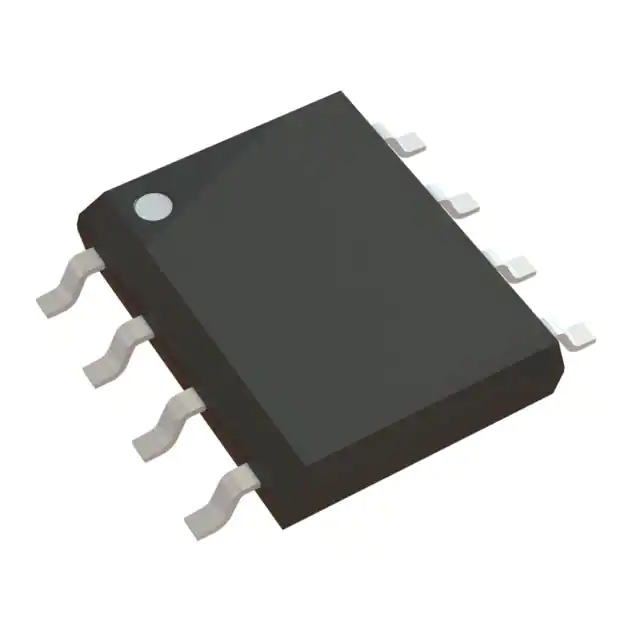
Infineon Technologies TLE4254EJSXUMA2
- Part No.:
- TLE4254EJSXUMA2
- Manufacturer:
- Infineon Technologies
- Package:
- 8-SOIC (0.154", 3.90mm Width) Exposed Pad
- Datasheet:
-
 TLE4254EJSXUMA2.pdf
- Description:
- IC REG LINEAR POS ADJ 70MA 8DSO
- Quantity:
- Payment:

- Shipping:

Inventory:5,833
Please send an inquiry. Send us your inquiry, and we will respond immediately.
Product details
Overview
TLE4254EJSXUMA2 from Infineon is a high-accuracy automotive-grade low-dropout voltage tracking regulator in PG-DSO-8 exposed pad package, delivering 70 mA output current with ±1.5% output tracking tolerance to reference, 0.2 V typical dropout at full load, and operation across -40 °C to +150 °C junction temperature. It supplies off-board sensors in powertrain systems using a reference input (2.0–45 V) and features open-collector status output for fault indication.
For engineers reviewing the TLE4254EJSXUMA2 datasheet, TLE4254EJSXUMA2 pinout, TLE4254EJSXUMA2 application, or TLE4254EJSXUMA2 equivalent, this device is selected for precision tracking regulation in harsh automotive environments where reverse polarity protection, short-circuit resilience, and thermal robustness are mandatory design requirements.
Technical Context
The TLE4254EJSXUMA2 implements a precision tracking architecture where the output voltage (Q) follows an externally applied reference voltage at the EN/ADJ pin with typ. ±1.5% tolerance over temperature and line/load variations. Its internal error amplifier compares the reference to feedback (via FB pin in EJA variants) or directly regulates against EN/ADJ in EJS configuration.
This variant (EJS) integrates an open-collector status (ST) output that sinks current when output voltage deviates outside specified UV/OV thresholds, enabling system-level fault detection. Protection includes reverse-polarity input handling (-20 V), short-circuit to GND/battery, and thermal shutdown at ~175 °C.
Key Specifications
| Parameter | Value and Actual Design Meaning |
|---|---|
| Output current | 70 mA max - sufficient to power multiple automotive sensors (e.g., crankshaft/camshaft position sensors) without external buffering. |
| Tracking accuracy | ±1.5% over -40 °C to +150 °C - ensures stable sensor biasing despite engine bay thermal cycling. |
| Dropout voltage | 0.2 V typ. @ 70 mA - enables regulation from low-input rails (e.g., 5.2 V reference → 5.0 V output) with minimal headroom loss. |
| Input voltage range | -20 V to +45 V - supports reverse-battery immunity and transient ride-through per ISO 7637-2 Pulse 1/2/5a. |
| Output capacitor | 1 µF ceramic - reduces BOM count and PCB area vs. electrolytic alternatives; compatible with standard MLCC footprints. |
| Status output | Open-collector ST pin - allows wired-OR fault signaling to microcontroller GPIO with configurable pull-up voltage (≤7 V). |
| Junction temp. range | -40 °C to +150 °C - qualified per AEC-Q100 Grade 0, suitable for under-hood placement near exhaust manifolds or turbochargers. |
Pinout & Package
Package: PG-DSO-8 exposed pad (RoHS-compliant, thermally enhanced), with exposed pad electrically connected to GND for improved heat dissipation (RthJC = 15 K/W).
| Pin/Terminal | Circuit Role | Design Meaning |
|---|---|---|
| 1 Q | Tracker output | Regulated output node; requires local 1 µF ceramic capacitor to GND with ESR ≤5 Ω for stability. |
| 2, 3, 7 n.c. | No-connect | Internally unconnected; must be tied to GND on PCB for mechanical integrity and thermal conduction. |
| 4 ST | Status output | Open-collector fault indicator; pulls low during output undervoltage/overvoltage; requires external pull-up resistor. |
| 5 EN/ADJ | Adjust/enable input | Reference voltage input (2.0–45 V); high = enable, low = shutdown; also defines output tracking setpoint. |
| 6 GND | Ground reference | Main signal and power return; connects to PCB heatsink area and exposed pad for thermal management. |
| 8 I | Input supply | Main IC supply rail; requires local decoupling capacitor close to pin to suppress line transients. |
| Pad (exposed) | Thermal pad / GND | Electrically GND; soldered to large copper pour for RthJA reduction to 47 K/W (natural convection). |
Key Features
| Feature | Design Value |
|---|---|
| Reverse polarity protection | Withstands -20 V input continuously - eliminates need for external series diode in battery-connected applications. |
| Short-circuit protection | Self-limiting current foldback with automatic recovery - sustains indefinite short to GND or battery without latch-up or damage. |
| Low quiescent current | Typ. 120 µA in OFF mode - extends vehicle battery life during extended parking (e.g., key-off leakage budgets). |
| Wide reference compatibility | Accepts 2.0 V minimum reference - interoperates with low-voltage MCU I/Os, DACs, or precision bandgap references. |
| AEC-Q100 qualification | Grade 0 (−40 °C to +150 °C) - certified for safety-critical powertrain and chassis control modules. |
Applications
| Engine Control Unit (ECU) Sensor Biasing | Transmission Control Module (TCM) Position Sensing |
|---|---|
|
Use Scenario: Providing stable 5.0 V bias to Hall-effect crankshaft position sensors in gasoline direct injection engines. IC Role / Device Role / Timing Role: Precision tracking regulator replicating main ECU 5 V rail with ±1.5% accuracy under 125 °C ambient and load transients. Use Value: Eliminates sensor signal drift caused by reference voltage variation, ensuring accurate ignition timing and misfire detection. |
Use Scenario: Powering dual GMR-based gear position sensors in 8-speed automatic transmissions exposed to oil immersion and vibration. IC Role / Device Role / Timing Role: Fault-tolerant regulator with ST pin reporting output faults to TCM microcontroller for diagnostic trouble code (DTC) generation. Use Value: Enables ISO 26262 ASIL-B compliant diagnostics via real-time output monitoring without additional supervisory ICs. |
| Brake-by-Wire Actuator Interface | Exhaust Gas Recirculation (EGR) Valve Control |
|
Use Scenario: Supplying isolated 3.3 V logic rails to solenoid driver ICs in electro-hydraulic brake actuators. IC Role / Device Role / Timing Role: Low-dropout tracker regulating from 5 V master rail; maintains regulation during cranking dips down to 6 V battery. Use Value: Prevents actuator lockup during cold-start voltage sags by sustaining >3.0 V output with only 0.2 V headroom required. |
Use Scenario: Biasing differential pressure sensors measuring EGR flow across hot exhaust manifolds (130 °C case temp). IC Role / Device Role / Timing Role: High-temp qualified regulator operating up to 150 °C junction, with thermal shutdown protecting against sustained overheating. Use Value: Ensures continuous sensor operation without derating, supporting OBD-II emissions compliance under extreme thermal stress. |
Equivalent & Alternatives
The following parts are listed as comparable options for similar automotive tracking regulator applications.
| Alternative Part | Technical Difference | Application Difference | Selection Advice |
|---|---|---|---|
| TLV71718PDPWR | Fixed 1.8 V output, 150 mA, no status pin, no reverse polarity protection, max input 5.5 V. | Limited to low-voltage, non-automotive applications (e.g., infotainment MCUs); lacks fault reporting and ruggedization. | Select only for cost-sensitive, non-safety-critical 1.8 V point-of-load regulation with clean input rails. |
| MAX1725EUT+T | Fixed 3.3 V output, 150 mA, no tracking capability, no ST pin, no reverse polarity rating, max input 28 V. | Suitable for body electronics (e.g., door modules) but not powertrain due to narrower voltage/temp range and missing protections. | Choose when fixed-output, higher-current regulation suffices and AEC-Q100 Grade 0 is not required. |
Compared with TLV71718PDPWR and MAX1725EUT+T, the TLE4254EJSXUMA2 uniquely combines adjustable tracking, reverse-battery immunity, integrated fault signaling, and AEC-Q100 Grade 0 qualification-making it irreplaceable for safety-critical engine/transmission sensor biasing.
Availability
TLE4254EJSXUMA2 is available at Aetrix Electronics and suitable for engine control units, transmission control modules, brake-by-wire systems, and exhaust gas recirculation subsystems requiring stable component supply under automotive qualification and long-term lifecycle assurance.
Supply support for TLE4254EJSXUMA2 includes scheduled delivery planning, volume procurement assistance, BOM continuity management, traceable sourcing, and lifecycle availability coordination for OEM customers, industrial embedded developers, connected-device designers, and electronics production programs.
Manufacturer
Infineon Technologies is a German semiconductor manufacturer specializing in power management, automotive ICs, and industrial control solutions, with global manufacturing and AEC-Q100 validation infrastructure.
The TLE4254 belongs to Infineon's OPTIREG™ linear product line, engineered specifically for high-reliability automotive power supply functions-including sensor biasing, actuator interface, and ECU sub-regulation-under extreme thermal, electrical, and mechanical stress.
FAQ
What is the function of the ST pin on TLE4254EJSXUMA2?
The ST (Status) pin is an open-collector output that pulls low when the regulated output voltage falls outside its valid window-either due to undervoltage (e.g., input dropout) or overvoltage (e.g., feedback fault). It requires an external pull-up resistor to a logic-compatible voltage (≤7 V) and interfaces directly with microcontroller GPIO pins for real-time fault detection without additional circuitry.
Can TLE4254EJSXUMA2 regulate from a 3.3 V reference?
Yes-the EN/ADJ pin accepts reference voltages as low as 2.0 V, so a 3.3 V source (e.g., from an MCU GPIO or precision reference IC) can serve as the tracking reference. The output will follow that 3.3 V with ±1.5% accuracy across temperature and load, provided input voltage remains ≥3.5 V (3.3 V + 0.2 V dropout).
How does the exposed pad affect thermal performance?
The exposed pad is electrically connected to GND and serves as the primary thermal path. With proper PCB layout-soldered to ≥300 mm² copper area using thermal vias-junction-to-ambient thermal resistance drops to 47 K/W (vs. 159 K/W on footprint-only board), enabling reliable 70 mA operation at 150 °C junction temperature without forced airflow.
Is external feedback compensation required for stability?
No-stability is guaranteed with a single 1 µF ceramic output capacitor (ESR ≤5 Ω) placed adjacent to the Q and GND pins. The internal compensation network is optimized for this condition; adding external RC networks or larger capacitors may degrade transient response or induce oscillation per datasheet Section 3.2.
TLE4254EJSXUMA2 Specifications
- Product attributes
- Attribute value
- Manufacturer:
- Infineon Technologies
- Series:
- OPTIREG™
- Package/Case:
- 8-SOIC (0.154", 3.90mm Width) Exposed Pad
- Packaging:
- Tape & Reel (TR)
- Product Status:
- Active
- Output Configuration:
- Positive
- Output Type:
- Adjustable
- Number of Regulators:
- 1
- Voltage - Input (Max):
- 45V
- Voltage - Output (Min/Fixed):
- Tracking
- Voltage - Output (Max):
- -
- Voltage Dropout (Max):
- 0.4V @ 70mA
- Current - Output:
- 70mA
- Current - Quiescent (Iq):
- 80 µA
- Current - Supply (Max):
- 15 mA
- PSRR:
- 60dB (100Hz)
- Control Features:
- Enable
- Protection Features:
- Over Temperature, Reverse Polarity, Short Circuit
- Operating Temperature:
- -40°C ~ 150°C (TJ)
- Grade:
- Automotive
- Qualification:
- AEC-Q100
- Mounting Type:
- Surface Mount
- Supplier Device Package:
- PG-DSO-8
TLE4254EJSXUMA2 FAQ
1.How can I place an order for TLE4254EJSXUMA2 through Aetrix?
Please submit a Request for Quotation (RFQ) for TLE4254EJSXUMA2 on Aetrix. Our sales agent will provide a competitive quotation and guide you through the order confirmation once you accept the terms.
2.Are the price and stock information for TLE4254EJSXUMA2 reliable?
The price and inventory of TLE4254EJSXUMA2 are updated periodically and may fluctuate due to market conditions. Stock and pricing data are typically refreshed every 24 hours. Quotation validity for TLE4254EJSXUMA2 is usually 5 days.
3.What payment methods are accepted for TLE4254EJSXUMA2?
We accept Wire Transfer, PayPal, Credit Card, Western Union, MoneyGram, and Escrow for TLE4254EJSXUMA2 transactions.
Note: Certain payment methods may incur a processing fee.
4.How is shipping managed for TLE4254EJSXUMA2?
TLE4254EJSXUMA2 orders can be shipped via leading logistics carriers, including DHL, UPS, FedEx, TNT, or Registered Mail.
Once your TLE4254EJSXUMA2 order is processed, you will receive an email with the shipment details and tracking number.
Note: Tracking information may take up to 24 hours to appear. Express delivery typically takes 3–5 business days.
5.How can I obtain technical support or documentation for TLE4254EJSXUMA2?
For technical support, including TLE4254EJSXUMA2 datasheets, pinout diagrams, or application guidance, please contact our engineering support team. They can provide detailed documentation and assistance for your TLE4254EJSXUMA2 requirements.
6.How does Aetrix verify that TLE4254EJSXUMA2 is sourced from the original manufacturer or authorized distributors?
All TLE4254EJSXUMA2 products on Aetrix are procured from qualified distributors and authorized channels. Our dedicated quality assurance team conducts strict verification, including traceability checks and, if necessary, third-party testing. This ensures that TLE4254EJSXUMA2 meets industry standards.
7.What is the process for return or replacement of TLE4254EJSXUMA2?
All TLE4254EJSXUMA2 units undergo pre-shipment inspection (PSI). If there is an issue with TLE4254EJSXUMA2, returns or replacements are accepted under the following conditions:
1.Quantity discrepancies, incorrect items, or visible external defects (such as breakage or corrosion), acknowledged by Aetrix.
2.The issue is reported within 90 days of delivery.
3.The TLE4254EJSXUMA2 part is unused and in its original packaging.
Return procedure for TLE4254EJSXUMA2:
1.Submit a request within 90 days.
2.Obtain a Return Material Authorization (RMA) from Aetrix.
TLE4254EJSXUMA2 Tags
-
MIC5504-1.8YM5-TR
Microchip Technology
-
MIC5504-3.3YM5-TR
Microchip Technology
-
MIC5365-3.0YC5-TR
Microchip Technology
-
MIC5365-1.8YC5-TR
Microchip Technology
-
MIC5365-2.5YC5-TR
Microchip Technology
-
MIC5365-3.3YC5-TR
Microchip Technology
-
MIC5365-3.3YD5-TR
Microchip Technology
-
MIC5317-3.3YM5-TR
Microchip Technology
-
TLV1117LV33DCYR
Texas Instruments
-
MIC5317-3.3YMT-TZ
Microchip Technology
-
MIC5528-3.3YMT-TR
Microchip Technology
-
TLV75801PDRVR
Texas Instruments
Tech Hub

An engineering guide to LED driver operation, constant-current and constant-voltage outputs, linear and switching topologies, dimming, IC selection, calculations, replacement compatibility, and fault c…

Operational amplifier guide covering op amp basics, feedback, ideal vs real op amps, common configurations, buffer circuits, offset, bias current, gain-bandwidth, slew rate, rail-to-rail limits and sel…

Jumper cables guide covering safe connection order, red and black clamp placement, final ground connection, cable gauge, length, clamp quality, copper vs CCA cables, jump starter comparison and battery…

LDO regulator guide covering low dropout voltage, power dissipation, thermal design, PSRR, output noise, capacitor stability, adjustable LDO circuits, LDO vs buck converter and datasheet selection chec…

Conditional Access Module guide covering CAM meaning, CI/CI+ interface, smart card authorization, DVB security workflow, TV and set-top box compatibility, internal electronics, ESD protection, connecto…

Guide to electronic component obsolescence covering EOL risk, PCN/PDN notices, last-time buy planning, replacement options, form-fit-function validation, counterfeit risk and BOM lifecycle management.

18650 battery guide covering lithium-ion cell basics, 3.6V/3.7V voltage, 4.2V charging, mAh and Wh capacity, protected cells, chargers, BMS, series-parallel packs, holders, welding and sourcing checks.…

Hall effect sensor guide covering working principle, linear and digital sensors, Arduino circuits, current sensing, speed detection, automotive applications, A3144 examples, signal filtering and datash…

Product Change Notification guide for electronic components, covering PCN meaning, PCN vs PDN/EOL, common change types, risk levels, form-fit-function review, engineering validation, BOM control, LTB/L…

A practical guide to blend door actuators, covering HVAC function, symptoms, location, AC and heater issues, reset and calibration, replacement cost, electrical diagnosis, compatibility checks, and rep…


