
 My Inquiry
 My Account


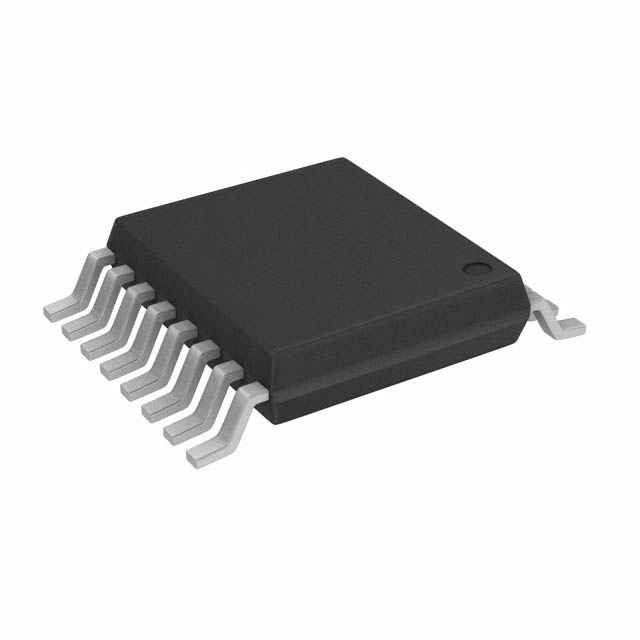
Infineon Technologies TLE5309DE1211XUMA1
- Part No.:
- TLE5309DE1211XUMA1
- Manufacturer:
- Infineon Technologies
- Category:
- Angle, Linear Position Measuring
- Package:
- 16-TSSOP (0.154", 3.90mm Width)
- Datasheet:
-
 TLE5309DE1211XUMA1.pdf
- Description:
- IC ANGLE SENSOR ANLG TDSO16
- Quantity:
- Payment:

- Shipping:

Inventory:2,458
Please send an inquiry. Send us your inquiry, and we will respond immediately.
Product details
Overview
TLE5309DE1211XUMA1 from Infineon is a dual-die, AEC-Q100 qualified contactless angle sensor integrating a top-side GMR sensor (360° range) and bottom-side AMR sensor (180° high-precision range) in one PG-TDSO-16 package. It delivers differential sine/cosine analog outputs for both sensors, operates from separate 3.3 V supplies (GMR and AMR), and supports automotive-grade ambient temperatures from −40°C to +125°C. Used in electric power steering (EPS) and BLDC motor commutation where redundancy, low propagation delay, and airgap immunity are critical.
For engineers reviewing the TLE5309DE1211XUMA1 datasheet, TLE5309DE1211XUMA1 pinout, TLE5309DE1211XUMA1 application, or TLE5309DE1211XUMA1 equivalent, this page provides verified technical context, validated pin functions, real-world use cases in safety-critical motion control, and confirmed alternative parts with documented functional and supply-voltage differences.
Technical Context
The device implements vertical-integrated MR sensing with two independent Wheatstone bridges per sensor: orthogonal GMR bridges yield unambiguous 360° output via arctan2(VX,VY); 45°-offset AMR bridges produce 180° output requiring arctan2(VX,VY)/2. Each die has dedicated supply (GMR_VDD/AMR_VDD), ground (dual GMR_GND/AMR_GND), and diagnostic pins (GMR_VDIAG/AMR_VDIAG).
Signal conditioning includes DC-offset compensation, temperature-compensated amplification, and fuse-protected analog paths. Output voltages are rail-to-rail referenced to their respective supply rails-enabling direct interfacing with 3.3 V ADCs without external level-shifting-and maintain amplitude stability across airgap variations due to MR physics.
Key Specifications
| Parameter | Value and Actual Design Meaning |
|---|---|
| Angle Range | GMR: 0–360° full-circle; AMR: 0–180° high-accuracy segment-enables redundant angle calculation with cross-validation. |
| Supply Voltage | GMR_VDD = 3.3 V ±0.3 V; AMR_VDD = 3.3 V ±0.3 V-separate rails allow independent power sequencing and fault isolation. |
| Output Type | Differential analog sine/cosine (GMR_SIN_P/N, AMR_SIN_P/N, etc.)-optimized for noise-immune routing and full ADC dynamic range utilization. |
| Operating Temp | −40°C to +125°C ambient-qualified per AEC-Q100 Grade 1, enabling deployment in engine bay and EPS control units. |
| Propagation Delay | < 3 µs typical-supports real-time closed-loop control in high-speed BLDC motors up to 20,000 RPM. |
| Diagnostic Output | GMR_VDIAG & AMR_VDIAG provide temperature-proportional bridge voltage-enables on-chip thermal monitoring without external sensors. |
Pinout & Package
Package: PG-TDSO-16 (plastic thin dual small outline, 16-pin, 1.27 mm pitch, exposed thermal pad). Dimensions: 10.0 mm × 7.5 mm × 2.3 mm. RoHS-compliant, green product.
| Pin/Terminal | Circuit Role | Design Meaning |
|---|---|---|
| 1 GMR_VDIAG | GMR die temperature diagnostic | Analog voltage proportional to GMR bridge temperature-used for thermal derating or fault detection. |
| 2 GMR_VDD | GMR sensor supply input | 3.3 V dedicated rail for top die; decoupling required within 10 mm of pin for EMI suppression. |
| 3 GMR_SIN_N | GMR negative sine output | Differential complement to GMR_SIN_P; enables common-mode noise rejection in twisted-pair routing. |
| 4 GMR_SIN_P | GMR positive sine output | Main sine signal for 360° angle reconstruction; amplitude scales linearly with magnetic field strength. |
| 5 AMR_SIN_P | AMR positive sine output | High-precision sine component from bottom die; used with AMR_SIN_N for 180° angle resolution. |
| 6 AMR_SIN_N | AMR negative sine output | Differential pair with AMR_SIN_P; improves SNR in noisy automotive environments. |
| 7 AMR_VDD | AMR sensor supply input | 3.3 V dedicated rail for bottom die; independent from GMR_VDD to support asymmetric power cycling. |
| 8 AMR_VDIAG | AMR die temperature diagnostic | Independent thermal monitor for AMR die-enables dual-point temperature compensation in software. |
| 9 & 10 AMR_GND | AMR sensor ground return | Dual ground pins reduce impedance and improve PSRR; must be connected to low-impedance ground plane. |
| 11 AMR_COS_N | AMR negative cosine output | Complement to AMR_COS_P; completes differential pair for cosine channel in 180° measurement. |
| 12 AMR_COS_P | AMR positive cosine output | Primary cosine signal from AMR die; combined with AMR_SIN_P/N for high-fidelity angle estimation. |
| 13 GMR_COS_P | GMR positive cosine output | Full 360° cosine reference; used with GMR_SIN_P/N for arctan2-based absolute angle computation. |
| 14 GMR_COS_N | GMR negative cosine output | Differential partner to GMR_COS_P; maintains signal integrity under EFT and RF interference. |
| 15 & 16 GMR_GND | GMR sensor ground return | Dual ground pins minimize ground bounce during fast switching transients in motor drive systems. |
Key Features
| Feature | Design Value |
|---|---|
| Dual-die MR architecture | Top-side GMR (360°) + bottom-side AMR (180°) in flipped configuration-ensures <1° mechanical misalignment between sensing planes for true redundancy. |
| Separate supply domains | Independent GMR_VDD and AMR_VDD pins-enable selective power-down, fault containment, and flexible BOM sourcing (e.g., single LDO vs. dual regulators). |
| Airgap-insensitive output | MR bridge signals scale with magnetic field direction-not magnitude-eliminating calibration drift due to magnet-to-sensor distance variation. |
| Fast startup time | < 10 µs wake-up from standby-reduces average power in turn-counting applications using duty-cycled operation. |
| AEC-Q100 Grade 1 qualification | Validated for −40°C to +125°C operation with HTOL, TC, ESD, and EMC testing-meets ASIL-B functional safety requirements when integrated into system-level diagnostics. |
Applications
| Electric Power Steering (EPS) | Brushless DC Motor Commutation |
|---|---|
|
Use Scenario: Real-time rotor position feedback for torque-assist algorithms in column-assist and rack-assist EPS modules. IC Role / Device Role / Timing Role: Primary angle sensor providing dual-redundant 360°/180° analog outputs to MCU's ADC inputs with sub-microsecond latency. Use Value: Enables ASIL-B compliant motor control by cross-validating GMR and AMR outputs-detecting single-point failures before torque deviation exceeds safety thresholds. |
Use Scenario: Rotor angular position sensing in HVAC blower motors and seat adjustment actuators requiring precise 6-step commutation. IC Role / Device Role / Timing Role: Contactless angle transducer delivering synchronized sine/cosine pairs to microcontroller for space-vector modulation (SVM) lookup tables. Use Value: Eliminates brush wear and electrical noise of potentiometers while maintaining ≤0.5° total angle error over lifetime-even under vibration and thermal cycling. |
| Steering Angle Sensor (SAS) Backup | Low-Power Turn Counting |
|
Use Scenario: Secondary angle source in multi-sensor SAS systems where primary sensor is optical or resolver-based. IC Role / Device Role / Timing Role: Redundant analog angle source with independent supply and ground-monitored via diagnostic VDIAG pins for plausibility checks. Use Value: Provides fail-operational capability during primary sensor failure; GMR/AMR mismatch detection triggers safe-degradation mode per ISO 26262. |
Use Scenario: Counting full rotations in parking brake caliper position tracking and sunroof anti-pinch mechanisms. IC Role / Device Role / Timing Role: Low-quiescent-current angle sensor powered intermittently via microcontroller GPIO-leveraging fast start-up to minimize active time. Use Value: Achieves < 5 µA average current in 1 Hz sampling mode-extending battery life in always-on vehicle modules without compromising position fidelity. |
Equivalent & Alternatives
The following parts are listed as comparable options for similar dual-output magnetic angle sensing applications.
| Alternative Part | Technical Difference | Application Difference | Selection Advice |
|---|---|---|---|
| TLE5309DE2211XUMA1 | GMR and AMR both supplied at 5.0 V (vs. 3.3 V in E1211)-higher output swing but requires 5 V LDO and higher power budget. | Suitable for legacy 5 V ADC systems; not drop-in compatible due to supply voltage mismatch and different TCO calibration. | Select only if existing 5 V supply infrastructure exists and 3.3 V regulator redesign is prohibitive. |
| TLE5309DE5201XUMA1 | GMR supplied at 3.3 V, AMR at 5.0 V; no Temperature Compensation Offset (TCO) calibration-higher angle error drift above 85°C. | Used in cost-sensitive non-safety applications where full AEC-Q100 Grade 1 thermal performance is not required. | Acceptable for interior modules (e.g., climate control flaps) but not for EPS or drivetrain systems. |
Compared with TLE5309DE1211XUMA1, the E2211 variant trades lower system-level power efficiency for compatibility with 5 V signal chains, while the E5201 sacrifices thermal stability and safety certification to reduce BOM cost-making E1211 the only choice for ASIL-B–compliant, 3.3 V–based automotive motion control.
Availability
TLE5309DE1211XUMA1 is available at Aetrix Electronics and suitable for electric power steering (EPS), brushless DC motor commutation, steering angle sensing, and low-power turn counting requiring stable component supply across automotive production lifecycles.
Supply support for TLE5309DE1211XUMA1 includes scheduled delivery planning, volume procurement assistance, BOM continuity management, traceable sourcing, and lifecycle availability coordination for OEM customers, industrial embedded developers, connected-device designers, and electronics production programs.
Manufacturer
Infineon Technologies is a German semiconductor manufacturer specializing in power management, automotive ICs, and sensor solutions-with over 20 years of AEC-Q100 qualified magnetic sensor development.
TLE5309D belongs to Infineon's TLE family of contactless angle sensors designed specifically for functional safety–critical automotive motion control-including EPS, transmission, and chassis actuation systems.
FAQ
What is the purpose of separate GMR_VDD and AMR_VDD pins?
The dual supply pins enable independent power sequencing, fault isolation, and flexible system-level power architecture. For example, the AMR die can remain powered during GMR self-test, or one sensor can be cycled to reduce average current. This separation also prevents supply coupling noise from degrading the high-precision AMR channel.
How does the flipped dual-die configuration improve accuracy?
Mounting the GMR die on top and AMR die on bottom-flipped so their sensitive areas align in the same XY plane-minimizes mechanical misalignment between sensing elements. This ensures both sensors experience nearly identical magnetic field vectors, reducing cross-die angle error to <1° and enabling robust hardware-level redundancy validation.
Can TLE5309DE1211XUMA1 interface directly with a 3.3 V ADC?
Yes. All analog outputs (GMR_SIN_P/N, AMR_COS_P/N, etc.) are ratiometric to their respective 3.3 V supplies, producing 0–3.3 V differential signals. When referenced to the same 3.3 V ADC VREF, they fully utilize the converter's dynamic range without external scaling or level-shifting circuitry.
What diagnostic capabilities does TLE5309DE1211XUMA1 provide?
It offers two dedicated diagnostic outputs: GMR_VDIAG and AMR_VDIAG deliver temperature-proportional voltages from each die's bridge-enabling real-time thermal monitoring and plausibility checks. Combined with output amplitude and phase consistency between sine/cosine pairs, these signals support ISO 26262-compliant fault detection strategies.
TLE5309DE1211XUMA1 Specifications
- Product attributes
- Attribute value
- Manufacturer:
- Infineon Technologies
- Package/Case:
- 16-TSSOP (0.154", 3.90mm Width)
- Series:
- -
- Packaging:
- Tape & Reel (TR)
- Product Status:
- Active
- Programmable:
- -
- For Measuring:
- Angle
- Technology:
- Magnetoresistive
- Rotation Angle - Electrical, Mechanical:
- 0° ~ 360°, Continuous
- Linear Range:
- -
- Output:
- Analog Voltage
- Output Signal:
- Cosine, Sine
- Actuator Type:
- External Magnet, Not Included
- Linearity:
- -
- Resistance:
- -
- Resistance Tolerance:
- -
- Voltage - Supply:
- 3V ~ 3.6V, 4.5V ~ 5.5V
- Mounting Type:
- Surface Mount
- Termination Style:
- Gull Wing
- Operating Temperature:
- -40°C ~ 125°C (TA)
- Grade:
- Automotive
- Qualification:
- AEC-Q100
- Supplier Device Package:
- PG-TDSO-16
TLE5309DE1211XUMA1 FAQ
1.How can I place an order for TLE5309DE1211XUMA1 through Aetrix?
Please submit a Request for Quotation (RFQ) for TLE5309DE1211XUMA1 on Aetrix. Our sales agent will provide a competitive quotation and guide you through the order confirmation once you accept the terms.
2.Are the price and stock information for TLE5309DE1211XUMA1 reliable?
The price and inventory of TLE5309DE1211XUMA1 are updated periodically and may fluctuate due to market conditions. Stock and pricing data are typically refreshed every 24 hours. Quotation validity for TLE5309DE1211XUMA1 is usually 5 days.
3.What payment methods are accepted for TLE5309DE1211XUMA1?
We accept Wire Transfer, PayPal, Credit Card, Western Union, MoneyGram, and Escrow for TLE5309DE1211XUMA1 transactions.
Note: Certain payment methods may incur a processing fee.
4.How is shipping managed for TLE5309DE1211XUMA1?
TLE5309DE1211XUMA1 orders can be shipped via leading logistics carriers, including DHL, UPS, FedEx, TNT, or Registered Mail.
Once your TLE5309DE1211XUMA1 order is processed, you will receive an email with the shipment details and tracking number.
Note: Tracking information may take up to 24 hours to appear. Express delivery typically takes 3–5 business days.
5.How can I obtain technical support or documentation for TLE5309DE1211XUMA1?
For technical support, including TLE5309DE1211XUMA1 datasheets, pinout diagrams, or application guidance, please contact our engineering support team. They can provide detailed documentation and assistance for your TLE5309DE1211XUMA1 requirements.
6.How does Aetrix verify that TLE5309DE1211XUMA1 is sourced from the original manufacturer or authorized distributors?
All TLE5309DE1211XUMA1 products on Aetrix are procured from qualified distributors and authorized channels. Our dedicated quality assurance team conducts strict verification, including traceability checks and, if necessary, third-party testing. This ensures that TLE5309DE1211XUMA1 meets industry standards.
7.What is the process for return or replacement of TLE5309DE1211XUMA1?
All TLE5309DE1211XUMA1 units undergo pre-shipment inspection (PSI). If there is an issue with TLE5309DE1211XUMA1, returns or replacements are accepted under the following conditions:
1.Quantity discrepancies, incorrect items, or visible external defects (such as breakage or corrosion), acknowledged by Aetrix.
2.The issue is reported within 90 days of delivery.
3.The TLE5309DE1211XUMA1 part is unused and in its original packaging.
Return procedure for TLE5309DE1211XUMA1:
1.Submit a request within 90 days.
2.Obtain a Return Material Authorization (RMA) from Aetrix.
TLE5309DE1211XUMA1 Tags
-
TLV493DA1B6HTSA2
Infineon Technologies
-
EVW-AE4001B14
Panasonic Electronic Components
-
3382G-1-103G
Bourns Inc.
-
TLE5501E0001XUMA1
Infineon Technologies
-
HAL830UT-A
TDK-Micronas GmbH
-
TLE5009E1000FUMA1
Infineon Technologies
-
TLE5501E0002XUMA1
Infineon Technologies
-
HAL3725DJ-A
TDK-Micronas GmbH
-
HAL3727DJ-A
TDK-Micronas GmbH
-
HMC1501-TR
Honeywell Aerospace
-
HMC1512-TR
Honeywell Aerospace

-
AAS33001LLEATR-5
Allegro MicroSystems
Tech Hub

Operational amplifier guide covering op amp basics, feedback, ideal vs real op amps, common configurations, buffer circuits, offset, bias current, gain-bandwidth, slew rate, rail-to-rail limits and sel…

Jumper cables guide covering safe connection order, red and black clamp placement, final ground connection, cable gauge, length, clamp quality, copper vs CCA cables, jump starter comparison and battery…

LDO regulator guide covering low dropout voltage, power dissipation, thermal design, PSRR, output noise, capacitor stability, adjustable LDO circuits, LDO vs buck converter and datasheet selection chec…

Conditional Access Module guide covering CAM meaning, CI/CI+ interface, smart card authorization, DVB security workflow, TV and set-top box compatibility, internal electronics, ESD protection, connecto…

Guide to electronic component obsolescence covering EOL risk, PCN/PDN notices, last-time buy planning, replacement options, form-fit-function validation, counterfeit risk and BOM lifecycle management.

18650 battery guide covering lithium-ion cell basics, 3.6V/3.7V voltage, 4.2V charging, mAh and Wh capacity, protected cells, chargers, BMS, series-parallel packs, holders, welding and sourcing checks.…

Hall effect sensor guide covering working principle, linear and digital sensors, Arduino circuits, current sensing, speed detection, automotive applications, A3144 examples, signal filtering and datash…

Product Change Notification guide for electronic components, covering PCN meaning, PCN vs PDN/EOL, common change types, risk levels, form-fit-function review, engineering validation, BOM control, LTB/L…

A practical guide to blend door actuators, covering HVAC function, symptoms, location, AC and heater issues, reset and calibration, replacement cost, electrical diagnosis, compatibility checks, and rep…

Engineering guide to Raspberry Pi alternatives, covering chip-level differences, Orange Pi, ROCK, Jetson, Banana Pi, NanoPi, Compute Module, Pico, GPIO, camera, HAT compatibility, and replacement risks…


