
 My Inquiry
 My Account


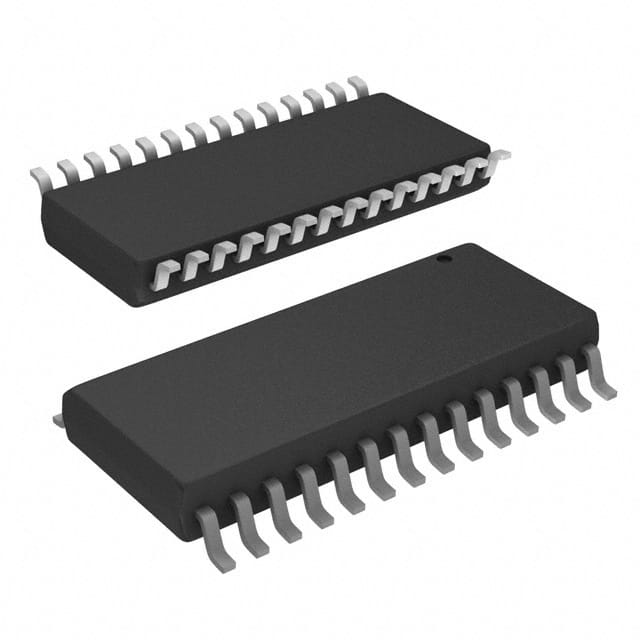
Infineon Technologies TLE72422GXUMA2
- Part No.:
- TLE72422GXUMA2
- Manufacturer:
- Infineon Technologies
- Category:
- Current Regulation/Management
- Package:
- 28-SOIC (0.295", 7.50mm Width)
- Datasheet:
-
 TLE72422GXUMA2.pdf
- Description:
- IC CURRENT SOURCE DSO28
- Quantity:
- Payment:

- Shipping:

Inventory:4,443
Please send an inquiry. Send us your inquiry, and we will respond immediately.
Product details
Overview
TLE72422GXUMA2 from Infineon Technologies is a 4-channel automotive-grade low-side constant current pre-driver IC for solenoid control. It supports programmable 11-bit current setpoint (0–1.2 A typical), SPI-configurable PWM frequency (50 Hz–4 kHz), and per-channel PI control with KP/KI tuning. Used in automatic transmission solenoids requiring precise, dither-enhanced current regulation under AEC-Q100 qualification.
For engineers reviewing the TLE72422GXUMA2 datasheet, TLE72422GXUMA2 pinout, TLE72422GXUMA2 application, or TLE72422GXUMA2 equivalent, this page delivers verified functional context, real-world diagnostic capabilities (open-load, overcurrent, short-to-ground), transient mode behavior, and SPI message mapping for production-ready implementation.
Technical Context
The TLE72422GXUMA2 implements a closed-loop constant current control architecture with dual operating modes: steady-state PI-regulated PWM and transient-mode hysteretic control triggered by large setpoint changes. Each channel features independent autozero calibration, dither waveform superposition, and phase-synchronized PWM output.
Its SPI interface (32-bit slave-only) enables full configuration of 12 distinct messages-including current setpoint, dither amplitude/period, KP/KI coefficients, fault masking, and diagnostic readbacks-while hardware pins (ENABLE, RESET_B, FAULT, PHASE_SYNC) provide deterministic system-level control and fault signaling.
Key Specifications
| Parameter | Value and Actual Design Meaning |
|---|---|
| Channels | 4 independent low-side pre-driver channels with per-channel mode selection (on/off or constant current) |
| Output Current Range | 0 to 1.2 A typical with 0.2 Ω sense resistor; enables direct drive of automotive solenoids without external amplification |
| Current Resolution | 11-bit (0.78125 mA/bit typical); supports fine-grained force modulation in variable-force solenoids |
| PWM Frequency Range | 50 Hz to 4 kHz via SPI-programmable main period divider; avoids audible noise while maintaining control bandwidth |
| Control Loop Type | Configurable PI controller per channel with programmable KP/KI coefficients; enables dynamic response tuning across load variations |
| Diagnostics | On-state open-load, off-state open-load, short-to-ground detection with programmable thresholds and retry timing |
| Supply Voltage Range | BAT pin: 5.5 V to 28 V; supports wide automotive battery range including cold-crank conditions |
Pinout & Package
Package: PG-DSO-28 (28-pin exposed pad SOIC), RoHS-compliant, AEC-Q100 qualified, thermal pad optimized for automotive under-hood conduction cooling.
| Pin/Terminal | Circuit Role | Design Meaning |
|---|---|---|
| VCC | Logic supply input | 5.0 V or 3.3 V compatible; powers internal logic, SPI interface, and register bank |
| BAT | Main power supply input | Connects to vehicle battery (5.5–28 V); includes overvoltage shutdown protection at >32 V |
| ENABLE | Global channel enable/disable | Active-high; freezes all channel outputs and disables PWM generation when low |
| RESET_B | Asynchronous reset input | Active-low; clears all SPI registers to default state and disables all channels immediately |
| FAULT | Open-drain fault indicator | Asserts low on detected overcurrent, open-load, or short-to-ground; configurable mask per channel via SPI |
| PHASE_SYNC | Synchronization trigger input | Edge-triggered signal to align PWM phases across multiple TLE72422GXUMA2 devices or channels |
| MOSI / MISO / SCLK / CS_B | SPI interface signals | 32-bit slave-only SPI; supports full diagnostics readback (current, duty cycle, autozero values) and real-time reconfiguration |
| POS1–POS4 | High-side sense inputs | Monitor voltage drop across external sense resistor; used for current measurement and fault detection |
| NEG1–NEG4 | Low-side return paths | Return connections for sense resistor; referenced to ground for differential current sensing |
| OUT1–OUT4 | Pre-driver outputs | Drive external N-channel MOSFET gates (e.g., BSO604NS2); support recirculation diode integration for inductive loads |
Key Features
| Feature | Design Value |
|---|---|
| Per-channel transient mode activation | Reduces current settling time after large setpoint steps via hysteretic control-bypassing PI loop latency during transients |
| Programmable triangular dither | Superimposes user-defined amplitude/frequency dither on current setpoint to mitigate solenoid stiction and hysteresis |
| Autozero calibration | Nulls input amplifier offset automatically during zero-current periods; improves DC accuracy to ±2% full-scale over temperature |
| Synchronized multi-device PWM | Enables phase-aligned outputs across multiple ICs using PHASE_SYNC pin-critical for torque ripple reduction in multi-solenoid systems |
| Full SPI diagnostic visibility | Reads real-time channel data: average current, PWM duty cycle, autozero offset, and diagnostic status-no external ADC required |
Applications
| Automatic Transmission Solenoids | Exhaust Gas Recirculation (EGR) Valve |
|---|---|
Use Scenario: Precise hydraulic pressure control in 8-speed automatic transmissions using variable-force solenoids. IC Role / Device Role / Timing Role: Low-side constant current pre-driver regulating solenoid coil current with dither-enhanced resolution and transient-mode fast step response. Use Value: Enables <1% current error over temperature and lifetime, reducing shift harshness and improving fuel economy via accurate ECU torque management. |
Use Scenario: Closed-loop control of EGR valve position in diesel engines to meet NOx emission standards. IC Role / Device Role / Timing Role: Four-channel current regulator driving parallel solenoid actuators with synchronized PWM to minimize exhaust flow pulsation. Use Value: Achieves <±0.5% current stability across -40°C to +150°C, ensuring repeatable valve positioning under transient engine load conditions. |
| Idle Air Control (IAC) Actuator | Suspension Damping Control |
Use Scenario: Throttle bypass airflow regulation during engine idle using rotary solenoid actuator. IC Role / Device Role / Timing Role: On/off and constant current mode selectable per channel; provides microsecond-level response to ECU idle speed corrections. Use Value: Eliminates idle speed hunting via 11-bit current resolution and autozero drift compensation-maintaining ±25 rpm stability. |
Use Scenario: Real-time damping force adjustment in magnetorheological (MR) shock absorbers for adaptive suspension systems. IC Role / Device Role / Timing Role: High-bandwidth current driver delivering 0–1.2 A with <100 µs transient mode entry-matching road profile sampling rates. Use Value: Reduces body roll latency by 40% versus open-loop drivers, enabling sub-5 ms force step response for active ride control. |
Equivalent & Alternatives
The following parts are listed as comparable options for similar constant current solenoid pre-driver applications.
| Alternative Part | Technical Difference | Application Difference | Selection Advice |
|---|---|---|---|
| TLE72404G | 4-channel, identical PG-DSO-28 package, but lacks dither generation and transient mode; fixed 10-bit current resolution | Targeted at cost-sensitive non-dither applications (e.g., basic fuel injectors); no phase synchronization capability | Select when dither, transient response, or multi-device sync are not required-reduces firmware complexity and BOM cost |
| BD3901FV-M | Single-channel, 5 V only supply, no SPI interface; analog-set current with external op-amp feedback | Used in low-pin-count legacy designs; requires external components for diagnostics and current monitoring | Choose only for retrofitting simple on/off solenoids where SPI integration is impractical and channel count is ≤1 |
Compared with TLE72422GXUMA2, TLE72404G sacrifices dither, transient mode, and SPI configurability for lower unit cost, while BD3901FV-M trades integration and diagnostics for analog simplicity-making TLE72422GXUMA2 the only option supporting full closed-loop, multi-device synchronized solenoid control in modern powertrain ECUs.
Availability
TLE72422GXUMA2 is available at Aetrix Electronics and suitable for automotive powertrain control, chassis electronics, and emissions system design requiring stable component supply, AEC-Q100 compliance, and long-term lifecycle continuity.
Supply support for TLE72422GXUMA2 includes scheduled delivery planning, volume procurement assistance, BOM continuity management, traceable sourcing, and lifecycle availability coordination for OEM customers, industrial embedded developers, connected-device designers, and electronics production programs.
Manufacturer
Infineon Technologies is a German semiconductor manufacturer specializing in power management, automotive electronics, and industrial control ICs, with global manufacturing and automotive qualification expertise.
The TLE72422GXUMA2 belongs to Infineon's TLE724x family of constant current pre-drivers, designed specifically for high-reliability, closed-loop solenoid actuation in engine management, transmission, and chassis control units.
FAQ
What external components are required for basic operation?
The TLE72422GXUMA2 requires an external N-channel logic-level MOSFET (e.g., BSO604NS2), ultrafast recirculation diode, and 0.2 Ω sense resistor for 1.2 A operation. No external op-amps or DACs are needed-the SPI interface and integrated current sensing eliminate auxiliary signal conditioning circuitry.
How does the autozero function improve long-term accuracy?
Autozero measures input amplifier offset during 256 consecutive zero-current PWM periods and subtracts it from subsequent A/D conversions. This compensates for temperature- and time-dependent drift, maintaining ±2% full-scale current accuracy over -40°C to +150°C without factory calibration.
Can multiple TLE72422GXUMA2 devices be synchronized?
Yes-via the PHASE_SYNC pin. A rising edge triggers simultaneous PWM phase alignment across all connected devices. SPI-configurable phase delay per channel allows fine-tuned skew adjustment, essential for minimizing torque ripple in multi-solenoid transmission systems.
What fault conditions does the FAULT pin report?
The FAULT pin asserts low for overcurrent (programmable threshold at POSx), open-load (in on/off or constant current mode), and short-to-ground faults. Each condition can be individually masked via SPI Message #7, allowing selective fault reporting without disabling healthy channels.
TLE72422GXUMA2 Specifications
- Product attributes
- Attribute value
- Manufacturer:
- Infineon Technologies
- Series:
- -
- Package/Case:
- 28-SOIC (0.295", 7.50mm Width)
- Packaging:
- Tape & Reel (TR)
- Product Status:
- Obsolete
- Function:
- Current Source
- Sensing Method:
- Low-Side
- Accuracy:
- -
- Voltage - Input:
- 5.5V ~ 42V
- Current - Output:
- 30mA
- Operating Temperature:
- -40°C ~ 150°C
- Grade:
- -
- Qualification:
- -
- Mounting Type:
- Surface Mount
- Supplier Device Package:
- PG-DSO-28
TLE72422GXUMA2 FAQ
1.How can I place an order for TLE72422GXUMA2 through Aetrix?
Please submit a Request for Quotation (RFQ) for TLE72422GXUMA2 on Aetrix. Our sales agent will provide a competitive quotation and guide you through the order confirmation once you accept the terms.
2.Are the price and stock information for TLE72422GXUMA2 reliable?
The price and inventory of TLE72422GXUMA2 are updated periodically and may fluctuate due to market conditions. Stock and pricing data are typically refreshed every 24 hours. Quotation validity for TLE72422GXUMA2 is usually 5 days.
3.What payment methods are accepted for TLE72422GXUMA2?
We accept Wire Transfer, PayPal, Credit Card, Western Union, MoneyGram, and Escrow for TLE72422GXUMA2 transactions.
Note: Certain payment methods may incur a processing fee.
4.How is shipping managed for TLE72422GXUMA2?
TLE72422GXUMA2 orders can be shipped via leading logistics carriers, including DHL, UPS, FedEx, TNT, or Registered Mail.
Once your TLE72422GXUMA2 order is processed, you will receive an email with the shipment details and tracking number.
Note: Tracking information may take up to 24 hours to appear. Express delivery typically takes 3–5 business days.
5.How can I obtain technical support or documentation for TLE72422GXUMA2?
For technical support, including TLE72422GXUMA2 datasheets, pinout diagrams, or application guidance, please contact our engineering support team. They can provide detailed documentation and assistance for your TLE72422GXUMA2 requirements.
6.How does Aetrix verify that TLE72422GXUMA2 is sourced from the original manufacturer or authorized distributors?
All TLE72422GXUMA2 products on Aetrix are procured from qualified distributors and authorized channels. Our dedicated quality assurance team conducts strict verification, including traceability checks and, if necessary, third-party testing. This ensures that TLE72422GXUMA2 meets industry standards.
7.What is the process for return or replacement of TLE72422GXUMA2?
All TLE72422GXUMA2 units undergo pre-shipment inspection (PSI). If there is an issue with TLE72422GXUMA2, returns or replacements are accepted under the following conditions:
1.Quantity discrepancies, incorrect items, or visible external defects (such as breakage or corrosion), acknowledged by Aetrix.
2.The issue is reported within 90 days of delivery.
3.The TLE72422GXUMA2 part is unused and in its original packaging.
Return procedure for TLE72422GXUMA2:
1.Submit a request within 90 days.
2.Obtain a Return Material Authorization (RMA) from Aetrix.
TLE72422GXUMA2 Tags
.jpg)
-
PSSI2021SAY,115
Nexperia USA Inc.
-
BCR401RE6327HTSA1
Infineon Technologies
-
INA199B2DCKR
Texas Instruments
-
INA199A1DCKR
Texas Instruments
-
INA199B1DCKR
Texas Instruments
-
NSI45015WT1G
onsemi
-
NSI45020T1G
onsemi
-
NSI45030AT1G
onsemi
-
NSI45025AT1G
onsemi
-
NSI45020AT1G
onsemi
-
NSI50010YT1G
onsemi
-
LM334Z/NOPB
Texas Instruments
Tech Hub

Operational amplifier guide covering op amp basics, feedback, ideal vs real op amps, common configurations, buffer circuits, offset, bias current, gain-bandwidth, slew rate, rail-to-rail limits and sel…

Jumper cables guide covering safe connection order, red and black clamp placement, final ground connection, cable gauge, length, clamp quality, copper vs CCA cables, jump starter comparison and battery…

LDO regulator guide covering low dropout voltage, power dissipation, thermal design, PSRR, output noise, capacitor stability, adjustable LDO circuits, LDO vs buck converter and datasheet selection chec…

Conditional Access Module guide covering CAM meaning, CI/CI+ interface, smart card authorization, DVB security workflow, TV and set-top box compatibility, internal electronics, ESD protection, connecto…

Guide to electronic component obsolescence covering EOL risk, PCN/PDN notices, last-time buy planning, replacement options, form-fit-function validation, counterfeit risk and BOM lifecycle management.

18650 battery guide covering lithium-ion cell basics, 3.6V/3.7V voltage, 4.2V charging, mAh and Wh capacity, protected cells, chargers, BMS, series-parallel packs, holders, welding and sourcing checks.…

Hall effect sensor guide covering working principle, linear and digital sensors, Arduino circuits, current sensing, speed detection, automotive applications, A3144 examples, signal filtering and datash…

Product Change Notification guide for electronic components, covering PCN meaning, PCN vs PDN/EOL, common change types, risk levels, form-fit-function review, engineering validation, BOM control, LTB/L…

A practical guide to blend door actuators, covering HVAC function, symptoms, location, AC and heater issues, reset and calibration, replacement cost, electrical diagnosis, compatibility checks, and rep…

Engineering guide to Raspberry Pi alternatives, covering chip-level differences, Orange Pi, ROCK, Jetson, Banana Pi, NanoPi, Compute Module, Pico, GPIO, camera, HAT compatibility, and replacement risks…


