
 My Inquiry
 My Account


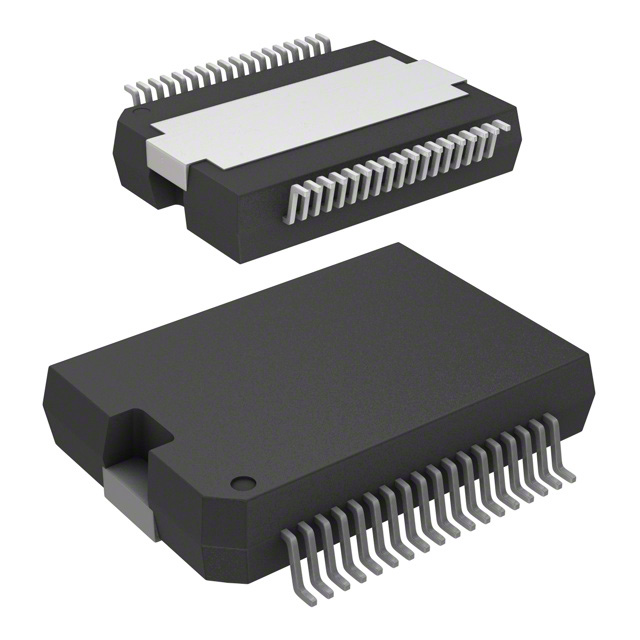
Infineon Technologies TLE7263E
- Part No.:
- TLE7263E
- Manufacturer:
- Infineon Technologies
- Category:
- Specialized
- Package:
- 36-BSSOP (0.295", 7.50mm Width) Exposed Pad
- Datasheet:
-
 TLE7263E.pdf
- Description:
- IC INTERFACE SPECIALIZED DSO-36
- Quantity:
- Payment:

- Shipping:

Inventory:4,595
Please send an inquiry. Send us your inquiry, and we will respond immediately.
Product details
Overview
TLE7263E from Infineon Technologies is an automotive System Basis Chip integrating HS-CAN transceiver (1 MBaud), LIN transceiver (20 kBaud), dual 5 V ±2% LDOs (150 mA each), high-side switch (150 mA), window watchdog, SPI interface, and 4 bi-level wake-up inputs - designed for CAN-LIN gateway modules in battery-connected ECUs.
For engineers reviewing the TLE7263E datasheet, TLE7263E pinout, TLE7263E application, or TLE7263E equivalent, key selection considerations include dual-regulator rail separation (VCC1 for MCU, VCC2 for internal CAN), bus-wake capability via CAN/LIN message or MONx inputs, fail-safe output (FSO) behavior under reset, and SPI-controlled cyclic sensing for ultra-low-power sleep mode (50 µA).
Technical Context
The TLE7263E implements a dual-domain power architecture: VCC1 powers external microcontrollers while VCC2 supplies the integrated CAN transceiver and peripherals, enabling independent rail control and fault isolation. Its SPI interface supports 16-bit command/response framing with LSB-first transmission and chip-select–gated tri-state outputs for diagnostics.
Wake-up logic combines hardware-level bi-level sensitivity on MON1–MON4 (with MON4 permanently active), bus-driven wake via CANH/CANL or LIN pins, and programmable cyclic sense timing - all coordinated through dedicated WKO and STS signals to manage transitions between Stop, Standby, and Sleep modes without MCU intervention.
Key Specifications
| Parameter | Value and Actual Design Meaning |
|---|---|
| CAN Data Rate | Up to 1 MBaud - supports high-speed CAN FD-ready physical layer signaling in automotive gateways. |
| LIN Data Rate | Up to 20 kBaud - compliant with LIN 1.3/2.0/2.1 and SAE J2602-2 for body electronics subnetworks. |
| LDO Outputs | VCC1 & VCC2: 5 V ±2%, 150 mA each - separate regulated rails for MCU and CAN module, reducing cross-coupling noise. |
| Sleep Current | 50 µA - enables direct KL30 battery connection with minimal parasitic drain during vehicle off-state. |
| HS Switch Current | 150 mA - drives external wake-up circuitry or sensors in low-power mode via SPI-controlled OUTHS pin. |
| Wake Inputs | 4 bi-level MONx pins - support both edge- and level-triggered wake events; MON4 always active for critical alerts. |
| SPI Interface | 16-bit, LSB-first, CMOS-level - enables full configuration, status readback, and fail-safe monitoring without external glue logic. |
Pinout & Package
Package: PG-DSO-36-24 (exposed pad, GND-connected), RoHS-compliant, AEC-Q100 qualified.
| Pin/Terminal | Circuit Role | Design Meaning |
|---|---|---|
| MON1–MON4 | Bi-level wake-up input | Hardware-triggered wake source; MON4 always enabled for fail-safe alert path. |
| VCC1 / VCC2 | Dual LDO output | Independent 5 V rails: VCC1 for MCU, VCC2 for CAN module - enables rail-specific power gating. |
| WKO | Wake-up event output | Active-low open-drain signal indicating wake cause (CAN/LIN/MON); used to synchronize MCU exit from STOP. |
| FSO | Fail-safe output | Active-low indicator of watchdog health; goes low on reset or undervoltage - directly drives safety-critical enable lines. |
| OUTHS | High-side switch output | SPI-controlled 150 mA driver; powers external wake circuitry during Sleep mode via cyclic sense function. |
| RxDCAN / TxDCAN | CAN data interface | Receive-only CAN mode supported for diagnostic monitoring without bus arbitration conflict. |
| RxDLIN / TxDLIN | LIN data interface | Push-pull RxDLIN and CMOS TxDLIN compliant with ISO 9141 and LIN spec - no external transceiver needed. |
| SI | Voltage sense input | Analog monitor input with external resistor divider - enables custom battery or sensor voltage threshold detection. |
Key Features
| Feature | Design Value |
|---|---|
| Dual 5 V LDOs with independent enable | Enables clean separation of MCU and CAN power domains - reduces noise coupling and supports selective rail shutdown. |
| Bus-wake capability (CAN/LIN) | Allows ECU to remain in Sleep mode until valid frame received - eliminates polling and extends battery life in parked state. |
| Window watchdog with reset generator | Prevents runaway firmware by requiring periodic SPI-served window; RO output provides system-wide reset signal. |
| SPI-controlled cyclic sensing | Automatically pulses OUTHS at configurable intervals during Sleep - powers external sensors without MCU wake-up overhead. |
| Fail-safe output (FSO) | Direct hardware indication of watchdog health - used to disable actuators or illuminate warning lamps in safety-critical paths. |
Applications
| Body Control Module (BCM) | Door Module Gateway |
|---|---|
Use Scenario: Centralized control of door locks, windows, mirrors, and interior lighting via LIN slave nodes and CAN backbone communication. IC Role / Device Role / Timing Role: System Basis Chip providing power, wake-up, CAN/LIN bridging, and fail-safe supervision for distributed body electronics. Use Value: Eliminates need for discrete LDOs, CAN/LIN transceivers, and watchdog ICs - reduces BOM count and PCB area by >40%. | Use Scenario: Local gateway in driver/passenger door managing mirror position, window lift, and anti-pinch sensors. IC Role / Device Role / Timing Role: Power management and bus interface hub that wakes only on LIN command or door handle switch (MONx) activation. Use Value: Achieves 50 µA sleep current with reliable bus- and switch-triggered wake - meets OEM off-mode current targets. |
| Roof Module Controller | Seat Control Unit |
Use Scenario: Integration of sunroof motor, ambient lighting, and rain sensor signals into vehicle network. IC Role / Device Role / Timing Role: Dual-rail power source (VCC1 for MCU, VCC2 for CAN PHY), LIN master (MTS-controlled termination), and wake supervisor. Use Value: MTS pin enables automatic LIN bus termination switching - ensures signal integrity across varying node counts without software overhead. | Use Scenario: Monitoring seat position sensors, heating elements, and occupancy detection while maintaining low standby power. IC Role / Device Role / Timing Role: High-side switch (OUTHS) powers analog sensor circuits only during scheduled cyclic sense windows - avoids continuous bias current. Use Value: Reduces average current draw by >90% vs. always-on sensor biasing - extends battery life in valet/parked modes. |
Equivalent & Alternatives
The following parts are listed as comparable options for similar automotive SBC applications.
| Alternative Part | Technical Difference | Application Difference | Selection Advice |
|---|---|---|---|
| MC33816 | Single 5 V LDO (250 mA), no LIN transceiver, includes SPI-configurable watchdog and CAN wake only | Lacks integrated LIN interface - requires external LIN transceiver for LIN gateway use cases | Select when CAN-only gateway or cost-sensitive design prioritizes higher LDO current over LIN integration |
| TLF35584 | Dual LDOs (300 mA/150 mA), embedded ARM Cortex-M0 safety monitor, no LIN, CAN FD capable | Includes ASIL-B safety controller but omits LIN - suited for safety-critical power domains, not LIN-centric gateways | Select when functional safety certification (ISO 26262) is required and LIN is handled separately |
Compared with MC33816 and TLF35584, the TLE7263E uniquely integrates LIN transceiver + dual LDOs + CAN in one AEC-Q100 package - making it optimal for cost- and space-constrained body electronics gateways where LIN is mandatory.
Availability
TLE7263E is available at Aetrix Electronics and suitable for Body Control Modules, Door Module Gateways, Roof Module Controllers, and Seat Control Units requiring stable component supply across automotive production lifecycles.
Supply support for TLE7263E includes scheduled delivery planning, volume procurement assistance, BOM continuity management, traceable sourcing, and lifecycle availability coordination for OEM customers, industrial embedded developers, connected-device designers, and electronics production programs.
Manufacturer
Infineon Technologies is a German semiconductor manufacturer specializing in automotive, power management, and security ICs, with global manufacturing and qualification infrastructure.
The TLE7263E belongs to Infineon's System Basis Chip (SBC) product line - engineered specifically for battery-connected automotive ECUs needing integrated power, communication, and safety functions in harsh environments.
FAQ
What is the purpose of the MTS pin on the TLE7263E?
The MTS (Master Termination Switch) pin controls an internal pull-up resistor on the LIN bus. When asserted high via SPI, it enables termination for LIN master operation per ISO 9141 and LIN 2.x specifications - eliminating need for external resistors and simplifying board layout in LIN gateway designs.
How does the TLE7263E achieve 50 µA sleep current?
The 50 µA sleep current is achieved by disabling both LDOs (VCC1/VCC2), turning off CAN/LIN transceivers, powering down the oscillator, and retaining only essential wake logic (MONx inputs, bus receivers, and WKO driver). The exposed pad thermal path and optimized internal biasing ensure stable low-current operation at temperature extremes.
Can the TLE7263E operate without an external microcontroller?
No - the TLE7263E requires an external µController for SPI initialization, mode configuration, and watchdog servicing. It lacks autonomous firmware and serves strictly as a peripheral power/communication/safety companion IC; all functional states (Stop, Standby, Sleep) are entered and exited via SPI commands or hardware wake events.
What protection features are implemented on the CANH/CANL pins?
CANH and CANL pins feature short-circuit protection to battery (VBAT) and ground, bus-failure detection, and thermal shutdown. They withstand ±8 kV ESD (HBM), tolerate ±40 V transients per ISO 16750-2, and enter safe receive-only mode during overtemperature or overcurrent - preserving bus visibility during fault conditions.
TLE7263E Specifications
- Product attributes
- Attribute value
- Manufacturer:
- Infineon Technologies
- Series:
- -
- Package/Case:
- 36-BSSOP (0.295", 7.50mm Width) Exposed Pad
- Packaging:
- Tape & Reel (TR)
- Product Status:
- Obsolete
- Applications:
- -
- Interface:
- SPI Serial
- Voltage - Supply:
- 13.5V
- Supplier Device Package:
- PG-DSO-36-24
- Grade:
- Automotive
- Qualification:
- -
- Mounting Type:
- Surface Mount
TLE7263E FAQ
1.How can I place an order for TLE7263E through Aetrix?
Please submit a Request for Quotation (RFQ) for TLE7263E on Aetrix. Our sales agent will provide a competitive quotation and guide you through the order confirmation once you accept the terms.
2.Are the price and stock information for TLE7263E reliable?
The price and inventory of TLE7263E are updated periodically and may fluctuate due to market conditions. Stock and pricing data are typically refreshed every 24 hours. Quotation validity for TLE7263E is usually 5 days.
3.What payment methods are accepted for TLE7263E?
We accept Wire Transfer, PayPal, Credit Card, Western Union, MoneyGram, and Escrow for TLE7263E transactions.
Note: Certain payment methods may incur a processing fee.
4.How is shipping managed for TLE7263E?
TLE7263E orders can be shipped via leading logistics carriers, including DHL, UPS, FedEx, TNT, or Registered Mail.
Once your TLE7263E order is processed, you will receive an email with the shipment details and tracking number.
Note: Tracking information may take up to 24 hours to appear. Express delivery typically takes 3–5 business days.
5.How can I obtain technical support or documentation for TLE7263E?
For technical support, including TLE7263E datasheets, pinout diagrams, or application guidance, please contact our engineering support team. They can provide detailed documentation and assistance for your TLE7263E requirements.
6.How does Aetrix verify that TLE7263E is sourced from the original manufacturer or authorized distributors?
All TLE7263E products on Aetrix are procured from qualified distributors and authorized channels. Our dedicated quality assurance team conducts strict verification, including traceability checks and, if necessary, third-party testing. This ensures that TLE7263E meets industry standards.
7.What is the process for return or replacement of TLE7263E?
All TLE7263E units undergo pre-shipment inspection (PSI). If there is an issue with TLE7263E, returns or replacements are accepted under the following conditions:
1.Quantity discrepancies, incorrect items, or visible external defects (such as breakage or corrosion), acknowledged by Aetrix.
2.The issue is reported within 90 days of delivery.
3.The TLE7263E part is unused and in its original packaging.
Return procedure for TLE7263E:
1.Submit a request within 90 days.
2.Obtain a Return Material Authorization (RMA) from Aetrix.
TLE7263E Tags
-
NVT4857UKAZ
NXP USA Inc.
-
TCA8418RTWR
Texas Instruments

-
PCA9546APWR
Texas Instruments

-
MD0100N8-G
Microchip Technology
-
PCA9548APW,118
NXP USA Inc.
-
PCA9540BDP,118
NXP USA Inc.
-
PCA9548APWR
Texas Instruments
-
PCA9546APW,118
NXP USA Inc.
-
PTN3360DBS,518
NXP USA Inc.
-
PCA9546ABS,118
NXP USA Inc.
-
PCA9518PWR
Texas Instruments
-
PCA9545APW,118
NXP USA Inc.
Tech Hub

An engineering guide to LED driver operation, constant-current and constant-voltage outputs, linear and switching topologies, dimming, IC selection, calculations, replacement compatibility, and fault c…

Operational amplifier guide covering op amp basics, feedback, ideal vs real op amps, common configurations, buffer circuits, offset, bias current, gain-bandwidth, slew rate, rail-to-rail limits and sel…

Jumper cables guide covering safe connection order, red and black clamp placement, final ground connection, cable gauge, length, clamp quality, copper vs CCA cables, jump starter comparison and battery…

LDO regulator guide covering low dropout voltage, power dissipation, thermal design, PSRR, output noise, capacitor stability, adjustable LDO circuits, LDO vs buck converter and datasheet selection chec…

Conditional Access Module guide covering CAM meaning, CI/CI+ interface, smart card authorization, DVB security workflow, TV and set-top box compatibility, internal electronics, ESD protection, connecto…

Guide to electronic component obsolescence covering EOL risk, PCN/PDN notices, last-time buy planning, replacement options, form-fit-function validation, counterfeit risk and BOM lifecycle management.

18650 battery guide covering lithium-ion cell basics, 3.6V/3.7V voltage, 4.2V charging, mAh and Wh capacity, protected cells, chargers, BMS, series-parallel packs, holders, welding and sourcing checks.…

Hall effect sensor guide covering working principle, linear and digital sensors, Arduino circuits, current sensing, speed detection, automotive applications, A3144 examples, signal filtering and datash…

Product Change Notification guide for electronic components, covering PCN meaning, PCN vs PDN/EOL, common change types, risk levels, form-fit-function review, engineering validation, BOM control, LTB/L…

A practical guide to blend door actuators, covering HVAC function, symptoms, location, AC and heater issues, reset and calibration, replacement cost, electrical diagnosis, compatibility checks, and rep…


