
 My Inquiry
 My Account


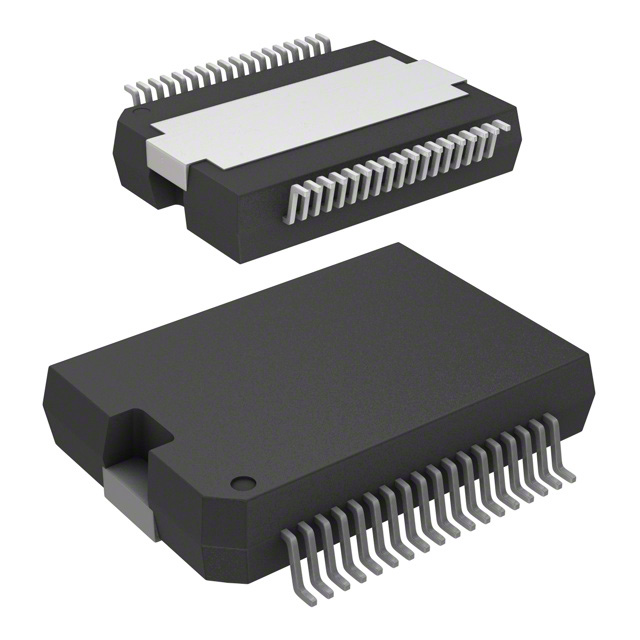
Infineon Technologies TLE82642EXUMA3
- Part No.:
- TLE82642EXUMA3
- Manufacturer:
- Infineon Technologies
- Category:
- Specialized ICs
- Package:
- 36-BSSOP (0.295", 7.50mm Width) Exposed Pad
- Datasheet:
-
 TLE82642EXUMA3.pdf
- Description:
- IC TRANSCEIVER DSO36-38
- Quantity:
- Payment:

- Shipping:

Inventory:1,643
Please send an inquiry. Send us your inquiry, and we will respond immediately.
Product details
Overview
TLE82642EXUMA3 from Infineon Technologies is a monolithic Universal System Basis Chip (SBC) for automotive CAN-LIN gateway and body control applications. It integrates a high-speed CAN transceiver (ISO 11898-2/5 compliant, up to 1 MBaud), three LIN transceivers (LIN 2.1, up to 20 kBaud), three LDO regulators (Vcc1µC/Vcc2 @ 200 mA, Vcc3 @ up to 400 mA), SPI interface, watchdog/reset supervision, wake-up input, and four open-drain Limp Home outputs - all in a single PG-DSO-36-38 package.
For engineers reviewing the TLE82642EXUMA3 datasheet, TLE82642EXUMA3 pinout, TLE82642EXUMA3 application, or TLE82642EXUMA3 equivalent, key selection criteria include dual-supply LDO capability, configurable fail-safe Limp Home behavior, bus wake-up support across CAN/LIN, cyclic wake in Stop Mode, and AEC-Q100 qualification for under-hood deployment.
Technical Context
The TLE82642EXUMA3 implements a state-machine-driven SBC architecture with hardware-configurable modes (Normal, Stop, Sleep, Flash) and software-controlled transitions via SPI. Its supervision subsystem includes a window watchdog (16–1024 ms programmable timeout), undervoltage reset generator with time-out on Vcc1µC, and interrupt management with timing filters to suppress noise-induced spurious signals.
It supports concurrent bus activity: HS-CAN operates at up to 1 MBaud with dedicated VccHSCAN supply and bus failure detection; each of the three LIN channels complies with LIN 2.1 and SAE J2602-2, with independent enable/disable and fault reporting via SPI status registers. The Limp Home logic uses dedicated internal supply and offers PWM (100 Hz, 20% duty) and side-indicator (1.25 Hz, 50% duty) outputs for safety-critical fallback operation.
Key Specifications
| Parameter | Value and Actual Design Meaning |
|---|---|
| HS-CAN Data Rate | Up to 1 MBaud; enables real-time communication with ECUs in powertrain and chassis networks. |
| LIN Channels | 3 independent LIN 2.1 transceivers; supports multi-node body electronics (e.g., door modules, seat controls). |
| Vcc1µC Output | 5 V ±2%, 200 mA; powers external microcontroller with integrated pull-up reset output and UVLO time-out. |
| Watchdog Type | Configurable window watchdog (16–1024 ms); prevents firmware lockup with checksum-protected SPI configuration. |
| Limp Home Outputs | 4 open-drain outputs; provide fail-safe signaling (e.g., hazard flash, brake light override) during system fault. |
| Operating Temp | −40 °C to +150 °C ambient; qualified per AEC-Q100 Grade 0 for under-hood use without derating. |
| ESD Robustness | 8 kV HBM on CANH/CANL/SPLIT and LIN bus pins; ensures reliability in manufacturing and field environments. |
Pinout & Package
Package: PG-DSO-36-38 (36-pin exposed-pad SOIC variant with thermal enhancement; RoHS-compliant, lead-free finish).
| Pin/Terminal | Circuit Role | Design Meaning |
|---|---|---|
| Vcc1µC | Primary LDO output | 5 V ±2% regulated supply for MCU core; includes undervoltage time-out reset generation. |
| Vcc2 | Secondary LDO output | 5 V ±2%, 200 mA; powers internal HS-CAN cell or external peripherals; independent from Vcc1µC. |
| Vcc3 | Adjustable LDO output | 5 V ±4% with external PNP pass transistor; current limited by shunt resistor (e.g., 400 mA with 220 mΩ). |
| CANH / CANL | HS-CAN differential bus interface | ISO 11898-2/5 compliant; short-circuit proof to battery and GND; supports bus wake-up. |
| LIN1–LIN3 | Three LIN bus I/Os | Each supports LIN 2.1 protocol, 20 kBaud data rate, and individual fault detection via SPI. |
| WK | Wake-up input | Bi-level sensitive; enables wake from Stop/Sleep modes via external signal or bus activity. |
| RESET | Reset output | Open-drain active-low reset with integrated pull-up; asserts on UVLO, watchdog timeout, or SPI command. |
| SPI_CS / MOSI / MISO / SCLK | 16-bit SPI interface | Full-duplex serial control and status monitoring; supports corrupted-data detection and CRC-like checksums. |
| LH1–LH4 | Limp Home outputs | Open-drain, internally powered; configurable for PWM (100 Hz) or side-indicator (1.25 Hz) safety signaling. |
Key Features
| Feature | Design Value |
|---|---|
| Triple LIN + HS-CAN integration | Reduces BOM count and PCB area vs. discrete transceivers; eliminates inter-chip timing skew in gateways. |
| Four configurable Limp Home outputs | Enables ASIL-B–compatible fail-safe behavior (e.g., brake light override, hazard activation) without external logic. |
| Dual independent 5 V LDOs (200 mA each) | Allows isolated power domains: one for MCU, one for CAN PHY - improving noise immunity and fault containment. |
| Cyclic wake-up in Stop Mode | Permits periodic self-check without external timer; extends battery life in always-on vehicle modules. |
| Bus failure detection (CAN/LIN) | Reports short-to-battery, short-to-ground, and open-circuit faults via SPI status register for diagnostic logging. |
Applications
| Body Control Module (BCM) | Central Gateway ECU |
|---|---|
|
Use Scenario: Centralized control of lighting, windows, locks, and mirrors in modern passenger vehicles. IC Role / Device Role / Timing Role: SBC provides power (Vcc1µC/Vcc2), communication (3× LIN + CAN), and safety fallback (LH1–LH4) for MCU and peripheral drivers. Use Value: Single-chip integration reduces component count by ≥7 discrete ICs while enabling coordinated Limp Home responses during MCU failure. |
Use Scenario: Protocol translation and message routing between CAN (powertrain/chassis) and LIN (body/sensor) subnetworks. IC Role / Device Role / Timing Role: Acts as bridge controller: HS-CAN handles high-priority messages; three LIN ports manage distributed low-cost nodes (e.g., HVAC actuators). Use Value: Concurrent bus operation avoids arbitration delays; SPI allows runtime reconfiguration of LIN node addressing and CAN filter settings. |
| Roof Module Controller | Seat Control Unit |
|
Use Scenario: Sunroof, panoramic roof, and interior lighting control with integrated anti-pinch and position feedback. IC Role / Device Role / Timing Role: Supplies MCU and motor drivers (via Vcc3), monitors CAN commands, wakes on LIN sensor updates, and triggers LH outputs on overtemperature. Use Value: Vcc3's adjustable current limit (up to 400 mA) supports external PNP-based motor biasing; WK pin enables precise wake timing from LIN position sensors. |
Use Scenario: Memory seat positioning, heating/ventilation, and occupancy sensing in premium vehicle seating systems. IC Role / Device Role / Timing Role: Powers MCU and LIN-connected seat sensors/actuators; uses Limp Home outputs to force safe seat position (e.g., full upright) on critical fault. Use Value: Four LH outputs allow independent control of seat motor direction, heater disable, and warning indicators - meeting ISO 26262 ASIL-B requirements. |
Equivalent & Alternatives
The following parts are listed as comparable options for similar universal SBC applications.
| Alternative Part | Technical Difference | Application Difference | Selection Advice |
|---|---|---|---|
| TLE9471-2QX | Single LIN channel, no Limp Home outputs; adds SENT interface and enhanced diagnostics. | Targeted at powertrain sensor interfaces, not body/gateway applications requiring multiple LIN buses. | Select when SENT sensor integration outweighs need for LIN scalability and fail-safe outputs. |
| MC33816 | Two LIN channels, no Vcc3 regulator; includes analog inputs and enhanced watchdog with window violation detection. | Optimized for mid-tier body controllers where cost and analog monitoring outweigh triple-LIN demand. | Select when analog sensor monitoring (e.g., temperature, voltage) is required alongside dual-LIN and CAN. |
Compared with TLE9471-2QX and MC33816, the TLE82642EXUMA3 uniquely delivers triple-LIN support, four Limp Home outputs, and Vcc3 programmability - making it the only choice for scalable, safety-aware automotive gateways requiring ≥3 LIN domains and coordinated fail-safe signaling.
Availability
TLE82642EXUMA3 is available at Aetrix Electronics and suitable for automotive body control modules, central gateway ECUs, roof module controllers, and seat control units requiring stable component supply across extended product lifecycles.
Supply support for TLE82642EXUMA3 includes scheduled delivery planning, volume procurement assistance, BOM continuity management, traceable sourcing, and lifecycle availability coordination for OEM customers, industrial embedded developers, connected-device designers, and electronics production programs.
Manufacturer
Infineon Technologies is a German semiconductor manufacturer specializing in automotive, power management, and security ICs, with global R&D and manufacturing infrastructure.
The TLE82642EXUMA3 belongs to Infineon's HERMES family of System Basis Chips, designed specifically for scalable, AEC-Q100-qualified automotive networking - prioritizing integration density, functional safety, and robustness in harsh electrical environments.
FAQ
What is the maximum allowable junction temperature for continuous operation?
The TLE82642EXUMA3 has a maximum junction temperature of +150 °C, validated per AEC-Q100 Grade 0. Thermal derating is not required up to this limit when mounted on a 4-layer PCB with 2 oz copper and ≥2 cm² thermal pad area. The device includes internal overtemperature protection that forces Safe State entry above 165 °C.
Can the three LIN transceivers operate simultaneously at different baud rates?
Yes - each LIN channel (LIN1–LIN3) supports independent baud rate configuration via SPI register writes. Valid ranges are 1–20 kBaud for standard operation and up to 115 kBaud in LIN Flash Mode. No hardware conflict arises because each transceiver has dedicated TX/RX logic and bus drivers.
How does the Limp Home output behavior change during a Vcc1µC undervoltage event?
During Vcc1µC undervoltage, the Limp Home outputs remain active and retain their last configured state (PWM or side-indicator mode) because they are powered by a dedicated internal supply rail decoupled from Vcc1µC. This ensures fail-safe signaling continues even if the MCU supply collapses.
Is the HS-CAN transceiver compatible with CAN FD physical layer requirements?
No - the TLE82642EXUMA3 implements a classical HS-CAN transceiver compliant with ISO 11898-2 and ISO 11898-5 only. It does not support CAN FD's higher bit rates (>1 MBaud) or flexible data phase; its maximum data rate is 1 MBaud with fixed dominant/recessive timing.
TLE82642EXUMA3 Specifications
- Product attributes
- Attribute value
- Manufacturer:
- Infineon Technologies
- Series:
- -
- Package/Case:
- 36-BSSOP (0.295", 7.50mm Width) Exposed Pad
- Packaging:
- Tape & Reel (TR)
- Product Status:
- Obsolete
- Programmable:
- Not Verified
- Type:
- Transceiver
- Applications:
- -
- Mounting Type:
- Surface Mount
- Supplier Device Package:
- PG-DSO-36-38
- Grade:
- Automotive
- Qualification:
- -
TLE82642EXUMA3 FAQ
1.How can I place an order for TLE82642EXUMA3 through Aetrix?
Please submit a Request for Quotation (RFQ) for TLE82642EXUMA3 on Aetrix. Our sales agent will provide a competitive quotation and guide you through the order confirmation once you accept the terms.
2.Are the price and stock information for TLE82642EXUMA3 reliable?
The price and inventory of TLE82642EXUMA3 are updated periodically and may fluctuate due to market conditions. Stock and pricing data are typically refreshed every 24 hours. Quotation validity for TLE82642EXUMA3 is usually 5 days.
3.What payment methods are accepted for TLE82642EXUMA3?
We accept Wire Transfer, PayPal, Credit Card, Western Union, MoneyGram, and Escrow for TLE82642EXUMA3 transactions.
Note: Certain payment methods may incur a processing fee.
4.How is shipping managed for TLE82642EXUMA3?
TLE82642EXUMA3 orders can be shipped via leading logistics carriers, including DHL, UPS, FedEx, TNT, or Registered Mail.
Once your TLE82642EXUMA3 order is processed, you will receive an email with the shipment details and tracking number.
Note: Tracking information may take up to 24 hours to appear. Express delivery typically takes 3–5 business days.
5.How can I obtain technical support or documentation for TLE82642EXUMA3?
For technical support, including TLE82642EXUMA3 datasheets, pinout diagrams, or application guidance, please contact our engineering support team. They can provide detailed documentation and assistance for your TLE82642EXUMA3 requirements.
6.How does Aetrix verify that TLE82642EXUMA3 is sourced from the original manufacturer or authorized distributors?
All TLE82642EXUMA3 products on Aetrix are procured from qualified distributors and authorized channels. Our dedicated quality assurance team conducts strict verification, including traceability checks and, if necessary, third-party testing. This ensures that TLE82642EXUMA3 meets industry standards.
7.What is the process for return or replacement of TLE82642EXUMA3?
All TLE82642EXUMA3 units undergo pre-shipment inspection (PSI). If there is an issue with TLE82642EXUMA3, returns or replacements are accepted under the following conditions:
1.Quantity discrepancies, incorrect items, or visible external defects (such as breakage or corrosion), acknowledged by Aetrix.
2.The issue is reported within 90 days of delivery.
3.The TLE82642EXUMA3 part is unused and in its original packaging.
Return procedure for TLE82642EXUMA3:
1.Submit a request within 90 days.
2.Obtain a Return Material Authorization (RMA) from Aetrix.
TLE82642EXUMA3 Tags
-
CAP200DG-TL
Power Integrations
-
ATSHA204A-MAHDA-T
Microchip Technology

-
ATSHA204A-SSHDA-T
Microchip Technology
-
ATSHA204A-STUCZ-T
Microchip Technology
-
ATECC608B-MAHDA-T
Microchip Technology
-
ATECC608B-MAHCZ-S
Microchip Technology

-
ATECC608B-SSHDA-T
Microchip Technology
-
ATECC608B-MAHDA-S
Microchip Technology
-
ATECC608A-MAHDA-S
Microchip Technology
-
ATECC608B-MAVDA-T
Microchip Technology

-
ATECC608A-SSHDA-T
Microchip Technology
-
ATECC508A-MAHDA-T
Microchip Technology
Tech Hub

Jumper cables guide covering safe connection order, red and black clamp placement, final ground connection, cable gauge, length, clamp quality, copper vs CCA cables, jump starter comparison and battery…

LDO regulator guide covering low dropout voltage, power dissipation, thermal design, PSRR, output noise, capacitor stability, adjustable LDO circuits, LDO vs buck converter and datasheet selection chec…

Conditional Access Module guide covering CAM meaning, CI/CI+ interface, smart card authorization, DVB security workflow, TV and set-top box compatibility, internal electronics, ESD protection, connecto…

Guide to electronic component obsolescence covering EOL risk, PCN/PDN notices, last-time buy planning, replacement options, form-fit-function validation, counterfeit risk and BOM lifecycle management.

18650 battery guide covering lithium-ion cell basics, 3.6V/3.7V voltage, 4.2V charging, mAh and Wh capacity, protected cells, chargers, BMS, series-parallel packs, holders, welding and sourcing checks.…

Hall effect sensor guide covering working principle, linear and digital sensors, Arduino circuits, current sensing, speed detection, automotive applications, A3144 examples, signal filtering and datash…

Product Change Notification guide for electronic components, covering PCN meaning, PCN vs PDN/EOL, common change types, risk levels, form-fit-function review, engineering validation, BOM control, LTB/L…

A practical guide to blend door actuators, covering HVAC function, symptoms, location, AC and heater issues, reset and calibration, replacement cost, electrical diagnosis, compatibility checks, and rep…

Engineering guide to Raspberry Pi alternatives, covering chip-level differences, Orange Pi, ROCK, Jetson, Banana Pi, NanoPi, Compute Module, Pico, GPIO, camera, HAT compatibility, and replacement risks…
Engineering guide to dynamic load response testing for high-current buck converters, covering load step setup, slew rate, Vcore undershoot, overshoot, recovery time, probe location, output capacitors a…


