
 My Inquiry
 My Account


Toshiba Semiconductor and Storage TLP351A(F)
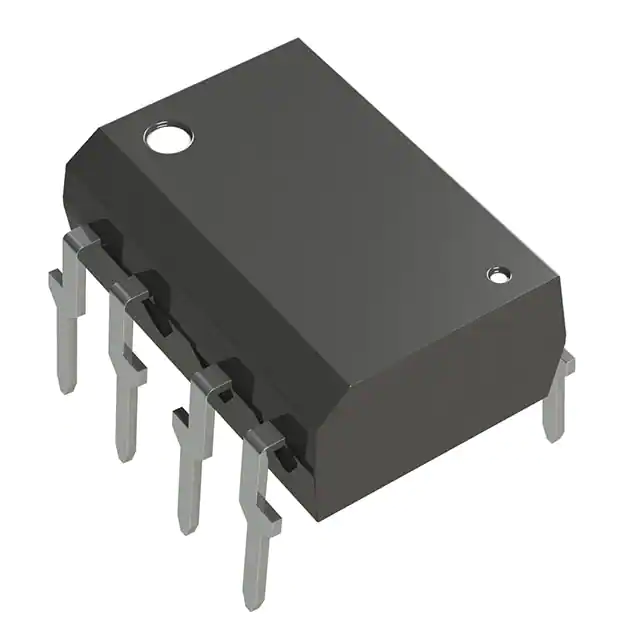
- Part No.:
- TLP351A(F)
- Manufacturer:
- Toshiba Semiconductor and Storage
- Category:
- Isolators - Gate Drivers
- Package:
- 8-DIP (0.300", 7.62mm)
- Datasheet:
-
 TLP351A(F).pdf
- Description:
- OPTOISO 3.75KV 1CH GATE DVR 8DIP
- Quantity:
- Payment:

- Shipping:

Inventory:1,362
Please send an inquiry. Send us your inquiry, and we will respond immediately.
Product details
Overview
TLP351A(F) from Toshiba Electronic Devices & Storage Corporation is a high-speed, high-isolation photocoupler with GaAlAs infrared LED and integrated photo IC output stage, designed for driving IGBTs and power MOSFETs in industrial inverters and home appliances. It delivers ±0.6 A peak output current, supports 10–30 V supply voltage, achieves ≤500 ns propagation delay, and provides ±20 kV/µs common-mode transient immunity in an 8-pin DIP package.
For engineers reviewing the TLP351A(F) datasheet, TLP351A(F) pinout, TLP351A(F) application, or TLP351A(F) equivalent, this page delivers verified technical context, real-world gate-drive use cases, pin-level design meaning, safety-certified isolation specs, and validated alternative options for high-reliability power switching designs.
Technical Context
The TLP351A(F) integrates a GaAlAs LED optically coupled to a high-gain photodetector IC with totem-pole output stage, enabling both sourcing and sinking of gate drive current. Its internal Faraday shield ensures robust noise rejection in high-dV/dt environments typical of motor drives and induction cooktops.
It operates across –40°C to +100°C, requires a mandatory 0.1 µF bypass capacitor between VCC (pin 8) and GND (pin 5), and uses logic-level input thresholds (≤5 mA IF(L/H)) to interface directly with microcontrollers or PWM controllers without external level-shifting.
Key Specifications
| Parameter | Value and Actual Design Meaning |
|---|---|
| Output Peak Current | ±0.6 A max - sufficient to rapidly charge/discharge IGBT/MOSFET gates up to ~100 nC total gate charge at 25 kHz switching. |
| Propagation Delay | ≤500 ns max - enables precise timing control in high-frequency inverter topologies with minimal skew between channels. |
| Common-Mode Transient Immunity | ±20 kV/µs min - maintains signal integrity during fast voltage transients across isolated domains in 600 V+ bus systems. |
| Isolation Voltage | 3750 Vrms min - certified for reinforced insulation per UL1577 and CSA Component Acceptance, supporting 400 VAC mains-connected applications. |
| Supply Voltage Range | 10–30 V - compatible with standard industrial 12 V and 24 V rail supplies, eliminating need for auxiliary bias regulation. |
| Threshold Input Current | ≤5 mA max - allows direct drive from low-power MCU GPIOs or open-collector logic without external current amplification. |
| Operating Temperature | –40°C to +100°C - rated for under-hood automotive-adjacent environments and enclosed industrial enclosures without derating. |
Pinout & Package
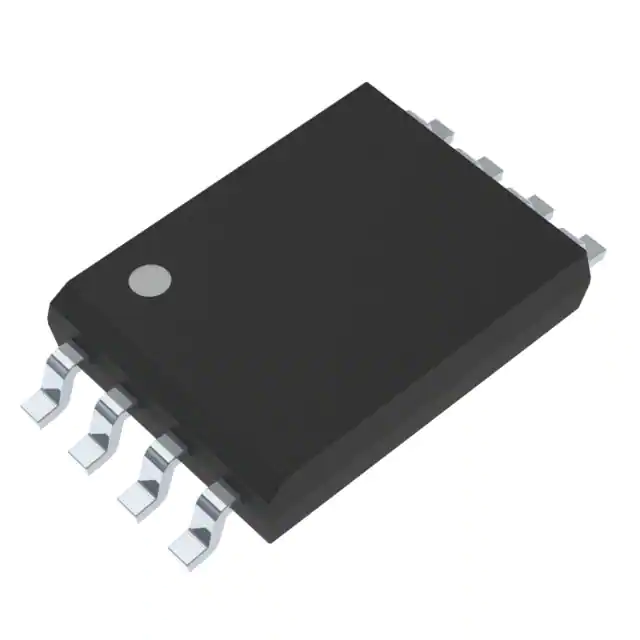
Package: 8-pin DIP (dual in-line package), through-hole mounting, 7.62 mm pitch for TLP351A and 10.16 mm pitch for TLP351AF variant. RoHS-compliant lead finish; weight ≈ 0.54 g.
| Pin/Terminal | Circuit Role | Design Meaning |
|---|---|---|
| 1, 4, 7 | No Connect (N.C.) | Internally unconnected; must remain floating - no routing or soldering required. |
| 2 | Anode | LED anode input - connect to MCU GPIO or driver via current-limiting resistor (e.g., 1 kΩ @ 5 V). |
| 3 | Cathode | LED cathode return - tie to ground or open-collector sink; defines logic polarity (low = ON). |
| 5 | GND | Photodetector IC ground reference - connect to local low-noise analog ground near bypass capacitor. |
| 6 | VO (Output) | Totem-pole output - directly drives gate of N-channel IGBT/MOSFET; sinks or sources current based on input state. |
| 8 | VCC | Photodetector supply - must be decoupled to pin 5 with 0.1 µF ceramic capacitor placed within 1 cm. |
Key Features
| Feature | Design Value |
|---|---|
| Faraday shield integration | Guarantees ≥±20 kV/µs CMTI - critical for stable operation in high-noise motor drive and induction heating circuits. |
| Totem-pole output stage | Enables bidirectional gate current (±0.6 A) - eliminates need for external push-pull drivers in half-bridge gate control. |
| UL1577 / CSA / VDE EN60747-5-5 certification | Validated reinforced isolation - satisfies safety requirements for Class I/II equipment in industrial and appliance end products. |
| Logic-compatible input threshold | ≤5 mA IF(L/H) - interfaces directly with 3.3 V/5 V MCUs and FPGA outputs without level shifters or buffer stages. |
| Wide operating temperature range | –40°C to +100°C - supports deployment in sealed inverters, induction cooktops, and HVAC systems without thermal derating. |
Applications
| Industrial Inverters | MOSFET Gate Drivers |
|---|---|
|
Use Scenario: Controlling three-phase IGBT modules in variable-frequency drives for pumps, fans, and compressors. IC Role / Device Role / Timing Role: Isolated gate driver providing timing-synchronized, high-current turn-on/turn-off pulses to upper/lower IGBT legs. Use Value: ±20 kV/µs CMTI prevents false triggering during bus voltage transitions; 500 ns delay enables <1 µs dead-time control. |
Use Scenario: Driving high-side and low-side N-channel MOSFETs in synchronous buck converters for server PSUs. IC Role / Device Role / Timing Role: Level-shifting, isolated gate driver translating low-voltage PWM signals to floating gate nodes. Use Value: Totem-pole output delivers ±0.6 A peak current to minimize gate charge time; 3750 Vrms isolation meets IPC-2221 creepage requirements. |
| IGBT Gate Drivers | Induction Cooktop and Home Appliances |
|
Use Scenario: Direct gate drive of 600 V/30 A IGBTs in resonant inverter stages of induction cooktops and rice cookers. IC Role / Device Role / Timing Role: High-speed, isolated switch controller interfacing MCU PWM with IGBT gate, handling >20 kHz burst-mode operation. Use Value: ≤5 mA input threshold enables reliable triggering from 3.3 V microcontrollers; 10–30 V VCC accommodates wide-input auxiliary supplies. |
Use Scenario: Isolating control logic from high-power heating elements in smart ovens, air fryers, and washing machine motor drives. IC Role / Device Role / Timing Role: Safety-critical isolation barrier between user-interface MCU and mains-referenced power stage. Use Value: UL/cUL/VDE certification validates compliance with IEC 60335-1; 100°C rating supports compact, thermally constrained appliance PCB layouts. |
Equivalent & Alternatives
The following parts are listed as comparable options for similar photocoupler-based gate drive applications.
| Alternative Part | Technical Difference | Application Difference | Selection Advice |
|---|---|---|---|
| ACPL-332J | Higher CMTI (±35 kV/µs), lower peak output (±0.4 A), SO-8 package | Better noise immunity in ultra-high-dV/dt environments; limited drive strength for >50 nC gates | Select when system-level EMI exceeds ±20 kV/µs and board space favors surface-mount over DIP. |
| HCPL-316J | Integrated fault reporting, higher supply voltage (15–30 V), same ±0.6 A output | Supports DESAT detection and active Miller clamp; requires additional fault-handling logic | Choose when IGBT protection features (desaturation sensing, soft shutdown) are required beyond basic gate drive. |
Compared with ACPL-332J and HCPL-316J, the TLP351A(F) offers optimal balance of cost, proven reliability in high-volume appliances, and straightforward implementation - no extra pins or configuration needed for core gate-driving functionality.
Availability
TLP351A(F) is available at Aetrix Electronics and suitable for industrial inverters, MOSFET/IGBT gate drivers, and induction cooktop and home appliance designs requiring stable component supply, long-lifecycle support, and certified isolation performance.
Supply support for TLP351A(F) includes scheduled delivery planning, volume procurement assistance, BOM continuity management, traceable sourcing, and lifecycle availability coordination for OEM customers, industrial embedded developers, connected-device designers, and electronics production programs.
Manufacturer
Toshiba Electronic Devices & Storage Corporation designs and manufactures high-reliability semiconductor components, with global leadership in optocouplers, power devices, and storage solutions.
The TLP351A(F) belongs to Toshiba's high-speed photocoupler product line, engineered specifically for robust, low-latency isolation in power electronics gate drive circuits where noise immunity and timing precision are critical.
FAQ
What is the maximum recommended operating temperature for the TLP351A(F)?
The TLP351A(F) is rated for continuous operation from –40°C to +100°C. This full-range specification is validated per datasheet Section 8 (Absolute Maximum Ratings) and Section 9 (Recommended Operating Conditions), making it suitable for enclosed industrial inverters and induction cooktops where ambient temperatures may exceed 85°C. Derating is not required within this envelope.
Does the TLP351A(F) require an external bypass capacitor?
Yes - a 0.1 µF ceramic capacitor must be placed between pin 8 (VCC) and pin 5 (GND), located within 1 cm of the pins. This is explicitly mandated in Section 6 (Internal Circuit Note) and Section 9 (Recommended Operating Conditions) to stabilize the high-gain photodetector IC and prevent improper switching behavior.
What safety certifications does the TLP351A(F) hold?
The TLP351A(F) is UL1577 approved (File No. E67349), cUL-approved per CSA Component Acceptance Service (File No. E67349), and VDE-approved to EN60747-5-5 - with the D4 option required for full VDE compliance. These certifications validate its 3750 Vrms isolation rating for reinforced insulation in end-equipment safety standards.
Can the TLP351A(F) drive both IGBTs and MOSFETs?
Yes - the TLP351A(F)'s totem-pole output delivers ±0.6 A peak current and supports 10–30 V supply, enabling direct gate drive of both power MOSFETs (e.g., 100 V/30 A types) and IGBTs (e.g., 600 V/25 A modules) used in industrial inverters and induction cooktops, as confirmed in Section 1 (Applications) and Section 2 (General).
What is the difference between TLP351A and TLP351AF package variants?
The TLP351A uses a 7.62 mm lead pitch DIP8 package (TOSHIBA code 11-10C4S), while the TLP351AF uses a wider 10.16 mm pitch DIP8 (11-10C402S). Mechanical parameters in Section 7.2 confirm creepage/clearance distances differ: TLP351A min 7.0 mm, TLP351AF min 8.0 mm - making TLP351AF preferred for higher working voltage isolation requirements.
TLP351A(F) Specifications
- Product attributes
- Attribute value
- Manufacturer:
- Toshiba Semiconductor and Storage
- Series:
- -
- Package/Case:
- 8-DIP (0.300", 7.62mm)
- Packaging:
- Tube
- Product Status:
- Active
- Technology:
- Optical Coupling
- Number of Channels:
- 1
- Voltage - Isolation:
- 3750Vrms
- Common Mode Transient Immunity (Min):
- 20kV/µs
- Propagation Delay tpLH / tpHL (Max):
- 500ns, 500ns
- Pulse Width Distortion (Max):
- 350ns
- Rise / Fall Time (Typ):
- 50ns, 50ns
- Current - Output High, Low:
- 400mA, 400mA
- Current - Peak Output:
- 600mA
- Voltage - Forward (Vf) (Typ):
- 1.55V
- Current - DC Forward (If) (Max):
- 20 mA
- Voltage - Output Supply:
- 10V ~ 30V
- Grade:
- -
- Qualification:
- -
- Operating Temperature:
- -40°C ~ 100°C
- Mounting Type:
- Through Hole
- Supplier Device Package:
- 8-DIP
- Approval Agency:
- cUR, UR, VDE
TLP351A(F) FAQ
1.How can I place an order for TLP351A(F) through Aetrix?
Please submit a Request for Quotation (RFQ) for TLP351A(F) on Aetrix. Our sales agent will provide a competitive quotation and guide you through the order confirmation once you accept the terms.
2.Are the price and stock information for TLP351A(F) reliable?
The price and inventory of TLP351A(F) are updated periodically and may fluctuate due to market conditions. Stock and pricing data are typically refreshed every 24 hours. Quotation validity for TLP351A(F) is usually 5 days.
3.What payment methods are accepted for TLP351A(F)?
We accept Wire Transfer, PayPal, Credit Card, Western Union, MoneyGram, and Escrow for TLP351A(F) transactions.
Note: Certain payment methods may incur a processing fee.
4.How is shipping managed for TLP351A(F)?
TLP351A(F) orders can be shipped via leading logistics carriers, including DHL, UPS, FedEx, TNT, or Registered Mail.
Once your TLP351A(F) order is processed, you will receive an email with the shipment details and tracking number.
Note: Tracking information may take up to 24 hours to appear. Express delivery typically takes 3–5 business days.
5.How can I obtain technical support or documentation for TLP351A(F)?
For technical support, including TLP351A(F) datasheets, pinout diagrams, or application guidance, please contact our engineering support team. They can provide detailed documentation and assistance for your TLP351A(F) requirements.
6.How does Aetrix verify that TLP351A(F) is sourced from the original manufacturer or authorized distributors?
All TLP351A(F) products on Aetrix are procured from qualified distributors and authorized channels. Our dedicated quality assurance team conducts strict verification, including traceability checks and, if necessary, third-party testing. This ensures that TLP351A(F) meets industry standards.
7.What is the process for return or replacement of TLP351A(F)?
All TLP351A(F) units undergo pre-shipment inspection (PSI). If there is an issue with TLP351A(F), returns or replacements are accepted under the following conditions:
1.Quantity discrepancies, incorrect items, or visible external defects (such as breakage or corrosion), acknowledged by Aetrix.
2.The issue is reported within 90 days of delivery.
3.The TLP351A(F) part is unused and in its original packaging.
Return procedure for TLP351A(F):
1.Submit a request within 90 days.
2.Obtain a Return Material Authorization (RMA) from Aetrix.
TLP351A(F) Tags
.JPG)
-
TLP152(TPL,E
Toshiba Semiconductor and Storage

-
HT0740LG-G
Microchip Technology
-
FOD8314TR2
onsemi
-
1EDI60N12AFXUMA1
Infineon Technologies
-
1EDB7275FXUMA1
Infineon Technologies
-
UCC5350MCDR
Texas Instruments

-
2EDB7259KXUMA1
Infineon Technologies

-
UCC5304DWVR
Texas Instruments
-
SI8261BBC-C-ISR
Skyworks Solutions Inc.
-
HT0440LG-G
Microchip Technology
-
HCPL-0302-500E
Broadcom Limited
-
STGAP2HSCMTR
STMicroelectronics
Tech Hub

Counterfeit components can hide behind convincing markings and passing basic function tests. This engineering reference covers source traceability, external inspection, X-ray, XRF, electrical testing, …

A practical engineering and sourcing framework covering lifecycle verification, lifetime-buy calculations, replacement qualification, supplier checks and counterfeit-risk controls.

TTL and CMOS logic families differ in thresholds, loading, output drive, power and timing. This engineering guide compares 74HC and 74HCT, calculates noise margins and checks 3.3 V/5 V compatibility.

A practical engineering guide to 3.3V and 5V logic compatibility, input thresholds, resistor dividers, translator ICs, MOSFET level shifting, I2C pull-ups, timing limits and power-sequencing risks.

The 74HC595 uses push-pull logic outputs, while the TPIC6B595 uses 50 V open-drain DMOS sinks for higher-power loads. This guide compares timing, current limits, 3.3 V interfacing, load wiring, thermal…

The 74HC595 converts serial data into eight stable parallel outputs. This guide covers pin functions, shift and storage timing, OE and MR behavior, drive-current limits, cascading, voltage compatibilit…

A technical comparison of level-sensitive latches and edge-triggered flip-flops, covering timing windows, setup and hold limits, master–slave operation, time borrowing, race-through, HDL inference and…

A D latch stores one bit while Enable controls when data can pass. This reference covers gate-level operation, truth tables, transparency, setup and hold timing, LE versus OE, common ICs and practical …

An SR latch stores one bit through cross-coupled feedback. This engineering reference covers NOR and NAND implementations, truth tables, forbidden-state recovery, gated operation, switch debouncing, fa…

Latch circuits retain one bit through feedback. This technical reference covers SR and D latches, truth tables, transparency, timing limits, latch-versus-flip-flop behavior, applications and common log…


