
 My Inquiry
 My Account


Infineon Technologies TLS202B1MBV33HTSA1
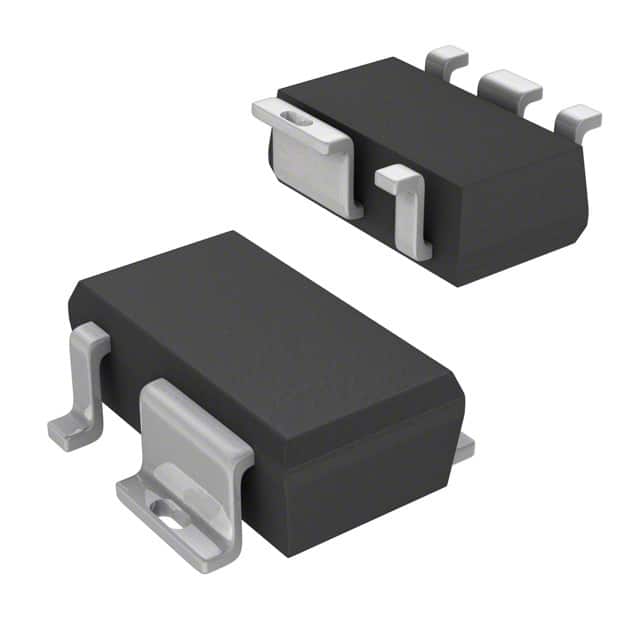
- Part No.:
- TLS202B1MBV33HTSA1
- Manufacturer:
- Infineon Technologies
- Package:
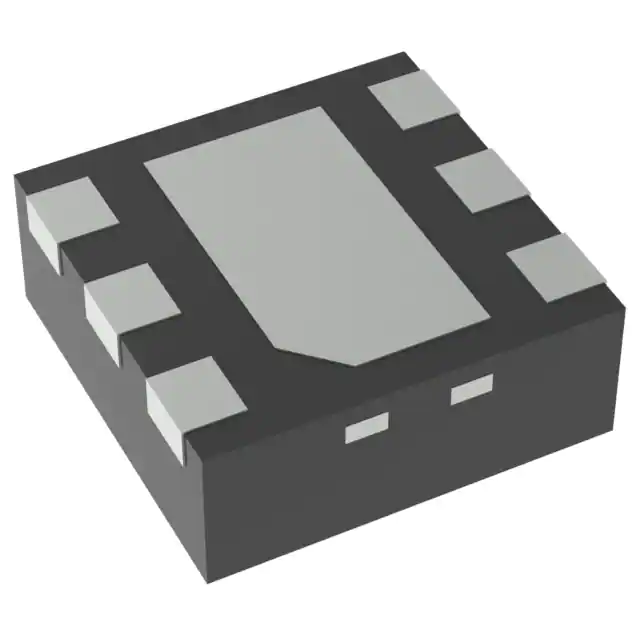
- 6-SMD (5 Leads), Gull Wing
- Datasheet:
-
 TLS202B1MBV33HTSA1.pdf
- Description:
- IC REG LINEAR 3.3V 150MA SCT595
- Quantity:
- Payment:

- Shipping:

Inventory:2,519
Please send an inquiry. Send us your inquiry, and we will respond immediately.
Product details
Overview
TLS202B1MBV33 from Infineon Technologies is a fixed-output 3.3 V linear post-regulator IC for automotive applications, delivering up to 150 mA output current with ±3% voltage accuracy, 290 mV typical dropout, and AEC-Q100 qualification. It operates across 2.7–18 V input range, features enable control, and is designed for use downstream of DC-DC preregulators in body control modules.
For engineers reviewing the TLS202B1MBV33 datasheet, TLS202B1MBV33 pinout, TLS202B1MBV33 application, or TLS202B1MBV33 equivalent, key selection criteria include low shutdown current (0.01 µA), high PSRR (63 dB @ 10 kHz), thermal protection, and PG-SCT595 package compatibility with automotive PCB layout constraints.
Technical Context
The TLS202B1MBV33 implements a bandgap-referenced feedback loop controlling a pass transistor to maintain regulated 3.3 V output. Its internal current limitation and overtemperature shutdown circuits respond independently to short-circuit and thermal faults, causing oscillatory restart behavior until fault removal.
Stability requires an output capacitor CQ of ≥1 µF with ESR ≤10 Ω at 10 kHz, and an input capacitor CI is recommended for line transient suppression. The dual-GND pins (2 and 5) must both be soldered to a heatsink area to meet thermal resistance targets (RthJA = 117 K/W with 300 mm² copper).
Key Specifications
| Parameter | Value and Actual Design Meaning |
|---|---|
| Output Voltage | Fixed 3.3 V ±3% - ensures stable MCU core/logic supply under load and temperature variation. |
| Max Output Current | 150 mA - supports multiple low-power automotive sensors or CAN transceivers without external boost. |
| Dropout Voltage | 290 mV typ. at 150 mA - enables operation down to 3.59 V input, critical for cold-crank scenarios. |
| PSRR | 63 dB @ 10 kHz - suppresses switching noise from upstream DC-DC converters feeding the post-regulator. |
| Quiescent Current | 50 µA typ. - minimizes standby power in always-on vehicle domains like alarm or telematics. |
| Shutdown Current | 0.01 µA typ. - meets ultra-low leakage requirements for battery-backed systems with >10-year shelf life. |
| Operating Temp | −40°C to +150°C junction - validated for engine bay and transmission control unit mounting locations. |
Pinout & Package
Package: PG-SCT595-5 - thermally enhanced 5-pin surface-mount package with dual exposed GND pads (pins 2 and 5) requiring direct connection to PCB heatsink area for thermal management.
| Pin/Terminal | Circuit Role | Design Meaning |
|---|---|---|
| 1 (I) | Input Supply | Accepts 2.7–18 V input; requires 220 nF decoupling capacitor placed adjacent to pin for line stability. |
| 2 (GND) | Ground Reference | Internally tied to pin 5; must be soldered to thermal pad for heat dissipation and RthJA compliance. |
| 3 (Q) | Regulated Output | Delivers 3.3 V; requires ≥1 µF output capacitor with ≤10 Ω ESR at 10 kHz for loop stability. |
| 4 (EN) | Enable Control | Active-high logic; tie to I if enable function unused; drives internal driver to activate/deactivate regulator. |
| 5 (GND) | Ground Reference | Identical function and internal connection to pin 2; mandatory second thermal anchor point. |
Key Features
| Feature | Design Value |
|---|---|
| AEC-Q100 Qualified | Validated for automotive Grade 0 (−40°C to +150°C), enabling use in safety-critical ECUs without additional qualification effort. |
| Thermal Shutdown | Auto-restart behavior upon cooling prevents permanent latch-up during sustained overload, supporting robust field operation. |
| Low Dropout Design | 290 mV dropout at full 150 mA allows regulation from 12 V battery even during 8.5 V cold-crank dips. |
| High PSRR at 10 kHz | 63 dB attenuation of DC-DC switching ripple ensures clean 3.3 V rail for sensitive analog sensor interfaces. |
| Dual-GND Thermal Layout | Pins 2 and 5 provide parallel thermal paths to PCB copper, reducing RthJA by up to 35% vs. single-GND alternatives. |
Applications
| Body Control Module (BCM) | Door Module Electronics |
|---|---|
Use Scenario: Powering microcontroller, LIN transceiver, and window motor drivers in centralized door control units. IC Role / Device Role / Timing Role: Post-regulator supplying stable 3.3 V to MCU core and peripheral I/O after primary 5 V DC-DC conversion. Use Value: Ultra-low 0.01 µA shutdown current extends battery life during vehicle sleep mode; thermal shutdown protects against motor stall-induced overheating. | Use Scenario: Regulating power for mirror position sensors, memory seat controllers, and LED status indicators. IC Role / Device Role / Timing Role: Fixed 3.3 V supply for precision analog front-ends and EEPROM interfaces requiring tight voltage tolerance. Use Value: ±3% output accuracy maintains ADC reference integrity; 63 dB PSRR eliminates noise coupling from nearby PWM-controlled LEDs. |
| Telematics Control Unit (TCU) | Climate Control Actuator |
Use Scenario: Providing always-on 3.3 V rail to GNSS receiver, cellular modem baseband, and secure boot ROM. IC Role / Device Role / Timing Role: Low-quiescent-current post-regulator maintaining system wake-up capability during ignition-off states. Use Value: 50 µA operating current enables multi-year battery backup; AEC-Q100 qualification ensures reliability in hot under-dash environments. | Use Scenario: Powering stepper motor drivers and cabin temperature sensor signal conditioning circuitry. IC Role / Device Role / Timing Role: Stable 3.3 V source for op-amps and comparators in closed-loop HVAC feedback paths. Use Value: 290 mV dropout sustains regulation during 9 V battery brownouts; short-circuit protection prevents actuator driver failure from wiring faults. |
Equivalent & Alternatives
The following parts are listed as comparable options for similar fixed-output linear post-regulator applications.
| Alternative Part | Technical Difference | Application Difference | Selection Advice |
|---|---|---|---|
| TLD5098EL | Higher 200 mA output, 300 mV dropout, but no enable pin and wider ±4% output tolerance. | Lacks EN control - unsuitable for systems requiring dynamic power gating. | Select when higher current is needed and enable functionality is unnecessary. |
| TLV73333PDBVR | 3.3 V, ±1% accuracy, 150 mA, but rated only to +125°C and not AEC-Q100 qualified. | Not automotive-qualified - requires full requalification for vehicle deployment. | Select for non-automotive industrial or consumer applications needing tighter voltage tolerance. |
Compared with TLD5098EL and TLV73333PDBVR, TLS202B1MBV33 uniquely combines AEC-Q100 qualification, enable control, and ultra-low shutdown current - making it the only choice for automotive always-on domains where functional safety and battery preservation are co-dependent.
Availability
TLS202B1MBV33 is available at Aetrix Electronics and suitable for body control modules, telematics units, door electronics, and climate actuators requiring stable component supply under automotive qualification and thermal stress conditions.
Supply support for TLS202B1MBV33 includes scheduled delivery planning, volume procurement assistance, BOM continuity management, traceable sourcing, and lifecycle availability coordination for OEM customers, industrial embedded developers, connected-device designers, and electronics production programs.
Manufacturer
Infineon Technologies is a German semiconductor manufacturer specializing in power management, automotive ICs, and security solutions, with global manufacturing and automotive qualification infrastructure.
The OPTIREG™ linear family delivers AEC-Q100-qualified voltage regulators optimized for post-regulation in harsh automotive environments - specifically targeting low-quiescent-current, high-PSRR, and thermally robust operation downstream of DC-DC converters.
FAQ
What is the minimum input voltage required for regulation at full 150 mA load?
The TLS202B1MBV33 requires a minimum input voltage of 3.59 V to maintain 3.3 V output at 150 mA, based on its 290 mV typical dropout voltage. Below this threshold, output voltage drops linearly with input; operation below 2.7 V is outside the functional range per datasheet Table 3.
Can the EN pin be left floating, or must it be pulled high/low?
The EN pin must not be left floating. It is CMOS-compatible and requires a defined logic level: connect to input (VI) for always-on operation, or drive actively high/low via microcontroller GPIO. Floating may cause unpredictable startup behavior or increased leakage due to undefined gate bias on the internal enable driver.
Is an input capacitor (CI) mandatory, or only recommended?
An input capacitor CI is recommended-not mandatory-for line transient suppression, but omission risks instability during fast input voltage changes (e.g., load dump). Infineon specifies a 220 nF ceramic capacitor placed adjacent to pin 1; absence may degrade PSRR and increase susceptibility to conducted EMI from upstream DC-DC stages.
How does the dual-GND configuration affect PCB layout requirements?
Both GND pins (2 and 5) must be connected to the same low-impedance thermal plane using wide copper pours and multiple thermal vias. Separating them or routing one to a different net violates the internal grounding scheme and degrades thermal performance-increasing junction temperature by up to 40°C and risking premature thermal shutdown under 150 mA load.
TLS202B1MBV33HTSA1 Specifications
- Product attributes
- Attribute value
- Manufacturer:
- Infineon Technologies
- Series:
- OPTIREG™
- Package/Case:
- 6-SMD (5 Leads), Gull Wing
- Packaging:
- Tape & Reel (TR)
- Product Status:
- Active
- Output Configuration:
- Positive
- Output Type:
- Fixed
- Number of Regulators:
- 1
- Voltage - Input (Max):
- 18V
- Voltage - Output (Min/Fixed):
- 3.3V
- Voltage - Output (Max):
- -
- Voltage Dropout (Max):
- 0.57V @ 150mA
- Current - Output:
- 150mA
- Current - Quiescent (Iq):
- 75 µA
- Current - Supply (Max):
- 200 µA
- PSRR:
- 63dB (10kHz)
- Control Features:
- -
- Protection Features:
- Over Current, Over Temperature, Short Circuit
- Operating Temperature:
- -40°C ~ 150°C (TJ)
- Grade:
- Automotive
- Qualification:
- AEC-Q100
- Mounting Type:
- Surface Mount
- Supplier Device Package:
- PG-SCT595-5-1
TLS202B1MBV33HTSA1 FAQ
1.How can I place an order for TLS202B1MBV33HTSA1 through Aetrix?
Please submit a Request for Quotation (RFQ) for TLS202B1MBV33HTSA1 on Aetrix. Our sales agent will provide a competitive quotation and guide you through the order confirmation once you accept the terms.
2.Are the price and stock information for TLS202B1MBV33HTSA1 reliable?
The price and inventory of TLS202B1MBV33HTSA1 are updated periodically and may fluctuate due to market conditions. Stock and pricing data are typically refreshed every 24 hours. Quotation validity for TLS202B1MBV33HTSA1 is usually 5 days.
3.What payment methods are accepted for TLS202B1MBV33HTSA1?
We accept Wire Transfer, PayPal, Credit Card, Western Union, MoneyGram, and Escrow for TLS202B1MBV33HTSA1 transactions.
Note: Certain payment methods may incur a processing fee.
4.How is shipping managed for TLS202B1MBV33HTSA1?
TLS202B1MBV33HTSA1 orders can be shipped via leading logistics carriers, including DHL, UPS, FedEx, TNT, or Registered Mail.
Once your TLS202B1MBV33HTSA1 order is processed, you will receive an email with the shipment details and tracking number.
Note: Tracking information may take up to 24 hours to appear. Express delivery typically takes 3–5 business days.
5.How can I obtain technical support or documentation for TLS202B1MBV33HTSA1?
For technical support, including TLS202B1MBV33HTSA1 datasheets, pinout diagrams, or application guidance, please contact our engineering support team. They can provide detailed documentation and assistance for your TLS202B1MBV33HTSA1 requirements.
6.How does Aetrix verify that TLS202B1MBV33HTSA1 is sourced from the original manufacturer or authorized distributors?
All TLS202B1MBV33HTSA1 products on Aetrix are procured from qualified distributors and authorized channels. Our dedicated quality assurance team conducts strict verification, including traceability checks and, if necessary, third-party testing. This ensures that TLS202B1MBV33HTSA1 meets industry standards.
7.What is the process for return or replacement of TLS202B1MBV33HTSA1?
All TLS202B1MBV33HTSA1 units undergo pre-shipment inspection (PSI). If there is an issue with TLS202B1MBV33HTSA1, returns or replacements are accepted under the following conditions:
1.Quantity discrepancies, incorrect items, or visible external defects (such as breakage or corrosion), acknowledged by Aetrix.
2.The issue is reported within 90 days of delivery.
3.The TLS202B1MBV33HTSA1 part is unused and in its original packaging.
Return procedure for TLS202B1MBV33HTSA1:
1.Submit a request within 90 days.
2.Obtain a Return Material Authorization (RMA) from Aetrix.
TLS202B1MBV33HTSA1 Tags
-
MIC5504-1.8YM5-TR
Microchip Technology
-
MIC5504-3.3YM5-TR
Microchip Technology
-
MIC5365-3.0YC5-TR
Microchip Technology
-
MIC5365-1.8YC5-TR
Microchip Technology
-
MIC5365-2.5YC5-TR
Microchip Technology
-
MIC5365-3.3YC5-TR
Microchip Technology
-
MIC5365-3.3YD5-TR
Microchip Technology
-
MIC5317-3.3YM5-TR
Microchip Technology
-
TLV1117LV33DCYR
Texas Instruments
-
MIC5317-3.3YMT-TZ
Microchip Technology
-
MIC5528-3.3YMT-TR
Microchip Technology
-
TLV75801PDRVR
Texas Instruments
Tech Hub

An engineering guide to LED driver operation, constant-current and constant-voltage outputs, linear and switching topologies, dimming, IC selection, calculations, replacement compatibility, and fault c…

Operational amplifier guide covering op amp basics, feedback, ideal vs real op amps, common configurations, buffer circuits, offset, bias current, gain-bandwidth, slew rate, rail-to-rail limits and sel…

Jumper cables guide covering safe connection order, red and black clamp placement, final ground connection, cable gauge, length, clamp quality, copper vs CCA cables, jump starter comparison and battery…

LDO regulator guide covering low dropout voltage, power dissipation, thermal design, PSRR, output noise, capacitor stability, adjustable LDO circuits, LDO vs buck converter and datasheet selection chec…

Conditional Access Module guide covering CAM meaning, CI/CI+ interface, smart card authorization, DVB security workflow, TV and set-top box compatibility, internal electronics, ESD protection, connecto…

Guide to electronic component obsolescence covering EOL risk, PCN/PDN notices, last-time buy planning, replacement options, form-fit-function validation, counterfeit risk and BOM lifecycle management.

18650 battery guide covering lithium-ion cell basics, 3.6V/3.7V voltage, 4.2V charging, mAh and Wh capacity, protected cells, chargers, BMS, series-parallel packs, holders, welding and sourcing checks.…

Hall effect sensor guide covering working principle, linear and digital sensors, Arduino circuits, current sensing, speed detection, automotive applications, A3144 examples, signal filtering and datash…

Product Change Notification guide for electronic components, covering PCN meaning, PCN vs PDN/EOL, common change types, risk levels, form-fit-function review, engineering validation, BOM control, LTB/L…

A practical guide to blend door actuators, covering HVAC function, symptoms, location, AC and heater issues, reset and calibration, replacement cost, electrical diagnosis, compatibility checks, and rep…


