
 My Inquiry
 My Account


Texas Instruments TL-SCSI285PWRG4
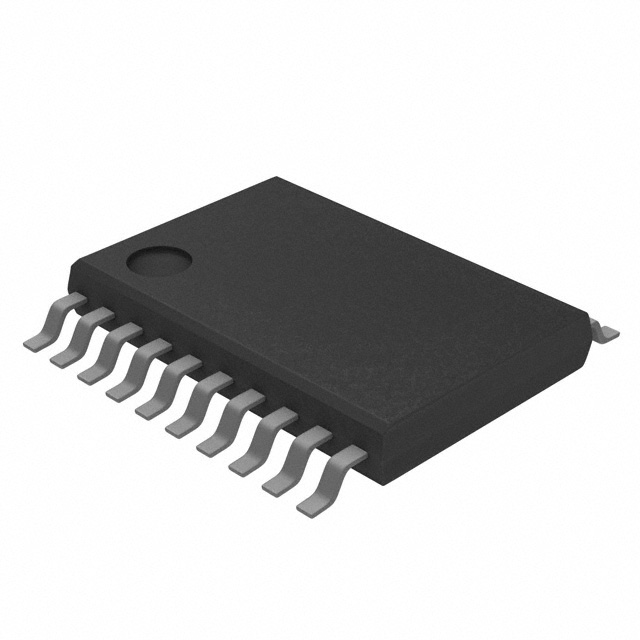
- Part No.:
- TL-SCSI285PWRG4
- Manufacturer:
- Texas Instruments
- Package:
- 20-TSSOP (0.173", 4.40mm Width)
- Datasheet:
-
 TL-SCSI285PWRG4.pdf
- Description:
- IC REG LIN 2.85V 500MA 20TSSOP
- Quantity:
- Payment:

- Shipping:

Inventory:2,040
Please send an inquiry. Send us your inquiry, and we will respond immediately.
Product details
Overview
TL-SCSI285PWRG4 from Texas Instruments is a fixed-output, low-dropout linear regulator engineered specifically for SCSI Alternative 2 active termination, delivering a precise 2.85 V ±1% output at 25°C with 0.7 V max dropout and 500 mA rated output current in the TSSOP-20 package. It integrates internal overcurrent, thermal-overload, and overvoltage protection to ensure robust operation in legacy SCSI bus terminators.
For engineers reviewing the TL-SCSI285PWRG4 datasheet, TL-SCSI285PWRG4 pinout, TL-SCSI285PWRG4 application, or TL-SCSI285PWRG4 equivalent, key selection criteria include its 2.85-V SCSI termination compliance, 0.7-V dropout enabling wide TERMPWR range support, ±2% absolute output variation across temperature, integrated protection features, and TSSOP-20 footprint compatibility with existing SCSI backplane layouts.
Technical Context
The TL-SCSI285PWRG4 implements a monolithic low-dropout regulator architecture optimized for impedance-matched SCSI signal termination, replacing passive 220-Ω/330-Ω resistor networks with active regulation into 110-Ω series termination resistors. Its internal bias current scales with asserted SCSI lines (3–6 mA for 1 line, 26–49 mA for 18-line 8-bit operation), directly supporting dynamic bus loading.
Designed for operation from 3.55 V to 5.5 V input across 0°C to 125°C virtual junction temperature, it maintains 2.79 V to 2.91 V output voltage stability under full load and temperature extremes, with –62 dB ripple rejection at 120 Hz and 500 µV RMS output noise (10 Hz–100 kHz), ensuring clean termination voltage for noise-sensitive differential signaling.
Key Specifications
| Parameter | Value and Actual Design Meaning |
|---|---|
| Output Voltage | 2.85 V ±1% at TJ = 25°C; ensures tight line-driver current tolerance per SCSI Alternative 2 spec |
| Dropout Voltage | 0.7 V max at IO = 500 mA; enables stable operation down to 3.55 V TERMPWR supply |
| Output Current | 500 mA max (TSSOP-20 package); supports full 18-line SCSI-2/SCSI-3 active termination |
| Input Voltage Range | 3.55 V to 5.5 V; compatible with standard 5-V logic rails and degraded TERMPWR conditions |
| Thermal Protection | Internal thermal-overload shutdown; prevents damage during sustained overload or poor heatsinking |
| Ripple Rejection | –62 dB at 120 Hz; suppresses power-supply ripple that could modulate termination impedance |
| Output Noise | 500 µV RMS (10 Hz–100 kHz); minimizes noise injection into SCSI differential receivers |
Pinout & Package
TSSOP-20 package with exposed thermal pad; 6.95 mm × 7.1 mm footprint, 1.2 mm height, RoHS-compliant Green (no Sb/Br) finish, moisture sensitivity level 1 (260°C peak reflow).
| Pin/Terminal | Circuit Role | Design Meaning |
|---|---|---|
| 1–4, 6–9, 11–14, 16–19 | GND | Multiple ground terminals provide low-impedance return paths for termination currents and thermal dissipation |
| 5, 10, 15, 20 | INPUT | Four independent input pins accept TERMPWR from multiple board locations to reduce trace IR drop |
| Output | OUTPUT | Single regulated 2.85-V output drives parallel 110-Ω termination resistors on SCSI signal lines |
Key Features
| Feature | Design Value |
|---|---|
| SCSI Alternative 2 Compliance | Fixed 2.85-V output meets ANSI X3.131-1994 termination voltage requirement |
| Multi-Pin INPUT/GND Architecture | Four INPUT and sixteen GND pins minimize PCB layout IR drop and improve thermal spreading |
| Dynamic Bias Current Scaling | Bias current adjusts from 3 mA (1 line) to 49 mA (18 lines), matching actual SCSI bus activity |
| Integrated Protection Suite | Simultaneous overcurrent limiting, thermal shutdown, and overvoltage clamping prevent field failures |
| Low-Noise Regulation | 500 µV RMS output noise avoids corruption of SCSI receiver common-mode thresholds |
Applications
| SCSI-2 Host Adapter Termination | SCSI-3 Backplane Terminator Module |
|---|---|
Use Scenario: Active termination on a PCI-to-SCSI host adapter card operating in a server chassis with variable TERMPWR rail stability. IC Role / Device Role / Timing Role: Provides regulated 2.85-V reference for 18-channel 110-Ω series termination, replacing discrete resistor networks. Use Value: Eliminates 36 passive resistors per adapter, reducing board area by >12 mm² and cutting continuous power draw by 450 mW vs passive scheme. | Use Scenario: Modular active terminator installed in a rack-mounted storage enclosure supporting hot-swappable SCSI drives. IC Role / Device Role / Timing Role: Supplies stable termination voltage across all 18 signal pairs while rejecting ripple from shared 5-V backplane supply. Use Value: Maintains <±50 mV output deviation under 0–500 mA load transients, preserving SCSI signal integrity during drive insertion/removal. |
| Legacy Workstation SCSI Bus | Industrial SCSI Motion Controller |
Use Scenario: Retrofitting active termination onto aging Sun Ultra 1/2 workstations where original passive terminators cause intermittent link failures. IC Role / Device Role / Timing Role: Replaces obsolete 220-Ω/330-Ω resistor-based termination with low-dropout regulation into 110-Ω loads. Use Value: Restores 100% SCSI-2 compliance with <1 ns added jitter, resolving data corruption at 10 MB/s transfer rates. | Use Scenario: Embedded motion controller in semiconductor equipment requiring deterministic SCSI command response under thermal stress. IC Role / Device Role / Timing Role: Delivers fault-tolerant 2.85-V termination voltage across –20°C to 70°C ambient with built-in thermal shutdown. Use Value: Prevents bus lockup during extended high-current motor sequencing by sustaining regulation until thermal limit (125°C TJ) is reached. |
Equivalent & Alternatives
The following parts are listed as comparable options for similar SCSI active termination applications.
| Alternative Part | Technical Difference | Application Difference | Selection Advice |
|---|---|---|---|
| TL-SCSI285PWRE4 | Identical electrical specs and TSSOP-20 package; Pb-free (RoHS) finish without Sb/Br exemption | No functional difference; same pinout, thermal profile, and qualification | Select when RoHS compliance without brominated flame retardants is required |
| TL-SCSI285KCSE3 | TO-220-3 package; higher 620 mA output rating but requires external heatsink; different pinout (3-pin) | Suitable for high-power, single-point termination where PCB space allows TO-220 mounting | Choose only if thermal design accommodates TO-220 footprint and higher power dissipation |
Compared with TL-SCSI285PWRE4, TL-SCSI285PWRG4 offers identical performance with Green (Sb/Br-free) packaging; versus TL-SCSI285KCSE3, it trades higher current capability for compact surface-mount integration and simplified thermal management in dense backplane layouts.
Availability
TL-SCSI285PWRG4 is available at Aetrix Electronics and suitable for SCSI-2/SCSI-3 host adapters, backplane terminator modules, legacy workstation upgrades, and industrial motion controllers requiring stable component supply and long-term obsolescence mitigation.
Supply support for TL-SCSI285PWRG4 includes scheduled delivery planning, volume procurement assistance, BOM continuity management, traceable sourcing, and lifecycle availability coordination for OEM customers, industrial embedded developers, connected-device designers, and electronics production programs.
Manufacturer
Texas Instruments is a global semiconductor company headquartered in Dallas, Texas, specializing in analog, embedded processing, and connectivity technologies with over 90 years of innovation in power management and interface solutions.
The TL-SCSI285 product line was developed to replace passive SCSI termination networks with integrated, protected, low-dropout regulators-enabling reliable, low-power, and space-efficient active termination in enterprise storage and industrial computing systems.
FAQ
What is the primary function of the TL-SCSI285PWRG4 in a SCSI system?
The TL-SCSI285PWRG4 serves as a fixed 2.85-V low-dropout regulator dedicated to SCSI Alternative 2 active termination. It replaces passive resistor networks by supplying precisely regulated voltage to 110-Ω series termination resistors on SCSI signal lines, ensuring impedance matching, reducing reflections, and improving noise margin. Its design directly supports ANSI X3.131-1994 compliance and is integral to TL-SCSI285PWRG4-based termination circuits.
Does the TL-SCSI285PWRG4 require external capacitors, and what are the recommended values?
Yes, the TL-SCSI285PWRG4 requires both input and output capacitors for stability and transient response. Per the datasheet, a 0.1-µF ceramic capacitor is mandatory across the input, and a 22.0-µF tantalum capacitor with ≤1.5 Ω ESR is specified on the output. The TL-SCSI285PWRG4's control loop is sensitive to output capacitance value and ESR; deviating from these values risks instability, especially under varying load and temperature conditions.
How does the TL-SCSI285PWRG4 handle thermal management in the TSSOP-20 package?
The TL-SCSI285PWRG4 uses a TSSOP-20 package with an exposed thermal pad and sixteen dedicated GND pins to maximize heat conduction to the PCB. Its thermal impedance is 83°C/W (θJA), and it incorporates internal thermal-overload protection that shuts down regulation above ~125°C virtual junction temperature. For continuous 500 mA operation, adequate copper pour and via stitching beneath the thermal pad are essential-TL-SCSI285PWRG4 reliability depends on this layout implementation.
Can the TL-SCSI285PWRG4 be used outside of SCSI applications?
No-the TL-SCSI285PWRG4 is purpose-built for SCSI Alternative 2 active termination and is not characterized or guaranteed for general-purpose regulation. Its bias current scaling (3–49 mA), multi-pin INPUT/GND topology, and 2.85-V output are optimized exclusively for SCSI bus impedance matching. Using TL-SCSI285PWRG4 in non-SCSI contexts may result in undefined behavior, inadequate protection coverage, or failure to meet output accuracy specifications.
What protection features are integrated into the TL-SCSI285PWRG4?
The TL-SCSI285PWRG4 integrates three critical protection functions: internal overcurrent limiting to prevent damage during short-circuit events on the OUTPUT pin; thermal-overload shutdown that disables regulation above safe junction temperature; and overvoltage protection to clamp input surges beyond 7.5 V. These features operate autonomously without external components-ensuring robust TL-SCSI285PWRG4 operation in electrically noisy SCSI environments with marginal power distribution.
TL-SCSI285PWRG4 Specifications
- Product attributes
- Attribute value
- Manufacturer:
- Texas Instruments
- Series:
- -
- Package/Case:
- 20-TSSOP (0.173", 4.40mm Width)
- Packaging:
- Tape & Reel (TR)
- Product Status:
- Obsolete
- Output Configuration:
- Positive
- Output Type:
- Fixed
- Number of Regulators:
- 1
- Voltage - Input (Max):
- 5.5V
- Voltage - Output (Min/Fixed):
- 2.85V
- Voltage - Output (Max):
- -
- Voltage Dropout (Max):
- 0.8V @ 620mA
- Current - Output:
- 500mA
- Current - Quiescent (Iq):
- -
- Current - Supply (Max):
- -
- PSRR:
- 62dB (120Hz)
- Control Features:
- -
- Protection Features:
- Over Current, Over Temperature, Over Voltage
- Operating Temperature:
- 0°C ~ 125°C
- Grade:
- -
- Qualification:
- -
- Mounting Type:
- Surface Mount
- Supplier Device Package:
- 20-TSSOP
TL-SCSI285PWRG4 FAQ
1.How can I place an order for TL-SCSI285PWRG4 through Aetrix?
Please submit a Request for Quotation (RFQ) for TL-SCSI285PWRG4 on Aetrix. Our sales agent will provide a competitive quotation and guide you through the order confirmation once you accept the terms.
2.Are the price and stock information for TL-SCSI285PWRG4 reliable?
The price and inventory of TL-SCSI285PWRG4 are updated periodically and may fluctuate due to market conditions. Stock and pricing data are typically refreshed every 24 hours. Quotation validity for TL-SCSI285PWRG4 is usually 5 days.
3.What payment methods are accepted for TL-SCSI285PWRG4?
We accept Wire Transfer, PayPal, Credit Card, Western Union, MoneyGram, and Escrow for TL-SCSI285PWRG4 transactions.
Note: Certain payment methods may incur a processing fee.
4.How is shipping managed for TL-SCSI285PWRG4?
TL-SCSI285PWRG4 orders can be shipped via leading logistics carriers, including DHL, UPS, FedEx, TNT, or Registered Mail.
Once your TL-SCSI285PWRG4 order is processed, you will receive an email with the shipment details and tracking number.
Note: Tracking information may take up to 24 hours to appear. Express delivery typically takes 3–5 business days.
5.How can I obtain technical support or documentation for TL-SCSI285PWRG4?
For technical support, including TL-SCSI285PWRG4 datasheets, pinout diagrams, or application guidance, please contact our engineering support team. They can provide detailed documentation and assistance for your TL-SCSI285PWRG4 requirements.
6.How does Aetrix verify that TL-SCSI285PWRG4 is sourced from the original manufacturer or authorized distributors?
All TL-SCSI285PWRG4 products on Aetrix are procured from qualified distributors and authorized channels. Our dedicated quality assurance team conducts strict verification, including traceability checks and, if necessary, third-party testing. This ensures that TL-SCSI285PWRG4 meets industry standards.
7.What is the process for return or replacement of TL-SCSI285PWRG4?
All TL-SCSI285PWRG4 units undergo pre-shipment inspection (PSI). If there is an issue with TL-SCSI285PWRG4, returns or replacements are accepted under the following conditions:
1.Quantity discrepancies, incorrect items, or visible external defects (such as breakage or corrosion), acknowledged by Aetrix.
2.The issue is reported within 90 days of delivery.
3.The TL-SCSI285PWRG4 part is unused and in its original packaging.
Return procedure for TL-SCSI285PWRG4:
1.Submit a request within 90 days.
2.Obtain a Return Material Authorization (RMA) from Aetrix.
TL-SCSI285PWRG4 Tags
-
MIC5504-1.8YM5-TR
Microchip Technology
-
MIC5504-3.3YM5-TR
Microchip Technology
-
MIC5365-3.0YC5-TR
Microchip Technology
-
MIC5365-1.8YC5-TR
Microchip Technology
-
MIC5365-2.5YC5-TR
Microchip Technology
-
MIC5365-3.3YC5-TR
Microchip Technology
-
MIC5365-3.3YD5-TR
Microchip Technology
-
MIC5317-3.3YM5-TR
Microchip Technology
-
TLV1117LV33DCYR
Texas Instruments
-
MIC5317-3.3YMT-TZ
Microchip Technology
-
MIC5528-3.3YMT-TR
Microchip Technology
-
TLV75801PDRVR
Texas Instruments
Tech Hub
A D latch stores one bit while Enable controls when data can pass. This reference covers gate-level operation, truth tables, transparency, setup and hold timing, LE versus OE, common ICs and practical …
An SR latch stores one bit through cross-coupled feedback. This engineering reference covers NOR and NAND implementations, truth tables, forbidden-state recovery, gated operation, switch debouncing, fa…

Latch circuits retain one bit through feedback. This technical reference covers SR and D latches, truth tables, transparency, timing limits, latch-versus-flip-flop behavior, applications and common log…

An engineering guide to LED driver operation, constant-current and constant-voltage outputs, linear and switching topologies, dimming, IC selection, calculations, replacement compatibility, and fault c…

Operational amplifier guide covering op amp basics, feedback, ideal vs real op amps, common configurations, buffer circuits, offset, bias current, gain-bandwidth, slew rate, rail-to-rail limits and sel…

Jumper cables guide covering safe connection order, red and black clamp placement, final ground connection, cable gauge, length, clamp quality, copper vs CCA cables, jump starter comparison and battery…

LDO regulator guide covering low dropout voltage, power dissipation, thermal design, PSRR, output noise, capacitor stability, adjustable LDO circuits, LDO vs buck converter and datasheet selection chec…

Conditional Access Module guide covering CAM meaning, CI/CI+ interface, smart card authorization, DVB security workflow, TV and set-top box compatibility, internal electronics, ESD protection, connecto…

Guide to electronic component obsolescence covering EOL risk, PCN/PDN notices, last-time buy planning, replacement options, form-fit-function validation, counterfeit risk and BOM lifecycle management.

18650 battery guide covering lithium-ion cell basics, 3.6V/3.7V voltage, 4.2V charging, mAh and Wh capacity, protected cells, chargers, BMS, series-parallel packs, holders, welding and sourcing checks.…


