
 My Inquiry
 My Account


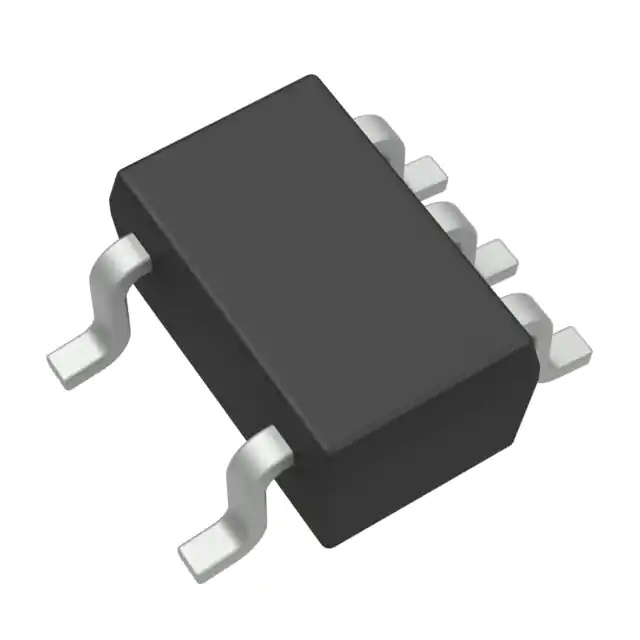
Texas Instruments TLV7031QDCKRQ1
- Part No.:
- TLV7031QDCKRQ1
- Manufacturer:
- Texas Instruments
- Category:
- Comparators
- Package:
- 5-TSSOP, SC-70-5, SOT-353
- Datasheet:
-
 TLV7031QDCKRQ1.pdf
- Description:
- IC COMPARATOR 1 GEN PUR SC70-5
- Quantity:
- Payment:

- Shipping:

Inventory:11,914
Please send an inquiry. Send us your inquiry, and we will respond immediately.
Product details
Overview
TLV7031QDCKRQ1 from Texas Instruments is a single-channel, AEC-Q100 Grade 1 automotive-compliant comparator with push-pull output, rail-to-rail input stage, 315 nA quiescent current, 3 µs propagation delay, and 6.5 mV internal hysteresis - used for precision voltage monitoring in telematics eCall and instrument cluster fault-detection circuits.
For engineers reviewing the TLV7031QDCKRQ1 datasheet, TLV7031QDCKRQ1 pinout, TLV7031QDCKRQ1 application, or TLV7031QDCKRQ1 equivalent, key selection criteria include nanopower operation at 1.6 V–6.5 V supply, no phase reversal under overdriven inputs, internal POR startup control, and SC70-5 package compatibility with space-constrained automotive PCB layouts.
Technical Context
The TLV7031QDCKRQ1 implements a rail-to-rail input stage capable of accepting signals up to 100 mV beyond VCC and down to VEE, with no output phase inversion during overdrive. Its internal power-on-reset (POR) forces output low during supply ramp-up until VCC ≥ 1.6 V.
It features fixed 6.5 mV hysteresis (typical at 25°C), 1 pA input bias current, ±0.1 mV input offset voltage (min), and operates across –40°C to +125°C ambient temperature - all verified per AEC-Q100 requirements for Grade 1 automotive systems.
Key Specifications
| Parameter | Value and Actual Design Meaning |
|---|---|
| Supply Voltage Range | 1.6 V to 6.5 V - supports direct interface with 1.8 V, 3.3 V, and 5 V automotive subsystems without level-shifting. |
| Quiescent Current | 315 nA - enables always-on battery monitoring in low-power telematics modules with multi-year runtime. |
| Propagation Delay | 3 µs - provides fast fault response for overvoltage/undervoltage detection in safety-critical power rails. |
| Input Offset Voltage | ±0.1 mV (min) - ensures high-accuracy threshold detection in precision sensor signal conditioning. |
| Internal Hysteresis | 6.5 mV - suppresses noise-induced chatter on slow-moving analog inputs in noisy automotive environments. |
| Operating Temperature | –40°C to +125°C - qualified for engine bay and infotainment module mounting locations per AEC-Q100 Grade 1. |
| Output Type | Push-pull - drives logic-level loads directly without external pull-up; sinks/sours ≥3 mA at 5 V. |
Pinout & Package
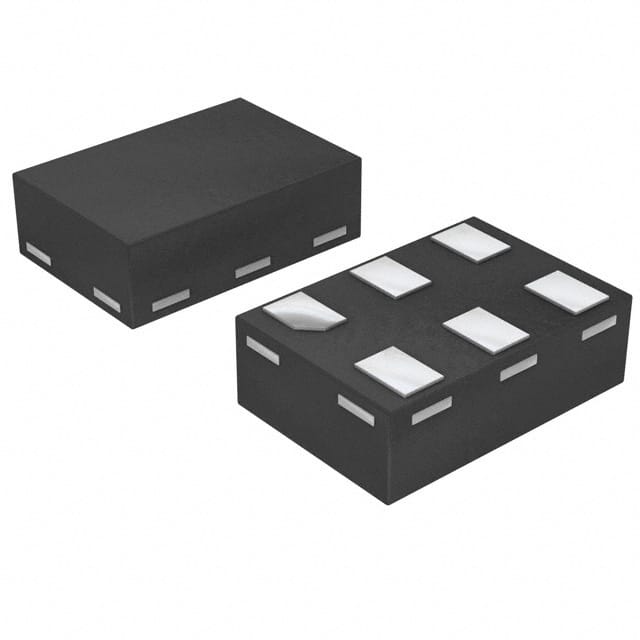
TLV7031QDCKRQ1 is packaged in SC70-5 (DCK), measuring 2.00 mm × 1.25 mm, with 0.65 mm pitch and exposed pad not present. This ultra-compact footprint suits high-density automotive PCBs where board space is constrained.
| Pin/Terminal | Circuit Role | Design Meaning |
|---|---|---|
| 1 - OUT | Output | Push-pull digital output; actively drives high/low - eliminates need for external pull-up in most logic interfacing. |
| 2 - VEE | Power (negative) | Ground or negative supply reference; must be connected even in single-supply configurations. |
| 3 - IN+ | Input (noninverting) | High-impedance node (1 pA bias); accepts rail-to-rail common-mode signals up to VCC + 0.1 V. |
| 4 - IN− | Input (inverting) | High-impedance node (1 pA bias); fault-tolerant - safe to drive up to 7 V even when VCC = 0 V. |
| 5 - VCC | Power (positive) | Primary supply rail; powers internal bias, POR, and output stage; POR holds OUT low until VCC ≥ 1.6 V. |
Key Features
| Feature | Design Value |
|---|---|
| Rail-to-rail input stage | Accepts common-mode voltages from VEE to VCC + 0.1 V - enables direct sensing of battery voltage, sensor outputs, and rail monitors without attenuation. |
| Internal hysteresis | 6.5 mV typical - prevents oscillation on noisy or slowly varying inputs (e.g., thermistor-based temperature thresholds). |
| Power-on-reset (POR) | Guarantees known output state (low) during power ramp-up - avoids undefined logic states in safety-critical boot sequences. |
| No phase reversal | Output remains monotonic even when IN+ or IN− exceed VCC or drop below VEE - critical for robust fault detection in transient-rich automotive environments. |
| AEC-Q100 Grade 1 qualification | Validated for –40°C to +125°C operation, HBM ±2 kV, CDM ±1 kV - meets functional safety requirements for ASIL-B–capable systems. |
Applications
| Telematics eCall System | Automotive Instrument Cluster |
|---|---|
Use Scenario: Monitoring vehicle battery voltage during crash-triggered eCall activation to ensure sufficient power for GSM transmission. IC Role / Device Role / Timing Role: Precision comparator detecting undervoltage condition (<11.5 V) with hysteresis to reject ignition noise. Use Value: 315 nA quiescent current extends backup battery life; 3 µs response enables rapid fault flagging before communication failure. | Use Scenario: Detecting backlight LED string open-circuit faults by comparing sense resistor voltage against reference. IC Role / Device Role / Timing Role: Fault detector converting analog current-sense signal into clean digital alert for MCU interrupt. Use Value: Rail-to-rail input handles 0–5 V sense range; push-pull output directly interfaces MCU GPIO without pull-up resistor. |
| Audio Amplifier Protection | On-Board Charger (OBC) Monitoring |
Use Scenario: Clipping detection in Class-D audio amplifiers by comparing output waveform envelope to threshold. IC Role / Device Role / Timing Role: High-speed comparator generating mute signal when amplifier output exceeds safe amplitude. Use Value: 3 µs propagation delay ensures real-time clipping response; no phase reversal prevents false triggers during signal transients. | Use Scenario: Monitoring DC-link voltage pre-charge sequence in OBC to prevent inrush damage to IGBTs. IC Role / Device Role / Timing Role: Threshold detector verifying voltage reaches 80% of target before enabling main converter stage. Use Value: –40°C to +125°C operation sustains reliability in under-hood thermal cycling; 6.5 mV hysteresis rejects switching noise. |
Equivalent & Alternatives
The following parts are listed as comparable options for similar comparator applications.
| Alternative Part | Technical Difference | Application Difference | Selection Advice |
|---|---|---|---|
| TLV7031DRQ1 | SOT-23-5 package (2.90 mm × 1.60 mm); identical electrical specs and AEC-Q100 Grade 1 qualification. | Larger footprint; better thermal dissipation (RθJA = 212.5°C/W vs. 278.8°C/W) but occupies more PCB area. | Select when layout allows larger package and thermal margin is prioritized over miniaturization. |
| LM7321QMA/NOPB | Higher supply current (1.15 mA), faster propagation (130 ns), rail-to-rail output - not nanopower; no internal hysteresis or POR. | Used in high-speed feedback loops, not ultra-low-power monitoring; requires external hysteresis and power sequencing design. | Select only when speed >10× faster is required and system power budget permits ~3600× higher quiescent draw. |
Compared with TLV7031DRQ1 and LM7321QMA/NOPB, TLV7031QDCKRQ1 uniquely balances sub-µA power, automotive qualification, integrated hysteresis, and SC70 miniaturization - making it optimal for space- and energy-constrained fault-monitoring nodes.
Availability
TLV7031QDCKRQ1 is available at Aetrix Electronics and suitable for telematics eCall, instrument cluster, and on-board charger applications requiring stable component supply, long-term automotive-grade availability, and AEC-Q100 compliance.
Supply support for TLV7031QDCKRQ1 includes scheduled delivery planning, volume procurement assistance, BOM continuity management, traceable sourcing, and lifecycle availability coordination for OEM customers, industrial embedded developers, connected-device designers, and electronics production programs.
Manufacturer
Texas Instruments is a global semiconductor leader delivering analog and embedded processing solutions, with deep expertise in automotive electronics and functional safety design.
The TLV703x-Q1 product line was engineered specifically for nanopower, rail-to-rail voltage monitoring in harsh automotive environments - targeting telematics, infotainment, and powertrain subsystems demanding AEC-Q100 Grade 1 reliability.
FAQ
What is the operating temperature range for TLV7031QDCKRQ1?
TLV7031QDCKRQ1 is rated for –40°C to +125°C ambient operating temperature and qualified per AEC-Q100 Grade 1. This range covers under-hood, dashboard, and trunk-mounted automotive applications where thermal extremes occur. The device maintains specified performance across this full range, including input offset voltage, propagation delay, and hysteresis stability - confirmed in TI's SNOSDA5D datasheet Section 6.3.
Does TLV7031QDCKRQ1 have internal hysteresis, and what is its value?
Yes, TLV7031QDCKRQ1 includes fixed internal hysteresis of 6.5 mV (typical at 25°C), with min/max values of 2 mV and 17 mV across temperature and supply conditions. This hysteresis is factory-trimmed and does not require external components. It stabilizes switching behavior on slow or noisy inputs - critical for reliable voltage monitoring in automotive EMI environments, as documented in Section 6.7 of the TLV7031QDCKRQ1 datasheet.
What output configuration does TLV7031QDCKRQ1 use, and how does it differ from TLV7041QDCKRQ1?
TLV7031QDCKRQ1 uses a push-pull output stage capable of both sourcing and sinking current (≥3 mA at 5 V), eliminating the need for external pull-up resistors. In contrast, TLV7041QDCKRQ1 uses an open-drain output requiring an external pull-up. This distinction is fundamental to the TLV703x-Q1/TLV704x-Q1 family split - TLV7031QDCKRQ1 is selected when active high/low drive is required without added components.
How does the power-on-reset (POR) function in TLV7031QDCKRQ1?
TLV7031QDCKRQ1 incorporates an internal POR circuit that holds the OUT pin low (at VEE) whenever VCC is below 1.6 V - during power-up ramp or brownout. Once VCC reaches or exceeds 1.6 V and remains stable for ≥200 µs, the comparator resumes normal operation and reflects the IN+/IN− differential state. This guarantees a defined startup condition, preventing spurious MCU interrupts during system boot, as detailed in Section 7.4 of the datasheet.
Is TLV7031QDCKRQ1 pin-compatible with other devices in the TLV703x-Q1 family?
TLV7031QDCKRQ1 in SC70-5 is pin-compatible with TLV7031DRQ1 (SOT-23-5) for the same pin functions (OUT, VEE, IN+, IN−, VCC), though package dimensions differ. It is not pin-compatible with dual (TLV7032x-Q1) or quad (TLV7034x-Q1) variants due to differing channel count and pinout. Always verify mechanical fit and thermal performance when substituting packages - SC70 offers smaller area but higher thermal resistance (RθJA = 278.8°C/W) than SOT-23.
TLV7031QDCKRQ1 Specifications
- Product attributes
- Attribute value
- Manufacturer:
- Texas Instruments
- Package/Case:
- 5-TSSOP, SC-70-5, SOT-353
- Series:
- -
- Packaging:
- Tape & Reel (TR)
- Product Status:
- Active
- Type:
- General Purpose
- Number of Elements:
- 1
- Output Type:
- Push-Pull, Rail-to-Rail
- Voltage - Supply, Single/Dual (±):
- 1.6V ~ 6.5V
- :
- 8mV @ 5V
- Voltage - Input Offset (Max):
- 2pA @ 5V
- Current - Input Bias (Max):
- 35mA @ 5V
- Current - Output (Typ):
- 900nA
- Current - Quiescent (Max):
- 73dB CMRR, 77dB PSRR
- CMRR, PSRR (Typ):
- 3µs
- Propagation Delay (Max):
- 17mV
- Hysteresis:
- -40°C ~ 125°C
- Operating Temperature:
- Automotive
- Grade:
- AEC-Q100
- Qualification:
- Surface Mount
- :
- SC-70-5
TLV7031QDCKRQ1 FAQ
1.How can I place an order for TLV7031QDCKRQ1 through Aetrix?
Please submit a Request for Quotation (RFQ) for TLV7031QDCKRQ1 on Aetrix. Our sales agent will provide a competitive quotation and guide you through the order confirmation once you accept the terms.
2.Are the price and stock information for TLV7031QDCKRQ1 reliable?
The price and inventory of TLV7031QDCKRQ1 are updated periodically and may fluctuate due to market conditions. Stock and pricing data are typically refreshed every 24 hours. Quotation validity for TLV7031QDCKRQ1 is usually 5 days.
3.What payment methods are accepted for TLV7031QDCKRQ1?
We accept Wire Transfer, PayPal, Credit Card, Western Union, MoneyGram, and Escrow for TLV7031QDCKRQ1 transactions.
Note: Certain payment methods may incur a processing fee.
4.How is shipping managed for TLV7031QDCKRQ1?
TLV7031QDCKRQ1 orders can be shipped via leading logistics carriers, including DHL, UPS, FedEx, TNT, or Registered Mail.
Once your TLV7031QDCKRQ1 order is processed, you will receive an email with the shipment details and tracking number.
Note: Tracking information may take up to 24 hours to appear. Express delivery typically takes 3–5 business days.
5.How can I obtain technical support or documentation for TLV7031QDCKRQ1?
For technical support, including TLV7031QDCKRQ1 datasheets, pinout diagrams, or application guidance, please contact our engineering support team. They can provide detailed documentation and assistance for your TLV7031QDCKRQ1 requirements.
6.How does Aetrix verify that TLV7031QDCKRQ1 is sourced from the original manufacturer or authorized distributors?
All TLV7031QDCKRQ1 products on Aetrix are procured from qualified distributors and authorized channels. Our dedicated quality assurance team conducts strict verification, including traceability checks and, if necessary, third-party testing. This ensures that TLV7031QDCKRQ1 meets industry standards.
7.What is the process for return or replacement of TLV7031QDCKRQ1?
All TLV7031QDCKRQ1 units undergo pre-shipment inspection (PSI). If there is an issue with TLV7031QDCKRQ1, returns or replacements are accepted under the following conditions:
1.Quantity discrepancies, incorrect items, or visible external defects (such as breakage or corrosion), acknowledged by Aetrix.
2.The issue is reported within 90 days of delivery.
3.The TLV7031QDCKRQ1 part is unused and in its original packaging.
Return procedure for TLV7031QDCKRQ1:
1.Submit a request within 90 days.
2.Obtain a Return Material Authorization (RMA) from Aetrix.
TLV7031QDCKRQ1 Tags

-
LM2903DR
Texas Instruments
-
LM339DR
Texas Instruments
-
LM339PWR
Texas Instruments

-
LM393DT
STMicroelectronics
-
LM2901PWR
Texas Instruments
-
LM2903DT
STMicroelectronics
-
LM393DR
Texas Instruments
-
LM239DR
Texas Instruments
-
LM339APWR
Texas Instruments
-
LM2903P
Texas Instruments
-
LM393ADR
Texas Instruments
-
NCX2200GMAZ
NXP Semiconductors
Tech Hub

A practical engineering guide to 3.3V and 5V logic compatibility, input thresholds, resistor dividers, translator ICs, MOSFET level shifting, I2C pull-ups, timing limits and power-sequencing risks.

The 74HC595 uses push-pull logic outputs, while the TPIC6B595 uses 50 V open-drain DMOS sinks for higher-power loads. This guide compares timing, current limits, 3.3 V interfacing, load wiring, thermal…

The 74HC595 converts serial data into eight stable parallel outputs. This guide covers pin functions, shift and storage timing, OE and MR behavior, drive-current limits, cascading, voltage compatibilit…

A technical comparison of level-sensitive latches and edge-triggered flip-flops, covering timing windows, setup and hold limits, master–slave operation, time borrowing, race-through, HDL inference and…

A D latch stores one bit while Enable controls when data can pass. This reference covers gate-level operation, truth tables, transparency, setup and hold timing, LE versus OE, common ICs and practical …

An SR latch stores one bit through cross-coupled feedback. This engineering reference covers NOR and NAND implementations, truth tables, forbidden-state recovery, gated operation, switch debouncing, fa…

Latch circuits retain one bit through feedback. This technical reference covers SR and D latches, truth tables, transparency, timing limits, latch-versus-flip-flop behavior, applications and common log…

An engineering guide to LED driver operation, constant-current and constant-voltage outputs, linear and switching topologies, dimming, IC selection, calculations, replacement compatibility, and fault c…

Operational amplifier guide covering op amp basics, feedback, ideal vs real op amps, common configurations, buffer circuits, offset, bias current, gain-bandwidth, slew rate, rail-to-rail limits and sel…

Jumper cables guide covering safe connection order, red and black clamp placement, final ground connection, cable gauge, length, clamp quality, copper vs CCA cables, jump starter comparison and battery…


