
 My Inquiry
 My Account


Texas Instruments TLV704345DBVT

- Part No.:
- TLV704345DBVT
- Manufacturer:
- Texas Instruments
- Package:
- SC-74A, SOT-753
- Datasheet:
-
 TLV704345DBVT.pdf
- Description:
- IC REG LIN 3.45V 150MA SOT23-5
- Quantity:
- Payment:

- Shipping:

Inventory:990
Please send an inquiry. Send us your inquiry, and we will respond immediately.
Product details
Overview
TLV704345DBVT from Texas Instruments is a 3.45-V fixed-output, 150-mA, low-dropout linear regulator with 3.4 μA typical quiescent current, stable over –40°C to +125°C junction temperature and compatible with ≥0.47 μF output capacitance. It operates from 2.5 V to 24 V input and delivers regulated power to ultra-low-power microcontrollers in battery-backed industrial sensors.
For engineers reviewing the TLV704345DBVT datasheet, TLV704345DBVT pinout, TLV704345DBVT application, or TLV704345DBVT equivalent, key selection criteria include dropout voltage at 100 mA (850 mV typ), ground current stability across 0–150 mA load, thermal performance in SOT-23-5 (RθJA = 170.8°C/W), and compatibility with ceramic output capacitors down to 0.47 μF.
Technical Context
The TLV704345DBVT uses a CMOS pass transistor with RDS(ON) ≈ 8.5 Ω (calculated from 850 mV / 100 mA), enabling low dropout operation across its full 150-mA load range. Its leakage null control circuit maintains 3.4 μA quiescent current even at high input voltages (>18 V) and elevated temperatures (>100°C), ensuring consistent battery life in always-on monitoring systems.
Internal soft-start limits inrush current during power-up, while brick-wall overcurrent protection activates at 160–500 mA (new chip), safeguarding against sustained short-circuit faults without thermal shutdown dependency. The device operates in normal regulation when VIN > VOUT + VDO, and transitions to dropout mode-where VOUT tracks VIN-when input falls below that threshold.
Key Specifications
| Parameter | Value and Actual Design Meaning |
|---|---|
| Output voltage | Fixed 3.45 V ±2% - ensures stable supply for 3.3-V I/O logic with 150-mV headroom margin. |
| Input voltage range | 2.5 V to 24 V - supports direct connection to 12-V rails, Li-ion batteries (up to 4S), and unregulated solar inputs. |
| Max output current | 150 mA - sufficient to power MSP430-class MCUs with peripherals active, including RF transceivers. |
| Quiescent current | 3.4 μA typ at 100 mA - enables >10-year battery life in 10-μA average-current sensor nodes using CR2032 cells. |
| Dropout voltage | 850 mV typ at 100 mA - allows regulation down to 4.3 V input for 3.45-V output, critical for aging battery operation. |
| Stability capacitor | ≥0.47 μF ceramic - eliminates need for tantalum or electrolytic caps, reducing board area and cost in space-constrained designs. |
| Operating temperature | –40°C to +125°C - qualified for under-hood automotive modules, smart metering, and industrial PLC I/O stages. |
Pinout & Package
TLV704345DBVT is housed in a 2.90 mm × 1.60 mm, 5-pin SOT-23 (DBV) package with exposed pad for enhanced thermal dissipation. Pin 1 is GND, Pin 2 is IN, Pin 3 is OUT, Pins 4 and 5 are NC (not internally connected).
| Pin/Terminal | Circuit Role | Design Meaning |
|---|---|---|
| GND (Pin 1) | Ground reference | Primary return path for regulator bias and load current; must be low-impedance to minimize ground bounce in noise-sensitive analog sections. |
| IN (Pin 2) | Input supply | Accepts 2.5–24 V; requires ≥0.047 μF local ceramic cap to suppress source inductance-induced ringing during load transients. |
| OUT (Pin 3) | Regulated output | Delivers 3.45 V ±2%; requires ≥1 μF effective capacitance (derated 50%) for stability and transient response. |
| NC (Pins 4, 5) | No internal connection | May be left floating or tied to GND to improve thermal conduction from die to PCB copper; no electrical function. |
Key Features
| Feature | Design Value |
|---|---|
| Ultra-low IQ across full load range | 3.4 μA typ from 0 to 150 mA - eliminates efficiency penalty at light loads, extending battery runtime in sleep-dominated applications. |
| Wide VIN range with single device | 2.5 V to 24 V - replaces multiple regulators in multi-rail systems, simplifying BOM and layout for field-deployed equipment. |
| Internal soft-start | Controls output ramp rate - prevents inrush into large COUT or downstream LDOs, avoiding brownout on shared supply rails. |
| Brick-wall overcurrent protection | 160–500 mA limit (new chip) - clamps fault current without foldback, enabling predictable thermal design and safe operation during intermittent shorts. |
| Thermal robustness | RθJA = 170.8°C/W (DBV) - sustains 150 mA at 24 V input with ≤40°C ambient rise on 2-layer PCB with 1-in² copper pour. |
Applications
| Smart Utility Metering | Wireless Sensor Node |
|---|---|
Use Scenario: Long-life battery-powered electricity/water/gas meters transmitting hourly consumption data via NB-IoT or LoRaWAN. IC Role / Device Role / Timing Role: Primary 3.45-V supply for metrology ADC, real-time clock, and sub-GHz transceiver MCU. Use Value: 3.4 μA IQ enables >15-year CR123A battery life at 10-sleep/1-wake duty cycle; 24-V input tolerance accommodates auxiliary AC-DC backup. | Use Scenario: Industrial predictive maintenance node mounted on rotating machinery, harvesting energy from vibration or thermal gradients. IC Role / Device Role / Timing Role: Post-regulator for energy-harvesting PMIC, delivering clean 3.45 V to ultra-low-power Cortex-M0+ MCU and MEMS accelerometer. Use Value: Stable regulation with ≥0.47 μF ceramic cap reduces bill-of-materials vs. traditional LDOs; 125°C rating supports operation near motor housings. |
| Medical Wearable Monitor | Home Automation Hub |
Use Scenario: FDA-classified wearable ECG patch requiring continuous 7-day operation on coin cell, with Bluetooth LE connectivity. IC Role / Device Role / Timing Role: Core power rail for analog front-end, SAR ADC, and BLE SoC, replacing switching regulator to eliminate RF interference. Use Value: Ultra-low noise (473 μVRMS integrated, 200 Hz–100 kHz) preserves signal integrity; 3.45-V output matches BLE SoC VDDIO spec exactly. | Use Scenario: Battery-buffered Zigbee/Z-Wave gateway for smart lighting and HVAC control, operating off USB-C PD or 12-V wall adapter. IC Role / Device Role / Timing Role: Secondary LDO supplying 3.45 V to RF transceiver and touch controller, isolated from noisy primary DC-DC converter. Use Value: PSRR of 60 dB at 100 kHz rejects ripple from upstream buck converter; SOT-23-5 footprint minimizes PCB area in compact enclosure. |
Equivalent & Alternatives
The following parts are listed as comparable options for similar LDO regulator applications.
| Alternative Part | Technical Difference | Application Difference | Selection Advice |
|---|---|---|---|
| TLS850F0TESK | Automotive-grade AEC-Q100, 500-mA output, higher IQ (25 μA), integrated enable and reset. | Designed for 12-V automotive body electronics; includes watchdog and fail-safe features not present in TLV704345DBVT. | Select TLS850F0TESK only if automotive qualification, higher current, or system supervision functions are required. |
| MCP1703T-3302E/MB | 3.3-V fixed output, 250-mA, 1.8 μA IQ, but limited VIN max = 16 V and no 3.45-V option. | Optimized for low-noise portable audio; lacks 24-V capability and exact 3.45-V match needed for precision analog interfaces. | Choose MCP1703T-3302E/MB only for cost-sensitive 3.3-V designs where 24-V input and 3.45-V accuracy are unnecessary. |
Compared with TLS850F0TESK and MCP1703T-3302E/MB, TLV704345DBVT uniquely balances 3.45-V precision output, 24-V input tolerance, and sub-4-μA quiescent current in a standard SOT-23-5 package-making it optimal for industrial and medical battery systems requiring exact voltage matching and long service life.
Availability
TLV704345DBVT is available at Aetrix Electronics and suitable for smart utility metering, wireless sensor nodes, medical wearables, home automation hubs, and grid infrastructure applications requiring stable component supply across extended product lifecycles.
Supply support for TLV704345DBVT includes scheduled delivery planning, volume procurement assistance, BOM continuity management, traceable sourcing, and lifecycle availability coordination for OEM customers, industrial embedded developers, connected-device designers, and electronics production programs.
Manufacturer
Texas Instruments is a global semiconductor company headquartered in Dallas, Texas, delivering analog and embedded processing solutions for industrial, automotive, and personal electronics markets.
The TLV704 family was designed specifically for ultra-low-power, wide-input-voltage battery management in space-constrained IoT endpoints-emphasizing quiescent current optimization, thermal resilience, and minimal external component count.
FAQ
What is the maximum input voltage rating for TLV704345DBVT?
The TLV704345DBVT has an absolute maximum input voltage of 30 V for the new chip revision, as confirmed in Section 6.1 of the SBVS148F datasheet. This rating applies only to devices marked as "new chip" per TI's March 2023 revision; legacy units are rated to 24 V. Always verify marking or date code to confirm revision before designing for 24–30 V operation. TLV704345DBVT must never be operated above 30 V to prevent permanent damage.
Does TLV704345DBVT require an input capacitor?
An input capacitor is not required for TLV704345DBVT stability, but TI recommends a 0.047 μF ceramic capacitor from IN to GND to suppress high-frequency noise and mitigate ringing caused by source inductance during load transients. This recommendation appears in Section 6.3 of the SBVS148F datasheet and is especially critical in systems with long traces or high-impedance sources. TLV704345DBVT remains functional without it, but transient immunity improves significantly with the recommended cap.
What is the minimum output capacitance required for stable operation of TLV704345DBVT?
TLV704345DBVT requires a minimum effective output capacitance of 0.47 μF, as stated in Sections 1, 3, and 6.3 of the SBVS148F datasheet. This value accounts for 50% derating of nominal capacitor values due to DC bias and temperature effects. A 1 μF X7R ceramic capacitor is recommended to ensure margin. Using less than 0.47 μF effective capacitance risks oscillation and poor load transient response. TLV704345DBVT does not support zero-ESR or polymer capacitors exclusively-ceramic is preferred.
How does the soft-start function operate in TLV704345DBVT?
TLV704345DBVT incorporates internal soft-start that controls the slew rate of the output voltage during power-up, limiting inrush current into the output capacitor and preventing voltage overshoot or rail collapse on shared supplies. This feature is active at every power-on event and requires no external components. As described in Section 3 and Figure 6-24 of SBVS148F, soft-start ensures monotonic VOUT rise with ~2-ms typical delay, protecting downstream circuits like ADC references and RF synthesizers. TLV704345DBVT does not offer adjustable soft-start timing.
Is TLV704345DBVT pin-compatible with other TLV704 variants?
Yes, all TLV704 fixed-output variants-including TLV704345DBVT-share identical 5-pin SOT-23 (DBV) packaging and pinout (GND–IN–OUT–NC–NC), as confirmed in Section 5 (Pin Configuration) of SBVS148F. This allows drop-in replacement across output voltages (1.8 V to 5 V) without PCB redesign. However, output voltage tolerance, dropout behavior, and thermal performance vary slightly between versions; always validate loop stability and thermal rise for the specific variant. TLV704345DBVT maintains full mechanical and electrical compatibility within the family.
TLV704345DBVT Specifications
- Product attributes
- Attribute value
- Manufacturer:
- Texas Instruments
- Series:
- -
- Package/Case:
- SC-74A, SOT-753
- Packaging:
- Tape & Reel (TR)
- Product Status:
- Active
- Output Configuration:
- Positive
- Output Type:
- Fixed
- Number of Regulators:
- 1
- Voltage - Input (Max):
- 24V
- Voltage - Output (Min/Fixed):
- 3.45V
- Voltage - Output (Max):
- -
- Voltage Dropout (Max):
- 1.1V @ 100mA
- Current - Output:
- 150mA
- Current - Quiescent (Iq):
- 4.5 µA
- Current - Supply (Max):
- 5.5 µA
- PSRR:
- 60dB (100kHz)
- Control Features:
- -
- Protection Features:
- -
- Operating Temperature:
- -40°C ~ 125°C (TJ)
- Grade:
- -
- Qualification:
- -
- Mounting Type:
- Surface Mount
- Supplier Device Package:
- SOT-23-5
TLV704345DBVT FAQ
1.How can I place an order for TLV704345DBVT through Aetrix?
Please submit a Request for Quotation (RFQ) for TLV704345DBVT on Aetrix. Our sales agent will provide a competitive quotation and guide you through the order confirmation once you accept the terms.
2.Are the price and stock information for TLV704345DBVT reliable?
The price and inventory of TLV704345DBVT are updated periodically and may fluctuate due to market conditions. Stock and pricing data are typically refreshed every 24 hours. Quotation validity for TLV704345DBVT is usually 5 days.
3.What payment methods are accepted for TLV704345DBVT?
We accept Wire Transfer, PayPal, Credit Card, Western Union, MoneyGram, and Escrow for TLV704345DBVT transactions.
Note: Certain payment methods may incur a processing fee.
4.How is shipping managed for TLV704345DBVT?
TLV704345DBVT orders can be shipped via leading logistics carriers, including DHL, UPS, FedEx, TNT, or Registered Mail.
Once your TLV704345DBVT order is processed, you will receive an email with the shipment details and tracking number.
Note: Tracking information may take up to 24 hours to appear. Express delivery typically takes 3–5 business days.
5.How can I obtain technical support or documentation for TLV704345DBVT?
For technical support, including TLV704345DBVT datasheets, pinout diagrams, or application guidance, please contact our engineering support team. They can provide detailed documentation and assistance for your TLV704345DBVT requirements.
6.How does Aetrix verify that TLV704345DBVT is sourced from the original manufacturer or authorized distributors?
All TLV704345DBVT products on Aetrix are procured from qualified distributors and authorized channels. Our dedicated quality assurance team conducts strict verification, including traceability checks and, if necessary, third-party testing. This ensures that TLV704345DBVT meets industry standards.
7.What is the process for return or replacement of TLV704345DBVT?
All TLV704345DBVT units undergo pre-shipment inspection (PSI). If there is an issue with TLV704345DBVT, returns or replacements are accepted under the following conditions:
1.Quantity discrepancies, incorrect items, or visible external defects (such as breakage or corrosion), acknowledged by Aetrix.
2.The issue is reported within 90 days of delivery.
3.The TLV704345DBVT part is unused and in its original packaging.
Return procedure for TLV704345DBVT:
1.Submit a request within 90 days.
2.Obtain a Return Material Authorization (RMA) from Aetrix.
TLV704345DBVT Tags
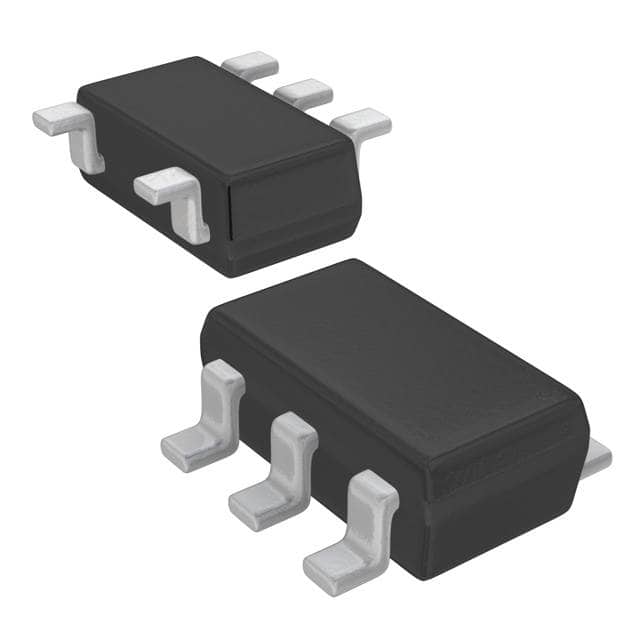
-
MIC5504-1.8YM5-TR
Microchip Technology
-
MIC5504-3.3YM5-TR
Microchip Technology
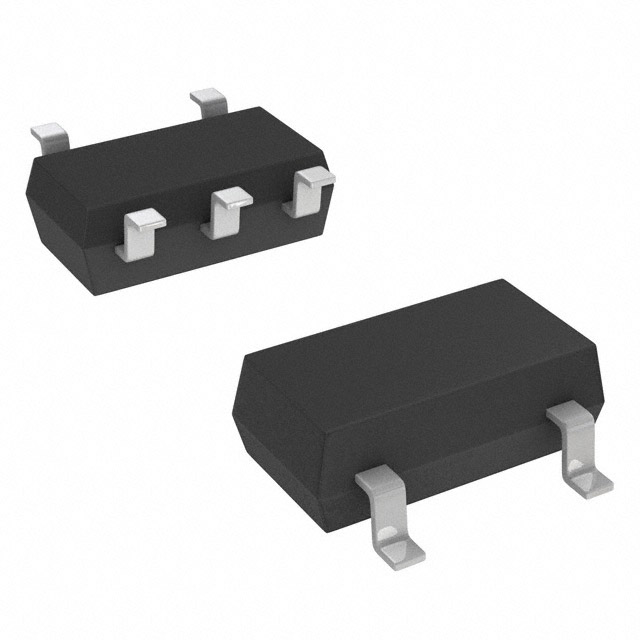
-
MIC5365-3.0YC5-TR
Microchip Technology
-
MIC5365-1.8YC5-TR
Microchip Technology
-
MIC5365-2.5YC5-TR
Microchip Technology
-
MIC5365-3.3YC5-TR
Microchip Technology
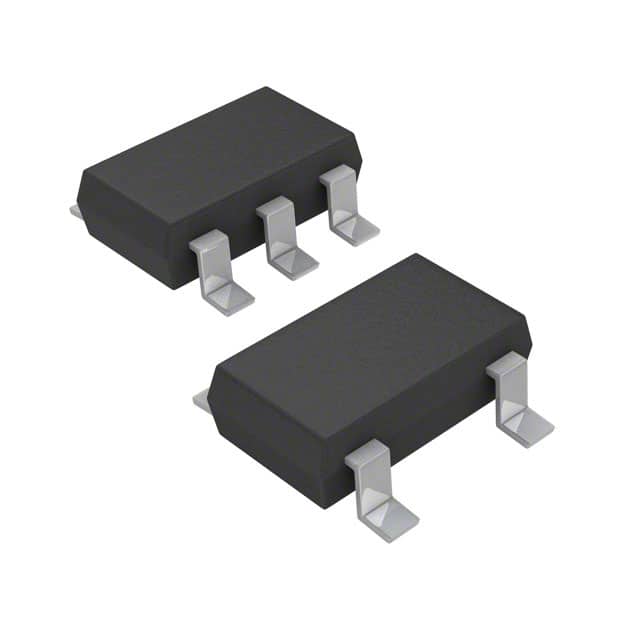
-
MIC5365-3.3YD5-TR
Microchip Technology
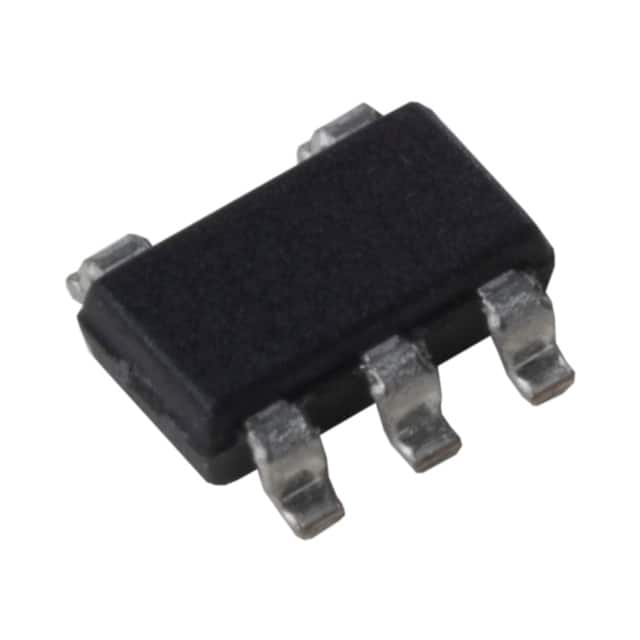
-
MIC5317-3.3YM5-TR
Microchip Technology
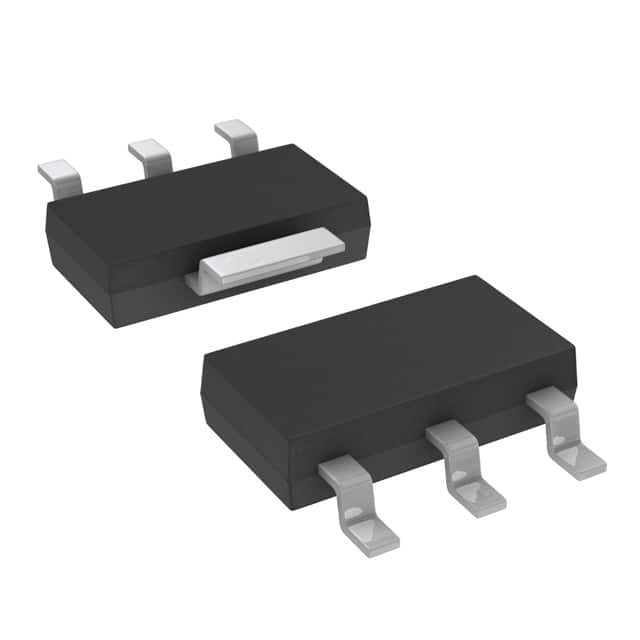
-
TLV1117LV33DCYR
Texas Instruments
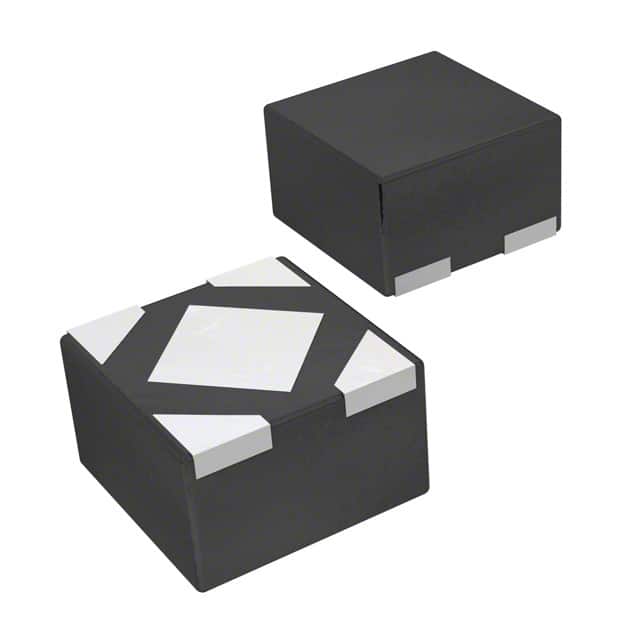
-
MIC5317-3.3YMT-TZ
Microchip Technology
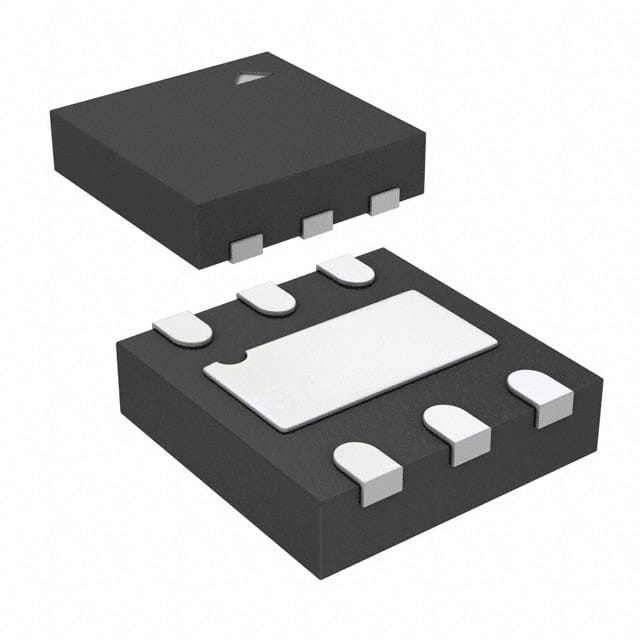
-
MIC5528-3.3YMT-TR
Microchip Technology
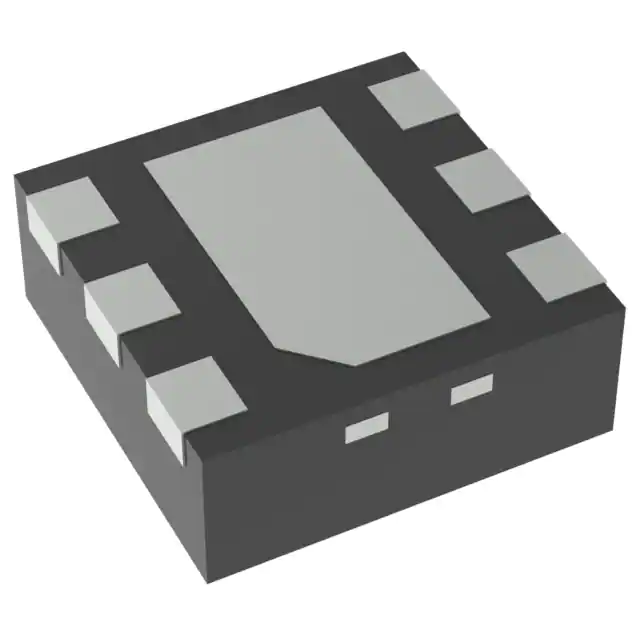
-
TLV75801PDRVR
Texas Instruments
Tech Hub
A D latch stores one bit while Enable controls when data can pass. This reference covers gate-level operation, truth tables, transparency, setup and hold timing, LE versus OE, common ICs and practical …
An SR latch stores one bit through cross-coupled feedback. This engineering reference covers NOR and NAND implementations, truth tables, forbidden-state recovery, gated operation, switch debouncing, fa…

Latch circuits retain one bit through feedback. This technical reference covers SR and D latches, truth tables, transparency, timing limits, latch-versus-flip-flop behavior, applications and common log…

An engineering guide to LED driver operation, constant-current and constant-voltage outputs, linear and switching topologies, dimming, IC selection, calculations, replacement compatibility, and fault c…

Operational amplifier guide covering op amp basics, feedback, ideal vs real op amps, common configurations, buffer circuits, offset, bias current, gain-bandwidth, slew rate, rail-to-rail limits and sel…

Jumper cables guide covering safe connection order, red and black clamp placement, final ground connection, cable gauge, length, clamp quality, copper vs CCA cables, jump starter comparison and battery…

LDO regulator guide covering low dropout voltage, power dissipation, thermal design, PSRR, output noise, capacitor stability, adjustable LDO circuits, LDO vs buck converter and datasheet selection chec…

Conditional Access Module guide covering CAM meaning, CI/CI+ interface, smart card authorization, DVB security workflow, TV and set-top box compatibility, internal electronics, ESD protection, connecto…

Guide to electronic component obsolescence covering EOL risk, PCN/PDN notices, last-time buy planning, replacement options, form-fit-function validation, counterfeit risk and BOM lifecycle management.

18650 battery guide covering lithium-ion cell basics, 3.6V/3.7V voltage, 4.2V charging, mAh and Wh capacity, protected cells, chargers, BMS, series-parallel packs, holders, welding and sourcing checks.…


