
 My Inquiry
 My Account


Texas Instruments TLV803EA42RDBZR
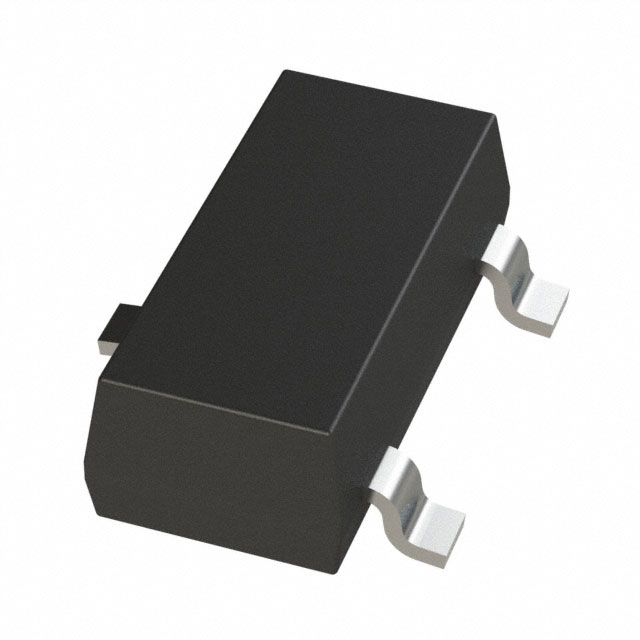
- Part No.:
- TLV803EA42RDBZR
- Manufacturer:
- Texas Instruments
- Category:
- Supervisors
- Package:
- TO-236-3, SC-59, SOT-23-3
- Datasheet:
-
 TLV803EA42RDBZR.pdf
- Description:
- IC SUPERVISOR 1 CHANNEL SOT23-3
- Quantity:
- Payment:

- Shipping:

Inventory:8,186
Please send an inquiry. Send us your inquiry, and we will respond immediately.
Product details
Overview
TLV803EA42RDBZR from Texas Instruments is an open-drain, active-low voltage supervisor IC designed for reliable power-on reset and brownout detection in ultra-low-power systems. It features a 4.2 V threshold voltage (±0.5% typical accuracy), 200 ms fixed reset delay, 250 nA typical supply current, and operates across –40°C to +125°C - enabling use in battery-powered industrial sensors and portable medical devices.
For engineers reviewing the TLV803EA42RDBZR datasheet, TLV803EA42RDBZR pinout, TLV803EA42RDBZR application, or TLV803EA42RDBZR equivalent, key selection criteria include its guaranteed reset assertion down to 0.7 V VDD, SOT-23-3 (DBZ) package with pin 1 = RESET, open-drain output requiring external pull-up, and compatibility with FPGA/ASIC power sequencing requirements.
Technical Context
The TLV803EA42RDBZR implements a precision bandgap-based comparator with built-in hysteresis (1.2% typical) to prevent chatter during slow-rising or noisy supply rails. Its internal glitch immunity filter rejects transients shorter than 10 µs at 5% overdrive, ensuring robust operation in electrically harsh environments like factory automation controllers.
This variant belongs to the TLV803E family and uses a fixed 4.2 V falling threshold (VIT–) with VIT+ = VIT– + VHYS. The open-drain output supports flexible logic-level translation via external pull-up and maintains defined state down to VPOR = 0.7 V, critical for low-voltage microcontroller startup sequencing.
Key Specifications
| Parameter | Value and Actual Design Meaning |
|---|---|
| Supply Voltage Range | 0.7 V to 6 V - ensures valid reset assertion even during deep brownout or ultra-low-power MCU wake-up. |
| Threshold Voltage (VIT–) | 4.2 V ±0.5% (typ) - factory-programmed precision enables accurate monitoring of 3.3 V or 5 V rails with margin. |
| Reset Delay Time (tD) | 200 ms (variant A) - provides sufficient hold time for slow-starting LDOs or flash memory initialization. |
| Quiescent Current (IDD) | 250 nA (typ), ≤1 µA @ 3.3 V - extends battery life in multi-year IoT sensor deployments. |
| Output Topology | Open-drain, active-low - allows wired-OR configuration and level-shifting with external pull-up resistor. |
| Operating Temperature | –40°C to +125°C - qualified for under-hood automotive modules and industrial PLCs. |
| Power-On Reset (VPOR) | 700 mV - guarantees known output state during sub-1 V power ramp-up, preventing undefined MCU behavior. |
Pinout & Package
SOT-23-3 (DBZ) package, 2.90 mm × 1.30 mm body size, with pin 1 = RESET, pin 2 = GND, pin 3 = VDD - confirmed per TI SLVSES2J Rev J Figure 6-3 and Table 6-1.
| Pin/Terminal | Circuit Role | Design Meaning |
|---|---|---|
| RESET (Pin 1) | Active-low open-drain output | Drives low when VDD < 4.2 V; requires external pull-up; sinks up to 2 mA; undefined below 0.7 V. |
| GND (Pin 2) | Ground reference | Primary return path for internal circuitry and reset output sink current; must be low-impedance. |
| VDD (Pin 3) | Supply input & monitored rail | Provides operating power and serves as the voltage being supervised; bypass capacitor required. |
Key Features
| Feature | Design Value |
|---|---|
| Guaranteed reset down to 0.7 V VDD | Enables deterministic startup in energy-harvesting systems where supply ramps slowly from near-zero. |
| ±0.5% threshold accuracy (typ) | Reduces design margin overhead vs. ±2% parts, allowing tighter supply rail tolerancing in space-constrained PCBs. |
| Integrated 10 µs glitch immunity | Eliminates need for external RC filtering on VDD, saving board area and BOM cost in motor drive control modules. |
| –40°C to +125°C operation | Supports deployment in uncontrolled ambient environments without derating, e.g., smart meter outdoor enclosures. |
| 250 nA quiescent current | Permits >10-year battery life in coin-cell-powered wireless sensors using CR2032 (220 mAh capacity). |
Applications
| Electricity Meters | Factory Automation Controllers |
|---|---|
|
Use Scenario: Monitoring main 3.3 V logic rail during power cycling and grid transients. IC Role / Device Role / Timing Role: Voltage supervisor asserting reset to MCU and metrology ASIC until stable 4.2 V threshold is exceeded. Use Value: Prevents corrupted flash writes during brownout by enforcing 200 ms minimum reset pulse width. |
Use Scenario: Ensuring safe startup of PLC I/O modules after AC/DC converter turn-on. IC Role / Device Role / Timing Role: Open-drain RESET signal synchronized to 5 V rail stabilization, compatible with 3.3 V logic inputs via pull-up. Use Value: Eliminates need for discrete transistor level-shifters while maintaining noise immunity in EMI-heavy factory floors. |
| Portable Medical Sensors | Notebook Power Sequencing |
|
Use Scenario: Supervising coin-cell–powered glucose monitor during cold-temperature storage and activation. IC Role / Device Role / Timing Role: Low-IQ supervisor detecting 4.2 V battery depletion and triggering graceful shutdown before cutoff. Use Value: 250 nA IDD preserves battery charge during multi-month shelf life; 0.7 V VPOR ensures reset validity at end-of-life voltage. |
Use Scenario: Coordinating power-up sequence between CPU core, SoC, and DDR memory rails. IC Role / Device Role / Timing Role: Reset generator providing 200 ms delay to allow LDOs to settle before releasing processor reset. Use Value: Pin-compatible replacement for MAX803-series supervisors, simplifying legacy design refreshes without layout changes. |
Equivalent & Alternatives
The following parts are listed as comparable options for similar voltage supervisor applications.
| Alternative Part | Technical Difference | Application Difference | Selection Advice |
|---|---|---|---|
| TLV803EA42DBZR | Same 4.2 V threshold and 200 ms delay, but DBZ package with pin 1 = GND (not RESET). | Requires PCB layout revision due to inverted pin 1 function; incompatible with existing TLV803EA42RDBZR footprints. | Select only if redesigning for improved thermal performance (GND-on-pin-1 aids heat dissipation). |
| MAX803SUR42+T | 4.2 V threshold, 200 ms delay, push-pull active-low output; higher 1.6 µA max IDD; no <0.7 V VPOR guarantee. | Lacks ultra-low-power capability and sub-1 V reset assurance - unsuitable for energy-harvesting or long-life battery apps. | Choose for cost-sensitive industrial controls where 250 nA IQ is unnecessary and legacy MAX803 footprint reuse is critical. |
Compared with TLV803EA42RDBZR, TLV803EA42DBZR demands PCB rework due to GND-on-pin-1 versus RESET-on-pin-1, while MAX803SUR42+T trades 7× higher quiescent current and no 0.7 V VPOR guarantee for broader distributor availability and mature qualification history.
Availability
TLV803EA42RDBZR is available at Aetrix Electronics and suitable for electricity meters, factory automation controllers, and portable medical sensors requiring stable component supply across extended temperature ranges and multi-year production cycles.
Supply support for TLV803EA42RDBZR includes scheduled delivery planning, volume procurement assistance, BOM continuity management, traceable sourcing, and lifecycle availability coordination for OEM customers, industrial embedded developers, connected-device designers, and electronics production programs.
Manufacturer
Texas Instruments is a global semiconductor leader specializing in analog, embedded processing, and power management technologies, with decades of expertise in high-reliability industrial and automotive ICs.
The TLV803E series was engineered specifically for ultra-low-power system supervision in battery-constrained and thermally demanding applications, emphasizing precision thresholding, minimal IQ, and robust glitch immunity.
FAQ
What is the exact reset threshold voltage of the TLV803EA42RDBZR?
The TLV803EA42RDBZR has a factory-programmed falling threshold voltage (VIT–) of 4.2 V with ±0.5% typical accuracy across –40°C to +125°C. This value is laser-trimmed during production and specified in TI's SLVSES2J datasheet Section 7.5. The rising threshold (VIT+) equals VIT– plus hysteresis (1.2% typical), ensuring stable release without oscillation.
Does the TLV803EA42RDBZR require an external pull-up resistor on the RESET pin?
Yes, the TLV803EA42RDBZR uses an open-drain, active-low output topology and requires an external pull-up resistor to a valid logic-high voltage (e.g., 3.3 V or 5 V). Typical values range from 10 kΩ to 100 kΩ. This resistor sets the rise time and logic level - unlike push-pull variants such as TLV809E, which do not need it.
What is the minimum supply voltage at which TLV803EA42RDBZR guarantees a valid reset output?
The TLV803EA42RDBZR guarantees a defined output state down to VPOR = 0.7 V, meaning the RESET pin will assert correctly even when VDD rises slowly from near-zero. Below 0.7 V, the output is undefined. This feature is critical for energy-harvesting systems and ultra-low-voltage microcontrollers.
Is the TLV803EA42RDBZR pin-compatible with legacy MAX803-series supervisors?
Yes - the TLV803EA42RDBZR is explicitly designed as a pin-to-pin compatible upgrade for MAX803/809/810 in SOT-23-3 packages. It retains identical pinout (pin 1 = RESET, pin 2 = GND, pin 3 = VDD), footprint, and basic timing, while improving IQ, accuracy, temperature range, and VPOR specification.
What is the reset delay time for TLV803EA42RDBZR, and is it adjustable?
The TLV803EA42RDBZR has a fixed 200 ms reset delay time (variant A), as indicated by the "A" in its part number suffix. This delay is internally programmed and non-adjustable. It ensures sufficient hold time for slow peripherals like EEPROMs or FPGAs to initialize fully before release from reset.
TLV803EA42RDBZR Specifications
- Product attributes
- Attribute value
- Manufacturer:
- Texas Instruments
- Series:
- -
- Package/Case:
- TO-236-3, SC-59, SOT-23-3
- Packaging:
- Tape & Reel (TR)
- Product Status:
- Active
- Programmable:
- Not Verified
- Type:
- Simple Reset/Power-On Reset
- Number of Voltages Monitored:
- 1
- Voltage - Threshold:
- 4.2V
- Output:
- Open Drain or Open Collector
- Reset:
- Active Low
- Reset Timeout:
- 130ms Minimum
- Operating Temperature:
- -40°C ~ 125°C (TA)
- Grade:
- -
- Qualification:
- -
- Mounting Type:
- Surface Mount
- Supplier Device Package:
- SOT-23-3
TLV803EA42RDBZR FAQ
1.How can I place an order for TLV803EA42RDBZR through Aetrix?
Please submit a Request for Quotation (RFQ) for TLV803EA42RDBZR on Aetrix. Our sales agent will provide a competitive quotation and guide you through the order confirmation once you accept the terms.
2.Are the price and stock information for TLV803EA42RDBZR reliable?
The price and inventory of TLV803EA42RDBZR are updated periodically and may fluctuate due to market conditions. Stock and pricing data are typically refreshed every 24 hours. Quotation validity for TLV803EA42RDBZR is usually 5 days.
3.What payment methods are accepted for TLV803EA42RDBZR?
We accept Wire Transfer, PayPal, Credit Card, Western Union, MoneyGram, and Escrow for TLV803EA42RDBZR transactions.
Note: Certain payment methods may incur a processing fee.
4.How is shipping managed for TLV803EA42RDBZR?
TLV803EA42RDBZR orders can be shipped via leading logistics carriers, including DHL, UPS, FedEx, TNT, or Registered Mail.
Once your TLV803EA42RDBZR order is processed, you will receive an email with the shipment details and tracking number.
Note: Tracking information may take up to 24 hours to appear. Express delivery typically takes 3–5 business days.
5.How can I obtain technical support or documentation for TLV803EA42RDBZR?
For technical support, including TLV803EA42RDBZR datasheets, pinout diagrams, or application guidance, please contact our engineering support team. They can provide detailed documentation and assistance for your TLV803EA42RDBZR requirements.
6.How does Aetrix verify that TLV803EA42RDBZR is sourced from the original manufacturer or authorized distributors?
All TLV803EA42RDBZR products on Aetrix are procured from qualified distributors and authorized channels. Our dedicated quality assurance team conducts strict verification, including traceability checks and, if necessary, third-party testing. This ensures that TLV803EA42RDBZR meets industry standards.
7.What is the process for return or replacement of TLV803EA42RDBZR?
All TLV803EA42RDBZR units undergo pre-shipment inspection (PSI). If there is an issue with TLV803EA42RDBZR, returns or replacements are accepted under the following conditions:
1.Quantity discrepancies, incorrect items, or visible external defects (such as breakage or corrosion), acknowledged by Aetrix.
2.The issue is reported within 90 days of delivery.
3.The TLV803EA42RDBZR part is unused and in its original packaging.
Return procedure for TLV803EA42RDBZR:
1.Submit a request within 90 days.
2.Obtain a Return Material Authorization (RMA) from Aetrix.
TLV803EA42RDBZR Tags
-
MIC826SYMT-TR
Microchip Technology
-
APX803S-31SA-7
Diodes Incorporated
-
APX803L20-29SA-7
Diodes Incorporated
-
TPS3828-33DBVR
Texas Instruments

-
V6340RSP3B+
EM Microelectronic
-
EM6325CXSP5B-2.9+
EM Microelectronic
-
MCP120T-300I/TT
Microchip Technology
-
MCP130T-315I/TT
Microchip Technology
-
MCP120T-475I/TT
Microchip Technology
-
MCP111T-300E/TT
Microchip Technology
-
MCP120T-315I/TT
Microchip Technology
-
MCP809T-315I/TT
Microchip Technology
Tech Hub

A practical engineering guide to 3.3V and 5V logic compatibility, input thresholds, resistor dividers, translator ICs, MOSFET level shifting, I2C pull-ups, timing limits and power-sequencing risks.

The 74HC595 uses push-pull logic outputs, while the TPIC6B595 uses 50 V open-drain DMOS sinks for higher-power loads. This guide compares timing, current limits, 3.3 V interfacing, load wiring, thermal…

The 74HC595 converts serial data into eight stable parallel outputs. This guide covers pin functions, shift and storage timing, OE and MR behavior, drive-current limits, cascading, voltage compatibilit…

A technical comparison of level-sensitive latches and edge-triggered flip-flops, covering timing windows, setup and hold limits, master–slave operation, time borrowing, race-through, HDL inference and…

A D latch stores one bit while Enable controls when data can pass. This reference covers gate-level operation, truth tables, transparency, setup and hold timing, LE versus OE, common ICs and practical …

An SR latch stores one bit through cross-coupled feedback. This engineering reference covers NOR and NAND implementations, truth tables, forbidden-state recovery, gated operation, switch debouncing, fa…

Latch circuits retain one bit through feedback. This technical reference covers SR and D latches, truth tables, transparency, timing limits, latch-versus-flip-flop behavior, applications and common log…

An engineering guide to LED driver operation, constant-current and constant-voltage outputs, linear and switching topologies, dimming, IC selection, calculations, replacement compatibility, and fault c…

Operational amplifier guide covering op amp basics, feedback, ideal vs real op amps, common configurations, buffer circuits, offset, bias current, gain-bandwidth, slew rate, rail-to-rail limits and sel…

Jumper cables guide covering safe connection order, red and black clamp placement, final ground connection, cable gauge, length, clamp quality, copper vs CCA cables, jump starter comparison and battery…


