
 My Inquiry
 My Account


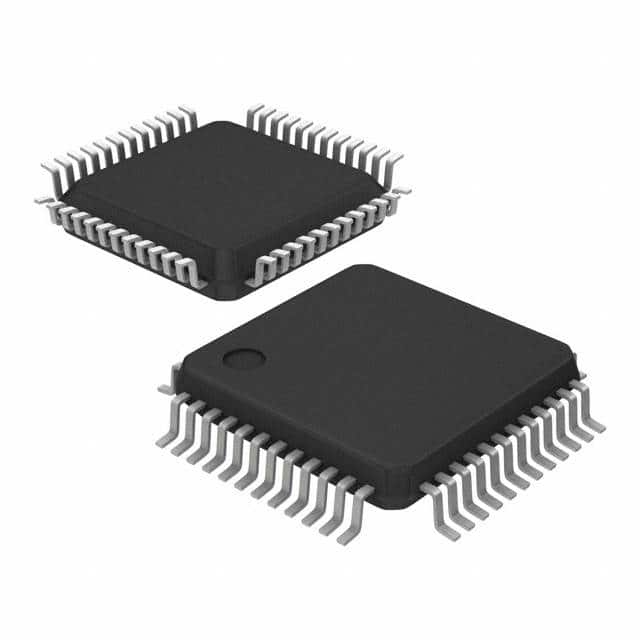
Texas Instruments TM4C123BE6PMIR
- Part No.:
- TM4C123BE6PMIR
- Manufacturer:
- Texas Instruments
- Category:
- Microcontrollers
- Package:
- 64-LQFP
- Datasheet:
-
 TM4C123BE6PMIR.pdf
- Description:
- IC MCU 32BIT 128KB FLASH 64LQFP
- Quantity:
- Payment:

- Shipping:

Inventory:1,508
Please send an inquiry. Send us your inquiry, and we will respond immediately.
Product details
Overview
TM4C123BE6PMIR from Texas Instruments is an ARM Cortex-M4F-based microcontroller with 80 MHz operation, 256 KB flash, 32 KB SRAM, integrated USB 2.0 device controller, and 12-bit ADC with 12 channels - deployed in industrial motor control, sensor gateway, and embedded HMI systems.
For engineers reviewing the TM4C123BE6PMIR datasheet, TM4C123BE6PMIR pinout, TM4C123BE6PMIR application, or TM4C123BE6PMIR equivalent, this page delivers verified electrical specs, package mapping to 64-pin LQFP, debug interface support (SWD/JTAG), and real-world timing/peripheral trade-offs for deterministic real-time firmware development.
Technical Context
The TM4C123BE6PMIR integrates a single-core ARM Cortex-M4F CPU with hardware floating-point unit (FPU), supporting Thumb-2 instruction set and vector table relocation. It features tightly coupled memory subsystems: 256 KB on-chip flash with 128-bit wide access, 32 KB SRAM, and 8 KB ROM containing TivaWare™ boot and driver libraries.
Peripherals include four 32-bit general-purpose timers (GPTM), two UARTs with IrDA/ISO 7816 support, one I²C, two SPI, one USB 2.0 device controller, and a 12-bit 1-MSPS ADC with eight sample sequencers - all clocked via a programmable PLL with internal precision oscillator (PIOSC) and external crystal support up to 25 MHz.
Key Specifications
| Parameter | Value and Actual Design Meaning |
|---|---|
| CPU Core | ARM Cortex-M4F @ 80 MHz - enables deterministic real-time control with hardware FPU for sensor fusion or motor algorithm acceleration. |
| Flash / SRAM | 256 KB flash + 32 KB SRAM - sufficient for bare-metal or RTOS-based firmware with USB stack and ADC data buffering. |
| ADC | 12-bit, 12-channel, 1-MSPS - supports simultaneous sampling of multiple analog sensors with hardware averaging and digital comparators. |
| USB Interface | USB 2.0 full-speed device controller - enables HID, CDC, or mass storage class implementations without external PHY. |
| Timers | Four 32-bit GPTMs, each configurable as two 16-bit timers - provides PWM generation, input capture, quadrature encoder interface, and RTC functionality. |
| Package | 64-pin LQFP (10 mm × 10 mm, 0.5 mm pitch) - compatible with standard PCB assembly processes and thermal management for industrial ambient (–40°C to 105°C). |
| Operating Temp | –40°C to +105°C - qualified for extended temperature industrial and automotive under-hood applications. |
Pinout & Package
TM4C123BE6PMIR uses a 64-pin LQFP package (package code PM) with exposed thermal pad. Pin functions are defined per TI SPMS365E datasheet Rev E (June 2014), including dedicated SWDIO/SWCLK pins for debug, USB D+/D−, and GPIO-mapped peripherals.
| Pin/Terminal | Circuit Role | Design Meaning |
|---|---|---|
| VDD / VDDA / VDDC | Power supply inputs | Separate analog (VDDA), core (VDDC), and I/O (VDD) rails enable noise isolation for ADC and digital logic. |
| SWDIO / SWCLK | ARM Serial Wire Debug interface | Two-pin debug interface replaces JTAG for reduced footprint; supports full halt-mode debugging and flash programming. |
| USB0DP / USB0DM | USB 2.0 full-speed differential pair | Integrated transceiver eliminates need for external PHY; requires 1.5-kΩ pull-up on DP for device enumeration. |
| GPIOA[7:0] | Programmable digital I/O bank | Configurable as UART, I²C, SPI, or timer outputs; supports slew-rate control and 8-mA drive strength. |
| AIN0–AIN11 | Analog input channels | 12 dedicated ADC inputs mapped across GPIO ports; support single-ended or differential sampling with programmable reference selection. |
Key Features
| Feature | Design Value |
|---|---|
| Hibernation module | Retains RTC, battery-backed RAM, and wake-on-external-interrupt capability at <1 µA deep-sleep current - extends battery life in remote sensor nodes. |
| μDMA controller | 32-channel micro-DMA engine offloads CPU during peripheral transfers (e.g., ADC-to-memory or UART-to-buffer), reducing interrupt latency and jitter. |
| ROM-based bootloader | 8 KB on-chip ROM contains factory-programmed In-Application Programming (IAP) routines and TivaWare driver APIs - reduces flash usage and simplifies firmware updates. |
| Peripheral gating | Individual clock enables per peripheral (via RCGC registers) allow dynamic power scaling - disable unused UART/SPI/ADC to cut active current by up to 30%. |
| GPIO commit control | Write-protection mechanism prevents accidental reconfiguration of critical I/O (e.g., reset or debug pins) after initialization - improves system reliability in field-deployed firmware. |
Applications
| Industrial Motor Control | Smart Sensor Gateway |
|---|---|
|
Use Scenario: Closed-loop BLDC motor control using hall-effect feedback and space-vector PWM generation. IC Role / Device Role / Timing Role: Real-time execution of FOC algorithms, ADC sampling synchronization, and precise 20-kHz PWM output with dead-time insertion. Use Value: Integrated 80-MHz M4F core with FPU executes torque/current loops in <2 µs; dual 16-bit timers provide complementary PWM outputs with hardware fault protection. |
Use Scenario: Multi-sensor aggregation (temperature, humidity, pressure) with local preprocessing and USB-CDC upload to host PC. IC Role / Device Role / Timing Role: ADC acquisition controller, data formatter, and USB device endpoint managing bulk transfers without host polling. Use Value: Hardware μDMA moves sensor samples directly into USB FIFO; ROM-based USB stack reduces firmware size and ensures CDC compliance without external dependencies. |
| Embedded HMI Panel | Energy Metering Node |
|
Use Scenario: Touch-enabled display interface with button debouncing, LED dimming, and serial communication to main controller. IC Role / Device Role / Timing Role: Peripheral coordinator managing capacitive touch scan, PWM-driven LED backlight, and UART/RS-485 link. Use Value: Dedicated GPIO commit control locks touch I/O configuration; 12-bit ADC measures panel voltage for adaptive brightness; integrated hibernation preserves state during power loss. |
Use Scenario: Residential electricity meter with current/voltage sensing, kWh calculation, and tamper detection via GPIO interrupts. IC Role / Device Role / Timing Role: High-accuracy analog front-end controller with calibrated ADC references and secure RTC timestamping for billing logs. Use Value: Internal temperature sensor compensates ADC gain drift; battery-backed hibernation RAM stores last-read energy values across AC outages; watchdog timer enforces firmware integrity. |
Equivalent & Alternatives
The following parts are listed as comparable options for similar microcontroller applications.
| Alternative Part | Technical Difference | Application Difference | Selection Advice |
|---|---|---|---|
| TM4C123GH6PM | Higher flash (256 KB vs. 256 KB same), but adds Ethernet MAC and additional UART/I²C; operates at same 80 MHz with identical 64-pin LQFP package. | Required for wired industrial networking; unnecessary overhead if Ethernet is unused - increases BOM cost and firmware complexity. | Select TM4C123BE6PMIR when Ethernet is not needed and cost-sensitive volume production is prioritized. |
| STM32F401CEU6 | ARM Cortex-M4F @ 84 MHz, 512 KB flash, 96 KB SRAM, but lacks integrated USB PHY and hibernation module; uses 48-pin UFQFPN package. | Requires external USB transceiver; no battery-backed RTC or ultra-low-power hibernate mode - unsuitable for battery-powered sensor nodes. | Choose STM32F401CEU6 only when larger memory and higher clock tolerance are critical, and USB/device power management are handled externally. |
Compared with TM4C123GH6PM and STM32F401CEU6, the TM4C123BE6PMIR offers optimal balance of USB integration, hibernation capability, and industrial temperature range in a cost-effective 64-pin LQFP - making it ideal for self-contained, field-deployable edge controllers without networking or memory expansion needs.
Availability
TM4C123BE6PMIR is available at Aetrix Electronics and suitable for industrial motor control, smart sensor gateways, embedded HMI panels, and energy metering nodes requiring stable component supply across multi-year production cycles.
Supply support for TM4C123BE6PMIR includes scheduled delivery planning, volume procurement assistance, BOM continuity management, traceable sourcing, and lifecycle availability coordination for OEM customers, industrial embedded developers, connected-device designers, and electronics production programs.
Manufacturer
Texas Instruments is a global semiconductor company headquartered in Dallas, Texas, specializing in analog, embedded processing, and connectivity technologies for industrial, automotive, and consumer markets.
The TM4C123BE6PMIR belongs to TI's Tiva C Series microcontroller family, designed specifically for cost-sensitive, real-time embedded applications requiring integrated analog peripherals, USB connectivity, and robust low-power operation in harsh environments.
FAQ
What is the maximum operating frequency of the TM4C123BE6PMIR?
The TM4C123BE6PMIR operates at a maximum CPU frequency of 80 MHz, achieved via its integrated PLL with support for external crystals up to 25 MHz or internal precision oscillator (PIOSC). This frequency is fully supported across the full industrial temperature range (–40°C to +105°C) and enables deterministic real-time execution of control loops and communication stacks without overclocking.
Does the TM4C123BE6PMIR include an integrated USB physical layer (PHY)?
Yes, the TM4C123BE6PMIR integrates a full-speed USB 2.0 device controller with on-die transceiver - eliminating the need for an external USB PHY. The USB0DP and USB0DM pins connect directly to the USB connector with appropriate series resistors and ESD protection, enabling CDC, HID, and mass storage class implementations using TI's TivaWare USB library.
What debug interfaces does the TM4C123BE6PMIR support?
The TM4C123BE6PMIR supports both JTAG and ARM Serial Wire Debug (SWD) via dedicated SWDIO and SWCLK pins. SWD is the recommended interface for production programming and debugging due to its two-pin footprint and full functional parity with JTAG - including flash programming, register inspection, and real-time variable monitoring through IDEs like Keil MDK or TI Code Composer Studio.
How much SRAM and flash memory does the TM4C123BE6PMIR provide?
The TM4C123BE6PMIR includes 32 KB of on-chip SRAM and 256 KB of on-chip flash memory. The flash supports read-while-write (RWW) operation and has error correction coding (ECC) enabled by default. The SRAM is partitioned into contiguous blocks accessible by CPU and μDMA, enabling efficient buffer management for high-throughput peripherals like USB and ADC.
Is the TM4C123BE6PMIR qualified for extended temperature operation?
Yes, the TM4C123BE6PMIR is rated for operation from –40°C to +105°C and is manufactured and tested to meet industrial-grade reliability standards. This qualification is explicitly stated in the TI SPMS365E datasheet and applies to all electrical specifications, including ADC accuracy, USB timing, and flash write endurance - making it suitable for deployment in uncontrolled environments such as factory floors or outdoor enclosures.
TM4C123BE6PMIR Specifications
- Product attributes
- Attribute value
- Manufacturer:
- Texas Instruments
- Package/Case:
- 64-LQFP
- Series:
- Tiva™ C
- Packaging:
- Tape & Reel (TR)
- Product Status:
- Active
- Programmable:
- Not Verified
- Core Processor:
- ARM® Cortex®-M4F
- Core Size:
- 32-Bit Single-Core
- Speed:
- 80MHz
- Connectivity:
- CANbus, I2C, IrDA, Microwire, QEI, SPI, SSI, UART/USART
- Peripherals:
- Brown-out Detect/Reset, DMA, Motion PWM, POR, WDT
- Number of I/O:
- 43
- Program Memory Size:
- 128KB (128K x 8)
- Program Memory Type:
- FLASH
- EEPROM Size:
- 2K x 8
- RAM Size:
- 32K x 8
- Voltage - Supply (Vcc/Vdd):
- 1.08V ~ 3.63V
- Data Converters:
- A/D 12x12b
- Oscillator Type:
- Internal
- Operating Temperature:
- -40°C ~ 85°C (TA)
- Grade:
- -
- Qualification:
- -
- Mounting Type:
- Surface Mount
- Supplier Device Package:
TM4C123BE6PMIR FAQ
1.How can I place an order for TM4C123BE6PMIR through Aetrix?
Please submit a Request for Quotation (RFQ) for TM4C123BE6PMIR on Aetrix. Our sales agent will provide a competitive quotation and guide you through the order confirmation once you accept the terms.
2.Are the price and stock information for TM4C123BE6PMIR reliable?
The price and inventory of TM4C123BE6PMIR are updated periodically and may fluctuate due to market conditions. Stock and pricing data are typically refreshed every 24 hours. Quotation validity for TM4C123BE6PMIR is usually 5 days.
3.What payment methods are accepted for TM4C123BE6PMIR?
We accept Wire Transfer, PayPal, Credit Card, Western Union, MoneyGram, and Escrow for TM4C123BE6PMIR transactions.
Note: Certain payment methods may incur a processing fee.
4.How is shipping managed for TM4C123BE6PMIR?
TM4C123BE6PMIR orders can be shipped via leading logistics carriers, including DHL, UPS, FedEx, TNT, or Registered Mail.
Once your TM4C123BE6PMIR order is processed, you will receive an email with the shipment details and tracking number.
Note: Tracking information may take up to 24 hours to appear. Express delivery typically takes 3–5 business days.
5.How can I obtain technical support or documentation for TM4C123BE6PMIR?
For technical support, including TM4C123BE6PMIR datasheets, pinout diagrams, or application guidance, please contact our engineering support team. They can provide detailed documentation and assistance for your TM4C123BE6PMIR requirements.
6.How does Aetrix verify that TM4C123BE6PMIR is sourced from the original manufacturer or authorized distributors?
All TM4C123BE6PMIR products on Aetrix are procured from qualified distributors and authorized channels. Our dedicated quality assurance team conducts strict verification, including traceability checks and, if necessary, third-party testing. This ensures that TM4C123BE6PMIR meets industry standards.
7.What is the process for return or replacement of TM4C123BE6PMIR?
All TM4C123BE6PMIR units undergo pre-shipment inspection (PSI). If there is an issue with TM4C123BE6PMIR, returns or replacements are accepted under the following conditions:
1.Quantity discrepancies, incorrect items, or visible external defects (such as breakage or corrosion), acknowledged by Aetrix.
2.The issue is reported within 90 days of delivery.
3.The TM4C123BE6PMIR part is unused and in its original packaging.
Return procedure for TM4C123BE6PMIR:
1.Submit a request within 90 days.
2.Obtain a Return Material Authorization (RMA) from Aetrix.
TM4C123BE6PMIR Tags

-
ATTINY4-TSHR
Microchip Technology
-
ATTINY10-TSHR
Microchip Technology
-
ATTINY10-TS8R
Microchip Technology

-
ATTINY202-SSNR
Microchip Technology
-
ATTINY202-SSFR
Microchip Technology
-
ATTINY402-SSNR
Microchip Technology
-
PIC16F15213T-I/MF
Microchip Technology
-
PIC16F15213-E/MF
Microchip Technology

-
PIC10F200T-I/OT
Microchip Technology
-
ATTINY412-SSNR
Microchip Technology
-
PIC10F202T-I/OT
Microchip Technology
-
ATTINY404-SSNR
Microchip Technology
Tech Hub

A practical engineering guide to 3.3V and 5V logic compatibility, input thresholds, resistor dividers, translator ICs, MOSFET level shifting, I2C pull-ups, timing limits and power-sequencing risks.

The 74HC595 uses push-pull logic outputs, while the TPIC6B595 uses 50 V open-drain DMOS sinks for higher-power loads. This guide compares timing, current limits, 3.3 V interfacing, load wiring, thermal…

The 74HC595 converts serial data into eight stable parallel outputs. This guide covers pin functions, shift and storage timing, OE and MR behavior, drive-current limits, cascading, voltage compatibilit…

A technical comparison of level-sensitive latches and edge-triggered flip-flops, covering timing windows, setup and hold limits, master–slave operation, time borrowing, race-through, HDL inference and…

A D latch stores one bit while Enable controls when data can pass. This reference covers gate-level operation, truth tables, transparency, setup and hold timing, LE versus OE, common ICs and practical …

An SR latch stores one bit through cross-coupled feedback. This engineering reference covers NOR and NAND implementations, truth tables, forbidden-state recovery, gated operation, switch debouncing, fa…

Latch circuits retain one bit through feedback. This technical reference covers SR and D latches, truth tables, transparency, timing limits, latch-versus-flip-flop behavior, applications and common log…

An engineering guide to LED driver operation, constant-current and constant-voltage outputs, linear and switching topologies, dimming, IC selection, calculations, replacement compatibility, and fault c…

Operational amplifier guide covering op amp basics, feedback, ideal vs real op amps, common configurations, buffer circuits, offset, bias current, gain-bandwidth, slew rate, rail-to-rail limits and sel…

Jumper cables guide covering safe connection order, red and black clamp placement, final ground connection, cable gauge, length, clamp quality, copper vs CCA cables, jump starter comparison and battery…


