
 My Inquiry
 My Account


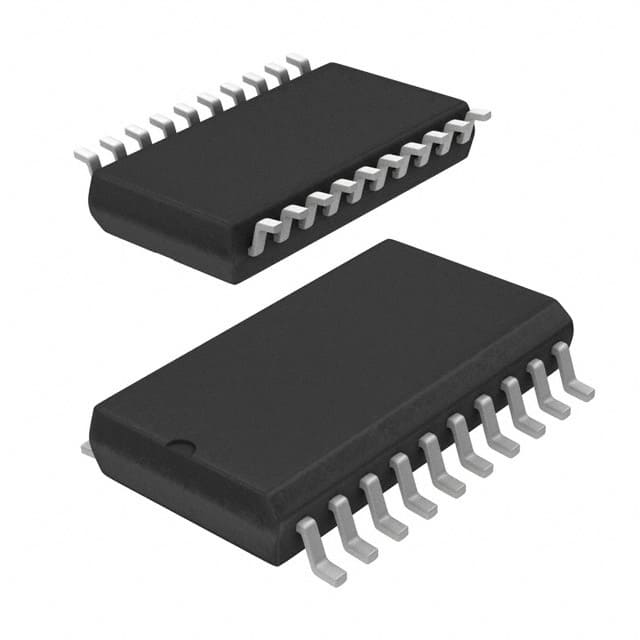
Analog Devices Inc./Maxim Integrated TMC222-SI
- Part No.:
- TMC222-SI
- Manufacturer:
- Analog Devices Inc./Maxim Integrated
- Category:
- Motor Drivers, Controllers
- Package:
- 20-SOIC (0.295", 7.50mm Width)
- Datasheet:
-
 TMC222-SI.pdf
- Description:
- IC MTR DRV BIPOLAR 3.3-5V 20SOIC
- Quantity:
- Payment:

- Shipping:

Inventory:2,944
Please send an inquiry. Send us your inquiry, and we will respond immediately.
Product details
Overview
TMC222-SI from TRINAMIC Motion Control is a fully integrated micro-stepping stepper motor controller and driver IC in SOIC-20 package, supporting up to 1/16 micro-stepping resolution, 800 mA coil current per phase, 8–29 V supply range, and autonomous ramp generation with 16-bit position counter - deployed in precision motion systems such as lab automation stages and compact CNC modules.
For engineers reviewing the TMC222-SI datasheet, TMC222-SI pinout, TMC222-SI application, or TMC222-SI equivalent, key selection considerations include its two-wire serial interface (up to 350 kbps), programmable Irun/Ihold current control, on-the-fly target position updates, and built-in diagnostics for open-circuit, over-temperature, and under-voltage conditions.
Technical Context
The TMC222-SI integrates a dedicated position controller with internal 16-bit position counter, configurable acceleration/deceleration profiles (16-step Acc parameter table), and velocity ramp logic that supports Vmin as programmable fraction of Vmax (1/32 to 15/32) - all executed autonomously after host initialization via two-wire interface. It uses fixed-frequency PWM with automatic fast/slow decay mode selection per coil.
Its dual H-bridge driver stage delivers up to 800 mA per phase with thermal shutdown, short-circuit, and open-load protection. The chip includes OTP memory for persistent motor parameters, an internal 4 MHz oscillator, charge pump (CPN/CPP/VCP pins), and SWI reference switch input with current-source detection - not a standard logic-level input.
Key Specifications
| Parameter | Value and Actual Design Meaning |
|---|---|
| Micro-stepping resolution | Up to 1/16 micro-step (16× finer than full step); enables smooth low-torque-ripple motion in precision positioning. |
| Coil current capability | 800 mA per phase (Irun); supports NEMA 11–17 stepper motors without external current amplification. |
| Supply voltage range | 8 V to 29 V DC; compatible with industrial 12 V and 24 V rails without external regulators. |
| Serial interface | Two-wire (SCL/SDA), 350 kbps max; supports daisy-chaining up to 32 devices with field-programmable node addresses. |
| Position counter | 16-bit two's complement register; provides ±32,767 step range in 1/16 micro-step mode (±65,536 micro-steps). |
| Diagnostic coverage | Real-time flags for over-temperature, under-voltage (UV2), open/short coil, charge pump failure, and external switch status (SWI). |
| Operating temperature | -40°C to +125°C ambient; qualified for industrial motor control environments with no derating required. |
Pinout & Package
Package: SOIC-20, surface-mount, 0.635 mm pitch, thermally enhanced with exposed pad (GND-connected). Pin count and layout match JEDEC MS-013AC standard.
| Pin/Terminal | Circuit Role | Design Meaning |
|---|---|---|
| OA1, OA2 | Phase A H-bridge outputs | Drive positive/negative ends of stepper motor winding A; rated for 800 mA continuous, 1.2 A peak. |
| OB1, OB2 | Phase B H-bridge outputs | Drive positive/negative ends of stepper motor winding B; identical current rating and thermal behavior as Phase A. |
| VBAT (pins 12, 19) | Main power supply input | Accepts 8–29 V; powers H-bridges and charge pump; requires local 100 nF + 100 µF low-ESR decoupling. |
| VDD (pin 3) | Digital core supply | Internal 5 V regulator output; powers logic, interface, and controller; needs 1 µF tantalum decoupling. |
| GND (pins 4, 7, 14, 17) | Ground reference & thermal path | Four dedicated GND pins; must be connected to solid ground plane for thermal dissipation and noise immunity. |
| SCL / SDA (pins 2, 1) | Two-wire serial interface | Open-drain, 350 kbps max; require external pull-ups (typically 4.7 kΩ to VDD); support multi-drop bus topology. |
| SWI (pin 20) | Reference switch interface | Current-source input (not logic level); detects mechanical switch closure to GND or VBAT via 1 kΩ resistor. |
| HW (pin 8) | Hardware address bit | Configures LSB of 5-bit node address; tied via 1 kΩ to VBAT (1) or GND (0); enables 32-device addressing. |
| TST (pin 5) | Test pin | Must be tied to GND in normal operation; used internally for factory test modes only. |
| open (pin 6) | No-connect terminal | Internally unconnected; must remain floating - no routing or soldering allowed. |
Key Features
| Feature | Design Value |
|---|---|
| Autonomous motion control | On-chip ramp generator executes full acceleration/deceleration profiles without host CPU intervention after SetPosition command. |
| Programmable current control | Irun (16-step table, up to 800 mA) and Ihold (separate 16-step setting) reduce power dissipation during standstill by >60% vs. fixed run current. |
| Secure position function | GotoSecurePosition command moves motor to preconfigured coarse position (11-bit resolution) - useful for homing or safety stops. |
| Integrated diagnostics | Real-time status flags (ElDef, CPFail, ESW, TSD) accessible via GetFullStatus1/2 commands - eliminates need for external fault monitoring circuitry. |
| OTP configuration storage | One-time-programmable memory retains motor parameters (current, steps/rev, acceleration) across power cycles - simplifies system initialization. |
Applications
| Lab Instrument Positioning | Compact CNC Router Axis |
|---|---|
Use Scenario: Precise linear actuation in automated pipetting systems and optical stage alignment. IC Role / Device Role / Timing Role: Stepper motor controller/driver executing closed-loop-like positioning using internal 16-bit counter and ramp generator - no encoder feedback required. Use Value: Eliminates need for external motion controller MCU; reduces BOM count and PCB area while maintaining ±1/16-step repeatability. |
Use Scenario: X/Y axis drive in desktop CNC mills handling aluminum and plastics. IC Role / Device Role / Timing Role: Autonomous motion engine managing acceleration, velocity, and target position via two-wire interface from host MCU. Use Value: Enables smooth 1/16 micro-stepping at full-step frequencies up to 1 kHz - directly translates to reduced vibration and improved surface finish. |
| Medical Infusion Pump Drive | Industrial Valve Actuation |
Use Scenario: Peristaltic pump motor control requiring precise volumetric delivery and stall detection. IC Role / Device Role / Timing Role: Integrated driver with open-circuit and over-current diagnostics monitors motor health in real time. Use Value: Detects occlusion or tube blockage via current-sense anomalies and triggers safe shutdown - meets IEC 62304 Class B requirements. |
Use Scenario: Modulating HVAC or process fluid valves in factory automation panels. IC Role / Device Role / Timing Role: Position controller with SWI input reading mechanical end-stop switches for absolute position initialization. Use Value: Enables reliable homing without external limit sensors - reduces wiring complexity and improves long-term calibration stability. |
Equivalent & Alternatives
The following parts are listed as comparable options for similar stepper motor controller/driver applications.
| Alternative Part | Technical Difference | Application Difference | Selection Advice |
|---|---|---|---|
| TMC2209-SO | Higher current (2.8 A), StealthChop2 silent stepping, UART interface instead of two-wire; QFN32 package. | Better suited for high-torque, low-noise applications (e.g., 3D printer extruders); requires different PCB layout and firmware interface. | Select when silent operation and >1 A coil current are mandatory; not drop-in due to interface and package mismatch. |
| DRV8825 | 5–40 V supply, 2.2 A max, standalone indexer (no internal RAM/ramp generator); requires external step/dir signals. | Needs host MCU to generate step pulses and manage acceleration - increases firmware load and timing constraints. | Choose for cost-sensitive designs where host has spare GPIO/timers and noise is not critical; lacks autonomous motion features of TMC222-SI. |
Compared with TMC222-SI, TMC2209-SO offers higher current and quieter operation but demands UART integration and board redesign, while DRV8825 shifts motion control burden to the host - making TMC222-SI optimal for compact, self-contained, low-firmware-overhead stepper systems.
Availability
TMC222-SI is available at Aetrix Electronics and suitable for lab instrumentation, compact CNC motion control, and medical infusion pump designs requiring stable component supply, long-lifecycle assurance, and industrial-grade thermal performance.
Supply support for TMC222-SI includes scheduled delivery planning, volume procurement assistance, BOM continuity management, traceable sourcing, and lifecycle availability coordination for OEM customers, industrial embedded developers, connected-device designers, and electronics production programs.
Manufacturer
TRINAMIC Motion Control GmbH & Co. KG is a German semiconductor company specializing in intelligent motor control ICs, founded in 2001 and headquartered in Hamburg.
The TMC222 product line was designed for cost-effective, autonomous stepper motor control in space-constrained industrial and medical equipment - integrating driver, controller, memory, and diagnostics into a single SOIC-20 IC.
FAQ
What is the maximum micro-stepping resolution supported by the TMC222-SI?
The TMC222-SI supports up to 1/16 micro-stepping resolution, delivering 16 micro-steps per full step. This is configured via serial interface commands and enables smooth, low-vibration motion ideal for precision positioning tasks. The internal sine-wave lookup table and DACs ensure accurate current profiling across all micro-step positions in the TMC222-SI.
Does the TMC222-SI require an external microcontroller to operate?
The TMC222-SI operates autonomously after initial configuration: once motor parameters and target position are sent via its two-wire interface, it executes full acceleration/deceleration ramps and positioning without further host involvement. However, a host microcontroller is required for setup, status reads, and dynamic reconfiguration - the TMC222-SI itself contains no embedded firmware processor.
How does the SWI pin on the TMC222-SI detect mechanical switch states?
The SWI pin on the TMC222-SI is a current-source input (not a logic-level pin) that sources current to detect whether an external mechanical switch is open, grounded, or connected to VBAT - using a mandatory 1 kΩ series resistor. Its state is reported in the
Can the TMC222-SI drive NEMA 17 stepper motors reliably?
Yes - the TMC222-SI delivers up to 800 mA per coil continuously, matching the typical rated current of many NEMA 17 motors (e.g., 0.4–0.8 A). Thermal performance is validated up to +125°C ambient in SOIC-20 package with proper PCB copper pour on GND pins, making the TMC222-SI suitable for sustained NEMA 17 operation in enclosed industrial enclosures.
What happens during motor shutdown on the TMC222-SI, and how is it cleared?
Motor shutdown on the TMC222-SI occurs on thermal overload, under-voltage (VBAT < UV2), coil fault, or charge pump failure - forcing H-bridges into high-impedance mode and latching ActPos to TagPos. Recovery requires both fault clearance and a GetFullStatus1 command over the two-wire interface; only then does the TMC222-SI resume Ihold mode and accept new motion commands.
TMC222-SI Specifications
- Product attributes
- Attribute value
- Manufacturer:
- Analog Devices Inc./Maxim Integrated
- Series:
- -
- Package/Case:
- 20-SOIC (0.295", 7.50mm Width)
- Packaging:
- Tube
- Product Status:
- Obsolete
- Motor Type - Stepper:
- Bipolar
- Motor Type - AC, DC:
- -
- Function:
- Driver - Fully Integrated, Control and Power Stage
- Output Configuration:
- Half Bridge (4)
- Interface:
- I2C
- Technology:
- Power MOSFET
- Step Resolution:
- 1, 1/2, 1/4, 1/8, 1/16
- Applications:
- General Purpose
- Current - Output:
- 570mA
- Voltage - Supply:
- 3.3V ~ 5V
- Voltage - Load:
- 8V ~ 29V
- Operating Temperature:
- -40°C ~ 85°C (TA)
- Grade:
- -
- Qualification:
- -
- Mounting Type:
- Surface Mount
- Supplier Device Package:
- 20-SOIC
TMC222-SI FAQ
1.How can I place an order for TMC222-SI through Aetrix?
Please submit a Request for Quotation (RFQ) for TMC222-SI on Aetrix. Our sales agent will provide a competitive quotation and guide you through the order confirmation once you accept the terms.
2.Are the price and stock information for TMC222-SI reliable?
The price and inventory of TMC222-SI are updated periodically and may fluctuate due to market conditions. Stock and pricing data are typically refreshed every 24 hours. Quotation validity for TMC222-SI is usually 5 days.
3.What payment methods are accepted for TMC222-SI?
We accept Wire Transfer, PayPal, Credit Card, Western Union, MoneyGram, and Escrow for TMC222-SI transactions.
Note: Certain payment methods may incur a processing fee.
4.How is shipping managed for TMC222-SI?
TMC222-SI orders can be shipped via leading logistics carriers, including DHL, UPS, FedEx, TNT, or Registered Mail.
Once your TMC222-SI order is processed, you will receive an email with the shipment details and tracking number.
Note: Tracking information may take up to 24 hours to appear. Express delivery typically takes 3–5 business days.
5.How can I obtain technical support or documentation for TMC222-SI?
For technical support, including TMC222-SI datasheets, pinout diagrams, or application guidance, please contact our engineering support team. They can provide detailed documentation and assistance for your TMC222-SI requirements.
6.How does Aetrix verify that TMC222-SI is sourced from the original manufacturer or authorized distributors?
All TMC222-SI products on Aetrix are procured from qualified distributors and authorized channels. Our dedicated quality assurance team conducts strict verification, including traceability checks and, if necessary, third-party testing. This ensures that TMC222-SI meets industry standards.
7.What is the process for return or replacement of TMC222-SI?
All TMC222-SI units undergo pre-shipment inspection (PSI). If there is an issue with TMC222-SI, returns or replacements are accepted under the following conditions:
1.Quantity discrepancies, incorrect items, or visible external defects (such as breakage or corrosion), acknowledged by Aetrix.
2.The issue is reported within 90 days of delivery.
3.The TMC222-SI part is unused and in its original packaging.
Return procedure for TMC222-SI:
1.Submit a request within 90 days.
2.Obtain a Return Material Authorization (RMA) from Aetrix.
TMC222-SI Tags
-
DRV2603RUNR
Texas Instruments
-
DRV8837CDSGR
Texas Instruments
-
DRV8837DSGR
Texas Instruments
-
DRV8838DSGR
Texas Instruments
-
DRV8839DSSR
Texas Instruments
-
EMC2301-1-ACZL-TR
Microchip Technology
-
DRV8231ADSGR
Texas Instruments
-
EMC2302-2-AIZL-TR
Microchip Technology
-
DRV8800PWPR
Texas Instruments
-
DRV8835DSSR
Texas Instruments
-
EMC2303-1-KP-TR
Microchip Technology
-
DRV8876PWPR
Texas Instruments
Tech Hub

A practical engineering guide to 3.3V and 5V logic compatibility, input thresholds, resistor dividers, translator ICs, MOSFET level shifting, I2C pull-ups, timing limits and power-sequencing risks.

The 74HC595 uses push-pull logic outputs, while the TPIC6B595 uses 50 V open-drain DMOS sinks for higher-power loads. This guide compares timing, current limits, 3.3 V interfacing, load wiring, thermal…

The 74HC595 converts serial data into eight stable parallel outputs. This guide covers pin functions, shift and storage timing, OE and MR behavior, drive-current limits, cascading, voltage compatibilit…

A technical comparison of level-sensitive latches and edge-triggered flip-flops, covering timing windows, setup and hold limits, master–slave operation, time borrowing, race-through, HDL inference and…

A D latch stores one bit while Enable controls when data can pass. This reference covers gate-level operation, truth tables, transparency, setup and hold timing, LE versus OE, common ICs and practical …

An SR latch stores one bit through cross-coupled feedback. This engineering reference covers NOR and NAND implementations, truth tables, forbidden-state recovery, gated operation, switch debouncing, fa…

Latch circuits retain one bit through feedback. This technical reference covers SR and D latches, truth tables, transparency, timing limits, latch-versus-flip-flop behavior, applications and common log…

An engineering guide to LED driver operation, constant-current and constant-voltage outputs, linear and switching topologies, dimming, IC selection, calculations, replacement compatibility, and fault c…

Operational amplifier guide covering op amp basics, feedback, ideal vs real op amps, common configurations, buffer circuits, offset, bias current, gain-bandwidth, slew rate, rail-to-rail limits and sel…

Jumper cables guide covering safe connection order, red and black clamp placement, final ground connection, cable gauge, length, clamp quality, copper vs CCA cables, jump starter comparison and battery…


