
 My Inquiry
 My Account


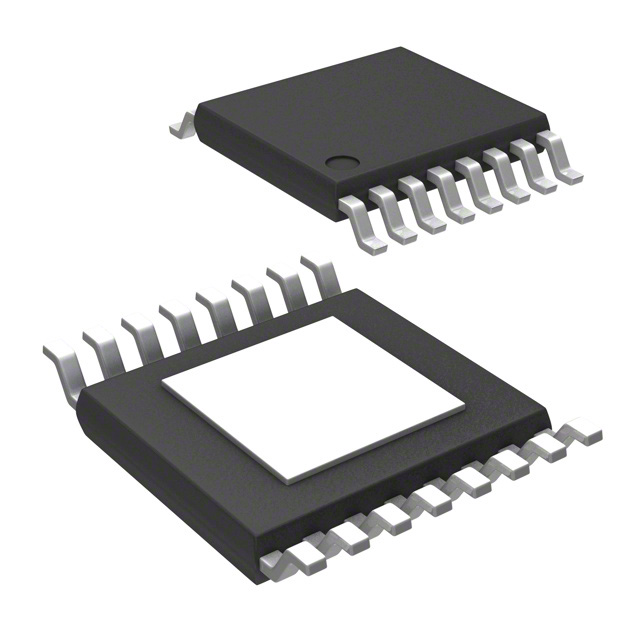
Analog Devices Inc./Maxim Integrated TMC2300-LA

- Part No.:
- TMC2300-LA
- Manufacturer:
- Analog Devices Inc./Maxim Integrated
- Category:
- Motor Drivers, Controllers
- Package:
- 20-VFQFN Exposed Pad
- Datasheet:
-
 TMC2300-LA.pdf
- Description:
- LOW VOLTAGE STEPPER MOTOR DRIVER
- Quantity:
- Payment:

- Shipping:

Inventory:1,517
Please send an inquiry. Send us your inquiry, and we will respond immediately.
Product details
Overview
TMC2300-LA from TRINAMIC Motion Control GmbH & Co. KG is a low-voltage, integrated stepper motor driver IC with integrated power MOSFETs, supporting 2-phase stepper motors up to 1.2A RMS (2A peak), operating from 2V–11V DC supply, and featuring StealthChop2™ for silent motion in battery-powered handheld and IoT devices.
For engineers reviewing the TMC2300-LA datasheet, TMC2300-LA pinout, TMC2300-LA application, or TMC2300-LA equivalent, key selection criteria include ultra-low standby current (<50nA), UART-configurable CoolStep™ energy saving, StallGuard4™ sensorless stall detection, and QFN20 3×3 mm package compatibility with space-constrained embedded motion systems.
Technical Context
The TMC2300-LA implements a dual full-bridge power stage with internal charge pump enabling 170mΩ typical RDS(on) per FET at low supply voltages (≥2V), supporting precise 256-microstep interpolation via MicroPlyer™ and real-time current regulation in StealthChop2™ mode. It operates in two primary modes: STEP/DIR standalone (pin-configured microstepping) and UART-controlled (full diagnostics, dynamic current tuning, and internal pulse generation).
Its architecture integrates StallGuard4™ for load-dependent current adaptation, automatic standstill current reduction (IHOLD ≤ 50% IRUN), and programmable DIAG output for error/stall/index reporting. The device uses feed-forward regulation to eliminate external sense resistors when required, and features a dedicated 1.8V LDO (1.8VOUT) with <100nF bypass capacitor support.
Key Specifications
| Parameter | Value and Actual Design Meaning |
|---|---|
| Supply Voltage Range | 2V to 11V DC - supports single Li-Ion (2.5–4.2V) or dual AA/NiMH (2.4–3.0V) operation without boost converter |
| Motor Current Capability | 1.2A RMS / 2A peak per coil - sufficient for NEMA 8–11 stepper motors in portable applications |
| Standby Current | <50nA typical - enables multi-year battery life in always-on IoT endpoints |
| Microstepping Resolution | Full-step to 1/256 step - selectable via pins (8/16/32/64) or UART (full range), with MicroPlyer™ interpolation smoothing lower-resolution inputs |
| RDS(on) (HS + LS) | 170mΩ typ. per FET - achieved via internal charge pump, minimizing conduction loss at low VS |
| Interface Options | STEP/DIR + 2-pin UART (PDN_UART) - enables either legacy control or full diagnostics with only three wires (STEP, DIR, PDN_UART) |
| Protection Features | Overtemperature, short-circuit, open-load, undervoltage lockout - ensures robust operation without external supervision circuitry |
Pinout & Package
Package: QFN20, 3 mm × 3 mm, 0.4 mm pitch, exposed thermal pad (connected to GND).
| Pin/Terminal | Circuit Role | Design Meaning |
|---|---|---|
| OA1, OA2, OB1, OB2 | Motor coil A/B high-side/low-side outputs | Drive 2-phase bipolar stepper motor; each pair forms full H-bridge with internal MOSFETs |
| BRA, BRB | Sense resistor connections for coil A/B | Enable current sensing; optional use with feed-forward regulation eliminates need for physical resistors |
| STEP, DIR | Digital motion control inputs | Accept CMOS-level pulses; support both rising-edge and dual-edge (DEDGE) stepping for reduced signal bandwidth |
| PDN_UART | UART I/O / Standby enable | In standalone mode: active-low auto-standby trigger; in UART mode: bidirectional serial interface with CRC |
| VIO/NSTDBY | Digital I/O supply & standby control | 1.8–5V input; pulling to GND forces full standby (reset + shutdown of logic and LDO) |
| DIAG | Programmable diagnostic output | Configurable as stall flag, error indicator, or index pulse (1 per electrical rotation); active-high, open-drain |
| 1.8VOUT | Internal LDO output | Provides regulated 1.8V for internal logic; requires 100nF ceramic cap to GND for stability |
| EN | Driver enable | Active-high; disables all H-bridges (outputs float), clears error flags on falling edge |
Key Features
| Feature | Design Value |
|---|---|
| StealthChop2™ chopper algorithm | Enables inaudible motor operation at standstill and low speeds without configuration - eliminates mechanical resonance noise in office/home automation |
| CoolStep™ current adaptation | Reduces motor current by up to 90% under light load using StallGuard4™ feedback - cuts PCB heating and extends battery runtime |
| StallGuard4™ sensorless homing | Measures back-EMF-based load torque in StealthChop mode - enables reliable end-stop detection without physical switches in thermostatic valves or POS printers |
| MicroPlyer™ microstep interpolation | Generates smooth 256-microstep motion from coarse STEP/DIR inputs (e.g., full-step or 1/8-step) - improves positioning resolution without MCU firmware changes |
| Integrated pulse generator | Drives motor at set velocity via UART alone - eliminates STEP/DIR signal generation in simple linear-motion applications like HVAC damper control |
Applications
| IoT & Handheld Devices | Battery-Powered Medical Equipment |
|---|---|
Use Scenario: Compact smart thermostat with motorized valve actuation and Bluetooth connectivity. IC Role / Device Role / Timing Role: Stepper driver controlling 1.2A thermostatic radiator valve; manages quiet positioning and zero-power hold via CoolStep™ and standby modes. Use Value: Enables >5-year battery life using two AA cells while maintaining sub-0.1° positioning accuracy and silent operation during nighttime cycles. |
Use Scenario: Portable insulin pump requiring precise, vibration-free syringe advancement. IC Role / Device Role / Timing Role: Low-noise stepper driver for micro-stepping syringe plunger; uses StallGuard4™ to detect occlusion and halt before pressure buildup. Use Value: Eliminates audible motor whine during patient wear and provides fail-safe stall detection without added sensors or PCB area. |
| Miniature 3D Printers | Office Automation (POS/Label Printers) |
Use Scenario: Desktop resin printer with compact XY gantry and silent Z-axis lift. IC Role / Device Role / Timing Role: Dual-axis stepper driver delivering 256-microstep smoothness and StealthChop2™ noise suppression during layer exposure pauses. Use Value: Achieves <10dB(A) acoustic emission during printing - meets Class I office noise standards without enclosure shielding. |
Use Scenario: Thermal receipt printer with auto-cutter and paper feed mechanism. IC Role / Device Role / Timing Role: Single-chip driver for paper advance and cutter actuation; leverages internal pulse generator for timed cut sequences independent of host MCU timing. Use Value: Reduces BOM count by eliminating separate timing ICs and simplifies firmware by offloading motion sequencing to hardware. |
Equivalent & Alternatives
The following parts are listed as comparable options for similar stepper motor driver applications.
| Alternative Part | Technical Difference | Application Difference | Selection Advice |
|---|---|---|---|
| TB67S109AFTG | Higher voltage range (4.5–44V), no integrated UART, no CoolStep or StallGuard, requires external sense resistors | Suitable for 12V+ industrial actuators; lacks sensorless homing and battery-optimized low-power modes | Select when operating above 11V or needing higher current (2A RMS) without UART configurability |
| DRV8886ATRGER | 2.7–11.5V supply, 1.5A peak, no StealthChop, no StallGuard, SPI interface only, no internal LDO | Targeted at cost-sensitive consumer electronics; lacks microstep interpolation and ultra-low standby current | Select for simpler designs where 50nA standby and silent operation are not required |
Compared with TMC2300-LA, TB67S109AFTG supports higher bus voltages but adds external components and forfeits battery-life extensions; DRV8886ATRGER offers SPI control but omits critical low-noise and energy-saving features essential for portable medical and IoT use cases.
Availability
TMC2300-LA is available at Aetrix Electronics and suitable for IoT edge nodes, portable medical devices, and miniature 3D printers requiring stable component supply, long-term lifecycle assurance, and consistent QFN20 packaging across production batches.
Supply support for TMC2300-LA includes scheduled delivery planning, volume procurement assistance, BOM continuity management, traceable sourcing, and lifecycle availability coordination for OEM customers, industrial embedded developers, connected-device designers, and electronics production programs.
Manufacturer
TRINAMIC Motion Control GmbH & Co. KG is a German semiconductor company specializing in high-precision motion control ICs, founded in Hamburg in 1997 and focused on intelligent motor drivers with embedded intelligence.
The TMC2300-LA belongs to TRINAMIC's low-voltage stepper driver product line, designed specifically for battery-powered, space-constrained applications demanding silent operation, ultra-low power consumption, and sensorless motion control.
FAQ
What is the minimum supply voltage required for reliable operation of the TMC2300-LA?
The TMC2300-LA operates down to 2.0V DC with typical performance; absolute minimum is 1.8V per datasheet Absolute Maximum Ratings. Below 2.0V, motor current regulation degrades and StealthChop2™ may lose synchronization. For stable 1.2A RMS output, ≥2.2V is recommended with proper input capacitance (≥10µF ceramic + bulk electrolytic).
Does the TMC2300-LA require external sense resistors to function?
No - the TMC2300-LA supports feed-forward current regulation that eliminates external sense resistors when BRA and BRB are tied directly to GND. This mode uses velocity-based scaling and internal current modeling, and is fully supported in StealthChop2™ and CoolStep™ operation. External resistors remain optional for highest accuracy.
How does StallGuard4™ work in the TMC2300-LA, and what applications benefit most?
StallGuard4™ measures motor coil back-EMF during StealthChop2™ operation to infer mechanical load without additional sensors. It delivers real-time torque data used for stall detection, sensorless homing, and CoolStep™ current adaptation. Applications like smart thermostatic valves, lab-on-chip fluid handlers, and automated document feeders rely on this feature for maintenance-free positioning.
Can the TMC2300-LA drive a stepper motor without any microcontroller involvement?
Yes - the TMC2300-LA includes an internal step pulse generator controllable via UART. By writing a target velocity register, the IC autonomously drives the motor at that speed until stopped via EN or UART command. This enables "fire-and-forget" motion in simple applications such as HVAC damper actuation or timer-based dispensers.
What thermal management considerations apply to the TMC2300-LA in its QFN20 package?
The TMC2300-LA requires direct connection of the exposed die pad to a solid internal or bottom-layer GND plane using ≥4 thermal vias (0.3mm diameter). PCB layout must minimize copper resistance between VS/GND pins and bulk capacitors. At 1.2A RMS, junction temperature rise is ≤25°C above ambient with 2 cm² 2-layer copper pour - no heatsink needed in most handheld designs.
TMC2300-LA Specifications
- Product attributes
- Attribute value
- Manufacturer:
- Analog Devices Inc./Maxim Integrated
- Series:
- stallGuard™
- Package/Case:
- 20-VFQFN Exposed Pad
- Packaging:
- Tube
- Product Status:
- Active
- Motor Type - Stepper:
- Bipolar
- Motor Type - AC, DC:
- Brushed DC
- Function:
- Driver - Fully Integrated, Control and Power Stage
- Output Configuration:
- Half Bridge (2)
- Interface:
- Step/Direction, UART
- Technology:
- Power MOSFET
- Step Resolution:
- 1 ~ 1/256
- Applications:
- Automation Control, Medical, Printer
- Current - Output:
- 1.2A
- Voltage - Supply:
- 2V ~ 11V
- Voltage - Load:
- 2V ~ 11V
- Operating Temperature:
- -40°C ~ 125°C (TJ)
- Grade:
- -
- Qualification:
- -
- Mounting Type:
- Surface Mount
- Supplier Device Package:
- 20-QFN (3x3)
TMC2300-LA FAQ
1.How can I place an order for TMC2300-LA through Aetrix?
Please submit a Request for Quotation (RFQ) for TMC2300-LA on Aetrix. Our sales agent will provide a competitive quotation and guide you through the order confirmation once you accept the terms.
2.Are the price and stock information for TMC2300-LA reliable?
The price and inventory of TMC2300-LA are updated periodically and may fluctuate due to market conditions. Stock and pricing data are typically refreshed every 24 hours. Quotation validity for TMC2300-LA is usually 5 days.
3.What payment methods are accepted for TMC2300-LA?
We accept Wire Transfer, PayPal, Credit Card, Western Union, MoneyGram, and Escrow for TMC2300-LA transactions.
Note: Certain payment methods may incur a processing fee.
4.How is shipping managed for TMC2300-LA?
TMC2300-LA orders can be shipped via leading logistics carriers, including DHL, UPS, FedEx, TNT, or Registered Mail.
Once your TMC2300-LA order is processed, you will receive an email with the shipment details and tracking number.
Note: Tracking information may take up to 24 hours to appear. Express delivery typically takes 3–5 business days.
5.How can I obtain technical support or documentation for TMC2300-LA?
For technical support, including TMC2300-LA datasheets, pinout diagrams, or application guidance, please contact our engineering support team. They can provide detailed documentation and assistance for your TMC2300-LA requirements.
6.How does Aetrix verify that TMC2300-LA is sourced from the original manufacturer or authorized distributors?
All TMC2300-LA products on Aetrix are procured from qualified distributors and authorized channels. Our dedicated quality assurance team conducts strict verification, including traceability checks and, if necessary, third-party testing. This ensures that TMC2300-LA meets industry standards.
7.What is the process for return or replacement of TMC2300-LA?
All TMC2300-LA units undergo pre-shipment inspection (PSI). If there is an issue with TMC2300-LA, returns or replacements are accepted under the following conditions:
1.Quantity discrepancies, incorrect items, or visible external defects (such as breakage or corrosion), acknowledged by Aetrix.
2.The issue is reported within 90 days of delivery.
3.The TMC2300-LA part is unused and in its original packaging.
Return procedure for TMC2300-LA:
1.Submit a request within 90 days.
2.Obtain a Return Material Authorization (RMA) from Aetrix.
TMC2300-LA Tags
-
DRV2603RUNR
Texas Instruments
-
DRV8837CDSGR
Texas Instruments
-
DRV8837DSGR
Texas Instruments
-
DRV8838DSGR
Texas Instruments
-
DRV8839DSSR
Texas Instruments
-
EMC2301-1-ACZL-TR
Microchip Technology
-
DRV8231ADSGR
Texas Instruments
-
EMC2302-2-AIZL-TR
Microchip Technology
-
DRV8800PWPR
Texas Instruments
-
DRV8835DSSR
Texas Instruments
-
EMC2303-1-KP-TR
Microchip Technology
-
DRV8876PWPR
Texas Instruments
Tech Hub

A practical engineering guide to 3.3V and 5V logic compatibility, input thresholds, resistor dividers, translator ICs, MOSFET level shifting, I2C pull-ups, timing limits and power-sequencing risks.

The 74HC595 uses push-pull logic outputs, while the TPIC6B595 uses 50 V open-drain DMOS sinks for higher-power loads. This guide compares timing, current limits, 3.3 V interfacing, load wiring, thermal…

The 74HC595 converts serial data into eight stable parallel outputs. This guide covers pin functions, shift and storage timing, OE and MR behavior, drive-current limits, cascading, voltage compatibilit…

A technical comparison of level-sensitive latches and edge-triggered flip-flops, covering timing windows, setup and hold limits, master–slave operation, time borrowing, race-through, HDL inference and…

A D latch stores one bit while Enable controls when data can pass. This reference covers gate-level operation, truth tables, transparency, setup and hold timing, LE versus OE, common ICs and practical …

An SR latch stores one bit through cross-coupled feedback. This engineering reference covers NOR and NAND implementations, truth tables, forbidden-state recovery, gated operation, switch debouncing, fa…

Latch circuits retain one bit through feedback. This technical reference covers SR and D latches, truth tables, transparency, timing limits, latch-versus-flip-flop behavior, applications and common log…

An engineering guide to LED driver operation, constant-current and constant-voltage outputs, linear and switching topologies, dimming, IC selection, calculations, replacement compatibility, and fault c…

Operational amplifier guide covering op amp basics, feedback, ideal vs real op amps, common configurations, buffer circuits, offset, bias current, gain-bandwidth, slew rate, rail-to-rail limits and sel…

Jumper cables guide covering safe connection order, red and black clamp placement, final ground connection, cable gauge, length, clamp quality, copper vs CCA cables, jump starter comparison and battery…


