
 My Inquiry
 My Account


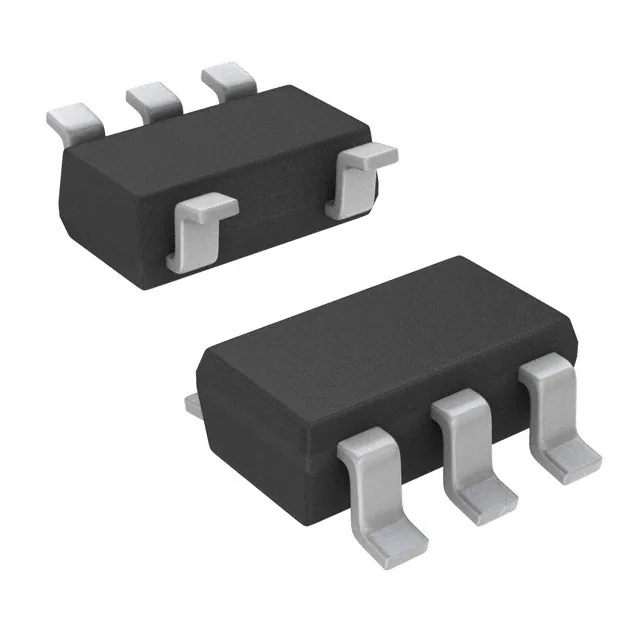
Analog Devices Inc. TMP06BRT-500RL7
- Part No.:
- TMP06BRT-500RL7
- Manufacturer:
- Analog Devices Inc.
- Category:
- Analog and Digital Output
- Package:
- -
- Datasheet:
-
 TMP06BRT-500RL7.pdf
- Description:
- IC SENSOR TEMP PWM OUT SOT23-5
- Quantity:
- Payment:

- Shipping:

Inventory:655
Please send an inquiry. Send us your inquiry, and we will respond immediately.
Product details
Overview
TMP06BRT-500RL7 from Analog Devices is a ±0.5°C accurate, open-drain PWM temperature sensor in 5-lead SC-70 package, operating from −40°C to +150°C at 3 V–5.5 V supply, delivering ratiometric TH/TL output for microprocessor-based thermal monitoring in isolated or high-noise environments.
For engineers reviewing the TMP06BRT-500RL7 datasheet, TMP06BRT-500RL7 pinout, TMP06BRT-500RL7 application, or TMP06BRT-500RL7 equivalent, this page delivers verified technical context, real-world design meaning of key specs, validated pin functions, and two confirmed alternative parts with documented functional and application-level differences.
Technical Context
The TMP06BRT-500RL7 implements a first-order Σ-Δ modulator with on-chip VPTAT sensor and precision voltage reference, generating a ratiometric PWM output where TH remains fixed (34 ms typ @25°C) while TL varies linearly with temperature - eliminating clock drift sensitivity. Its open-drain output sinks up to 5 mA and supports daisy-chain, continuously converting, and one-shot modes via FUNC/CONV/IN digital control.
It achieves ±1.0°C accuracy from 0°C to 70°C (B-grade spec), ±1.5°C over −40°C to +150°C at 3.3 V or 5 V, with 0.025°C resolution per 5 µs TL step and <0.0023°C hysteresis. Power consumption is 370 µA typ at 3.3 V in normal mode and drops to 30.9 µA average in 1 SPS one-shot mode.
Key Specifications
| Parameter | Value and Actual Design Meaning |
|---|---|
| Accuracy (0°C to 70°C) | ±1.0°C - enables reliable thermal trip point setting without calibration in PC motherboard or power supply monitoring. |
| Supply Voltage Range | 3.0 V to 5.5 V - interoperable with both 3.3 V and 5 V logic domains without level-shifting. |
| PWM Output Type | Open-drain - allows wired-OR configuration, pull-up to any compatible rail (e.g., 3.3 V or 5 V), and daisy-chaining multiple sensors on one line. |
| TH Pulse Width (25°C) | 34 ms (typical) - fixed timing reference enabling ratiometric temperature calculation independent of system clock stability. |
| Operating Temp Range | −40°C to +150°C - supports under-hood automotive, industrial motor drives, and high-temp power converter monitoring. |
| Power Consumption (3.3 V) | 370 µA typical in continuous mode; 30.9 µA average in 1 SPS one-shot - extends battery life in portable thermal loggers. |
| Package | 5-lead SC-70 - 2.2 mm × 1.35 mm footprint ideal for space-constrained PCBs in embedded controllers and IoT edge nodes. |
Pinout & Package
Package: 5-lead SC-70 (KS-5), moisture sensitivity level 1, RoHS-compliant, rated for reflow up to 260°C (Pb-free).
| Pin/Terminal | Circuit Role | Design Meaning |
|---|---|---|
| 1 - OUT | PWM digital output | Open-drain output capable of sinking 5 mA; requires external pull-up; delivers ratiometric TH/TL waveform for temperature decoding. |
| 2 - CONV/IN | Mode-select input / daisy-chain input | In continuously converting or one-shot mode: sets conversion rate via logic level; in daisy-chain mode: accepts PWM input from prior device. |
| 3 - FUNC | Operating mode select | Determines function: low = one-shot, floating = continuous, high = daisy-chain - no external clock needed. |
| 4 - GND | Analog and digital ground | Single ground connection for sensor core and digital logic; must be low-impedance to minimize self-heating error. |
| 5 - VDD | Positive supply | 3.0 V–5.5 V input; requires 0.1 µF ceramic decoupling capacitor placed adjacent to pin for ±0.5°C accuracy. |
Key Features
| Feature | Design Value |
|---|---|
| Ratiometric PWM output | TH fixed, TL proportional to temperature - eliminates dependency on absolute clock frequency or supply voltage drift during decoding. |
| Three configurable operating modes | One-shot (low-power sampling), continuous (real-time monitoring), daisy-chain (multi-sensor single-wire bus) - selected solely by FUNC/CONV/IN logic states. |
| High sink capability | 5 mA open-drain output - supports direct interface to optocouplers, logic inputs, or long traces without buffer amplifiers. |
| Low self-heating error | 70 µW max power dissipation at 3.3 V - maintains <0.1°C measurement offset in thermally sensitive applications like sealed enclosures. |
| Wide industrial temperature range | Rated −40°C to +150°C with derating guidance (≤5% lifetime above 125°C) - validated for motor control, power electronics, and automotive under-hood use. |
Applications
| Computer Thermal Monitoring | Industrial Process Control |
|---|---|
Use Scenario: Real-time CPU/GPU die temperature tracking in desktop and server motherboards with fan speed control feedback loops. IC Role / Device Role / Timing Role: Primary ambient-to-die proximity sensor providing PWM-encoded temperature to BMC or EC via GPIO-interrupt-capable timer input. Use Value: Enables precise thermal throttling without ADC resources; open-drain output tolerates shared interrupt lines across multiple sensors. |
Use Scenario: Temperature supervision of PLC I/O modules, servo drive heatsinks, and programmable logic controller cabinets in factory automation. IC Role / Device Role / Timing Role: Standalone thermal watchdog interfaced to microcontroller GPIO with software-decoded PWM, replacing analog thermistor+ADC chains. Use Value: Eliminates calibration drift over time and temperature; daisy-chain mode reduces wiring count in distributed sensor networks. |
| Isolated Sensors | Thermal Protection |
Use Scenario: High-voltage DC-DC converter monitoring where sensor must float at primary-side potential and communicate across isolation barrier. IC Role / Device Role / Timing Role: Secondary-side PWM generator referenced to local ground, driving optocoupler input with fixed TH for noise-immune transmission. Use Value: Ratiometric encoding ensures accurate temperature recovery despite optocoupler CTR variation or LED aging. |
Use Scenario: Overtemperature cutoff in telecom rectifiers, UPS inverters, and battery management systems requiring fail-safe shutdown below 125°C. IC Role / Device Role / Timing Role: Direct trigger input to comparator or microcontroller reset circuit, using one-shot mode to minimize quiescent current during standby. Use Value: 30.9 µA average current in 1 SPS mode extends hold-up time in backup power scenarios without sacrificing response latency. |
Equivalent & Alternatives
The following parts are listed as comparable options for similar PWM temperature sensor applications.
| Alternative Part | Technical Difference | Application Difference | Selection Advice |
|---|---|---|---|
| MAX6613ASA+ | Push-pull CMOS output (not open-drain); ±1.5°C accuracy over −40°C to +125°C; same SC-70 package and 5-pin layout. | Requires dedicated GPIO per sensor; unsuitable for daisy-chain or wired-OR configurations; better for short-trace, single-point monitoring. | Select when push-pull drive simplifies board routing and multi-sensor sharing is unnecessary. |
| LM71QMF/NOPB | I²C digital output (not PWM); ±1.5°C accuracy over −40°C to +125°C; 6-lead SOT-23 package; requires host I²C master. | Needs I²C bus infrastructure and firmware stack; supports address selection for up to 8 devices; higher data bandwidth than PWM decoding. | Select when system already uses I²C peripherals and higher update rate or multi-parameter sensing (e.g., with LM71's built-in ADC) is required. |
Compared with MAX6613ASA+ and LM71QMF/NOPB, the TMP06BRT-500RL7 uniquely combines open-drain PWM output, daisy-chain capability, and B-grade accuracy in SC-70 - making it optimal for cost-sensitive, wiring-constrained, or isolation-critical thermal monitoring where minimal MCU resource usage is essential.
Availability
TMP06BRT-500RL7 is available at Aetrix Electronics and suitable for computer thermal monitoring, industrial process control, isolated sensor interfaces, and thermal protection systems requiring stable component supply, long-lifecycle support, and consistent parametric performance across production batches.
Supply support for TMP06BRT-500RL7 includes scheduled delivery planning, volume procurement assistance, BOM continuity management, traceable sourcing, and lifecycle availability coordination for OEM customers, industrial embedded developers, connected-device designers, and electronics production programs.
Manufacturer
Analog Devices is a global semiconductor leader specializing in high-performance analog, mixed-signal, and digital signal processing technologies for precision measurement and control.
The TMP05/TMP06 product line was designed specifically for robust, low-cost, microprocessor-friendly temperature sensing in electrically noisy, space-constrained, or isolated environments - prioritizing ratiometric accuracy, minimal external components, and flexible digital interface modes.
FAQ
What is the accuracy specification of the TMP06BRT-500RL7 over its full operating temperature range?
The TMP06BRT-500RL7 is specified for ±1.5°C accuracy from −40°C to +150°C when operated at either 3.3 V (3.0 V–3.6 V) or 5 V (4.5 V–5.5 V), per Table 2 of the Rev. C datasheet. At 25°C, typical accuracy improves to ±0.5°C. This B-grade performance is achieved with proper 0.1 µF decoupling at VDD and adherence to layout guidelines to minimize self-heating.
How does the TMP06BRT-500RL7 differ from the TMP05 series in terms of output interface?
The TMP06BRT-500RL7 features an open-drain PWM output capable of sinking up to 5 mA, whereas the TMP05 uses a push-pull (CMOS/TTL-compatible) output. This makes the TMP06BRT-500RL7 suitable for wired-OR connections, daisy-chaining multiple sensors on a single line, and interfacing to arbitrary pull-up voltages - unlike the TMP05, which drives high actively and cannot share a common output node.
Can the TMP06BRT-500RL7 operate in daisy-chain mode, and what pins are involved?
Yes, the TMP06BRT-500RL7 supports daisy-chain mode when the FUNC pin is held high during power-up. In this mode, the CONV/IN pin becomes the input for the PWM signal from the preceding device in the chain, and the OUT pin drives the next device. This enables synchronized, single-wire temperature readout from multiple TMP06BRT-500RL7 units without additional GPIOs or timing complexity.
What is the recommended decoupling for the TMP06BRT-500RL7 to achieve its specified ±0.5°C accuracy?
A 0.1 µF multilayer ceramic capacitor must be placed as close as possible to the VDD pin (Pin 5) of the TMP06BRT-500RL7, with short, low-inductance traces to GND (Pin 4). This decoupling is mandatory to suppress supply noise that would otherwise degrade the internal reference and Σ-Δ modulator performance - omission results in measurable accuracy loss beyond ±1°C.
Does the TMP06BRT-500RL7 require an external clock or microcontroller firmware to function?
No - the TMP06BRT-500RL7 is fully self-contained: its on-chip Σ-Δ modulator and timing generation circuitry produce the PWM output autonomously. Only three digital control signals (FUNC, CONV/IN, and optional pull-up on OUT) are needed. Firmware is only required on the receiving end to measure TH and TL periods and compute temperature using the provided equation.
TMP06BRT-500RL7 Specifications
- Product attributes
- Attribute value
- Manufacturer:
- Analog Devices Inc.
- Series:
- -
- Package/Case:
- -
- Packaging:
- Bulk
- Product Status:
- Obsolete
- Sensor Type:
- Digital, Local
- Sensing Temperature - Local:
- -40°C ~ 150°C
- Sensing Temperature - Remote:
- -
- Output Type:
- PWM
- Voltage - Supply:
- 3V ~ 5.5V
- Resolution:
- -
- Features:
- One-Shot
- Accuracy - Highest (Lowest):
- ±2°C (±5°C)
- Test Condition:
- 0°C ~ 70°C (-40°C ~ 150°C)
- Operating Temperature:
- -40°C ~ 150°C
- Mounting Type:
- Surface Mount
- Grade:
- -
- Qualification:
- -
- Supplier Device Package:
- -
TMP06BRT-500RL7 FAQ
1.How can I place an order for TMP06BRT-500RL7 through Aetrix?
Please submit a Request for Quotation (RFQ) for TMP06BRT-500RL7 on Aetrix. Our sales agent will provide a competitive quotation and guide you through the order confirmation once you accept the terms.
2.Are the price and stock information for TMP06BRT-500RL7 reliable?
The price and inventory of TMP06BRT-500RL7 are updated periodically and may fluctuate due to market conditions. Stock and pricing data are typically refreshed every 24 hours. Quotation validity for TMP06BRT-500RL7 is usually 5 days.
3.What payment methods are accepted for TMP06BRT-500RL7?
We accept Wire Transfer, PayPal, Credit Card, Western Union, MoneyGram, and Escrow for TMP06BRT-500RL7 transactions.
Note: Certain payment methods may incur a processing fee.
4.How is shipping managed for TMP06BRT-500RL7?
TMP06BRT-500RL7 orders can be shipped via leading logistics carriers, including DHL, UPS, FedEx, TNT, or Registered Mail.
Once your TMP06BRT-500RL7 order is processed, you will receive an email with the shipment details and tracking number.
Note: Tracking information may take up to 24 hours to appear. Express delivery typically takes 3–5 business days.
5.How can I obtain technical support or documentation for TMP06BRT-500RL7?
For technical support, including TMP06BRT-500RL7 datasheets, pinout diagrams, or application guidance, please contact our engineering support team. They can provide detailed documentation and assistance for your TMP06BRT-500RL7 requirements.
6.How does Aetrix verify that TMP06BRT-500RL7 is sourced from the original manufacturer or authorized distributors?
All TMP06BRT-500RL7 products on Aetrix are procured from qualified distributors and authorized channels. Our dedicated quality assurance team conducts strict verification, including traceability checks and, if necessary, third-party testing. This ensures that TMP06BRT-500RL7 meets industry standards.
7.What is the process for return or replacement of TMP06BRT-500RL7?
All TMP06BRT-500RL7 units undergo pre-shipment inspection (PSI). If there is an issue with TMP06BRT-500RL7, returns or replacements are accepted under the following conditions:
1.Quantity discrepancies, incorrect items, or visible external defects (such as breakage or corrosion), acknowledged by Aetrix.
2.The issue is reported within 90 days of delivery.
3.The TMP06BRT-500RL7 part is unused and in its original packaging.
Return procedure for TMP06BRT-500RL7:
1.Submit a request within 90 days.
2.Obtain a Return Material Authorization (RMA) from Aetrix.
TMP06BRT-500RL7 Tags
-
MCP9700T-E/TT
Microchip Technology
-
MCP9700T-E/LT
Microchip Technology
-
MCP9701T-E/TT
Microchip Technology
-
MCP9701T-E/LT
Microchip Technology
-
TMP235A4DBZR
Texas Instruments
-
MCP9700AT-E/TT
Microchip Technology
-
MCP9700AT-E/LT
Microchip Technology
-
MCP9701AT-E/LT
Microchip Technology
-
MCP9701AT-E/TT
Microchip Technology
,TO-226_straightlead.jpg)
-
LM335Z
STMicroelectronics
-
TMP1075NDRLR
Texas Instruments
-
TMP1075DGKR
Texas Instruments
Tech Hub

A practical engineering guide to 3.3V and 5V logic compatibility, input thresholds, resistor dividers, translator ICs, MOSFET level shifting, I2C pull-ups, timing limits and power-sequencing risks.

The 74HC595 uses push-pull logic outputs, while the TPIC6B595 uses 50 V open-drain DMOS sinks for higher-power loads. This guide compares timing, current limits, 3.3 V interfacing, load wiring, thermal…

The 74HC595 converts serial data into eight stable parallel outputs. This guide covers pin functions, shift and storage timing, OE and MR behavior, drive-current limits, cascading, voltage compatibilit…

A technical comparison of level-sensitive latches and edge-triggered flip-flops, covering timing windows, setup and hold limits, master–slave operation, time borrowing, race-through, HDL inference and…

A D latch stores one bit while Enable controls when data can pass. This reference covers gate-level operation, truth tables, transparency, setup and hold timing, LE versus OE, common ICs and practical …

An SR latch stores one bit through cross-coupled feedback. This engineering reference covers NOR and NAND implementations, truth tables, forbidden-state recovery, gated operation, switch debouncing, fa…

Latch circuits retain one bit through feedback. This technical reference covers SR and D latches, truth tables, transparency, timing limits, latch-versus-flip-flop behavior, applications and common log…

An engineering guide to LED driver operation, constant-current and constant-voltage outputs, linear and switching topologies, dimming, IC selection, calculations, replacement compatibility, and fault c…

Operational amplifier guide covering op amp basics, feedback, ideal vs real op amps, common configurations, buffer circuits, offset, bias current, gain-bandwidth, slew rate, rail-to-rail limits and sel…

Jumper cables guide covering safe connection order, red and black clamp placement, final ground connection, cable gauge, length, clamp quality, copper vs CCA cables, jump starter comparison and battery…


