
 My Inquiry
 My Account


Texas Instruments TMP121AQDBVREP
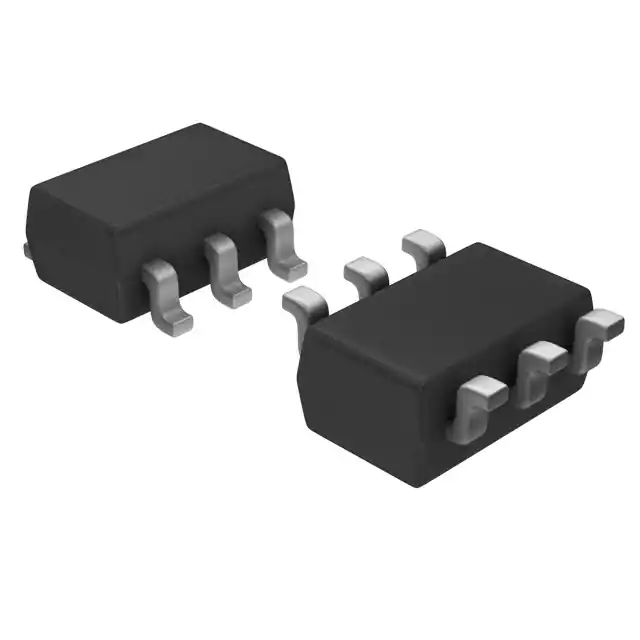
- Part No.:
- TMP121AQDBVREP
- Manufacturer:
- Texas Instruments
- Category:
- Analog and Digital Output
- Package:
- SOT-23-6
- Datasheet:
-
 TMP121AQDBVREP.pdf
- Description:
- SENSOR DIGITAL -40C-125C SOT23-6
- Quantity:
- Payment:

- Shipping:

Inventory:1,507
Please send an inquiry. Send us your inquiry, and we will respond immediately.
Product details
Overview
TMP121AQDBVREP from Texas Instruments is a radiation-hardened, extended-temperature digital temperature sensor with SPI-compatible serial interface, ±1.5°C accuracy from –25°C to 85°C, 12-bit + sign resolution (0.0625°C), and low quiescent current (50 µA max) in SOT23-6 package - used for thermal protection in space-grade power-supply monitoring and satellite onboard computer systems.
For engineers reviewing the TMP121AQDBVREP datasheet, TMP121AQDBVREP pinout, TMP121AQDBVREP application, or TMP121AQDBVREP equivalent, this page delivers verified electrical specs, thermal performance limits, SPI timing constraints, shutdown behavior, and qualified alternatives for high-reliability aerospace thermal sensing deployments.
Technical Context
The TMP121AQDBVREP integrates a silicon diode-based temperature sensor, sigma-delta A/D converter, oscillator, control logic, and SPI-compatible serial interface - all on a single die. It performs continuous temperature conversion while CS is high, latching data on CS falling edge for readout via SO on SCK falling edges.
Its thermal sensing relies on the die flag's thermal coupling to Pin 2 (GND), making GND the primary thermal path; NC pins (1 and 3) must be left floating or tied to GND. Conversion time is 240–320 ms (12-bit), with a 480–640 ms period between starts, enabling predictable low-power thermal sampling in radiation-tolerant systems.
Key Specifications
| Parameter | Value and Actual Design Meaning |
|---|---|
| Accuracy | ±1.5°C max from –25°C to 85°C; ±2°C over full –40°C to 125°C range - defines worst-case calibration error in flight-critical thermal thresholds. |
| Resolution | 12-bit + sign, 0.0625°C LSB - enables precise detection of sub-degree thermal drift in voltage regulator hotspots. |
| Supply Range | 2.7 V to 5.5 V - supports direct interfacing with 3.3 V and 5 V spacecraft bus rails without level-shifting. |
| Quiescent Current | 35–50 µA (active), 0.1–1 µA (shutdown) - allows >1-year battery-backed operation in dormant telemetry subsystems. |
| Operating Temp | –55°C to 150°C (operation), –40°C to 125°C (specified) - qualified per JEDEC HAST, temp cycle, and autoclave for LEO/MEO mission profiles. |
| Interface | SPI-compatible, 16-bit read-only temperature register (sign + 12 bits + confirmation + Hi-Z) - ensures compatibility with legacy FPGA and microcontroller SPI peripherals. |
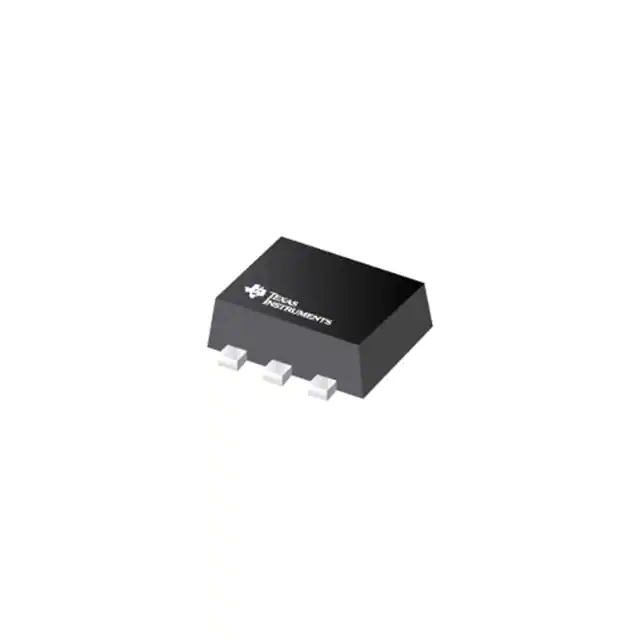
| Package | SOT23-6 (DBV), 3.0 × 2.6 × 1.45 mm - enables high-density placement near ASICs, DC/DC converters, and FPGAs on compact avionics PCBs. |
Pinout & Package
SOT23-6 (DBV) package with 1.45 mm max height, moisture sensitivity level 2 (260°C peak reflow), RoHS-compliant NiPdAu lead finish, and Q3 pin-1 quadrant orientation in tape.
| Pin/Terminal | Circuit Role | Design Meaning |
|---|---|---|
| 1 | NC | No connection; must be left floating or tied to GND to avoid noise coupling into thermal path. |
| 2 | GND | Ground reference and primary thermal conduction path - thermally bonded to die flag for accurate junction-to-package measurement. |
| 3 | NC | No connection; same handling as Pin 1 - critical for maintaining thermal integrity and ESD immunity. |
| 4 | V+ | Positive supply input (2.7–5.5 V); requires 0.1 µF bypass capacitor close to pin for stable ADC reference during conversion bursts. |
| 5 | SO | Serial output - tri-state, SPI-compatible data line; outputs 16-bit two's complement temperature word MSB-first on SCK falling edge. |
| 6 | CS | Chip select - active-low; initiates analog shutdown and latches last conversion result when pulled low mid-conversion. |
Key Features
| Feature | Design Value |
|---|---|
| Radiation-hardened EP grade | Qualified per V62/06608-01XE with enhanced DMS support and qualification pedigree for space applications. |
| Hardware shutdown mode | Reduces current to ≤1 µA when CS held low - enables ultra-low-power thermal watchdog operation in standby modes. |
| Self-contained operation | Requires no external components beyond 0.1 µF bypass cap - eliminates BOM count and layout risk in SWaP-constrained modules. |
| Thermal path optimization | GND pin (Pin 2) directly connected to lead frame - provides lowest-θJA path (200°C/W) for accurate board-level temperature tracking. |
| SPI timing compliance | t1 = 100 ns min SCK period; t2 = 30 ns max SCK-to-SO delay - ensures reliable communication with FPGA soft-SPI or MCU hardware peripherals. |
Applications
| Power-Supply Temperature Monitoring | Computer Peripheral Thermal Protection |
|---|---|
|
Use Scenario: Real-time monitoring of DC/DC converter thermal rise during orbital eclipse phases in CubeSat power management units. IC Role / Device Role / Timing Role: Primary temperature sensor feeding thermal shutdown logic to FPGA-based PMIC controller via SPI at 0.5 s intervals. Use Value: Enables margin verification against derating curves for radiation-degraded MOSFETs by delivering ±1.5°C accuracy across –40°C to 125°C. |
Use Scenario: Overtemperature cutoff for PCIe switch ICs in high-performance onboard data recorders exposed to solar flux. IC Role / Device Role / Timing Role: Standalone thermal guard rail sensor interfaced to microcontroller GPIO interrupt via CS assertion, triggering fan ramp-up or throttling. Use Value: Provides 0.0625°C resolution to detect early-stage thermal runaway before irreversible latch-up occurs in 28 nm ASICs. |
| Notebook Computers | Battery Management |
|
Use Scenario: Embedded thermal feedback for CPU/GPU thermal throttling algorithms in radiation-tolerant laptop-class avionics workstations. IC Role / Device Role / Timing Role: Secondary temperature node reporting to system BIOS via SPI, synchronized with main SoC thermal sensors. Use Value: Delivers consistent ±1.5°C accuracy despite wide supply variation (2.7–5.5 V), ensuring throttle decisions remain valid across battery discharge cycles. |
Use Scenario: Cell pack temperature monitoring in Li-ion battery modules for autonomous satellite propulsion systems. IC Role / Device Role / Timing Role: Isolated thermal sensor mounted on battery PCB, communicating via opto-isolated SPI to BMS MCU. Use Value: Supports safe charging above –20°C and cutoff below –40°C using verified –55°C to 150°C operational range and JEDEC-qualified reliability. |
Equivalent & Alternatives
The following parts are listed as comparable options for similar digital temperature sensing applications.
| Alternative Part | Technical Difference | Application Difference | Selection Advice |
|---|---|---|---|
| TMP123AQDBVREP | Same pinout, identical specs except internal NC pin mapping (Pin 2 = NC vs GND on TMP121); slightly higher shutdown current (≤3 µA). | Less optimal for thermal conduction - lacks GND pin thermal tie to die flag, reducing accuracy in surface-mount thermal monitoring. | Select TMP123AQDBVREP only when GND-based thermal path is not required and dual sourcing is needed within same DBV footprint. |
| MAX6627ESA+ | SO-8 package, ±2°C accuracy, I²C interface, 10-bit resolution (0.25°C), wider supply (3–5.5 V), no radiation qualification. | Not suitable for space use - lacks EP-grade qualification, MSL-2 reflow rating, or extended –55°C operation. | Consider MAX6627ESA+ only for commercial airborne or ground-test equipment where cost and I²C compatibility outweigh radiation tolerance needs. |
Compared with TMP121AQDBVREP, TMP123AQDBVREP offers identical form factor but inferior thermal path fidelity, while MAX6627ESA+ trades radiation hardening and resolution for I²C convenience and broader commercial availability - making TMP121AQDBVREP the sole choice for mission-critical thermal sensing where accuracy, reliability, and thermal coupling are non-negotiable.
Availability
TMP121AQDBVREP is available at Aetrix Electronics and suitable for aerospace power-supply monitoring, satellite onboard computer thermal protection, and radiation-tolerant battery management systems requiring stable component supply across extended product lifecycles.
Supply support for TMP121AQDBVREP includes scheduled delivery planning, volume procurement assistance, BOM continuity management, traceable sourcing, and lifecycle availability coordination for OEM customers, industrial embedded developers, connected-device designers, and electronics production programs.
Manufacturer
Texas Instruments is a global semiconductor leader specializing in analog, embedded processing, and high-reliability components, with decades of heritage in space-grade analog ICs and precision sensing solutions.
The TMP121-EP product line was designed specifically for extended-temperature, radiation-tolerant applications in defense, aerospace, and high-reliability industrial systems - emphasizing accuracy stability, low power, and qualification pedigree over consumer-grade cost targets.
FAQ
What is the absolute maximum operating temperature for the TMP121AQDBVREP?
The TMP121AQDBVREP has an absolute maximum junction temperature of 150°C and operates continuously from –55°C to 150°C. Its specified accuracy range is –40°C to 125°C, and it is qualified per JEDEC standards including HAST and temperature cycling to ensure reliability under these extremes. The TMP121AQDBVREP maintains functional integrity up to its 150°C limit, though accuracy degrades beyond 125°C per published electrical characteristics.
Does the TMP121AQDBVREP require external components for basic operation?
No, the TMP121AQDBVREP requires no external components for core temperature measurement functionality. A 0.1 µF ceramic bypass capacitor between V+ and GND is recommended for supply stability during conversion bursts, but it is not mandatory for functionality. The TMP121AQDBVREP integrates the temperature-sensing diode, sigma-delta ADC, oscillator, and SPI interface on-die - eliminating need for external references, clocks, or signal conditioning circuitry.
How does the TMP121AQDBVREP handle thermal conduction for accurate measurements?
The TMP121AQDBVREP uses the die flag of its lead frame - thermally connected to Pin 2 (GND) - as the primary thermal path. This design makes GND the optimal mounting point for PCB thermal vias or copper pours to extract heat from the IC and match ambient or component temperature. Pins labeled NC (1 and 3) must be left floating or grounded to avoid perturbing this path. The TMP121AQDBVREP's 200°C/W θJA reflects this optimized conduction route, critical for accuracy in surface-mount thermal monitoring.
What SPI timing parameters define reliable communication with the TMP121AQDBVREP?
The TMP121AQDBVREP specifies minimum SCK period (t1) of 100 ns, maximum SCK-to-SO propagation delay (t2) of 30 ns, and CS setup time (t3) of 40 ns relative to first SCK edge. These values enable interoperability with standard MCU and FPGA SPI peripherals clocked up to 10 MHz. The TMP121AQDBVREP outputs data MSB-first on SCK falling edges, and the SO line enters high-impedance state 30 ns after CS rises - ensuring clean bus sharing in multi-device SPI configurations.
Is the TMP121AQDBVREP pin-compatible with the commercial TMP121 variant?
Yes, the TMP121AQDBVREP shares identical SOT23-6 (DBV) pinout, electrical interface, and register map with the commercial TMP121, including NC/GND/SO/CS/SCK/V+ assignments and SPI protocol behavior. However, the TMP121AQDBVREP adds radiation-hardened process, extended temperature qualification (–55°C to 150°C), enhanced DMS support, and controlled baseline manufacturing - making it a drop-in replacement in terms of layout and firmware, but not a generic substitute for non-space applications due to cost and availability constraints.
TMP121AQDBVREP Specifications
- Product attributes
- Attribute value
- Manufacturer:
- Texas Instruments
- Series:
- -
- Package/Case:
- SOT-23-6
- Packaging:
- Tape & Reel (TR)
- Product Status:
- Active
- Sensor Type:
- Digital, Local
- Sensing Temperature - Local:
- -40°C ~ 125°C
- Sensing Temperature - Remote:
- -
- Output Type:
- SPI
- Voltage - Supply:
- 2.7V ~ 5.5V
- Resolution:
- 12 b
- Features:
- Shutdown Mode
- Accuracy - Highest (Lowest):
- ±1.5°C (±2°C)
- Test Condition:
- -25°C ~ 85°C (-40°C ~ 125°C)
- Operating Temperature:
- -40°C ~ 125°C
- Mounting Type:
- Surface Mount
- Grade:
- -
- Qualification:
- -
- Supplier Device Package:
- SOT-23-6
TMP121AQDBVREP FAQ
1.How can I place an order for TMP121AQDBVREP through Aetrix?
Please submit a Request for Quotation (RFQ) for TMP121AQDBVREP on Aetrix. Our sales agent will provide a competitive quotation and guide you through the order confirmation once you accept the terms.
2.Are the price and stock information for TMP121AQDBVREP reliable?
The price and inventory of TMP121AQDBVREP are updated periodically and may fluctuate due to market conditions. Stock and pricing data are typically refreshed every 24 hours. Quotation validity for TMP121AQDBVREP is usually 5 days.
3.What payment methods are accepted for TMP121AQDBVREP?
We accept Wire Transfer, PayPal, Credit Card, Western Union, MoneyGram, and Escrow for TMP121AQDBVREP transactions.
Note: Certain payment methods may incur a processing fee.
4.How is shipping managed for TMP121AQDBVREP?
TMP121AQDBVREP orders can be shipped via leading logistics carriers, including DHL, UPS, FedEx, TNT, or Registered Mail.
Once your TMP121AQDBVREP order is processed, you will receive an email with the shipment details and tracking number.
Note: Tracking information may take up to 24 hours to appear. Express delivery typically takes 3–5 business days.
5.How can I obtain technical support or documentation for TMP121AQDBVREP?
For technical support, including TMP121AQDBVREP datasheets, pinout diagrams, or application guidance, please contact our engineering support team. They can provide detailed documentation and assistance for your TMP121AQDBVREP requirements.
6.How does Aetrix verify that TMP121AQDBVREP is sourced from the original manufacturer or authorized distributors?
All TMP121AQDBVREP products on Aetrix are procured from qualified distributors and authorized channels. Our dedicated quality assurance team conducts strict verification, including traceability checks and, if necessary, third-party testing. This ensures that TMP121AQDBVREP meets industry standards.
7.What is the process for return or replacement of TMP121AQDBVREP?
All TMP121AQDBVREP units undergo pre-shipment inspection (PSI). If there is an issue with TMP121AQDBVREP, returns or replacements are accepted under the following conditions:
1.Quantity discrepancies, incorrect items, or visible external defects (such as breakage or corrosion), acknowledged by Aetrix.
2.The issue is reported within 90 days of delivery.
3.The TMP121AQDBVREP part is unused and in its original packaging.
Return procedure for TMP121AQDBVREP:
1.Submit a request within 90 days.
2.Obtain a Return Material Authorization (RMA) from Aetrix.
TMP121AQDBVREP Tags
-
MCP9700T-E/TT
Microchip Technology
-
MCP9700T-E/LT
Microchip Technology
-
MCP9701T-E/TT
Microchip Technology
-
MCP9701T-E/LT
Microchip Technology
-
TMP235A4DBZR
Texas Instruments
-
MCP9700AT-E/TT
Microchip Technology
-
MCP9700AT-E/LT
Microchip Technology
-
MCP9701AT-E/LT
Microchip Technology
-
MCP9701AT-E/TT
Microchip Technology
,TO-226_straightlead.jpg)
-
LM335Z
STMicroelectronics
-
TMP1075NDRLR
Texas Instruments
-
TMP1075DGKR
Texas Instruments
Tech Hub

A practical engineering guide to 3.3V and 5V logic compatibility, input thresholds, resistor dividers, translator ICs, MOSFET level shifting, I2C pull-ups, timing limits and power-sequencing risks.

The 74HC595 uses push-pull logic outputs, while the TPIC6B595 uses 50 V open-drain DMOS sinks for higher-power loads. This guide compares timing, current limits, 3.3 V interfacing, load wiring, thermal…

The 74HC595 converts serial data into eight stable parallel outputs. This guide covers pin functions, shift and storage timing, OE and MR behavior, drive-current limits, cascading, voltage compatibilit…

A technical comparison of level-sensitive latches and edge-triggered flip-flops, covering timing windows, setup and hold limits, master–slave operation, time borrowing, race-through, HDL inference and…

A D latch stores one bit while Enable controls when data can pass. This reference covers gate-level operation, truth tables, transparency, setup and hold timing, LE versus OE, common ICs and practical …

An SR latch stores one bit through cross-coupled feedback. This engineering reference covers NOR and NAND implementations, truth tables, forbidden-state recovery, gated operation, switch debouncing, fa…

Latch circuits retain one bit through feedback. This technical reference covers SR and D latches, truth tables, transparency, timing limits, latch-versus-flip-flop behavior, applications and common log…

An engineering guide to LED driver operation, constant-current and constant-voltage outputs, linear and switching topologies, dimming, IC selection, calculations, replacement compatibility, and fault c…

Operational amplifier guide covering op amp basics, feedback, ideal vs real op amps, common configurations, buffer circuits, offset, bias current, gain-bandwidth, slew rate, rail-to-rail limits and sel…

Jumper cables guide covering safe connection order, red and black clamp placement, final ground connection, cable gauge, length, clamp quality, copper vs CCA cables, jump starter comparison and battery…


