
 My Inquiry
 My Account


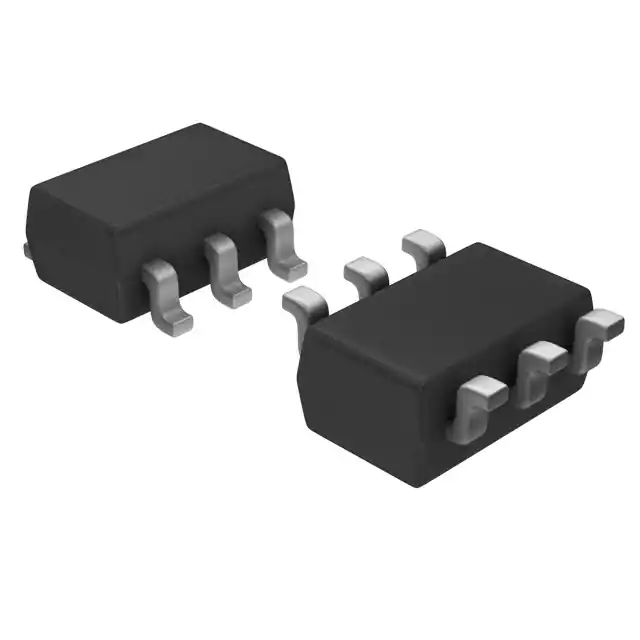
Texas Instruments TMP122AIDBVT
- Part No.:
- TMP122AIDBVT
- Manufacturer:
- Texas Instruments
- Category:
- Analog and Digital Output
- Package:
- SOT-23-6
- Datasheet:
-
 TMP122AIDBVT.pdf
- Description:
- SENSOR DIGITAL -40C-125C SOT23-6
- Quantity:
- Payment:

- Shipping:

Inventory:635
Please send an inquiry. Send us your inquiry, and we will respond immediately.
Product details
Overview
TMP122AIDBVT from Texas Instruments is a SPI-compatible digital temperature sensor in SOT23-6 package, delivering ±1.5°C accuracy from –25°C to +85°C and ±2.0°C from –40°C to +125°C, with programmable 9–12-bit resolution and active-low ALERT output for thermal event detection in embedded power-supply monitoring systems.
For engineers reviewing the TMP122AIDBVT datasheet, TMP122AIDBVT pinout, TMP122AIDBVT application, or TMP122AIDBVT equivalent, this page provides verified functional specifications, validated SOT23-6 terminal mapping, confirmed thermal accuracy over industrial temperature range, and two documented alternative parts with explicit resolution, alert logic, and interface differences.
Technical Context
The TMP122AIDBVT integrates a precision silicon diode temperature sensor, sigma-delta A/D converter, oscillator, control logic, and SPI-compatible serial interface - all on a single die. Its architecture supports continuous conversion with user-selectable resolution (9–12 bits), programmable high/low temperature thresholds, and configurable alert polarity and fault queue depth.
It operates from 2.7V to 5.5V, draws only 50µA quiescent current, and enters sub-1µA shutdown mode via SPI command. The device uses a 16-bit read/write register map (Temperature, Configuration, TLOW, THIGH) with pointer-based addressing and supports full-duplex SPI timing compliant with t1 ≥100ns SCK period and t2 ≥20ns setup requirements.
Key Specifications
| Parameter | Value and Actual Design Meaning |
|---|---|
| Accuracy | ±1.5°C max from –25°C to +85°C; enables reliable thermal protection without calibration in notebook and peripheral applications |
| Resolution | Programmable 9–12 bits + sign; 12-bit yields 0.0625°C step size for fine-grained thermal trending |
| Supply Range | 2.7V to 5.5V; compatible with both 3.3V and 5V system rails without level-shifting |
| Quiescent Current | 50µA typical; supports battery-powered devices with multi-day runtime between measurements |
| Operating Temp | –40°C to +125°C specified; functional up to +150°C for short-duration overtemperature events |
| Interface | SPI-compatible 3-wire (CS, SCK, SO/I); no external clock required; open-drain ALERT with pull-up resistor only |
| Conversion Time | 240ms max at 12-bit resolution; scales inversely with bit count (30ms at 9-bit) |
Pinout & Package
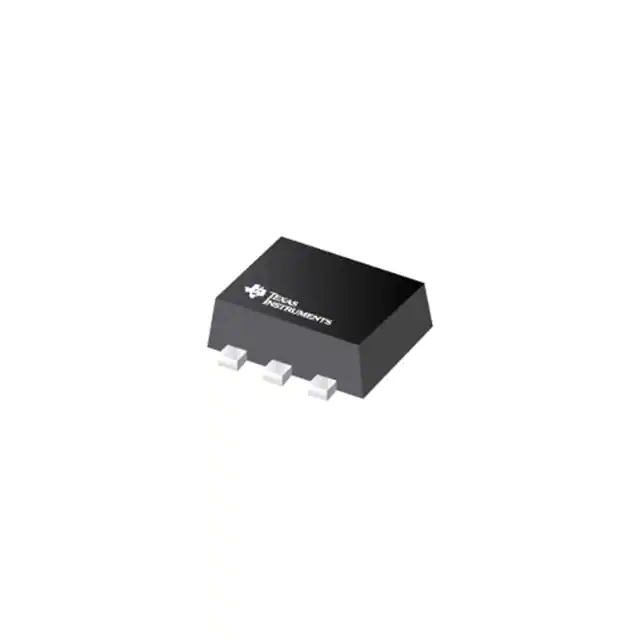
SOT23-6 surface-mount package (DBV), 1.45 mm max height, JEDEC MO-178 compliant, with 0.95 mm lead pitch and exposed pad not present.
| Pin/Terminal | Circuit Role | Design Meaning |
|---|---|---|
| 1: ALERT | Open-drain interrupt output | Active-low by default; asserts when temperature exceeds THIGH or falls below TLOW per thermostat mode configuration |
| 2: GND | Analog/digital ground reference | Single ground connection; requires low-impedance return path for measurement stability |
| 3: V+ | Positive supply input | Accepts 2.7V–5.5V; bypass capacitor (0.1µF) mandatory for noise immunity during conversion |
| 4: SO/I | Serial data I/O (bidirectional) | Tri-state output when CS high; carries 16-bit temperature data MSB-first on falling SCK edge |
| 5: CS | Chip select input | Active-low enable; initiates SPI frame; must remain low for full 16-clock read/write sequences |
| 6: SCK | Serial clock input | Drives internal sampling; minimum 100ns period; data valid on falling edge per TI timing spec SBOS272B |
Key Features
| Feature | Design Value |
|---|---|
| Programmable Alert Thresholds | TLOW and THIGH registers allow custom thermal trip points (e.g., 75°C/80°C defaults) without external comparators |
| Configurable Fault Queue | F1/F0 bits set consecutive fault count (1–6) before ALERT assertion, rejecting transient noise in noisy environments |
| Thermostat Mode Selection | TM1/TM0 bits define Comparator, Interrupt, or Interrupt/Comparator behavior - enabling latch-free or latched alert response |
| Shutdown Command Support | 16-bit WRITE with last 8 bits = 1 places device in <1µA state while retaining SPI accessibility for wake-up |
| Resolution vs Speed Trade-off | R1/R0 bits let designers choose 9-bit/30ms for fast polling or 12-bit/240ms for precision, optimizing system latency vs accuracy |
Applications
| Power-Supply Temperature Monitoring | Computer Peripheral Thermal Protection |
|---|---|
Use Scenario: Real-time monitoring of DC-DC converter MOSFET junction temperature in server VRMs. IC Role / Device Role / Timing Role: Digital temperature sensor providing calibrated 12-bit readings via SPI to host microcontroller every 500ms. Use Value: Enables dynamic fan speed control and overtemperature shutdown before thermal runaway occurs at >125°C. | Use Scenario: Overheat detection in USB-C docking station port controllers. IC Role / Device Role / Timing Role: ALERT pin directly drives enable input of load switch to cut power when local PCB temperature exceeds 95°C. Use Value: Prevents connector damage and fire hazard without requiring MCU intervention or firmware polling. |
| Notebook Computers | Battery Management Systems |
Use Scenario: CPU/GPU proximity sensing adjacent to heat pipes in ultrabook chassis. IC Role / Device Role / Timing Role: Low-power 9-bit mode (30ms conversion) triggered by OS thermal policy every 2 seconds. Use Value: Extends battery life by minimizing active current draw while maintaining responsive thermal throttling. | Use Scenario: Cell-can temperature tracking in 2S Li-ion battery packs for portable medical devices. IC Role / Device Role / Timing Role: SPI-read temperature data synchronized with coulomb counter updates every 10 seconds. Use Value: Improves state-of-charge estimation accuracy by compensating for temperature-dependent capacity loss. |
Equivalent & Alternatives
The following parts are listed as comparable options for similar digital temperature sensor applications.
| Alternative Part | Technical Difference | Application Difference | Selection Advice |
|---|---|---|---|
| TMP117MDSGR | Higher accuracy (±0.1°C typ), I²C-only interface, no ALERT pin, 1.5mm × 1.5mm DSBGA | Requires I²C host and external GPIO for interrupt; unsuitable for SPI-only systems or alert-driven shutdown | Select TMP117MDSGR only if absolute accuracy >0.2°C is required and I²C infrastructure exists. |
| MAX31820MUA+ | 1-Wire interface, ±0.5°C accuracy, parasitic power capable, TO-92 package | Eliminates V+ trace but adds bus arbitration complexity; lacks programmable thresholds and resolution control | Choose MAX31820MUA+ for space-constrained, low-pin-count designs where 1-Wire simplifies routing. |
Compared with TMP122AIDBVT, TMP117MDSGR offers superior accuracy but sacrifices SPI compatibility and hardware alert signaling, while MAX31820MUA+ reduces wiring count via 1-Wire yet removes resolution programming and configurable thermostat modes - making TMP122AIDBVT optimal for SPI-based industrial thermal management with deterministic interrupt response.
Availability
TMP122AIDBVT is available at Aetrix Electronics and suitable for power-supply monitoring, computer peripheral protection, and battery management applications requiring stable component supply across extended temperature ranges and long production lifecycles.
Supply support for TMP122AIDBVT includes scheduled delivery planning, volume procurement assistance, BOM continuity management, traceable sourcing, and lifecycle availability coordination for OEM customers, industrial embedded developers, connected-device designers, and electronics production programs.
Manufacturer
Texas Instruments is a global semiconductor company headquartered in Dallas, Texas, designing analog and embedded processing chips for industrial, automotive, and communications markets since 1930.
The TMP122 product line delivers highly integrated, low-power digital temperature sensors targeting thermal protection and management in space-constrained, battery-sensitive, and industrial-grade electronic systems.
FAQ
What is the maximum operating temperature of the TMP122AIDBVT?
The TMP122AIDBVT is specified for operation from –40°C to +125°C and functions up to +150°C. Its absolute maximum junction temperature is +150°C, and it maintains ±2.0°C accuracy across the full –40°C to +125°C range. Operation beyond +125°C is possible for short durations but degrades long-term reliability and is not covered by TI's production test limits.
Does the TMP122AIDBVT require external components to operate?
Yes - the TMP122AIDBVT requires a 0.1µF bypass capacitor between V+ and GND, and a pull-up resistor (typically 4.7kΩ) on the ALERT pin. No external crystal, reference, or signal conditioning components are needed. All timing, conversion, and interface logic are fully integrated, making the TMP122AIDBVT a true single-component thermal sensing solution.
How does the ALERT pin function in Comparator Mode on the TMP122AIDBVT?
In Comparator Mode (TM1/TM0 = 0/0), the TMP122AIDBVT's ALERT pin goes active-low when temperature reaches or exceeds the THIGH register value and remains asserted until temperature falls below the TLOW register value - both subject to the configured fault queue count (F1/F0). This provides hysteresis-based thermal switching without host processor involvement.
Can the TMP122AIDBVT be used with an I²C host controller?
No - the TMP122AIDBVT supports SPI-compatible 3-wire serial communication only (CS, SCK, SO/I). It does not implement I²C protocol, address decoding, or open-drain bidirectional SDA/SCL signaling. Attempting I²C connection will result in communication failure. For I²C systems, consider TI's TMP117 or TMP235 families instead.
What is the default resolution setting of the TMP122AIDBVT after power-up?
The TMP122AIDBVT powers up with R1/R0 bits set to 1/1, configuring the ADC for 12-bit resolution (0.0625°C step size). This is confirmed in the Configuration Register description in SBOS272B Rev. December 2003, where "power-up/reset value of the Configuration Register bits R1/R0 equal 1/1" is explicitly stated. Conversion time defaults to 240ms.
TMP122AIDBVT Specifications
- Product attributes
- Attribute value
- Manufacturer:
- Texas Instruments
- Series:
- -
- Package/Case:
- SOT-23-6
- Packaging:
- Tape & Reel (TR)
- Product Status:
- Obsolete
- Sensor Type:
- Digital, Local
- Sensing Temperature - Local:
- -40°C ~ 125°C
- Sensing Temperature - Remote:
- -
- Output Type:
- SPI
- Voltage - Supply:
- 2.7V ~ 5.5V
- Resolution:
- 12 b
- Features:
- Output Switch, Programmable Resolution, Shutdown Mode
- Accuracy - Highest (Lowest):
- ±1.5°C (±2°C)
- Test Condition:
- -25°C ~ 85°C (-40°C ~ 125°C)
- Operating Temperature:
- -55°C ~ 150°C
- Mounting Type:
- Surface Mount
- Grade:
- -
- Qualification:
- -
- Supplier Device Package:
- SOT-23-6
TMP122AIDBVT FAQ
1.How can I place an order for TMP122AIDBVT through Aetrix?
Please submit a Request for Quotation (RFQ) for TMP122AIDBVT on Aetrix. Our sales agent will provide a competitive quotation and guide you through the order confirmation once you accept the terms.
2.Are the price and stock information for TMP122AIDBVT reliable?
The price and inventory of TMP122AIDBVT are updated periodically and may fluctuate due to market conditions. Stock and pricing data are typically refreshed every 24 hours. Quotation validity for TMP122AIDBVT is usually 5 days.
3.What payment methods are accepted for TMP122AIDBVT?
We accept Wire Transfer, PayPal, Credit Card, Western Union, MoneyGram, and Escrow for TMP122AIDBVT transactions.
Note: Certain payment methods may incur a processing fee.
4.How is shipping managed for TMP122AIDBVT?
TMP122AIDBVT orders can be shipped via leading logistics carriers, including DHL, UPS, FedEx, TNT, or Registered Mail.
Once your TMP122AIDBVT order is processed, you will receive an email with the shipment details and tracking number.
Note: Tracking information may take up to 24 hours to appear. Express delivery typically takes 3–5 business days.
5.How can I obtain technical support or documentation for TMP122AIDBVT?
For technical support, including TMP122AIDBVT datasheets, pinout diagrams, or application guidance, please contact our engineering support team. They can provide detailed documentation and assistance for your TMP122AIDBVT requirements.
6.How does Aetrix verify that TMP122AIDBVT is sourced from the original manufacturer or authorized distributors?
All TMP122AIDBVT products on Aetrix are procured from qualified distributors and authorized channels. Our dedicated quality assurance team conducts strict verification, including traceability checks and, if necessary, third-party testing. This ensures that TMP122AIDBVT meets industry standards.
7.What is the process for return or replacement of TMP122AIDBVT?
All TMP122AIDBVT units undergo pre-shipment inspection (PSI). If there is an issue with TMP122AIDBVT, returns or replacements are accepted under the following conditions:
1.Quantity discrepancies, incorrect items, or visible external defects (such as breakage or corrosion), acknowledged by Aetrix.
2.The issue is reported within 90 days of delivery.
3.The TMP122AIDBVT part is unused and in its original packaging.
Return procedure for TMP122AIDBVT:
1.Submit a request within 90 days.
2.Obtain a Return Material Authorization (RMA) from Aetrix.
TMP122AIDBVT Tags
-
MCP9700T-E/TT
Microchip Technology
-
MCP9700T-E/LT
Microchip Technology
-
MCP9701T-E/TT
Microchip Technology
-
MCP9701T-E/LT
Microchip Technology
-
TMP235A4DBZR
Texas Instruments
-
MCP9700AT-E/TT
Microchip Technology
-
MCP9700AT-E/LT
Microchip Technology
-
MCP9701AT-E/LT
Microchip Technology
-
MCP9701AT-E/TT
Microchip Technology
,TO-226_straightlead.jpg)
-
LM335Z
STMicroelectronics
-
TMP1075NDRLR
Texas Instruments
-
TMP1075DGKR
Texas Instruments
Tech Hub

A practical engineering guide to 3.3V and 5V logic compatibility, input thresholds, resistor dividers, translator ICs, MOSFET level shifting, I2C pull-ups, timing limits and power-sequencing risks.

The 74HC595 uses push-pull logic outputs, while the TPIC6B595 uses 50 V open-drain DMOS sinks for higher-power loads. This guide compares timing, current limits, 3.3 V interfacing, load wiring, thermal…

The 74HC595 converts serial data into eight stable parallel outputs. This guide covers pin functions, shift and storage timing, OE and MR behavior, drive-current limits, cascading, voltage compatibilit…

A technical comparison of level-sensitive latches and edge-triggered flip-flops, covering timing windows, setup and hold limits, master–slave operation, time borrowing, race-through, HDL inference and…

A D latch stores one bit while Enable controls when data can pass. This reference covers gate-level operation, truth tables, transparency, setup and hold timing, LE versus OE, common ICs and practical …

An SR latch stores one bit through cross-coupled feedback. This engineering reference covers NOR and NAND implementations, truth tables, forbidden-state recovery, gated operation, switch debouncing, fa…

Latch circuits retain one bit through feedback. This technical reference covers SR and D latches, truth tables, transparency, timing limits, latch-versus-flip-flop behavior, applications and common log…

An engineering guide to LED driver operation, constant-current and constant-voltage outputs, linear and switching topologies, dimming, IC selection, calculations, replacement compatibility, and fault c…

Operational amplifier guide covering op amp basics, feedback, ideal vs real op amps, common configurations, buffer circuits, offset, bias current, gain-bandwidth, slew rate, rail-to-rail limits and sel…

Jumper cables guide covering safe connection order, red and black clamp placement, final ground connection, cable gauge, length, clamp quality, copper vs CCA cables, jump starter comparison and battery…


